 Lynden Roofing
 Exterior Contracting for Blaine, WA Homes
Blaine sits right on Semiahmoo Bay at the northwest corner of Whatcom County, and that location shapes everything about how a house ages here. Homes close to the water deal with a different set of pressures than houses further inland around Lynden or Ferndale — more salt in the air, more wind-driven rain coming off the Strait of Georgia, and long stretches of gray, damp weather that give moss and algae plenty of time to take hold. We work throughout Whatcom County, and Blaine is one of the areas where we see exterior wear show up faster than homeowners expect, simply because of what the marine environment does to roofing, siding, trim, and fasteners over time.
This page covers what we typically see on Blaine homes, how our roofing, siding, window, and deck services address those conditions, and what to think about if you're planning exterior work here.
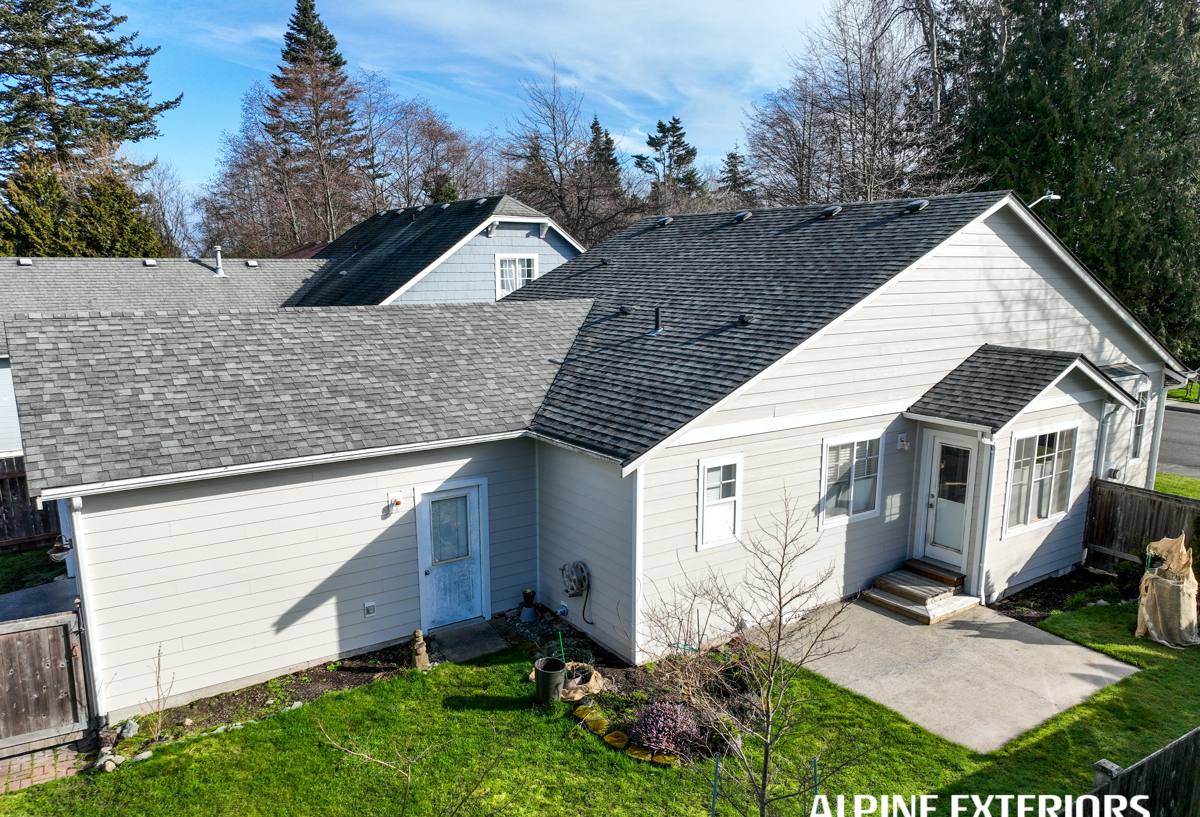
What the Blaine Climate Does to a House
Salt Air and Corrosion
Properties near the bay and along the water-facing side of town are exposed to salt-laden air, especially during winter storms when wind pushes moisture inland. Salt exposure accelerates corrosion on exposed metal — nails, flashing, gutter hardware, and hinges — faster than it would a few miles inland. It's not usually dramatic or sudden; it shows up as rust streaking near fasteners, pitted metal flashing, or hardware that seizes up years before it should.
Wind-Driven Rain
Blaine gets exposed to weather systems coming straight off the water, and that often means rain that isn't falling straight down — it's being pushed sideways into walls, under eaves, and into any gap in flashing or siding laps. Wind-driven rain finds weaknesses that vertical rain never would, which is why flashing details and siding overlaps matter more here than in more sheltered inland locations.
Moss, Algae, and Extended Dampness
Like the rest of northwest Washington, Blaine has a long wet season, and shaded or north-facing roof and siding surfaces can stay damp for days at a stretch. That extended moisture is exactly what moss and algae need to establish themselves on roofing, and once moss gets a foothold on a shingle roof, its root structure works into the granule layer and holds moisture against the surface, which shortens the life of the roofing underneath it.
Roofing in Blaine
Roof inspections in Blaine regularly turn up a consistent pattern: moss buildup in shaded valleys and north slopes, corrosion starting at flashing and fastener heads, and granule loss that's more advanced than the roof's age would suggest. None of that means a roof is failing — it usually means it needs attention sooner and more regularly than a similar roof would inland.
What We Look At
- Moss and algae growth, particularly on shaded or north-facing slopes
- Flashing condition around chimneys, valleys, skylights, and roof-to-wall transitions
- Fastener and metal hardware corrosion
- Granule loss and shingle wear on asphalt roofs
- Gutter and downspout function, since clogged gutters back water up under roof edges
- Ventilation, since poor attic airflow traps moisture and speeds up deck and shingle deterioration
For re-roofing, we install standard architectural asphalt shingle systems as well as metal roofing, both of which perform well in this climate when flashing and fastening details are done correctly. The material matters less than the workmanship — a well-flashed asphalt roof in Blaine will outlast a poorly detailed metal roof, and vice versa.
Siding for Coastal and Marine-Influenced Exposure
Siding on Blaine homes takes on wind-driven rain and salt air the same way roofing does. We pay close attention to lap overlaps, corner details, and the flashing behind siding at windows, doors, and roof transitions, since those are the points where wind-pushed moisture is most likely to get behind the cladding rather than run off it.
Our Approach to Product Selection
We install fiber cement, vinyl, and engineered wood siding depending on the home, budget, and look the homeowner wants. Our standard is to steer homeowners toward products with a track record of holding up to sustained moisture exposure rather than the cheapest option available, and we're upfront when a product's maintenance requirements or moisture sensitivity make it a poor match for a home's specific exposure — for example, a wall that takes direct wind-driven rain off the water is a place where we're more conservative about material choice than a sheltered inland wall would call for.
Trim and Fasteners
We use corrosion-resistant fasteners and flashing on every siding job, which matters more in Blaine than it would in a less salt-exposed area. Standard hardware that would be fine inland can start showing rust streaks within a few years this close to the water.
Windows: Sealing Out Wind-Driven Moisture
Window replacement and repair in Blaine is as much about the installation as the window unit itself. A quality window installed with poor flashing and sealant work will still leak under sustained wind-driven rain, and a modest window installed correctly will outperform it. We flash window openings to shed water outward and downward, use appropriate sealants rated for exterior exposure, and check that trim and casing details won't trap moisture against the wall assembly.
Homeowners in Blaine often come to us after noticing drafts, fogging between panes, or soft trim around a window — all signs that the seal or flashing has failed, not necessarily that the glass itself is the problem.
Decks: Built for a Wet, Salt-Exposed Climate
Outdoor living space in Blaine needs to handle standing moisture, salt exposure if the property faces the water, and the same moss and algae pressure that affects roofs. We build and repair decks with attention to ledger board flashing (a common failure point on older decks), proper drainage so water doesn't pool on the surface, and fastener hardware rated for exterior and, where relevant, coastal exposure. Composite decking is popular here because it resists the moisture-driven rot that wood decking is prone to in a climate this wet, though a well-maintained wood deck with the right coatings and fasteners can still perform well.
Cost Factors for Blaine Exterior Projects
| Factor | Why It Matters in Blaine |
|---|---|
| Proximity to water | Homes with direct exposure to wind and salt off the bay typically need more corrosion-resistant hardware and flashing detail, which affects material selection and labor |
| Roof pitch and shading | Steeper, more shaded, or north-facing roofs collect more moss and need more frequent maintenance or treatment |
| Existing moisture damage | Rot found once siding or roofing is opened up adds scope; this is more common on older homes that haven't had recent exterior maintenance |
| Access and site conditions | Lot layout, tree cover, and building height affect equipment needs and labor time |
| Material choice | Fiber cement, metal roofing, and composite decking generally cost more upfront than baseline alternatives but reduce moisture-related maintenance over time |
Maintenance That Actually Matters Here
Given the moss, salt, and rain exposure, a short list of regular maintenance tasks goes a long way toward protecting a Blaine home's exterior:
- Clear moss from roof surfaces before it builds up thickly, rather than after it's visibly established
- Keep gutters and downspouts clear so water isn't backing up under roof edges or siding
- Rinse salt residue off siding and trim periodically if the home faces the water directly
- Inspect flashing around chimneys, skylights, and window and door openings every year or two
- Check deck ledger boards and fastener hardware for corrosion or softening wood
- Address small leaks or soft trim spots quickly, before wind-driven rain has repeated chances to work into the same weak point
Why a Local Crew Matters
A contractor working across Whatcom County sees the difference between a Blaine roof and a roof further inland around Lynden or Everson on a regular basis, and that shows up in how a job gets bid and built — which fasteners get specified, how much attention flashing details get, and where a homeowner is steered toward a more moisture-tolerant material versus where a standard option is perfectly fine. That's the kind of judgment that comes from doing the work in this specific climate repeatedly, not from a generic spec sheet.
Get a Free Estimate
If you're dealing with moss buildup, a leak that shows up during windy storms, aging siding, or a deck that's starting to show its age, we're happy to take a look and give you an honest, no-pressure assessment. Use the form below to request a free estimate for roofing, siding, window, or deck work at your Blaine property.