 Lynden Roofing
 Blaine's Climate Asks More of a Window Than Most Places Do
Blaine sits right on the water, near the Canadian border, which means homes here deal with a combination of weather stresses that inland Whatcom County properties simply don't face as often. Salt-laden air off the bay, wind-driven rain that hits window walls almost horizontally during winter storms, and a long, gray moss-and-algae season all work on a window's frame, seals, and hardware year-round. A window that performs fine in a drier or more sheltered part of the county can fail early here if it wasn't chosen or installed with that exposure in mind.
This page covers what we look at specifically for custom window work on Blaine homes — not a generic rundown of window types, but what actually matters when the house is a few blocks from saltwater and gets weather most of the year.
Salt Air and Corrosion
Airborne salt accelerates corrosion on anything metal — window hardware, screen frames, fasteners, and unprotected aluminum components. Over years, that corrosion can seize locks, pit hinges, and stain sills. It's a slow process, so it's easy to underestimate until a homeowner tries to open a window that hasn't moved in a while and finds the hardware has locked up.
Driving Rain and Water Intrusion
Storms coming off the water don't just fall straight down — they push rain sideways into the wall assembly. That means the flashing details around a window, not just the window unit itself, decide whether water stays out. A well-built window installed with poor flashing will still leak. A modest window installed with correct flashing usually won't.
Moss, Algae, and Shaded Exposures
Whatcom County's long wet season keeps humidity high for months at a stretch, and shaded or north-facing window sills and trim are prone to the same moss and algae growth homeowners see on roofs and decks. On wood trim and sills, that constant dampness is what eventually leads to soft spots and paint failure if the surfaces aren't properly sealed and detailed to shed water.
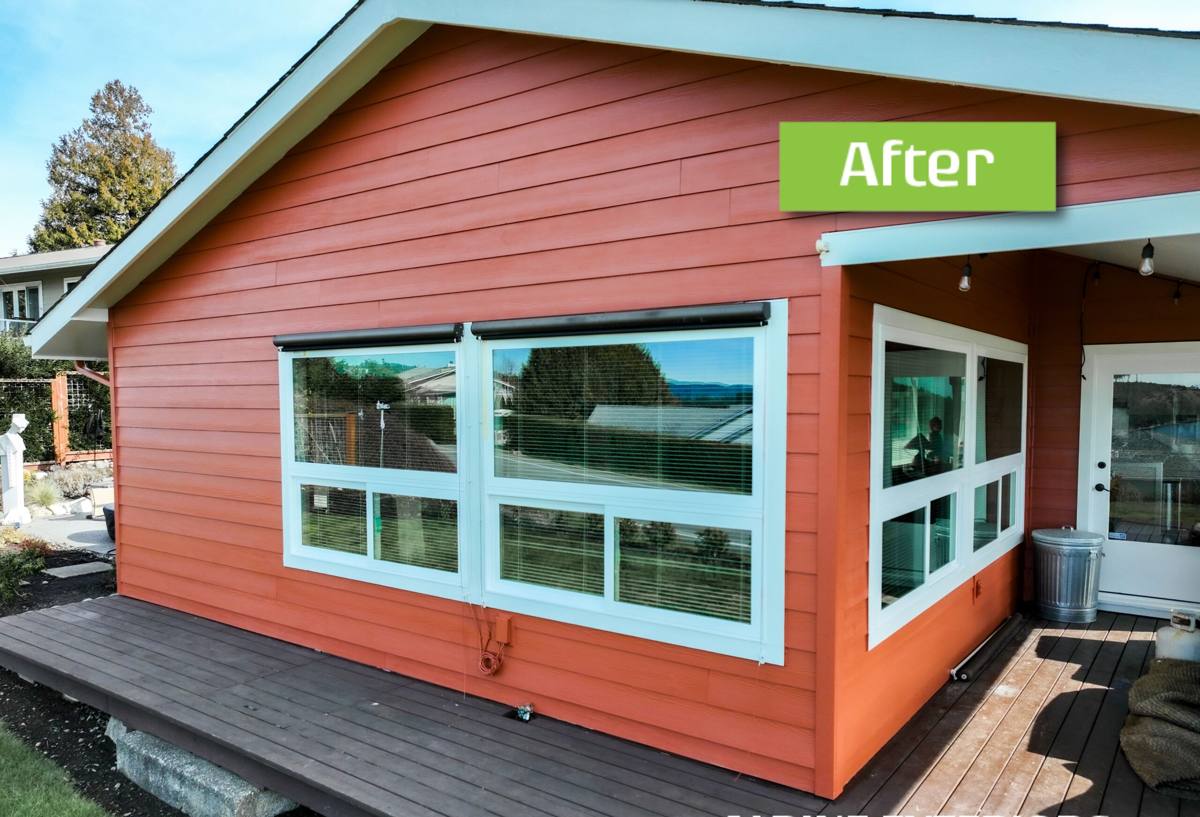
What "Custom" Means When It Comes to Windows
Custom windows aren't necessarily fancier or more expensive than stock sizes — the term just means the window is built or fitted to match your specific opening, architecture, or performance needs rather than pulled off a shelf in a standard size. That comes up constantly on Blaine homes, especially older ones, for a few reasons:
- Older homes often have openings that don't match modern standard sizes, so a stock replacement window would leave gaps or require reframing the opening.
- Coastal-facing walls sometimes benefit from a different glass package or frame material than the sheltered side of the same house.
- Additions, bay windows, and architectural features usually need shapes or configurations that aren't available off the shelf.
- Homeowners upgrading one problem window at a time need a close match to existing sightlines so the house doesn't end up with a mismatched patchwork.
We measure and spec every job to the actual opening and the actual exposure that window will face, rather than assuming one product fits every side of the house equally well.
Choosing the Right Window Materials for a Coastal Exposure
There's no single "best" window material — the right choice depends on the wall's sun and wind exposure, your maintenance appetite, and your budget. Here's how the common options generally compare for a home dealing with salt air and heavy rain:
| Material | How It Handles This Climate | Maintenance | General Cost Position |
|---|---|---|---|
| Vinyl | Won't corrode or rot; performs well in salt air; can expand/contract with temperature swings | Low — occasional cleaning | Lower |
| Fiberglass | Very stable, resists corrosion and moisture, holds paint well if a custom color is wanted | Low | Mid to higher |
| Wood-clad (metal or vinyl exterior over wood interior) | Good performance if the exterior cladding and flashing details are done correctly; interior wood adds warmth | Moderate — exterior clad is easy, but any exposed wood or damaged cladding needs prompt attention | Higher |
| Bare aluminum | Prone to pitting and corrosion in salt air unless it has a quality protective finish; conducts cold, so condensation risk is higher | Higher — finish and hardware need monitoring | Varies |
For most Blaine homes we work on, vinyl or fiberglass frames handle the salt air and rain exposure with the least ongoing fuss. Wood-clad windows can absolutely work here too, and plenty of homeowners choose them for the look — the key is making sure the exterior cladding and all its seams are fully protecting the wood underneath, since that's the part that fails first if it's compromised.
What a Correct Window Installation Actually Involves
The window unit itself only gets part of the credit for keeping a house dry. The installation details around it do most of the real work, especially on a wall that takes direct rain. A correct install includes:
Sill Pan and Flashing
A sloped sill pan under the window directs any water that gets past the exterior seal back outside instead of into the wall framing. Flashing tape integrates the window flange with the house's weather-resistive barrier in the correct shingle-lap order — top piece over the sides, sides over the bottom — so water is always directed downward and outward, never into a seam.
Sealant and Backer Rod
Exterior sealant needs the right joint width and a backer rod behind it to flex properly rather than crack under temperature and moisture cycling. A bead of caulk over a gap that's too wide, with nothing behind it, is one of the more common shortcuts that leads to an early leak.
Insulation at the Rough Opening
The gap between the window frame and the framing needs to be filled with a low-expansion foam or backer material — not packed solid, which can bow the frame, and not left empty, which creates a cold spot and air leak.
Interior and Exterior Trim
Trim should be back-primed and sealed on all sides before installation, particularly on wood trim, so moisture can't wick in from behind where it's hardest to spot.
Our Process, Start to Finish
- On-site assessment: We look at each opening, the wall's exposure to wind and rain, and the condition of the existing flashing or sheathing before recommending anything.
- Measuring and spec'ing: Openings are measured precisely, and we spec frame material, glass package, and hardware based on that wall's actual exposure — not a one-size answer for the whole house.
- Written estimate: You get a clear scope and price before any work is scheduled, with material options explained in plain terms.
- Removal and inspection: When we pull an old window, we check the sheathing and framing underneath for hidden moisture damage before installing the new unit — this is often where past problems get discovered.
- Installation: Sill pan, flashing, insulation, and sealant are installed in the correct sequence, not shortcut order.
- Final walkthrough: We check operation, seals, and finish work with you before calling the job complete.
Energy Efficiency and Condensation Control
Whatcom County's damp, moderate climate means condensation is often more of a day-to-day nuisance than extreme heat or cold. Interior condensation on window glass usually points to indoor humidity levels combined with a cold glass surface — insulated glass units with a warm-edge spacer and appropriate low-E coating reduce that cold-glass effect significantly. Argon or krypton gas fill between panes adds another layer of insulating performance, which also helps keep heating costs down through the long wet winter. We'll talk through glass package options based on the room, its sun exposure, and your comfort priorities rather than defaulting to the same spec everywhere.
Permits and Code Requirements
Window replacement in Whatcom County and the City of Blaine can require a permit depending on the scope of work, particularly if the rough opening size is changing or the work is part of a larger remodel. Bedroom windows also have egress requirements — minimum opening size and sill height — that matter if a window is being resized or if a room's use is changing. We handle the permit and code-check conversation as part of the estimate so there are no surprises mid-project.
Maintenance Checklist for Blaine Homeowners
Between our visits, a few simple habits go a long way toward protecting a window investment in this climate:
- Rinse salt residue off exterior frames and hardware periodically, especially after storms.
- Work locks and hinges a few times a year so hardware doesn't seize from corrosion.
- Check exterior caulk lines annually for cracking or separation, especially on rain-exposed walls.
- Clear moss or algae buildup from sills and trim before it holds moisture against the surface.
- Watch for soft spots on wood trim or sills, which usually mean moisture has gotten behind the finish.
- Wipe up interior condensation promptly to protect sills and interior trim from moisture damage.
Why a Crew That Already Works in Blaine Makes a Difference
Window installation on a coastal, storm-exposed wall isn't the same job as installation on a sheltered inland wall, even though the products look the same in a showroom. A crew that regularly works homes along this stretch of Whatcom County has already seen how salt air treats hardware over time, how driving rain finds the weak point in a flashing detail, and how moss and moisture behave on shaded trim through a long wet season. That experience shows up in the small decisions made during installation — the ones that determine whether a window is still performing well in ten years or starting to show problems in three.
If you're weighing a window replacement or a custom install for a Blaine property, we're happy to take a look and walk you through your options honestly. Use the form below to request a free, no-pressure estimate.