 Lynden Roofing
 Why Whatcom County Roofs Take a Particular Kind of Beating
Roofs in Lynden don't fail the way roofs do in drier parts of the country. Out here, the damage is usually cumulative before it's sudden. A long moss season keeps shingles damp for months at a stretch, driving rain gets pushed sideways and up under laps by wind coming off the valley, and even this far inland, salt-laden air moving in off the Sound and up the river valleys quietly corrodes fasteners, flashing, and metal edges faster than most homeowners expect. So when a real wind event hits, it's rarely attacking a roof at full strength. It's finishing off weak points that were already there.
That matters for how you respond. A storm doesn't just create damage — it exposes it. Understanding that distinction is the difference between a simple, affordable repair and a problem that quietly gets worse over the following winter.
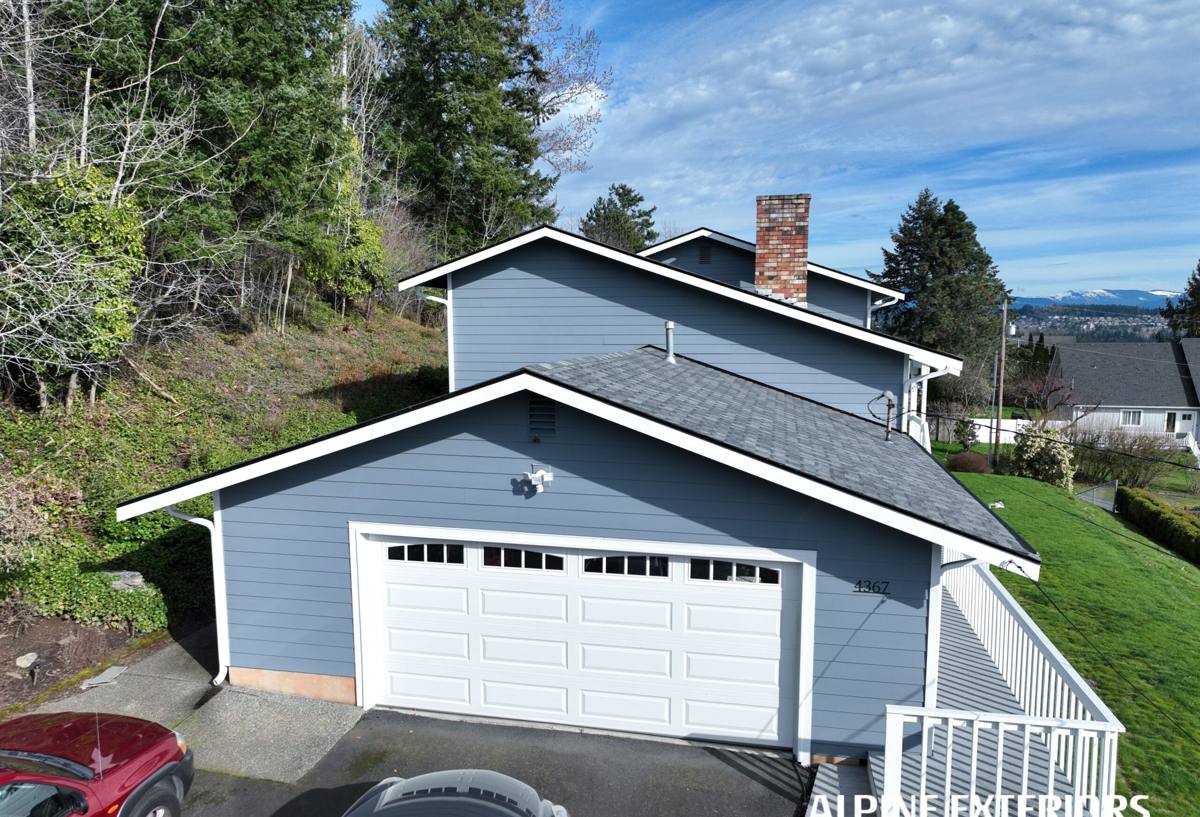
The First Hour After a Storm: Safety Before Inspection
Before you think about the roof at all, walk the property at ground level and rule out anything dangerous.
- Look for downed or sagging power lines anywhere near the house, driveway, or yard — treat all of them as live and stay well back.
- Check for leaning trees or large broken limbs still hung up overhead, especially near the roofline.
- Scan the yard and gutters for debris, but don't climb a ladder yet if wind gusts are still coming through.
- If you smell gas, see sparking, or notice structural movement in the house, leave and call the appropriate utility or emergency line before doing anything else.
Only once the immediate hazards are cleared does it make sense to start looking at the roof itself — and even then, ground-level and interior checks come first.
How to Spot Storm Damage Without Getting on the Roof
Most of what you need to know can be seen from the ground, the attic, or an upstairs window.
From the ground
Walk the perimeter and look up at the roof edges and slopes. You're looking for shingles that are visibly lifted, curled back, or missing outright, along with granules collecting in gutters, downspouts, or flower beds — a sign of shingles that took a hard impact or abrasion from wind-driven grit and branches. Check gutters and downspouts for separation from the fascia, and look at any roof vents, flashing, or chimney caps for obvious bending or displacement.
From inside
A flashlight check of the attic after a storm is one of the most useful five minutes you can spend. Look for fresh water staining on the underside of the roof deck or rafters, damp insulation, or daylight showing through where it shouldn't. Water doesn't always show up on ceilings right away — it can travel along framing before it drips somewhere visible, so a stain on a bedroom ceiling a few days after a storm doesn't mean the damage is new.
Wind Damage vs. Ordinary Wear: Telling Them Apart
Insurance adjusters and honest contractors both look at the same distinction: did the storm cause this, or did the storm reveal something that was already failing? Here's roughly how that breaks down.
| Sign | More likely storm-caused | More likely pre-existing wear |
|---|---|---|
| Missing shingles | Clean tear lines, torn sealant strip visible, shingle found intact nearby | Brittle, cracked edges, granule loss over a wide area, no intact shingle found |
| Lifted shingle tabs | Localized to one wind-exposed slope or edge | Scattered across the whole roof regardless of orientation |
| Flashing separation | Bent or torn metal, nail pull-through | Rust, caulking failure, gradual gap widening |
| Interior leak | Appears within days of a named storm event | Slow stain with concentric rings, mold odor, long-standing |
This distinction isn't just academic — it directly affects whether a claim is likely to be approved, and it's worth understanding before an adjuster ever shows up.
Temporary Measures That Help — and a Few That Don't
If a storm has left a roof exposed, doing nothing for a week isn't a real option. But not every quick fix is a good one.
Reasonable temporary steps
- A tarp secured over an exposed section, weighted and battened rather than nailed through good shingles, to stop active water intrusion.
- Clearing debris off the roof surface by hand if it can be done safely from a ladder without walking the slopes.
- Moving furniture and covering flooring beneath a known leak point.
- Photographing everything before you touch or cover anything.
Steps to avoid
- Walking a wet or moss-covered roof yourself — this time of year especially, moss holds moisture and turns a shingle surface into something closer to a skating rink.
- Applying roofing cement or sealant as a general fix. It rarely bonds well to wet or dirty shingles and can trap moisture underneath, turning a repair into a bigger problem later.
- Removing shingles or flashing yourself "to take a look." Once original material is gone, it's harder for an adjuster or contractor to determine the storm's actual footprint.
Documenting Damage the Right Way
Whether or not you end up filing an insurance claim, good documentation protects you either way.
Take dated photos of the exterior from multiple angles, close-ups of any visible damage, and interior shots of any staining or leaking, including a wide shot that shows where in the room it's located. Note the date and approximate time of the storm, and if local weather services or news reported wind speeds for the event, keep that reference — it can matter if a claim is questioned later. Keep any physical evidence, like a piece of shingle that blew into the yard, in a dry spot rather than throwing it out.
If you do file a claim, get a written repair estimate before the adjuster's visit if possible. It gives you an independent reference point rather than relying solely on the insurer's own assessment.
Choosing Who Gets on Your Roof After a Storm
Storms bring out door-knocking crews that follow weather systems from town to town, offer a "free inspection," and pressure homeowners into signing a contract on the spot. That approach itself should be treated as a warning sign, regardless of who's doing it. A legitimate local contractor doesn't need you to sign before they've even climbed a ladder.
Reasonable things to ask before agreeing to any storm repair work:
- Do you carry current liability insurance and workers' comp, and can you provide proof?
- Are you licensed to do this work in Washington, and can I verify that independently?
- Will you provide a written, itemized estimate before any work begins?
- Do you have a permanent local address and phone number, not just a cell number and a truck?
- Will you put the scope of repair, materials, and warranty terms in writing?
A contractor who's been doing roofs in this area for years has a reputation to protect here specifically — that's a meaningfully different incentive than a crew that will be three counties away by the time a repair fails.
Reducing Wind Vulnerability Going Forward
Once storm repairs are done, it's worth addressing the conditions that made the roof vulnerable in the first place. Moss removal and a properly sealed ridge and edge system matter more here than in drier climates, because sustained dampness softens the seal strips that hold shingles down against wind uplift in the first place — a shingle with a failed seal is doing a fraction of the wind resistance job it's rated for. Fastener corrosion from salt-influenced air is another quiet contributor; nails and flashing clips that have lost holding strength are exactly what lets a gust start peeling shingles from an edge inward.
A periodic roof check — ideally before the fall wind season and again after winter — catches lifted tabs, deteriorating sealant, and clogged gutters while they're still cheap fixes rather than storm-scale ones.
When to Call a Professional Instead of Waiting
Some situations don't benefit from a wait-and-see approach:
- Any active leak, even a small one, especially with more rain in the forecast.
- Missing shingles on a slope that faces the prevailing wind direction.
- Visible sagging anywhere in the roofline, which can indicate structural movement rather than surface damage.
- Chimney flashing or cap damage, since these are common points for water to enter unseen.
- Anything you're not fully sure how to interpret — a five-minute phone description is often enough for an experienced roofer to tell you whether it's urgent.
If a recent storm has left you wondering whether your roof took real damage or just needs a cleanup, we're happy to take a look. Reach out for a free, no-pressure estimate using the form below — we'll tell you honestly what we find, whether that's a small repair or nothing at all.