 Lynden Roofing
 Deming's Climate Puts Real Demands on a Roof
Deming sits in the Nooksack River valley, tucked up against the tree line on the way toward Mt. Baker. That location means more tree cover and more shade than you'll find on an open lot closer to town, and shade plus moisture is exactly the combination that keeps a roof wet longer after every storm. Whatcom County as a whole sees a long, damp season stretching from fall through spring, with weather systems rolling in off the Sound carrying steady rain and, at times, salt-tinged marine air. For a home in Deming, the bigger day-to-day factor is usually the tree canopy: needles and leaves collecting in valleys and behind chimneys, shaded roof sections that never fully dry out, and gutters that need more attention than a home out in the open.
None of this means a Deming roof is doomed to problems. It means the roofing system, the ventilation, and the maintenance schedule all need to be matched to a wetter, shadier reality than a standard installation manual assumes. That's the approach we bring to every job out here.
Why Moss Is the Defining Issue for Wooded Lots
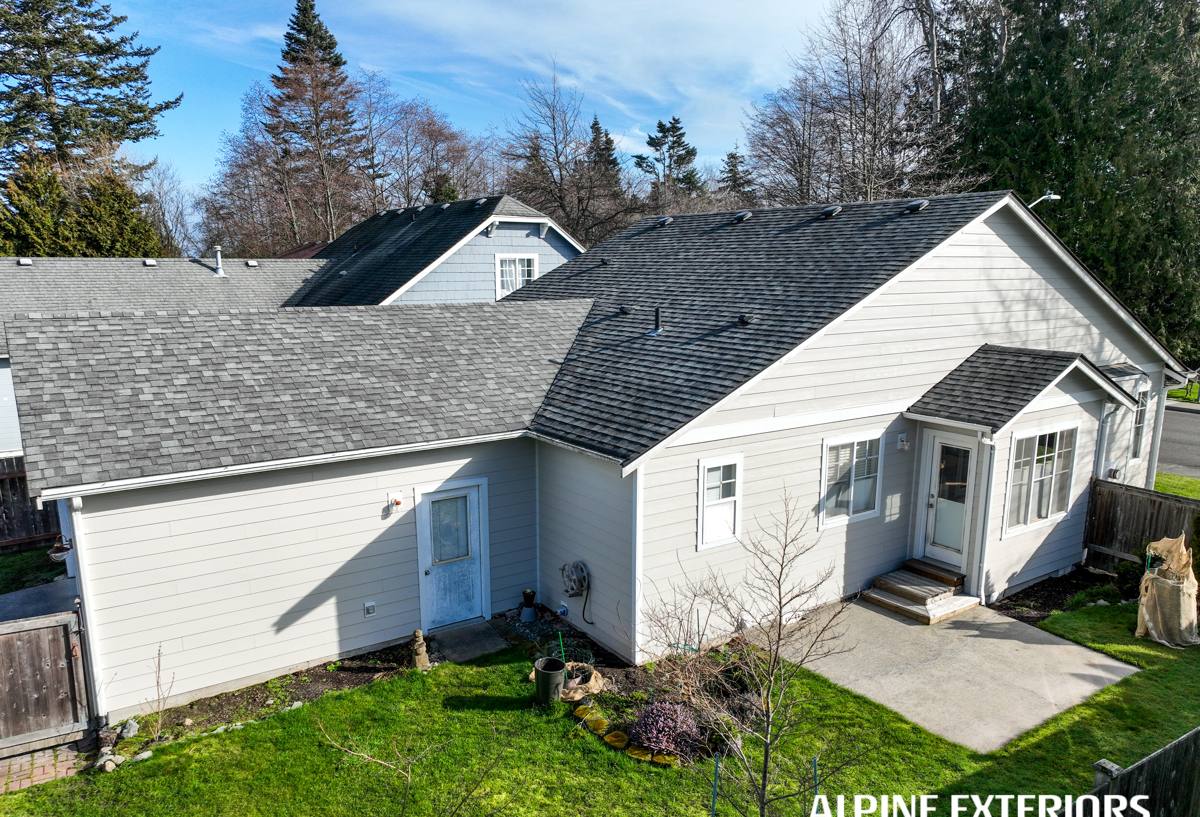
Moss doesn't show up because a roof is old or poorly built. It shows up because spores land on a damp, shaded surface and find enough moisture to take hold. Homes tucked under fir and cedar canopy — common around Deming — are prime real estate for it, especially on north-facing slopes and any section that sits in shadow for most of the day.
The problem isn't just cosmetic. As moss mats grow, they hold water against the roofing material far longer than open air ever would. On asphalt shingles, that constant moisture accelerates granule loss and can work its way under shingle edges. On any roof, moss and the debris it traps can back up water at seams, valleys, and flashing — the exact spots where leaks start. Left unchecked for years, a heavy moss load can shorten the usable life of an otherwise sound roof.
What Actually Helps
- Keeping overhanging branches trimmed back so more light and air reach the roof surface
- Physical moss removal by hand or soft-wash methods, not aggressive pressure washing that strips granules
- Zinc or copper control strips near the ridge, which release trace metals that discourage regrowth over time
- Clean, properly pitched gutters so water isn't sitting anywhere near the roof edge
Matching the Roofing Material to a Damp, Shaded Property
There's no single "best" roofing material for every home — it depends on the roof's exposure, the home's style, and the budget. For Deming properties specifically, moisture tolerance and moss resistance matter more than they would on a sunnier, more open lot.
| Material | How It Handles Moisture & Shade | General Lifespan |
|---|---|---|
| Asphalt composition shingle | Solid performer with proper ventilation; needs regular moss/debris removal on shaded slopes | 20–30 years |
| Metal (standing seam or panel) | Sheds water fast, very poor surface for moss to anchor to; performs well in heavy tree-cover areas | 40–60+ years |
| Cedar shake | Traditional look but naturally more moisture-absorbent; higher maintenance burden in shaded, damp settings | 20–30 years with diligent upkeep |
| Synthetic/composite shake or slate | Mimics natural materials without the same moisture uptake; consistent performance across shade conditions | 40–50 years |
We're upfront with homeowners about trade-offs. Cedar shake has a classic look many people want, but on a heavily shaded roof it demands more frequent cleaning and treatment to avoid moisture retention issues — that's a maintenance commitment, not a flaw in the product, and it's worth knowing before you choose it. Metal roofing has become a popular option for wooded Whatcom County lots precisely because its slick surface gives moss so little to grip.
It's Not Just the Roof — Siding, Windows, and Decks Take the Same Beating
A damp, shaded property doesn't stop testing your home at the roofline. Siding on the north and west sides of a Deming home often stays wetter longer, which is where you'll see the earliest signs of moss, algae staining, or paint failure. Wood and fiber-cement siding both need proper drainage planes and sealed joints to keep that moisture from working its way behind the surface.
Windows are the other common weak point. Older wood-frame windows in a shaded, humid setting are prone to seal failure and slow rot at the sill if flashing wasn't detailed correctly during the original install. Replacing failing windows with properly flashed, well-sealed units does more than improve comfort and energy bills — it closes off one of the most common paths water takes into a wall assembly.
Decks face their own version of the problem. Ground-level and partially shaded decks around Deming properties dry slowly, which is hard on both wood and the fasteners holding it together. Composite decking reduces some of that maintenance, but proper spacing, drainage, and ledger flashing matter regardless of the decking material you choose.
We work across all four of these — roofing, siding, windows, and decks — because on a property like this, they're rarely independent problems. Water intrusion at a window can show up as a stain on siding two feet away, and a moss-choked gutter can overflow straight onto a deck ledger. Looking at the whole exterior at once catches connections a single-trade inspection would miss.
Signs It's Time to Get a Closer Look
Most exterior problems in this climate start small and stay hidden for a while, especially under moss or behind siding. A few warning signs are worth acting on before they turn into interior damage:
- Visible moss or dark streaking on roof slopes, especially shaded sections
- Granules collecting in gutters or at downspout outlets
- Soft or discolored spots on fascia boards, siding, or deck ledger boards
- Windows that feel drafty, stick, or show soft wood at the sill
- Gutters overflowing during normal rain, not just heavy storms
- Any interior ceiling stain, even a faint one that seems to come and go
Any one of these on its own might be minor. A few of them together, especially on an older home, usually means it's worth having someone walk the property.
What a Full Exterior Assessment Covers
When we come out to a Deming property, we're not just glancing at the roof from the driveway. A proper assessment looks at the roofing material and flashing condition, attic ventilation and any signs of trapped moisture, gutter and downspout function, siding condition at grade and around penetrations, window seals and sill condition, and deck framing and ledger attachment where applicable. For a shaded, tree-heavy lot, we pay particular attention to which slopes and wall sections stay wet longest, since that's usually where problems develop first.
You get a plain-language rundown of what we find — what needs attention now, what's worth watching, and what's holding up fine. No pressure to turn a minor issue into a bigger job than it is.
Why Working With a Local Crew Matters Out Here
Deming isn't downtown Lynden, and it isn't Bellingham. It's a rural stretch of the county, and a crew that doesn't regularly work in the valley can underestimate how much the tree cover and drainage patterns here differ from a more open, in-town lot. We're based in Lynden and work throughout Whatcom County, which means we're familiar with how homes in this area actually age — where moss tends to build up first, which roof and siding materials hold up best under heavy shade, and what the local permitting and code requirements look like for roofing, siding, window, and deck work.
It also means we're not disappearing after the invoice clears. If a question comes up six months after a job — a new stain, a spot that looks different after the first big fall storm — you're calling a crew that's still local and still reachable, not chasing down a company that only worked this area for one season.
A Realistic Maintenance Rhythm for Deming Homes
Given the tree cover and rainfall here, most Deming properties do best with a maintenance schedule a bit more frequent than what you'd use on an open, sunny lot:
- Fall: Clear gutters and downspouts after leaf and needle drop, before the heavy winter rains start
- Winter: Watch for ice buildup at north-facing eaves and any interior signs of moisture after storms
- Spring: Check for moss growth after the wet season and address it before it mats down further
- Summer: Trim back branches encroaching on the roofline and inspect siding and deck surfaces while conditions are dry
Sticking to a rhythm like this catches small issues while they're still cheap and simple to fix, which is a lot less disruptive than dealing with a moisture problem that's had a full wet season to develop.
Let's Take a Look at Your Property
If you're noticing moss buildup, a slow leak, aging siding, or windows that aren't performing the way they used to, we're glad to come take a look. We'll give you a straightforward assessment and a free, no-pressure estimate — just fill out the form below to get started.