 Lynden Roofing
 What Kendall's Climate Does to a Home's Exterior
Kendall sits in the eastern reaches of Whatcom County, closer to the foothills than the coast, but it still gets the full weather package that defines this part of Washington: long stretches of rain from fall through spring, heavy cloud cover that keeps roofs and siding damp for days at a time, and the marine-influenced air that moves through the whole county and settles into low-lying, tree-shaded properties. Add in the tall conifers common around Kendall and you get shade, needle debris, and slower drying times than a home would see out in the open.
That combination is hard on a house in ways that aren't always obvious from the ground. Moss doesn't just look bad on a roof — it holds moisture against shingles and wood, and over a few seasons that moisture finds its way under flashing and into fascia boards. Siding that doesn't get a chance to dry out between rain events is more prone to swelling, paint failure, and rot at the bottom courses. Windows fog and stick when humidity stays high for weeks on end. None of this is unusual for the area — it's just what a long wet season does, and it's exactly what our services are built around.
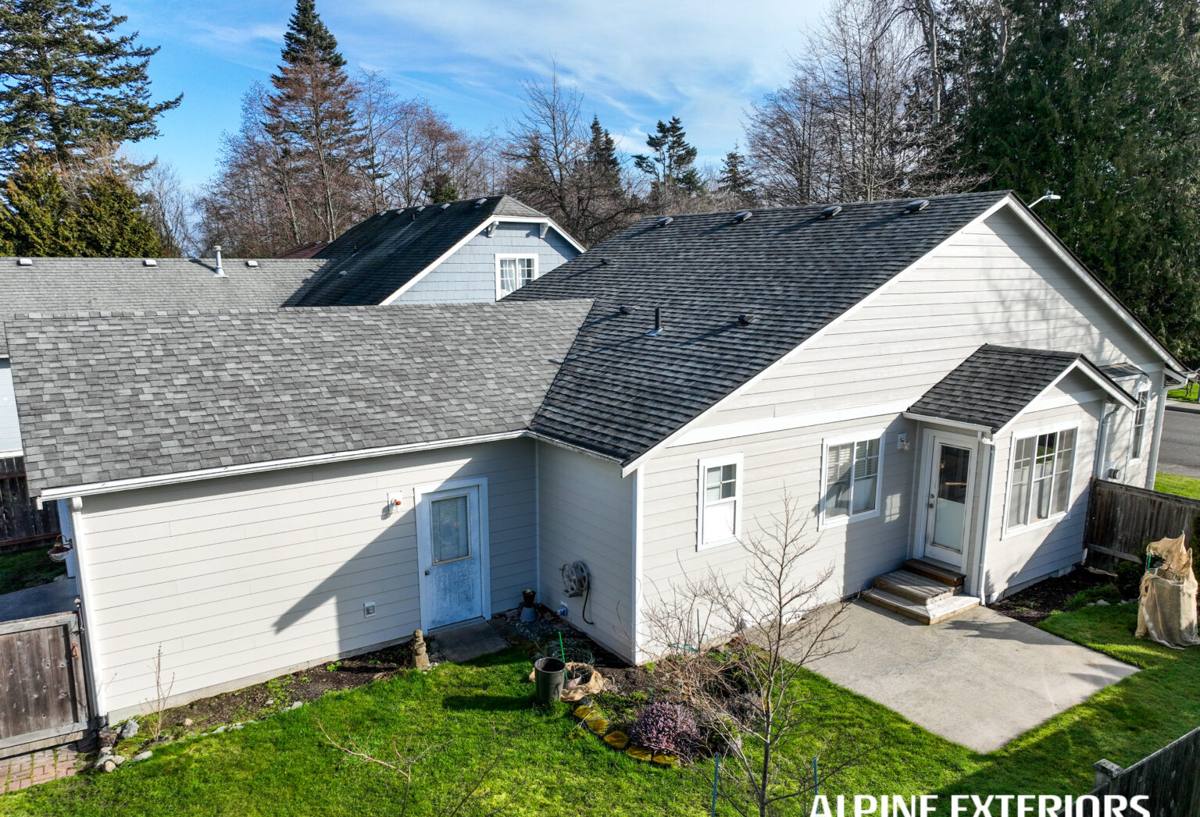
Roofing Services for Kendall Properties
Moss and Debris Management
Moss growth is one of the most common roofing complaints we hear from homeowners in and around Kendall, especially on north-facing slopes or roofs shaded by mature trees. We remove existing moss carefully — not with a pressure washer, which strips granules and shortens shingle life — and we look at the roof's ventilation and gutter system at the same time, since poor airflow and clogged gutters are usually what let moss take hold in the first place.
Materials That Handle Sustained Moisture
We install and repair asphalt composition shingles, metal roofing, and, where it fits the home, cedar. Each of these behaves differently under constant moisture exposure, and part of our job is being honest about that upfront rather than after the fact. Composition shingles rated for algae and moss resistance hold up well and are the most common choice we install locally. Metal sheds water and moss fastest but costs more upfront. Cedar shake has real character but needs more attention in a climate this wet — we'll walk through the maintenance expectations before you commit to it, not after.
Flashing and Ventilation
A huge share of the roof leaks we get called out for in Whatcom County trace back to flashing — around chimneys, skylights, valleys, and where a roof meets a wall — not failed shingles. We inspect and re-flash these areas as a matter of course on any roof replacement, and we check attic ventilation too, since a poorly vented attic traps moisture from inside the house and accelerates deck and shingle failure from underneath.
Siding That Stands Up to Year-Round Moisture
Siding in this climate has one job above all others: keep water moving away from the wall assembly instead of letting it sit. We install fiber cement, vinyl, and engineered wood siding, and for each one the installation details matter more than the product itself — proper flashing at windows and doors, correct overlap, ventilated rainscreen gaps where appropriate, and caulking only where it's actually needed rather than as a substitute for good flashing.
Fiber cement has become a common choice for homes in this area because it holds paint well and doesn't swell with repeated wetting, though it's heavier to install and needs a crew that knows how to handle it correctly at seams and corners. Vinyl remains a solid, lower-maintenance option for many budgets. Whatever the material, we pay close attention to the bottom few feet of any siding job — that's where splash-back from rain and irrigation does the most damage over time, and it's often the first place we find rot when we're called in to repair someone else's work.
Windows: Comfort, Condensation, and Efficiency
Older single-pane or early double-pane windows struggle in a climate with this much sustained humidity and temperature swing between a cold Kendall morning and a heated interior. Condensation between panes is usually a sign the seal has failed, not something a homeowner did wrong, and it's a good early indicator that a window is due for replacement rather than repair.
We install vinyl and fiberglass-framed windows with insulated, low-E glass suited to the Pacific Northwest's mix of cool wet winters and warmer summers. Beyond comfort and energy bills, correct window installation matters just as much for moisture control as roofing or siding does — a poorly flashed window opening is a common hidden source of wall rot, and it's one we check carefully on every install and every service call.
Decks Built for a Wet Season
A deck in this part of Washington spends a lot of the year wet, shaded, and slow to dry, which is exactly the environment that rots untreated wood and corrodes the wrong fasteners. We build and repair decks using pressure-treated framing, stainless or coated fasteners rated for ground and moisture contact, and decking materials — whether wood or composite — chosen with drainage and airflow underneath in mind, not just how they look on day one.
Composite decking has gotten popular locally because it doesn't need annual staining and resists the moisture that causes wood decks to gray, splinter, and eventually rot at the joists. Wood decking still has its place for homeowners who want that look and are willing to keep up with sealing on a regular schedule. Either way, the framing and ledger board connection — where the deck attaches to the house — is where we spend the most inspection time, since a failure there is a safety issue, not just a cosmetic one.
Comparing Roofing Materials for a Wet Climate
Homeowners weighing roofing options in Kendall usually ask the same underlying question: what's going to hold up best against moss, rain, and shade without costing more than it needs to. Here's how the main options generally compare for this climate.
| Material | Moss/Moisture Resistance | Typical Lifespan | Relative Upfront Cost |
|---|---|---|---|
| Asphalt composition (algae-resistant) | Good, especially with regular cleaning | 20–30 years | Lowest |
| Metal (standing seam or panel) | Excellent, sheds moss and water fastest | 40–60 years | Highest |
| Cedar shake | Fair, needs active maintenance in wet conditions | 20–30 years with upkeep | Mid-to-high |
These are general ranges, not promises — actual lifespan depends heavily on slope, shade, ventilation, and how consistently a roof gets cleaned and inspected. We'll give you a straight comparison for your specific roof rather than pushing one product across the board.
A Practical Seasonal Maintenance Checklist
Most of the exterior problems we get called out to fix started small and went unnoticed for a season or two. A short annual routine catches most of it early.
- Clear gutters and downspouts before the fall rains start, and again mid-winter if trees are nearby
- Look for moss or dark streaking on roof slopes, especially shaded north- and east-facing sections
- Check attic ventilation isn't blocked by insulation or debris
- Inspect caulking and flashing around windows and doors for cracking or gaps
- Look at deck ledger boards and support posts for soft spots or staining
- Check siding low to the ground for swelling, discoloration, or soft spots after winter
- Trim back tree limbs that keep sections of roof or siding shaded and slow to dry
Why a Local Crew Matters for Kendall Homes
Exterior work in this climate isn't one-size-fits-all, and it's not the same job it would be in a drier part of the state. A crew that works across Whatcom County regularly sees how shade, elevation, and tree cover on individual lots around Kendall change what a roof or siding job actually needs — where moss builds up fastest, which slopes stay wet longest, which details fail first. That's the kind of judgment that comes from doing this work locally and repeatedly, not from a general contractor passing through once.
It also matters for accountability. A local company is still around next season if something needs a second look, and we'd rather build a roof, siding job, or deck right the first time than get a callback a year later.
Getting Started
If you're noticing moss buildup, a window that fogs between the panes, siding that looks tired, or a deck that's due for an honest look, we're happy to come take a look and tell you straight what it needs — and what it doesn't. The estimate is free, there's no pressure attached to it, and you can use the form below to get in touch.