 Lynden Roofing
 Deck Replacement Built for Blaine's Coastal Climate
Blaine sits right on Semiahmoo Bay, which means homes here deal with a combination most inland Whatcom County towns don't see as often: salt-laden air off the water, wind-driven rain that gets pushed sideways under eaves and railings, and a long, damp moss season that can run from October well into April. A deck that's built or maintained the way you'd build one forty miles inland usually doesn't hold up the same way out here. Fasteners corrode faster, ledger connections stay wetter longer, and horizontal surfaces grow moss and algae faster than they would in a drier microclimate. If your deck is cupping, the boards are spongy underfoot, the railing posts wiggle, or you're re-staining every year just to keep ahead of the weather, it's usually not a maintenance problem anymore — it's a sign the structure or the materials underneath are losing the fight.
We're a Lynden-based crew that works Blaine regularly, so this isn't a one-off job for us. We know what a coastal Whatcom County deck goes through in a normal year, and we build and replace decks with that specific exposure in mind rather than treating every deck in the county the same.
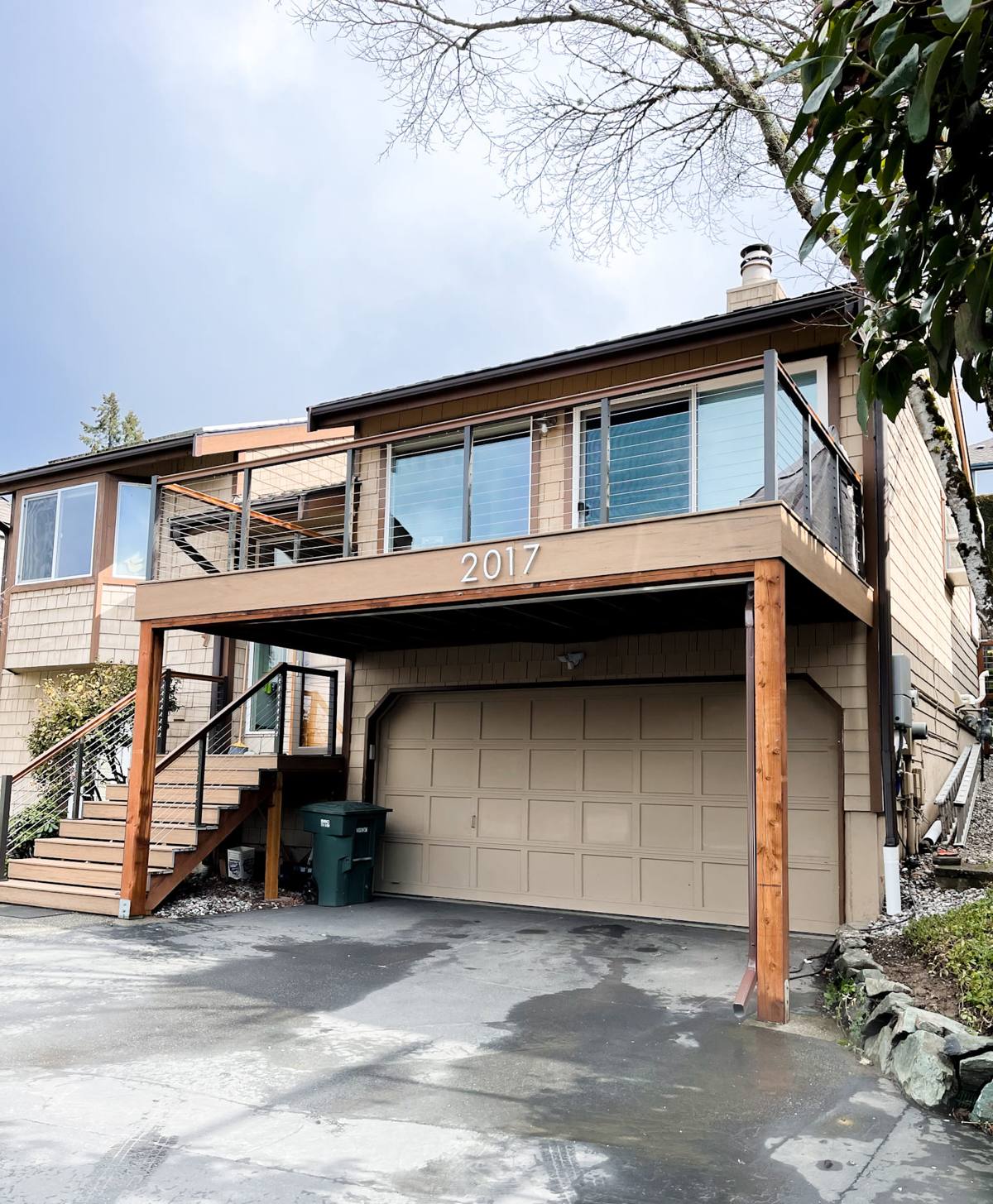
What Salt Air and Driving Rain Actually Do to a Deck
Fastener and Hardware Corrosion
Salt air accelerates corrosion on any exposed metal — nails, screws, joist hangers, post bases, and railing hardware. Standard electro-galvanized fasteners that might last a decade inland can start rusting and staining the wood around them in a fraction of that time near the water. Once a fastener starts to corrode, it loses holding strength long before the rust is visible from the top of the deck, which is part of why older Blaine decks sometimes look fine on the surface but are structurally weaker underneath than they appear.
Wind-Driven Rain and Water Intrusion
Rain that comes in sideways off the bay finds its way into places vertical-only rain never would — under railing caps, behind fascia boards, and especially at the ledger board where the deck attaches to the house. That ledger connection is one of the most common failure points on any deck, and it's also one of the most dangerous to get wrong, since it's what keeps the deck attached to the structure. In a driving-rain climate, flashing details at the ledger and around every post base matter more than they would in a calmer, drier location.
Extended Moss and Algae Season
Moss doesn't just look bad — it holds moisture against the deck surface, which speeds up rot in wood decking and can make composite and even some PVC surfaces slick and slippery. In Blaine, the moss season is long enough that a deck without adequate drainage, airflow underneath, and gap spacing between boards will stay damp for a large chunk of the year, even between rain events.
Signs Your Blaine Deck Needs Replacement, Not Just Repair
- Soft, spongy, or spring-feeling spots in the decking or framing underneath
- Visible rust streaks running from fasteners or hardware down the wood grain
- Railing posts or the ledger board that feel loose or move when pushed
- Persistent moss or algae growth that comes back within weeks of cleaning
- Gaps, cracking, or splitting boards that have gotten worse over the past year or two
- Visible daylight or gaps at the ledger flashing where the deck meets the house
- A deck older than 15–20 years that hasn't had major structural work done
Any one of these on its own might just call for a repair. Several of them together, especially anything involving the ledger board or the framing underneath, usually means it's time to talk about full replacement rather than patching around the problem.
What a Correct Deck Replacement Involves Here
Structural Framing First
Everything starts with the framing — joists, beams, posts, and footings sized correctly for the deck's actual load and span, not just matched to what was there before. In a wet, salt-air environment, we pay particular attention to joist hanger hardware and fastener selection, since this is the part of the deck that's hardest to inspect once it's covered by decking boards.
Ledger Board and Flashing
The ledger attachment is code-critical and it's the single most important water-management detail on the whole deck. Proper flashing — installed so water sheds away from the house rather than behind the ledger — is what keeps this connection from rotting out from the inside where you can't see it. This is not a place to cut corners in a climate that gets this much driving rain.
Decking Material Selection
Material choice matters more in Blaine than it does in drier parts of the state. We'll walk through the honest trade-offs between wood, composite, and PVC decking for your specific situation — budget, maintenance tolerance, and how close you are to the water — rather than pushing one product as a default.
Fasteners and Hardware
We use corrosion-resistant, coastal-rated fasteners and hardware appropriate for salt-air exposure. It costs a little more up front than standard hardware, but replacing rusted-out fasteners in five years costs a lot more than that.
Drainage and Airflow
Proper board spacing, ground clearance, and ventilation underneath the deck all help it dry out between rain events instead of staying damp, which is one of the biggest factors in how long the structure lasts through repeated moss seasons.
Comparing Decking Materials for Blaine's Climate
| Material | How It Handles Salt Air & Rain | Moss/Algae Resistance | Maintenance |
|---|---|---|---|
| Pressure-treated wood | Good if properly sealed and re-coated on schedule; framing lumber standard | Needs regular cleaning to stay ahead of moss | Highest — annual inspection, periodic staining/sealing |
| Cedar | Naturally moisture-resistant but still needs sealing near the water | Moderate; still benefits from periodic cleaning | Moderate to high |
| Composite decking | Very good; doesn't absorb water or rot | Better than wood, but caps can still get slick with algae if shaded | Low — occasional washing |
| PVC decking | Excellent; fully synthetic, no wood fiber to hold moisture | Best among common decking materials | Lowest — soap and water rinse |
Wood remains a reasonable, budget-friendly choice if you're committed to a regular maintenance schedule. Composite and PVC cost more up front but make sense for homeowners who want to spend less time maintaining a deck through a long wet season and are less concerned about matching a traditional wood look.
Cost Factors for a Blaine Deck Replacement
Every deck is different, so we don't quote firm numbers without seeing the site, but the main factors that move the price are consistent from job to job:
- Deck size and shape — multiple levels or angles cost more than a simple rectangle
- Height off the ground and whether stairs are involved
- Condition of the existing framing and whether it can be reused or needs full replacement
- Decking material selected — wood, composite, or PVC
- Railing style and material
- Ledger and flashing complexity, especially on older homes
- Permit requirements, which apply to most full deck replacements
We'll give you a clear, itemized estimate before any work starts, including material options at different price points, so you can decide what fits your budget without guessing.
Our Process for a Blaine Deck Replacement
- On-site assessment — We inspect the existing deck, framing, ledger connection, and footings to determine what's salvageable and what isn't.
- Material and design walkthrough — We go over decking, railing, and hardware options honestly, including trade-offs for your specific exposure and budget.
- Written estimate — A clear scope of work and price before anything is scheduled.
- Permitting — We handle the permit process required for most deck replacements in Whatcom County.
- Demolition and disposal — Old decking and framing removed and hauled off.
- Framing, flashing, and structural work — Built to code with attention to the ledger and water management details that matter most in this climate.
- Decking, railing, and finish work — Installed to manufacturer specs so warranties stay valid.
- Final walkthrough — We go over the finished deck with you before calling the job done.
Why a Crew That Already Works Blaine Matters
Deck replacement isn't a one-size-fits-all job, and a crew that mostly works drier, inland areas may not think twice about fastener grade, flashing details, or drainage the way a crew that regularly works Blaine's salt air and rain does. We're based in Lynden and cover this part of Whatcom County routinely, which means we've seen how decks built without those details in mind tend to fail — rusted hardware, rotted ledgers, moss-slick boards — and we build to avoid repeating those problems. That local familiarity also means fewer surprises during permitting and a better sense of what actually holds up here versus what looks fine on a spec sheet but struggles in this specific environment.
If your deck in Blaine is showing signs of wear, feeling unstable, or you're just tired of fighting moss every winter, we're happy to take a look and give you a straightforward, no-pressure estimate. There's no obligation — just an honest assessment of what your deck needs and what your options are, using the form below.