 Lynden Roofing
 Exterior Contractors Serving Ferndale, Washington
Ferndale sits close enough to the water and far enough into Whatcom County that its homes deal with a specific mix of weather stress: salt-laden air rolling in off the coast, long stretches of driving rain through fall and winter, and a moss season that can run most of the year on shaded roofs. We've built our roofing, siding, window, and deck work around that reality rather than treating every job like it's happening somewhere dry and inland. If you own a home in Ferndale, chances are your roof, siding, or deck is already showing signs of that climate whether you've noticed yet or not.
Lynden Roofing Co is based nearby in Lynden, which means our crews already know how Whatcom County weather behaves before we ever pull up to your driveway. That local footing matters more than it sounds like it should — it changes what materials we recommend, how we schedule around wet stretches, and how seriously we take details like flashing and ventilation that get skipped by contractors who don't work this ground regularly.
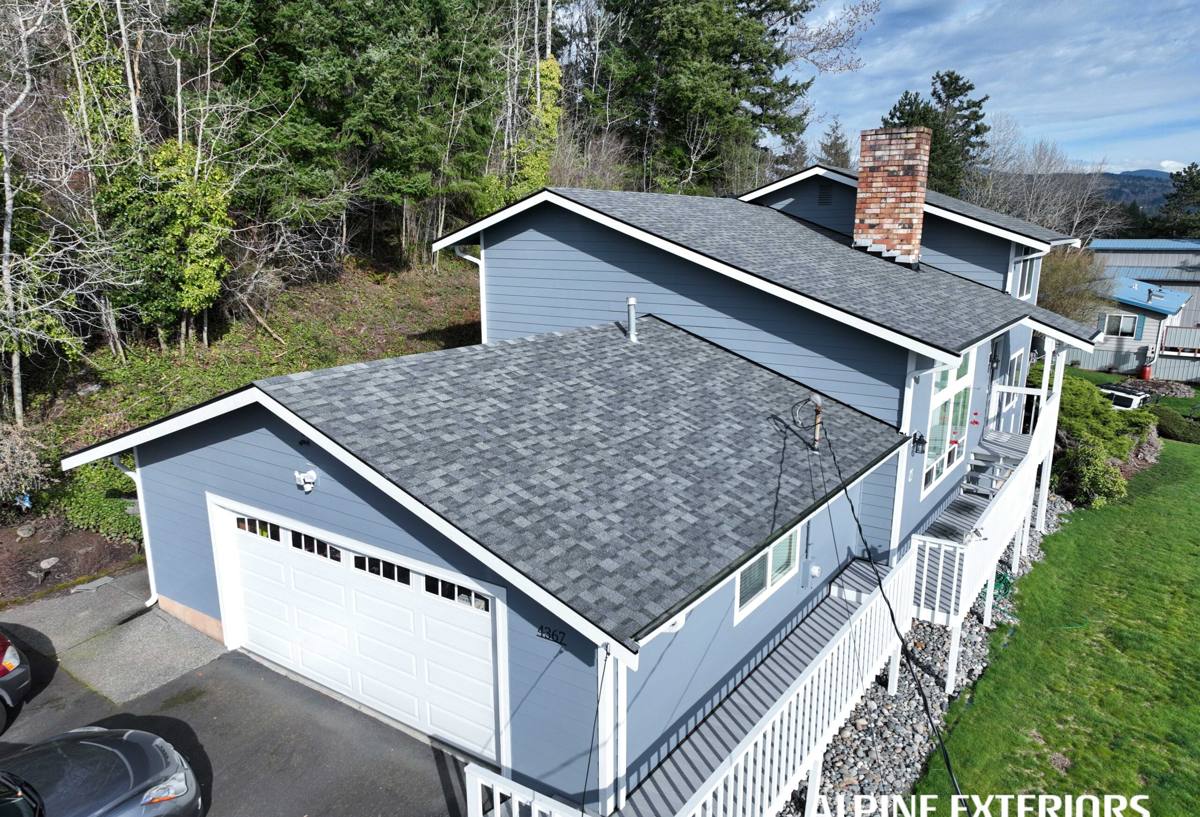
What Ferndale's Climate Does to a Home
Salt Air and Corrosion
Homes closer to the coast take on airborne salt that accelerates corrosion on exposed metal — roof flashing, fasteners, gutter hardware, and even some siding trim. It's a slow process, so it's easy to miss until a fastener starts bleeding rust or a flashing seam starts to fail. Choosing corrosion-resistant materials and fasteners up front saves a lot of grief later.
Driving Rain and Wind-Driven Moisture
Whatcom County doesn't just get rain — it gets rain pushed sideways by wind often enough that vertical surfaces take a beating too. That means siding laps, window flashing, and deck ledger connections all need to shed water correctly under real wind pressure, not just handle water falling straight down. Poorly lapped siding or under-flashed windows are common failure points we find on older homes in this area.
Moss, Algae, and Shade
Ferndale's tree cover and cloudy stretches keep roofs damp for long periods, which is exactly what moss and algae need to take hold. Moss doesn't just look bad — it holds moisture against shingles, works into laps and granule surfaces, and can shorten the useful life of a roof significantly if it's left unchecked for years.
Roofing in Ferndale
Most of our roofing calls in this area fall into a few categories: moss and organic growth cleanup, storm and wind damage repair, flashing repair around chimneys and valleys, and full roof replacement on homes reaching the end of their material's service life. We inspect the whole system, not just the shingles — decking condition, ventilation, flashing, and gutter tie-ins all affect how long a roof actually lasts here.
Ventilation Matters More Than People Think
Attic ventilation is one of the most overlooked factors in roof longevity in a climate like this. Poor airflow traps moisture under the deck, which speeds up rot and can void manufacturer warranties. When we're up on a roof for any reason, we check intake and exhaust venting as a matter of course.
| Roofing Material | Typical Lifespan Here | Trade-Offs in This Climate |
|---|---|---|
| Asphalt composition shingle | 20-30 years | Cost-effective, wide color range, needs periodic moss treatment |
| Metal roofing | 40-60 years | Sheds moss and moisture well, higher upfront cost, requires coastal-rated fasteners near salt air |
| Cedar shake | 20-30 years with upkeep | Classic look, higher maintenance burden in damp, shaded conditions |
| Flat/low-slope membrane | 15-25 years | Common on additions and porches, needs careful seam and drainage detailing |
Siding Built for Wet, Salt-Exposed Air
Siding on a Ferndale home has two jobs: keep water out and hold up under repeated wet-dry cycling without trapping moisture behind it. We see the most problems on homes where siding was installed without proper house wrap, flashing, or drainage gaps — moisture gets behind the siding and has nowhere to go, which leads to rot in the sheathing underneath long before the siding itself looks bad from the street.
Fiber Cement and Engineered Wood
Fiber cement holds up well against moisture and doesn't feed moss and algae growth the way some wood products can. Engineered wood siding has improved a lot over the years, but it still asks for consistent maintenance — caulking, paint, and prompt repair of any dings — to keep water from working into the panel edges. We'll walk you through the maintenance expectations of whatever material you're considering so there are no surprises five years in.
Why We're Selective About Certain Products
We don't install every siding product on the market, and that's a deliberate call rather than a limitation. Some materials are more sensitive to installation technique or demand a tighter maintenance schedule than most homeowners realistically keep up with in a climate this wet — when that's the case, we'll say so directly and explain the trade-off rather than push a product that's going to create callbacks down the line.
Windows: Sealing Out Wind-Driven Rain
Window failures in this area are rarely about the glass — they're about flashing and sealant. A window that isn't flashed correctly will let wind-driven rain track behind the frame and into the wall cavity, often for years before it shows up as a stain or soft spot inside. When we replace windows, proper flashing integration with the siding or house wrap is non-negotiable, regardless of how good the window unit itself is.
- Check caulking and sealant around frames every year, especially after a hard windstorm
- Look for soft or discolored drywall or trim below window sills — an early sign of a flashing leak
- Condensation between double-pane glass means the seal has failed and the unit needs replacing
- Older single-pane windows in this climate often cost more in heat loss and condensation issues than a replacement pays back
- Wood sills exposed to driving rain need paint or sealant maintained more often than sills under an overhang
Decks: Built to Handle Standing Moisture
A deck in Ferndale spends a lot of the year wet, and the ledger board — where the deck attaches to the house — is the single most important structural connection to get right. Improper ledger flashing is one of the most common deck failures we find, and it's almost always invisible until you go looking for it. We check ledger flashing, joist hanger corrosion, and post-base drainage as part of any deck inspection or repair.
Composite vs. Wood
Composite decking sheds moisture well and doesn't need staining, which appeals to a lot of homeowners dealing with this much rain. Wood decking costs less upfront and can look great, but it asks for more regular maintenance — cleaning, sealing, and moss removal — to get a comparable lifespan in a climate this damp.
What We Check on a Ferndale Home Inspection
- Roof flashing at chimneys, valleys, and any roof-to-wall transitions
- Moss and organic growth on north-facing or shaded roof slopes
- Gutter and downspout condition, including corrosion at fasteners and joints
- Siding laps and caulking, especially on walls facing prevailing wind and rain
- Window flashing integration with siding or house wrap
- Deck ledger flashing and post-base drainage
- Attic ventilation and any signs of trapped moisture under the roof deck
Why a Local Crew Matters Here
A contractor who doesn't work Whatcom County regularly can still do competent work, but they're guessing at things a local crew already knows — which slopes hold moss longest, how far wind-driven rain actually travels up a wall, which fastener grades hold up against salt air over a decade instead of a season. Being based in Lynden means we're not learning this county's weather on your roof. It also means when you call about a leak during a wet stretch, you're not waiting on a crew driving in from out of the area.
Maintenance Timing in a Wet Climate
Most exterior maintenance around here goes better scheduled during the drier months — late spring through early fall — but repairs like active leaks, storm damage, or a failing seal don't wait for good weather, and we don't either. Moss treatment and gutter cleaning are worth doing on a regular schedule rather than only after you notice a problem, since moss damage in particular is much cheaper to prevent than to reverse.
If you're dealing with a roof that's holding moss, siding that's showing wear, windows that feel drafty, or a deck that needs a closer look, we're happy to come take a look. Reach out for a free, no-pressure estimate using the form below.