 Lynden Roofing
 Asphalt Shingle Roofing Built for Blaine's Coastal Exposure
Blaine sits right on the water in northern Whatcom County, close enough to the Salish Sea that salt-laden air is part of daily life for every roof in town. Add the driving rain that blows in off the water during fall and winter storms, plus a moss season that can stretch from October well into spring, and you have a climate that is genuinely harder on a roof than the drier inland communities just a few miles away. An asphalt shingle roof can absolutely handle these conditions, but only when it is specified and installed with this exposure in mind. A roof built to a generic standard will show its age here faster than the same roof would in Lynden or Everson.
This page is specifically about asphalt shingle roofing for homes in Blaine. We work throughout Whatcom County, but Blaine's combination of salt air, wind-driven rain, and shaded, moisture-holding roof slopes deserves its own conversation.
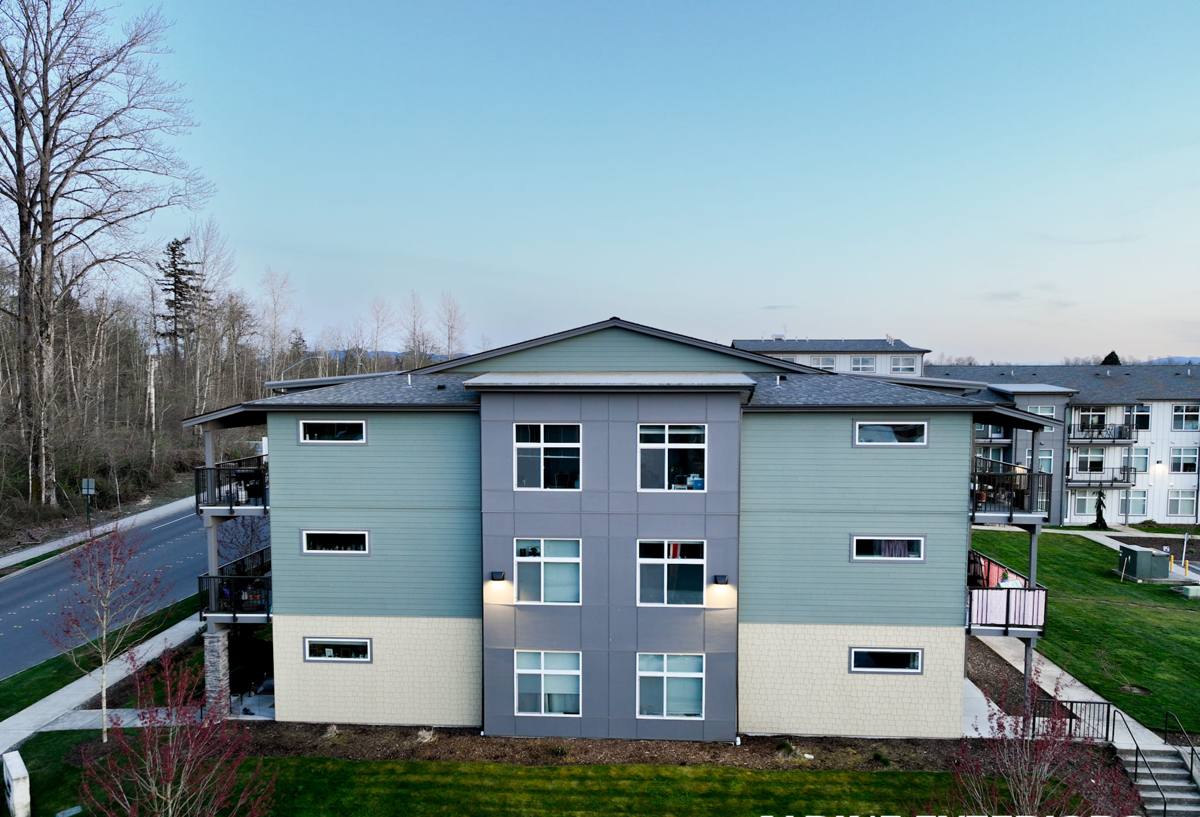
What Blaine's Climate Actually Does to a Shingle Roof
Salt Air and Metal Components
Shingles themselves are fairly inert to salt exposure, but the metal parts of your roofing system are not. Flashing, fasteners, and drip edge that aren't rated for coastal exposure can corrode years ahead of schedule. Once flashing starts to rust and pit, it stops shedding water properly at the seams it was installed to protect, which is exactly where leaks start.
Driving Rain
Wind-driven rain off the water doesn't just fall straight down onto a roof; it gets pushed sideways and upward under shingle edges, into valleys, and around penetrations like vents and chimneys. A roof that would be fine in calmer conditions can leak in Blaine if the underlayment, valley work, and flashing details weren't built for wind-driven moisture in the first place.
A Long Moss Season
Shaded, north-facing slopes and roofs under tree cover stay damp for long stretches through the fall, winter, and spring. That's exactly what moss needs to establish. Left alone, moss mats hold moisture against the shingle surface, lift the shingle edges, and accelerate granule loss — all of which shortens the life of the roof.
What a Correctly Built Shingle Roof Needs Here
A shingle roof isn't just shingles nailed to a deck. In a climate like Blaine's, the details underneath and around the shingles matter as much as the shingle itself.
- Quality synthetic underlayment across the full roof, not just felt paper, for a real secondary barrier against wind-driven rain.
- Ice-and-water membrane at eaves, valleys, and around penetrations, where wind-driven moisture is most likely to find a way in.
- Corrosion-resistant flashing and fasteners at valleys, chimneys, sidewalls, and any roof-to-wall transitions exposed to salt air.
- Balanced ventilation — enough intake at the eaves and exhaust at the ridge to keep the attic and roof deck dry from underneath, not just the outside dry from above.
- Shingles with algae-resistant granules, since moisture and shade are already working against you here.
- A nailing pattern and fastener count matched to local wind exposure, not just the manufacturer's minimum.
Choosing the Right Shingle for This Exposure
Not every asphalt shingle product is a good fit for a coastal, moss-prone roof. The three general tiers of asphalt shingle differ in how well they hold up here, and the difference matters more in Blaine than it would on a drier, more sheltered lot.
| Shingle Type | Wind Performance | Moss/Algae Resistance | Best Fit For |
|---|---|---|---|
| 3-tab | Lower wind rating, lighter profile | Depends on granule package; often basic | Budget-driven projects, secondary structures |
| Architectural (dimensional) | Higher wind rating, heavier and more layered | Widely available with algae-resistant granules | Most Blaine homes — the standard we recommend |
| Premium/designer | High wind rating, heaviest profile | Algae-resistant granules standard on most lines | Homes prioritizing curb appeal and longest expected service life |
For most homes in Blaine, we steer people toward architectural shingles as the baseline. They cost more than 3-tab up front, but the heavier profile and better wind rating are worth it on a lot exposed to water-driven wind, and the improved algae resistance directly addresses the moss problem.
A Note on Product Choice
We install a limited range of shingle lines rather than whatever a homeowner saw advertised. That's not about brand loyalty — it's because some lower-tier or unusual profiles are more sensitive to installation technique, have thinner warranty coverage, or simply don't hold up as well under sustained moisture exposure. We'll walk you through the specific options we install and why, so you understand the trade-offs before you decide.
Our Asphalt Shingle Roofing Process in Blaine
- Inspection and measurement. We look at the existing roof, the deck condition, ventilation setup, and any problem areas specific to your lot — shade patterns, prevailing wind exposure, and drainage.
- Tear-off and deck check. Old roofing comes off completely so we can inspect the decking underneath. Any soft, rotted, or delaminated sheathing gets replaced before anything new goes down.
- Underlayment and ice-and-water barrier. Synthetic underlayment goes down across the field, with ice-and-water membrane at eaves, valleys, and penetrations.
- Flashing. New flashing at valleys, chimneys, skylights, and sidewalls, using corrosion-resistant materials appropriate for salt-air exposure.
- Shingle installation. Shingles are installed with a nailing pattern and fastener count matched to wind exposure, not just the bare manufacturer minimum.
- Ridge and intake ventilation. We confirm or correct the balance between intake and exhaust ventilation so moisture doesn't get trapped under the new roof.
- Cleanup and magnetic sweep. Job site debris and stray nails are cleared from the yard and driveway before we consider the job finished.
- Final walkthrough. We go over the finished roof with you, point out anything worth knowing, and answer questions before we leave.
Ventilation, Moisture, and the Moss Problem
Moss doesn't grow because a shingle is defective — it grows because a roof surface stays damp long enough for it to take hold. In Blaine, shaded slopes and tree-covered lots create exactly that condition for much of the year. Two things reduce moss pressure over the life of the roof: shingles with algae-resistant granules, and balanced attic ventilation that keeps the roof deck itself from staying cold and damp from underneath, which can make surface moisture linger even longer.
Ventilation is also just good practice independent of moss. An attic that can't breathe properly traps humidity, which shortens the life of the decking, the insulation, and the shingles themselves — regardless of how well the shingles were installed on top.
Signs Your Blaine Roof Needs Attention
Because of the combination of salt exposure, driving rain, and moss, roofs here tend to show wear in a fairly consistent set of places. Worth checking for:
- Granules collecting in gutters or at the base of downspouts
- Shingles that are curling, cupping, or lifting at the edges
- Visible moss mats, especially on north-facing or shaded slopes
- Rust streaks running down from flashing or metal valleys
- Soft or spongy spots when walking the roof or attic decking
- Daylight visible through the roof deck from inside the attic
- Missing or torn shingles after a windstorm
- Water stains on interior ceilings near exterior walls or valleys
Any one of these is worth a look before it turns into a deck-level repair instead of a shingle-level one.
What Affects the Cost of a Shingle Roof in Blaine
Every roof is different, so we won't put a number on the page that doesn't apply to your house. What we can tell you is which factors move the price up or down, so an estimate makes sense when you get one.
| Factor | Why It Matters | Typical Cost Impact |
|---|---|---|
| Roof size and pitch | More surface area and steeper slopes take more time and material | Medium to high |
| Layers of existing roofing | Multiple old layers require full tear-off before new work can begin | Medium |
| Decking condition | Rotted or soft sheathing found during tear-off needs replacement | Variable, depends on extent |
| Shingle tier chosen | 3-tab, architectural, and premium lines carry different material costs | Medium to high |
| Ventilation upgrades | Adding or correcting intake/exhaust ventilation | Low to medium |
| Site access and staging | Tree cover, tight lots, or waterfront access can slow setup and cleanup | Low to medium |
We walk every roof and give you a real number based on your specific house, not a generic square-footage formula.
Why a Crew That Already Works in Blaine Matters
A contractor who mostly works drier, inland jobs can still install a technically correct roof, but they won't necessarily know which slopes in a coastal Whatcom County town hold moss the longest, how much wind-driven rain a given roof orientation actually takes in a winter storm, or which flashing and fastener choices hold up under sustained salt exposure instead of just meeting code minimums. We work this area regularly, which means we're not guessing at any of that — we're applying what we've already seen work on roofs like yours.
That familiarity also shows up in smaller ways: knowing what local permitting expects, being realistic about scheduling around this region's wetter months, and being available if a storm turns up an issue after the fact.
Caring for Your Shingle Roof After Installation
A well-installed shingle roof in Blaine still benefits from a little routine attention:
- Keep gutters and downspouts clear so water isn't backing up under the eaves
- Check shaded and north-facing slopes for early moss growth once or twice a year
- Have the roof looked at after any unusually severe windstorm
- Trim back overhanging branches that keep a slope shaded and damp
None of this replaces a properly built roof, but it does help you get the full service life out of one.
If you're weighing options for a Blaine roof, we're happy to take a look and give you a straightforward, no-pressure estimate — just fill out the form below and we'll get in touch.