 Lynden Roofing
 Roofing and Exterior Work Built for Birch Bay's Coastal Conditions
Birch Bay sits right on the water, and that changes how a roof and exterior age compared to homes further inland in Whatcom County. Salt-laden air, near-constant onshore moisture, and long stretches of shade from mature evergreens combine to put extra stress on shingles, flashing, siding, and trim. We work on homes throughout the Lynden and Whatcom County area, and Birch Bay properties consistently show a specific pattern of wear: faster moss colonization, earlier fastener corrosion, and more paint and caulk failure around windows and doors than we see on comparable homes ten or fifteen miles inland.
None of that means a home near the bay is doomed to constant repairs. It means the roofing, siding, window, and deck choices matter more here, and routine maintenance pays off faster than in a drier microclimate. This page covers what we actually see on Birch Bay homes, how we approach repairs and replacements for this environment, and what a homeowner can do between service visits to protect the investment.
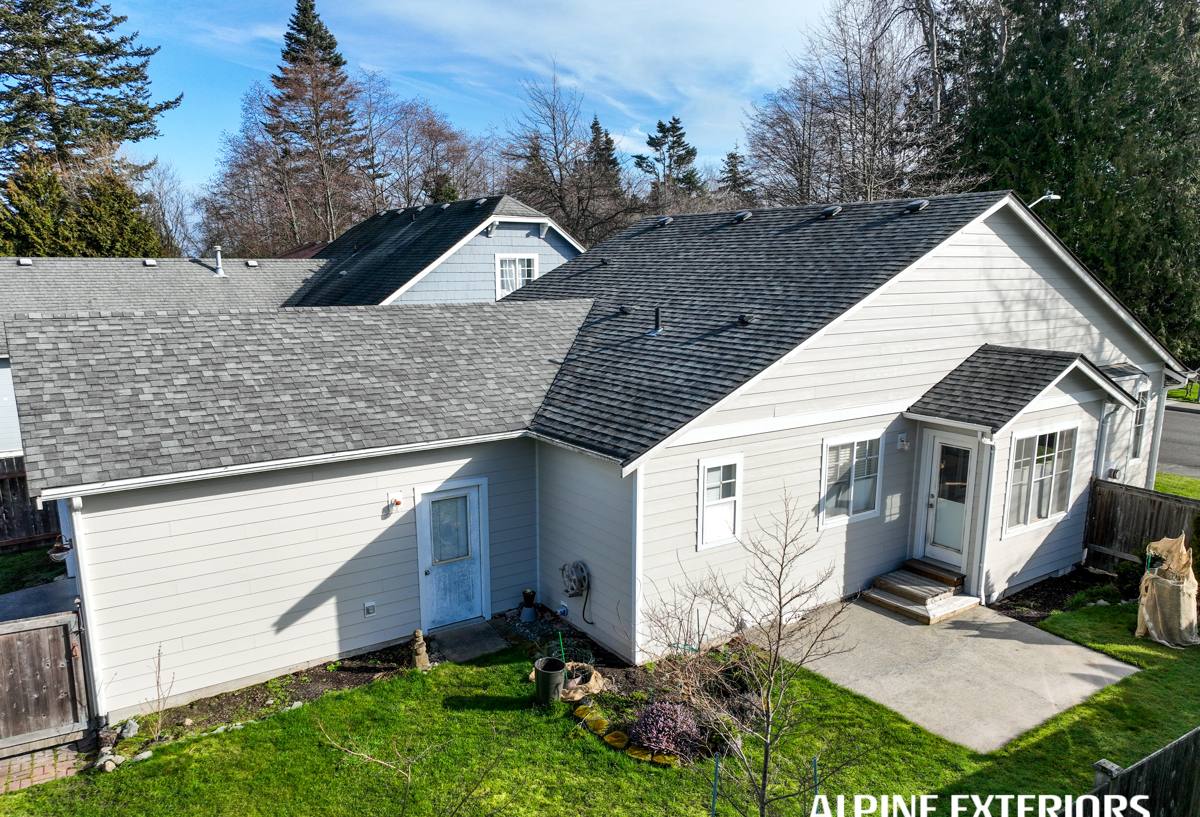
What Salt Air and Coastal Weather Actually Do to a Roof
Fastener and Flashing Corrosion
Airborne salt is corrosive to exposed metal, and a roof has a lot of small metal components: nail heads, flashing at valleys and chimneys, drip edge, and vent stacks. Standard electro-galvanized fasteners and lighter-gauge flashing can start showing rust streaks and pitting years before they would on a home away from the water. Once flashing corrodes at the seams, water finds its way underneath even if the shingles above look fine. This is one of the most common causes of a "mystery leak" we get called out for near the bay — the shingles are intact, but the metal underneath has failed.
Moss, Algae, and Trapped Moisture
Whatcom County gets moss on roofs generally, but the combination of coastal humidity, shade from tree cover, and north-facing slopes near Birch Bay accelerates it. Moss isn't just cosmetic — it lifts shingle edges as it grows, holds moisture against the roof deck, and creates channels for wind-driven rain to work its way under the shingle line during storms. Left unchecked over a few seasons, moss growth shortens the usable life of a roof significantly, regardless of the shingle brand or warranty.
Driving Rain and Wind Exposure
Storms coming off the water tend to push rain sideways rather than straight down, which stresses roof penetrations, siding laps, and window flashing differently than a typical downpour. Roofing and siding details that work fine on a sheltered inland lot — looser flashing laps, minimal sealant at penetrations — aren't good enough for a home exposed to that kind of wind-driven weather.
Roofing Services for Birch Bay Homes
We handle both targeted repair and full replacement, and for coastal properties we lean toward corrosion-resistant materials as a default rather than an upsell.
Roof Repair
Common repair calls near the bay include: corroded or lifted flashing at valleys and chimneys, moss-related shingle damage, granule loss on older asphalt roofs from constant moisture cycling, and leaks around vent boots where rubber seals have degraded faster than expected. We diagnose from the attic side when possible, since a leak's entry point on the roof surface is often several feet from where it shows up as a stain inside.
Roof Replacement
When a roof is past the point where repair makes sense, we walk through material options with an honest look at how each performs in a salt-air, high-moisture environment — not just upfront cost. That includes fastener and flashing specification, not only the shingle or panel itself, since the metal components are often the first thing to fail here.
Siding That Holds Up Near the Water
Siding on Birch Bay homes takes on moisture from two directions: driving rain from storms and persistent ambient humidity that keeps surfaces damp longer between dry spells. That combination is hard on materials that depend on paint film integrity to stay protected, and it's part of why we steer many coastal clients toward fiber cement or well-detailed vinyl over materials that need frequent repainting to keep moisture out. The bigger factor in siding longevity here, though, is installation detail — proper house wrap, correctly lapped flashing at windows and doors, and adequate clearance at grade so splash-back moisture doesn't sit against the bottom courses. We treat those details as non-negotiable on any coastal job, since a good siding material installed with sloppy flashing will still fail early in this climate.
Windows and Doors: Sealing Out Wind-Driven Rain
Window and door leaks in Birch Bay are rarely about the window unit itself failing — it's almost always the flashing and sealant around the opening breaking down under repeated wind-driven rain. We see this most on west- and south-facing exposures that catch the brunt of storms off the water. When we replace windows or doors, we pay particular attention to head flashing and sill pan details, since those are what actually keep water out during a sideways rain event, not just the caulk bead around the trim. For homeowners not ready for a full window replacement, resealing and re-flashing an existing window is often a reasonable interim step if the sash and frame are still sound.
Decks in a Marine Environment
Outdoor living space is part of why people live in Birch Bay, and decks there face accelerated wear from the same salt air and moisture that affects roofing and siding. Fastener corrosion shows up faster on deck hardware than almost anywhere else on the house, since it's horizontal, exposed, and holds standing moisture after rain. Wood decking also tends to hold moss and algae on the north and shaded sides, which makes the surface slicker and speeds up rot at board edges and joints. We build and repair decks with corrosion-resistant fasteners and connectors as standard near the water, and we're upfront about the maintenance cadence different decking materials actually require in this environment rather than what a product label promises in ideal conditions.
Comparing Roofing Materials for Coastal Exposure
| Material | Typical Lifespan Here | Coastal Considerations | Maintenance Needs |
|---|---|---|---|
| Asphalt composition shingle | 18-25 years | Reliable and cost-effective; granule loss can accelerate with constant moisture | Periodic moss removal, flashing inspection |
| Metal roofing (coated steel) | 40+ years | Sheds moisture well; coating quality matters more near salt air | Low; occasional fastener and seam check |
| Cedar shake | 20-30 years with upkeep | Natural material handles moisture cycling well if maintained; needs airflow to resist rot | Higher; regular cleaning and treatment |
There's no single "right" material for every home — budget, roof pitch, shade exposure, and how the home is used all factor in. What matters most is matching the material to how much upkeep a homeowner realistically wants to do, and making sure the installation details account for the coastal exposure regardless of which material is chosen.
Why a Local Whatcom County Crew Matters Here
A roofing or siding crew that mostly works inland doesn't always think about salt-air corrosion or moss cycles the way a crew that regularly services Birch Bay does. We're based in Lynden and work this county routinely, so we're familiar with how homes near the bay actually age — which north-facing roof slopes moss out first, which siding details tend to fail near the water, and what a realistic maintenance schedule looks like for a home in this specific microclimate. That local pattern recognition shapes the material and installation recommendations we give, rather than applying a generic approach that works fine in a drier part of the state but underperforms here.
Maintenance Checklist for Birch Bay Homeowners
- Have moss removed from the roof before it thickens — thin growth is a simple treatment, heavy growth risks shingle damage during removal
- Check attic ventilation periodically; poor airflow traps moisture and speeds up deck rot and mold growth from the inside
- Inspect flashing at chimneys, valleys, and roof-to-wall transitions annually for rust or lifted seams
- Look at caulk and sealant around windows and doors each fall before storm season, especially on west- and south-facing walls
- Rinse salt residue and debris off deck surfaces and railings periodically to slow corrosion of fasteners and connectors
- Keep gutters clear so water isn't backing up under the roof edge during heavy, wind-driven rain
If you're seeing moss buildup, a leak that comes and goes with storm direction, or siding and trim that seem to be aging faster than you'd expect, we're happy to take a look. We offer free, no-pressure estimates for roofing, siding, window, and deck work throughout Birch Bay and the surrounding Whatcom County area — use the form below to get started.