 Lynden Roofing
 Blaine's Coastal Climate Is Hard on Decks
Blaine sits right on the water at the top of Whatcom County, and that location shapes what happens to a deck over time. Salt-laden air off Semiahmoo Bay and the Strait of Georgia accelerates corrosion on anything metal — fasteners, joist hangers, railing hardware — long before the wood itself gives out. Add in the region's driving rain, which comes in sideways during winter storms and finds its way into every gap and seam, and you have a structure that's fighting moisture intrusion nearly year-round. Then there's moss. Blaine's long, wet, mild winters give moss and algae months to establish themselves on any deck surface that doesn't get regular sun and airflow, and once established, moss holds moisture against the wood like a wet sponge.
None of this means a deck in Blaine is doomed — it means a deck here needs to be built and repaired with those three factors in mind from the start. A repair that would hold up fine in a drier inland climate can fail within a season or two on a bayfront or near-water property in Blaine if it doesn't account for salt exposure and sustained moisture. That's the difference between a generic patch job and a repair that's actually right for this town.
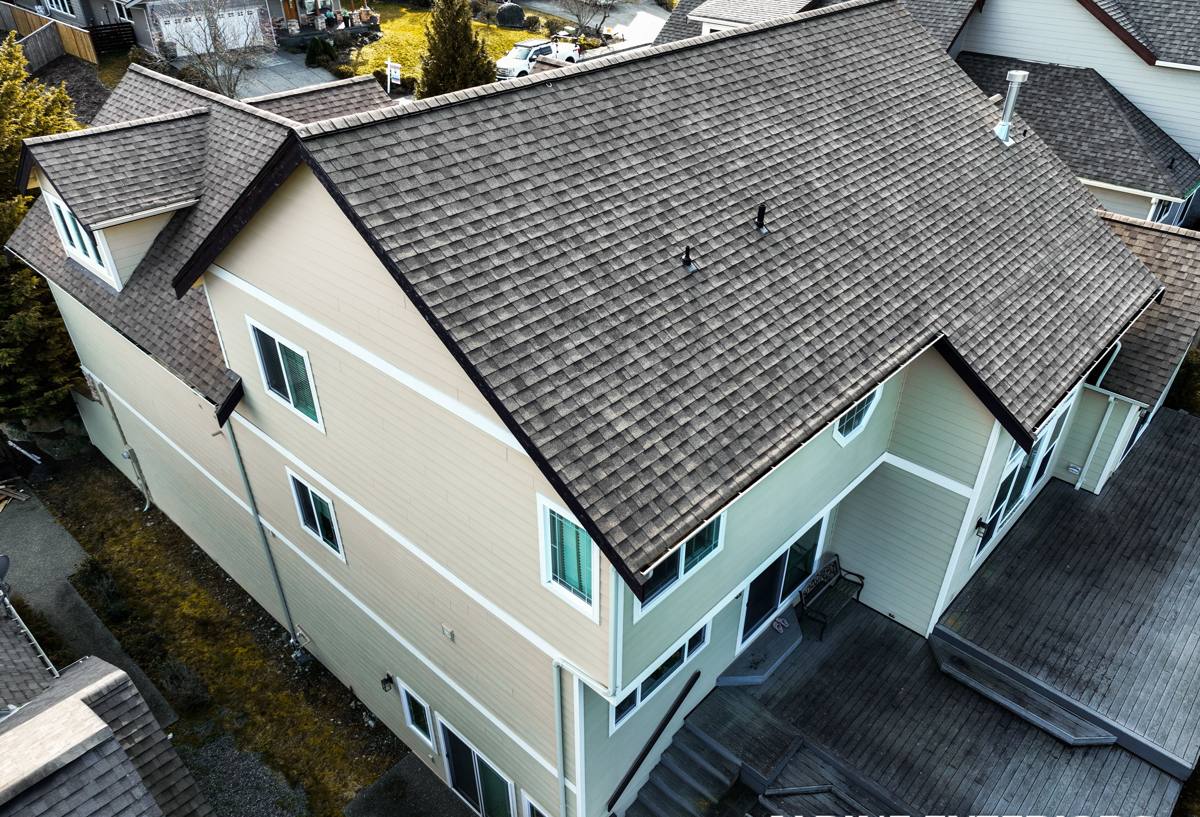
Signs Your Deck Needs Repair — Not Just a New Coat of Stain
Homeowners often catch deck problems late because the surface can look fine while the structure underneath is failing. Here's what we tell Blaine homeowners to check for before assuming a deck just needs cosmetic attention:
- Soft, spongy, or bouncy spots when you walk across the deck
- Boards that feel damp or stay dark/discolored long after rain has stopped
- Visible rust streaks below fastener heads or around joist hangers
- Gaps or separation where the deck's ledger board meets the house
- Wobble or movement in railings or posts when you push on them
- Persistent moss or green-black growth that comes back within weeks of cleaning
- Cracks running with the grain near fastener holes (a sign of splitting, not just weathering)
- Stair stringers that flex or steps that feel uneven underfoot
Any one of these on its own might be minor. Several together, especially near the ledger connection or support posts, usually mean there's structural work involved — not just replacing a board or two.
What a Correct Deck Repair Actually Involves
Structural Framing and the Ledger Connection
The ledger board — where the deck attaches to the house — is the single most important connection on the whole structure, and it's also the spot most exposed to trapped moisture if it wasn't flashed correctly to begin with. A proper repair means pulling back decking near the house, checking the ledger and the rim joist behind it for rot, confirming there's flashing directing water away from the wall rather than behind it, and replacing any compromised lumber rather than just resealing over it. We also check joist hangers and structural fasteners for corrosion, since salt air can weaken galvanized hardware faster than it visibly rusts.
Decking Boards and Fasteners
Board-level repair isn't just swapping bad wood for new wood. Fastener choice matters as much as the board itself — a corrosion-resistant deck board reattached with the wrong screws will still fail early near the water. We match fasteners to the decking material and the site's exposure, and we make sure new boards are spaced and gapped properly so water sheds instead of pooling, which also cuts down on the moss growth that's so persistent here.
Railings, Stairs, and Guardrails
Railings and stair stringers take a lot of stress and are often the first thing to loosen because their connection points are smaller and more exposed than the deck field itself. We check post connections, baluster spacing, and guardrail height against current code requirements during any repair, since older decks were sometimes built to standards that have since changed.
Materials That Actually Hold Up Near the Water
Material choice for a repair matters more in Blaine than it would a few miles inland. Here's how the common options compare for coastal exposure:
| Material | Moisture/Salt Behavior | Maintenance Needs | General Cost Range |
|---|---|---|---|
| Pressure-treated fir/hem-fir | Resists rot with treatment, but end cuts and fastener holes need sealing or they become entry points | Annual cleaning and re-sealing recommended in this climate | Lower upfront cost |
| Cedar | Naturally rot- and insect-resistant, but softer and more prone to surface wear from driving rain | Periodic cleaning and oiling to maintain appearance and water resistance | Mid-range |
| Composite decking | Doesn't absorb moisture the way wood does, which limits rot risk in framing-adjacent boards | Occasional washing to prevent surface algae/moss buildup; no sealing or staining | Higher upfront cost, lower ongoing maintenance |
We don't push one material over another as a blanket rule — the right call depends on how exposed the deck is to wind-driven rain and salt spray, how much upkeep the homeowner wants to do, and what's being repaired versus rebuilt. What we do insist on, regardless of decking material, is corrosion-resistant fasteners and hardware and proper flashing at the ledger. Those two things affect the structure's lifespan more than the decking surface does.
Our Deck Repair Process
- On-site assessment. We inspect the full structure — decking, framing, ledger, posts, and railings — not just the area the homeowner flagged, since related damage often hides nearby.
- Honest scope discussion. We walk through what's failing, what's still sound, and what the repair will and won't fix, so there are no surprises once work starts.
- Structural repair first. Any compromised framing, ledger connections, or posts get addressed before cosmetic work, since surface repairs on a weak structure don't hold.
- Board and hardware replacement. Damaged boards, railings, and corroded fasteners are replaced with materials suited to the deck's exposure.
- Final check and cleanup. We confirm the repair is solid underfoot, railings are secure, and the site is left clean.
Common Repair Scenarios We See Around Blaine
A few patterns show up repeatedly on decks in this area, and recognizing them early can save a homeowner from a bigger repair down the line:
- Rot concentrated right where the deck meets the house, from years of water working behind inadequate or missing flashing
- Rusted-through fastener heads on decks that face open water or prevailing wind, even when the boards themselves look fine
- Persistent moss on the shaded, north-facing side of a deck that never fully dries between rain events
- Post bases that have rotted at ground contact, especially on older decks set directly in soil or concrete without a moisture break
- Stair stringers that have weakened from repeated wetting and drying cycles at the base
Repair vs. Replace: How We Help You Decide
Not every deck problem calls for a full rebuild, and not every deck is worth patching indefinitely either. Generally, if the structural framing — posts, beams, and the ledger connection — is sound and the damage is limited to decking boards, railings, or isolated hardware, a repair makes sense and can extend the deck's usable life significantly. If rot has spread through multiple framing members, if the ledger connection itself is compromised, or if the deck was undersized or under-built for current use, replacement is usually the more honest recommendation, even if it's the less convenient answer. We'll tell you plainly which category your deck falls into and why, rather than defaulting to the option that's easier for us to sell.
Why Hiring a Crew That Already Works in Blaine Matters
Deck repair done right in Blaine looks different from a deck repair anywhere inland, simply because the failure points are different. A crew that mostly works drier, inland conditions may not think twice about fastener corrosion or moss-driven moisture retention — problems that show up here specifically because of the marine climate and Whatcom County's wet winter stretch. Working regularly on decks in and around Blaine means we recognize these patterns quickly, know which materials and fasteners actually hold up in this exposure, and don't have to relearn coastal conditions on your project. That familiarity translates into repairs that are diagnosed correctly the first time, instead of surface fixes that need to be redone once the underlying moisture or corrosion issue resurfaces.
Get a Straightforward Look at Your Deck
If your deck in Blaine is showing soft spots, corrosion, persistent moss, or just doesn't feel as solid as it used to, we're happy to come take a look and give you a clear, no-pressure assessment of what's going on and what it would take to fix it. Use the form below to request a free estimate.