 Lynden Roofing
 Roofing in a Border-Region Climate
Homes on the Abbotsford side of the line face the same weather patterns that shape roofing decisions throughout Whatcom County and the lower Fraser Valley: long stretches of steady rain, damp air moving in off the water, and short, mild winters that never quite dry a roof out before the next system rolls through. That combination is harder on a roof than a single hard freeze or a single big storm. It's the cumulative effect — months of moisture sitting in valleys, on north-facing slopes, and under trees — that wears materials down years before their rated lifespan.
A roof out here isn't just shedding water for a few weeks in spring. It's managing near-constant moisture exposure for most of the year, with salt-laden air adding a slow corrosive edge to fasteners, flashing, and metal components. That's the backdrop for every recommendation in this page — we're not describing generic roofing advice, we're describing what actually happens to roofs in this specific corner of the Pacific Northwest.
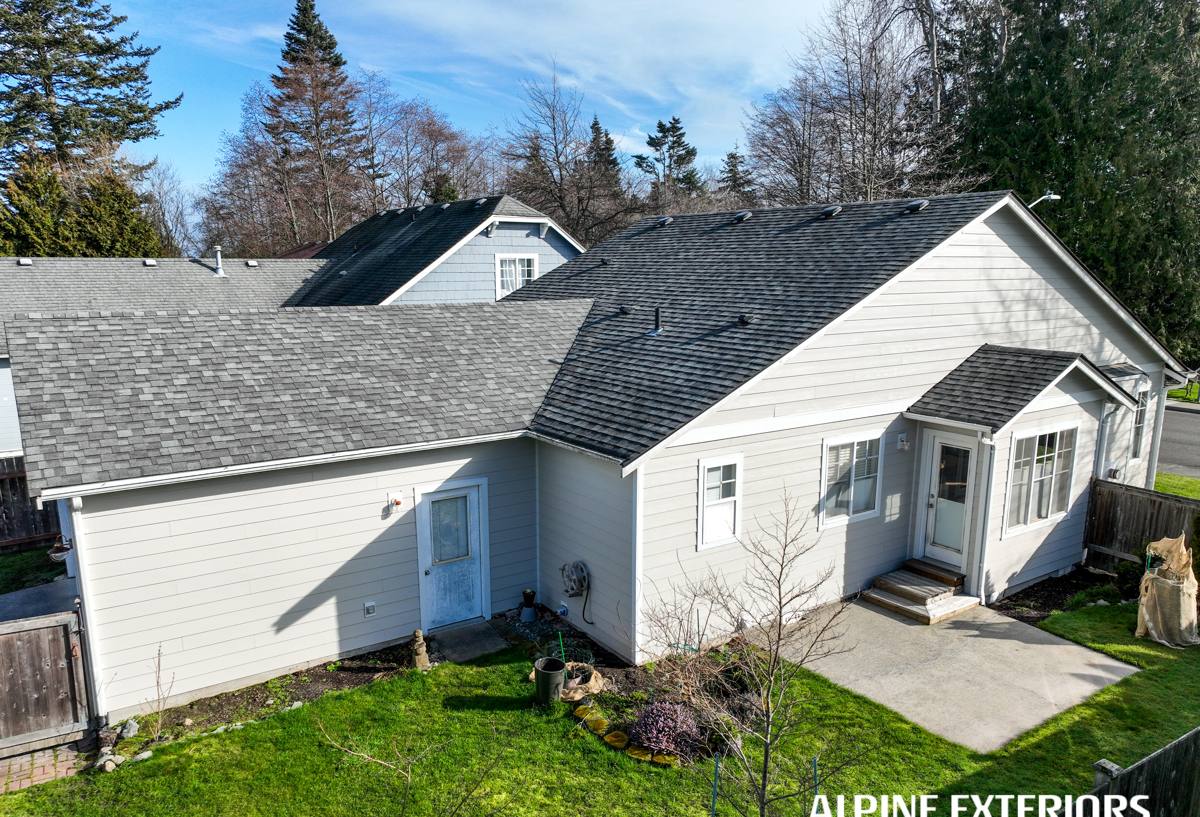
What Moisture and Moss Actually Do to a Roof
Moss Isn't Just Cosmetic
Moss on a roof looks like a minor eyesore, but it holds water directly against the roofing material for weeks at a time. On asphalt shingles, that trapped moisture accelerates granule loss and can work its way under shingle edges. On wood or composite products, sustained dampness invites rot at the exact spots where moss colonies take hold — usually the shaded, north-facing slopes and anywhere debris collects.
Driving Rain and Wind-Driven Water
It's not only how much rain falls, it's how it arrives. Wind-driven rain pushes water sideways and upward under laps, ridge caps, and flashing that would stay dry in a straight-down rain. Roofs here need flashing details and underlayment that account for that lateral movement, not just gravity.
Salt Air and Metal Fatigue
Even away from the immediate waterfront, salt-bearing air travels inland and settles on exposed metal — flashing, fasteners, gutters, and vent caps. Over years, that accelerates corrosion on lower-grade metal components. It's a slow process, but it's a real one, and it factors into what we spec for flashing and fastener material on every job in this region.
Core Roofing Services
We handle the full range of roofing work a home in this climate actually needs, not just the big-ticket replacement jobs:
- Roof inspections — pre-purchase, post-storm, or routine seasonal checks
- Leak diagnosis and repair, including hard-to-trace flashing and valley leaks
- Full roof replacement and re-roofing
- Moss treatment and removal, plus preventive moss-resistant strategies
- Gutter and downspout work tied to roof drainage
- Ventilation assessment and correction (attic moisture is a year-round issue here)
- Storm damage repair and insurance-related documentation
Because we also do siding, window, and deck work, we're often the ones who catch a roofing problem before it becomes a siding or structural problem — and vice versa. A failing roof edge shows up as rot in the fascia or top course of siding; a clogged gutter shows up as staining on siding below it. Seeing the whole exterior as one connected system, rather than a set of separate trades, is where a lot of the value is.
Comparing Roofing Materials for This Climate
There's no single "best" roofing material — the right choice depends on the home's exposure, slope, budget, and how much long-term maintenance the owner wants to take on. Here's how the common options stack up for a wet, moss-prone, salt-influenced climate:
| Material | Moisture & Moss Behavior | Typical Lifespan | Maintenance Level |
|---|---|---|---|
| Asphalt composition shingle | Good with proper ventilation and algae-resistant granules; moss still needs periodic removal | 20–30 years | Low to moderate |
| Metal roofing | Sheds water fast, resists moss well on steeper slopes; needs corrosion-resistant fasteners near salt air | 40–60 years | Low |
| Cedar shake/shingle | Attractive but holds moisture; high moss and rot risk without diligent upkeep | 20–30 years with upkeep | High |
| Synthetic/composite shingle | Resists moisture absorption well; performance varies by manufacturer | 30–50 years | Low to moderate |
We don't push one product line across every roof. We do steer homeowners away from materials that demand constant upkeep to perform in this climate — not because the material is bad on paper, but because our professional standard is to spec what holds up with realistic maintenance, not the maintenance a manufacturer's marketing assumes a homeowner will actually keep up with.
Siding, Windows, and Decks — The Rest of the Exterior
Siding
The same moisture load that affects roofs affects siding, especially at the transitions — where roof meets wall, where trim meets siding, and around window openings. Poorly flashed transitions are one of the most common sources of hidden water damage we find, often well before the siding itself shows visible wear.
Windows
Older or poorly sealed windows let moist air infiltrate wall cavities, which contributes to condensation and mold risk over a long wet season. Replacement and re-flashing work here is as much about managing moisture as it is about energy efficiency.
Decks
Decks take the climate head-on with no roof overhead protecting them. Ledger board attachment, proper flashing at the house connection, and decking material choice all matter more here than in a drier climate, since a poorly flashed ledger is a slow, hidden rot problem waiting to surface.
Handling all four trades under one roof (pun intended) means fewer handoffs, fewer "that's not my scope" gaps, and a crew that understands how a roofing decision affects the siding and deck details around it.
Why a Local Crew Matters Here
Roofing crews unfamiliar with this specific climate sometimes spec details that work fine in drier regions but fail here — inadequate underlayment overlap, ventilation that doesn't account for near-constant humidity, or fastener grades that corrode faster near the water and the border corridor. A crew that works this area regularly has already seen what fails and why, on real roofs in real neighborhoods nearby, not in a manual written for a different climate.
Being close by also means faster response for storm damage, active leaks, or moss buildup that's gotten ahead of a homeowner — problems that get worse the longer they sit in a climate this wet.
The Inspection and Estimate Process
A thorough roof evaluation isn't a five-minute glance from the ground. It typically includes:
- A full visual inspection of the roof surface, flashing, valleys, and penetrations
- An attic check for ventilation, insulation condition, and signs of moisture or staining
- A look at gutters and drainage paths, since poor drainage is often the real source of a "roof leak"
- Photo documentation of any problem areas
- A written estimate that separates repair options from full replacement, with the trade-offs explained plainly
We'd rather walk a homeowner through why a repair makes sense over a replacement (or vice versa) than default to the bigger job. Not every moss patch or worn shingle means the whole roof needs to come off.
Cost Factors Homeowners Should Understand
| Factor | Why It Matters |
|---|---|
| Roof pitch and complexity | Steeper, multi-plane roofs take longer to work safely and require more flashing detail |
| Existing layers and decking condition | Rotted decking discovered during tear-off adds cost but shouldn't be skipped over |
| Material choice | Upfront cost vs. lifespan and maintenance burden over 20–40 years |
| Ventilation upgrades | Correcting poor attic ventilation now prevents moisture damage later |
| Access and site conditions | Tree cover, tight lots, and steep grades affect labor time |
We provide honest, itemized estimates rather than a single lump number, so homeowners can see where the cost is actually going.
A Homeowner's Maintenance Checklist
Between professional inspections, a few habits go a long way in this climate:
- Clear gutters and downspouts at least twice a year, more often under trees
- Look for moss buildup on shaded roof sections each fall and spring
- Watch for staining on ceilings or attic framing after heavy storms
- Trim back overhanging branches that keep sections of roof shaded and damp
- Have flashing around chimneys, vents, and skylights checked every few years
- Don't ignore small leaks — in this climate, they rarely stay small
Getting Started
If you're dealing with a moss-covered roof, a leak you can't quite locate, or you're simply due for an honest inspection before the next wet season sets in, we're glad to take a look. We offer free, no-pressure estimates — use the form below to get in touch and we'll schedule a time to come out and assess the roof, siding, windows, or deck in person.