 Lynden Roofing
 Exterior Work Built for What Nooksack Weather Actually Does to a House
Nooksack sits in a part of Whatcom County where the weather doesn't do dramatic — no hurricanes, no hailstorms most years — it just does persistent. Long stretches of drizzle. Damp air that never fully dries out between storms. Cloud cover that keeps roofs and siding shaded and wet for days at a stretch. None of that shows up as a single disaster. It shows up ten years later as a roof that failed early, siding that's soft at the bottom edge, or a deck with soft spots where water sat too long. We work on homes throughout this part of the county and see the same patterns repeat, which is exactly why we build and maintain exteriors differently here than a contractor would in a dry climate.
What Nooksack-Area Homes Face Year-Round
Driving Rain and Wind
Storms coming off the Pacific pick up speed and moisture as they move through the region, and by the time they reach Whatcom County they're often pushing rain sideways, not just down. That matters more than people expect. A roof and a wall assembly can be rated for a certain amount of rainfall and still leak, because the failure point usually isn't the field of the roof or wall — it's the transitions: flashing around chimneys and vents, siding butt joints, window and door trim. Driving rain finds every gap that vertical rain would never reach.
Moss and Organic Growth
Whatcom County's growing season for moss, algae, and lichen is a long one. Shaded roof slopes, north-facing siding, and anywhere debris collects in a valley or gutter give organic growth exactly what it needs: shade, moisture, and time. Left alone, moss doesn't just look bad — it holds water against roofing material and can lift shingle edges over time, shortening the life of an otherwise sound roof.
Moisture and Damp Air
Even without direct rain, the Pacific Northwest's marine-influenced air keeps humidity elevated for much of the year across Whatcom County. Wood trim, fiber cement edges, and any exposed fastener are all more exposed to that slow moisture cycle than they would be in a drier region. It's rarely one bad storm that causes damage out here — it's the cumulative effect of materials staying damp longer than they were designed to.
Roofing Services for the Nooksack Area
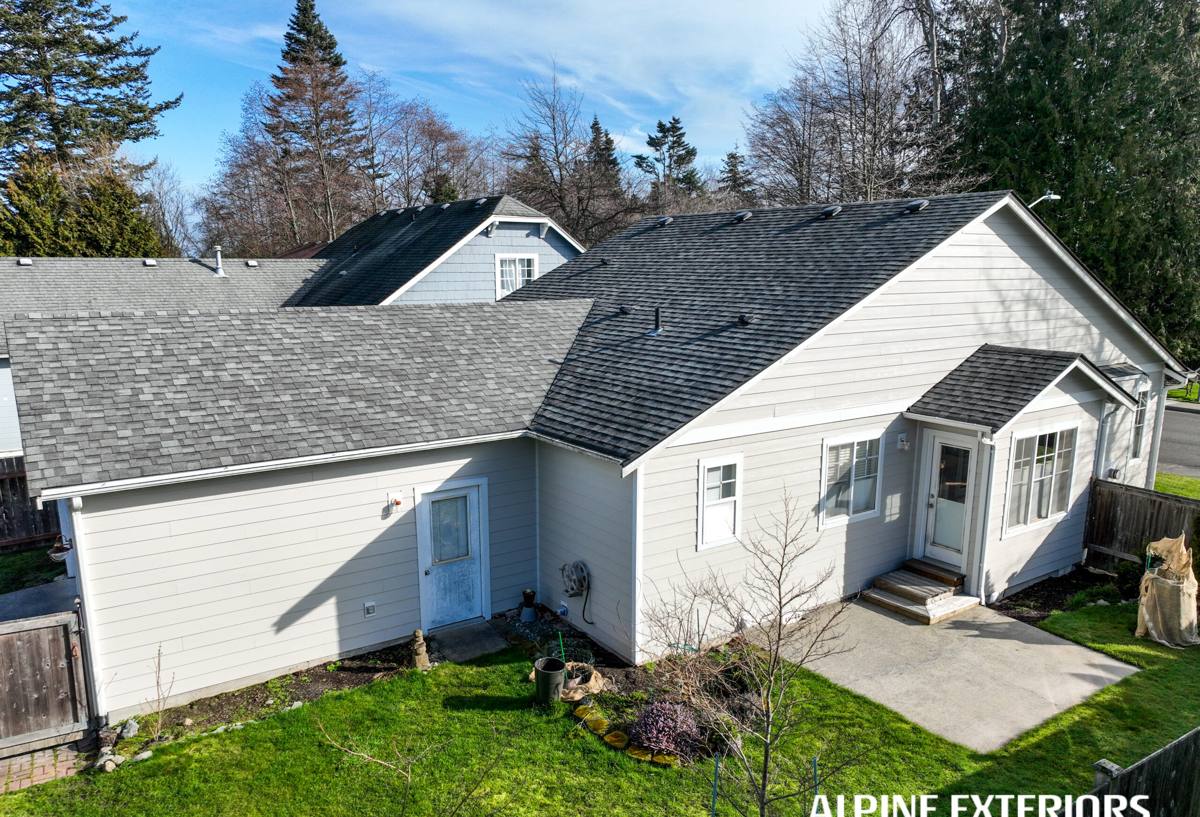
We install and repair asphalt composition roofing, and we work with metal roofing where a homeowner wants a longer-term, low-maintenance option. Every roof we install is built around the details that actually fail first in this climate: ice-and-water shield at eaves and valleys, properly lapped and sealed flashing, and ventilation that lets a roof dry out between rain events instead of staying damp underneath.
For repairs, we look past the obvious leak point. A stain on a ceiling often traces back to a flashing failure or a wind-lifted shingle several feet away, and patching only the visible spot without finding the real entry point just delays the next call.
| Roofing Material | Typical Lifespan Here | Maintenance Consideration |
|---|---|---|
| Asphalt composition shingle | 20-30 years | Needs periodic moss removal and gutter clearing to hit full lifespan |
| Standing seam metal | 40-60+ years | Sheds moss and debris more readily; higher upfront cost |
| Cedar shake | 20-30 years with upkeep | Requires more active moisture management in this climate |
Roof Maintenance and Inspections
A lot of roof damage in this region is preventable with a straightforward annual look-over: clearing moss and debris, checking flashing and sealant, and confirming gutters are actually moving water away from the roofline instead of backing it up. We offer inspections that catch these issues while they're still a maintenance item, not a replacement.
Siding That Holds Up to Whatcom County Moisture
Siding takes a different kind of beating than roofing — it's the wall's first line of defense against wind-driven rain, and it has to manage moisture at every seam, corner, and penetration for windows or fixtures. We install fiber cement siding as our standard recommendation for this climate. It holds paint well, doesn't swell or rot the way some wood products can when moisture gets behind them repeatedly, and it stands up to the freeze-thaw cycles and damp stretches that are routine here.
We're selective about vinyl and engineered wood products in this region — not because every product in those categories is bad, but because our standard is installation and material choices that hold up with minimal callbacks over 15-20 years in a wet climate, and that steers us toward materials with a track record of managing moisture well rather than ones that are more installation-sensitive.
Common Siding Problem Areas
- Bottom courses near grade, where splash-back keeps material wet longer
- Corners and butt joints, where water intrusion is most likely if caulking has failed
- Areas around window and door trim, especially on walls facing prevailing weather
- North-facing walls that stay shaded and slow to dry after rain
Windows: Comfort, Efficiency, and Moisture Control
Old or poorly sealed windows do more than let in a draft in a climate like this — they're a common point where moisture works its way into wall framing over time. We replace and install windows with attention to proper flashing integration with the surrounding siding, not just the window unit itself, because a great window installed without correct flashing can still leak. For homeowners weighing options, the biggest practical differences are frame material (vinyl vs. fiberglass vs. wood-clad), glazing performance for our cooler, damp winters, and how well the installation ties into the existing wall assembly.
Decks Built for a Wet-Season Reality
Decks in this climate deal with standing moisture, seasonal freeze-thaw, and long stretches without direct sun to dry them out. We build with attention to proper drainage and spacing between boards, ledger board flashing that keeps water from tracking into the house structure, and fastener choices that resist corrosion under repeated wet-dry cycling. Composite decking is a strong option here for homeowners who want to minimize the annual maintenance that wood decking demands in a climate this damp, though a well-maintained wood deck can also perform well if it's sealed and inspected on a regular schedule.
Why a Local Crew Matters
A crew that works Whatcom County year-round isn't guessing about how this climate treats a roof or a wall — we see the same failure points repeat across the homes we work on, from moss buildup on shaded slopes to trim rot around older window installations. That familiarity shapes how we bid a job, what we flag during an inspection, and where we spend extra attention during installation. It also means we're a known, reachable local company if a question or issue comes up after the work is done — not a crew that's moved on to another region by the time a warranty question arises.
Maintenance Checklist for Nooksack-Area Homeowners
- Clear roof moss and debris at least once a year, more often on heavily shaded slopes
- Check and clean gutters before the fall rains ramp up and again mid-winter
- Inspect caulking and flashing around windows and siding penetrations annually
- Walk your deck each spring, checking for soft boards and loose fasteners
- Have your roof professionally inspected every few years, or after any major windstorm
- Watch for staining on interior ceilings or walls near exterior corners — an early leak sign
What Drives the Cost of Exterior Work Here
| Factor | Why It Matters in This Climate |
|---|---|
| Roof pitch and complexity | Steeper or multi-plane roofs take longer to flash correctly, which affects both cost and leak resistance |
| Extent of existing moisture damage | Hidden rot found during tear-off or siding removal adds repair scope before new material goes on |
| Material choice | Higher-durability materials cost more upfront but reduce maintenance and replacement frequency in a wet climate |
| Access and site conditions | Tree cover, steep lots, or tight access common in this area can affect labor time |
We provide honest, itemized estimates so homeowners can see exactly what's driving the number, rather than a flat quote that hides where the money is going.
Get a Free, No-Pressure Estimate
If you're noticing moss buildup, a soft spot on your deck, drafty windows, or you just want a second opinion on your roof's condition, we're happy to take a look. Fill out the form below for a free estimate — no pressure, no obligation, just a straightforward assessment from a crew that knows what Whatcom County weather does to a house.