 Lynden Roofing
 Custer sits close enough to the water and open farmland that its homes take a different kind of beating than houses tucked into town. Between the salt-tinged air rolling in off the Strait, wind-driven rain that comes in sideways more often than straight down, and a moss season that seems to start earlier every year, exteriors out here work harder than most homeowners realize. Lynden Roofing Co has spent years serving Whatcom County properties like these, and Custer's mix of rural acreage, small farms, and newer developments is territory we know well.
What Custer's Climate Does to a House
Whatcom County's marine climate is mild compared to a lot of the country, but "mild" doesn't mean gentle on building materials. The combination of near-constant moisture, salt exposure closer to the water, and long stretches of shade under evergreen tree cover creates conditions that accelerate wear in ways drier climates never see.
Salt Air and Metal Fatigue
Homes closer to Custer's western edge, nearer the water, deal with airborne salt that settles on exposed metal — roof flashing, gutters, fasteners, and any exposed hardware on siding or deck railings. Over time that salt accelerates corrosion, especially on lower-grade or improperly coated metal components. It's a slow process, but it's cumulative, and it's one reason we pay close attention to flashing material and fastener quality on any project out this way.
Driving Rain and Water Intrusion
Custer gets its share of wind alongside the rain, and wind-driven rain behaves differently than a straight downpour. It can push moisture up and under roofing materials, behind siding laps, and into window and door openings that would stay dry in calmer weather. This is why proper flashing details, correct siding overlap, and quality window installation matter more here than in a sheltered inland location — the margin for error is smaller.
Moss, Shade, and Roof Longevity
Between the tree cover common on larger Custer lots and the extended damp season, moss and algae growth on roofs is a near-constant concern. Moss holds moisture against roofing material, works its way under shingle edges, and can shorten the effective life of a roof significantly if left unaddressed. North-facing slopes and roof sections shaded by trees are usually the first to show growth, and they're worth checking every year.
Roofing in Custer
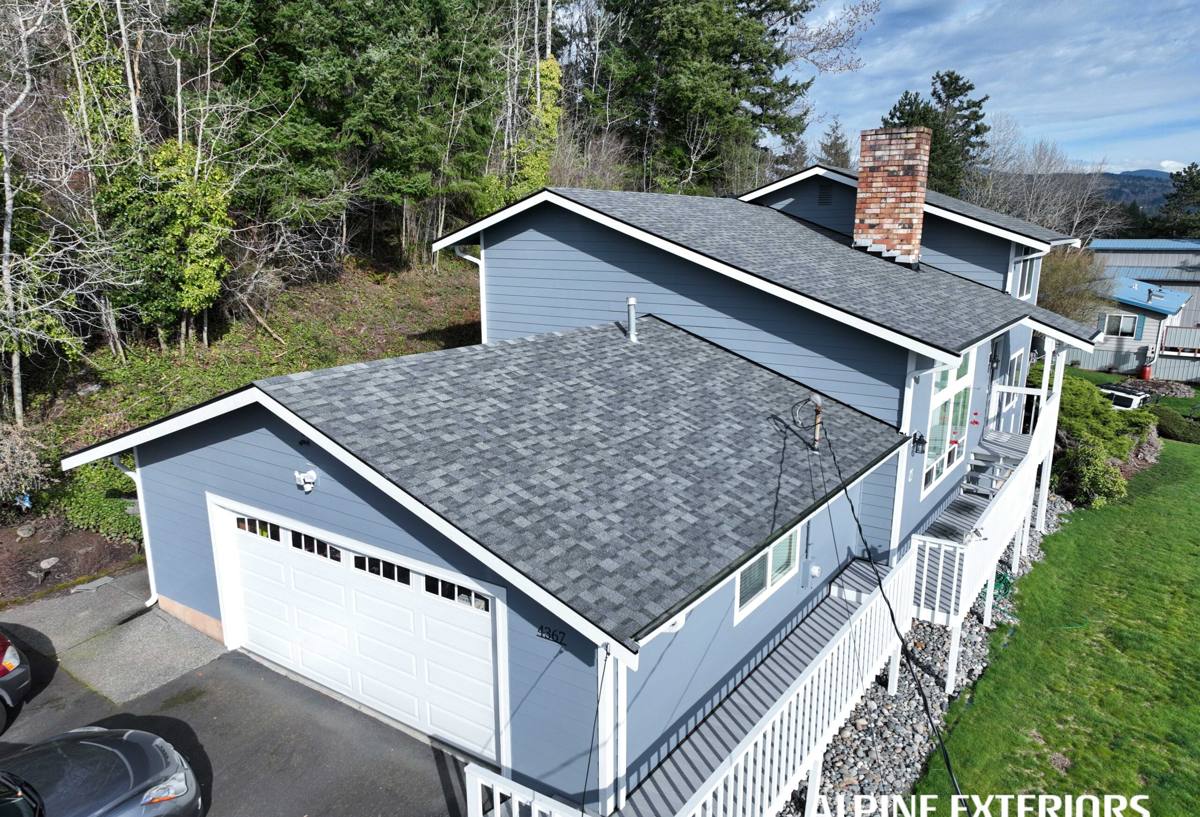
Roof replacement and repair make up the core of what we do, and Custer's mix of housing — from older farmhouses to newer construction — means we see a wide range of roofing conditions. Asphalt composition shingles remain the most common and cost-effective choice for this area, with metal roofing a solid option for homeowners wanting a longer service life and better shedding of moss and debris.
Signs a Custer Roof Needs Attention
- Moss buildup along shaded roof planes or roof valleys
- Granule loss showing up in gutters or downspouts
- Curling, cracked, or missing shingles after a windy season
- Soft spots or discoloration on interior ceilings near exterior walls
- Flashing that looks lifted, rusted, or gapped around chimneys and vents
- Gutters overflowing or pulling away from the fascia
We inspect the full system on every roofing visit — decking, underlayment, flashing, and ventilation — not just the shingles on top. A roof that looks fine from the ground can still have moisture problems underneath if the ventilation isn't right, and poor attic ventilation is a common contributor to premature roof failure in this climate.
Siding Built for Wet, Salt-Exposed Conditions
Siding takes on a lot of the same punishment as roofing, just from a different angle. Wind-driven rain hits siding directly, and any gap in the installation — a poorly lapped seam, a missed caulk joint, a fastener driven at the wrong angle — becomes an entry point for moisture over time.
We install fiber cement and quality vinyl siding options depending on the home and the homeowner's priorities. Fiber cement holds up especially well against the damp, salt-influenced air common in coastal Whatcom County because it resists moisture absorption and doesn't warp the way some wood products can under sustained humidity. Whatever material a homeowner chooses, correct installation — proper flashing behind every seam, correct nail placement, adequate drainage gaps — matters more than the brand name on the product itself.
Why We're Selective About Materials
We don't install every siding or roofing product on the market, and that's intentional. Some materials look good on a spec sheet but carry maintenance burdens or moisture-handling weaknesses that show up years later, once a crew and a homeowner have moved on. Our standard is to install materials we're confident will perform in this specific climate over the long term, even if that means steering a homeowner away from something trendier.
Windows That Handle Wind-Driven Rain
Window performance in Custer comes down to two things: the quality of the window itself and the quality of the installation around it. A well-built window installed with poor flashing will leak eventually. A modest window installed correctly, with proper sill pans and flashing tied into the surrounding siding or trim, will often outperform it.
We focus heavily on the installation details — sill pan flashing, correct integration with the water-resistive barrier, and proper sealing around the frame — because that's where most window leaks actually originate, not in the glass or frame itself. For Custer homes exposed to sideways rain, this attention to detail is not optional.
Decks in a Damp, Shaded Climate
Decks in Custer face constant cycles of wet and dry, plus shade from tree cover on many lots, which slows drying time after rain. That combination is hard on wood decking in particular — it's where rot, mold staining, and slick, moss-covered surfaces tend to show up first.
- Composite decking resists moisture absorption and doesn't require staining or sealing
- Proper joist spacing and hidden fastening reduce trapped moisture between boards
- Railing hardware should be corrosion-resistant, especially closer to the water
- Ledger board flashing needs to be correct where the deck attaches to the house — this is one of the most common failure points we find on older decks
We build and repair both wood and composite decks, and we're upfront with homeowners about the tradeoffs: wood costs less upfront but needs regular maintenance in this climate, while composite costs more initially but largely eliminates the moss, staining, and rot issues that shaded, damp decks are prone to.
Comparing Roofing Options for Custer Homes
| Factor | Asphalt Composition Shingle | Metal Roofing |
|---|---|---|
| Typical lifespan | 20-30 years | 40-60+ years |
| Moss resistance | Moderate — needs periodic cleaning | Better — smoother surface sheds moss more easily |
| Upfront cost | Lower | Higher |
| Performance in driving rain | Good with proper installation | Excellent with proper seaming and flashing |
| Maintenance | Periodic moss and debris removal | Minimal, occasional fastener check |
Neither option is universally "better" — the right choice depends on how long a homeowner plans to stay in the home, budget, and how much shade or tree debris the specific roof deals with.
Why a Local Crew Matters in Custer
A lot of exterior problems in this part of Whatcom County aren't caused by bad materials — they're caused by installation methods that work fine in drier climates but fail here. Flashing details, ventilation calculations, and material choices all need to account for the moisture load this area sees for a good chunk of the year. A crew that works this region regularly develops a feel for which roof slopes hold moss longest, which siding details tend to fail first in wind-driven rain, and where water actually wants to go once it gets past the first line of defense.
That's the value of hiring locally rather than a crew passing through from out of the area. We're not guessing at what Custer weather does to a house — we see it, and we build and repair accordingly.
Maintenance That Actually Extends the Life of Your Exterior
- Have roofs inspected annually, ideally before the wet season ramps up in fall
- Clean moss off roof surfaces using proper methods — pressure washing shingles can do more harm than good
- Check and clean gutters at least twice a year to prevent overflow against fascia and siding
- Inspect caulking and sealant around windows and siding seams annually
- Look at deck ledger boards and fasteners yearly for early signs of moisture damage
None of this requires a major time investment, but skipping it consistently is how small issues turn into expensive repairs.
If you're noticing moss buildup, a slow leak, drafty windows, or a deck that's seen better days, we're happy to take a look. Fill out the form below for a free, no-pressure estimate — we'll walk the property, tell you honestly what we see, and give you options that make sense for your home and your budget.