 Lynden Roofing
 Blaine's Coastline Is Hard on Siding
Blaine sits right on the water at the northern edge of Whatcom County, and that location shapes everything about how siding performs here. Homes close to Semiahmoo Bay and Drayton Harbor take on salt-laden air almost daily, along with wind-driven rain that comes in sideways off the water during fall and winter storms. Add in the shaded, damp conditions that let moss and algae take hold on north- and west-facing walls, and you have a climate that is genuinely tougher on exterior materials than most inland parts of the county. Siding that would hold up fine in a drier, more sheltered spot can fail early in Blaine if it isn't matched to these conditions and installed correctly.
This page is about one job, done right, for this one area: installing James Hardie fiber cement siding on Blaine homes. We're a Lynden-based roofing and exterior crew, and siding installation is part of how we protect a home's envelope from the same weather that wears down a roof — the two systems work together, and Blaine's coastal exposure demands the same seriousness for both.
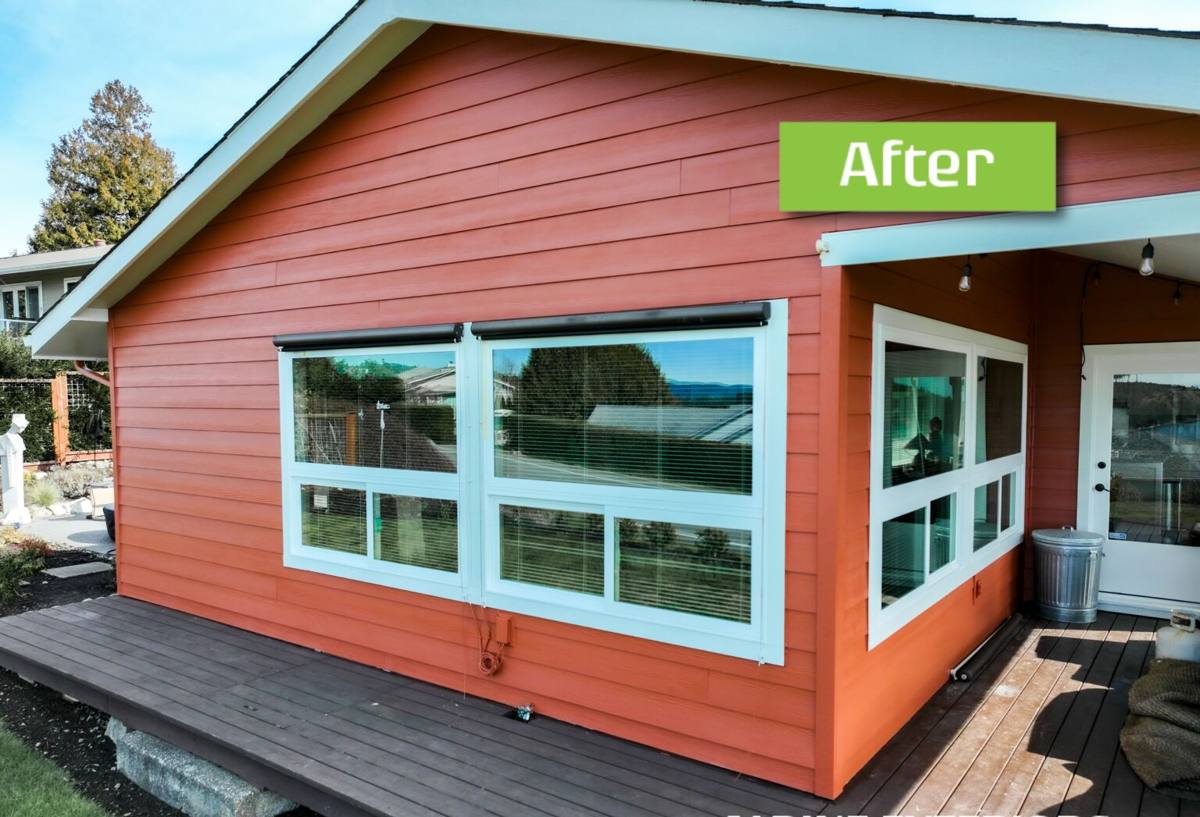
What Salt Air, Wind-Driven Rain, and Moss Actually Do
Salt Air
Airborne salt doesn't just sit on a wall — it works into fasteners, trim joints, and any exposed cut edge of siding material. Over years, that accelerates corrosion of metal fasteners and flashing that isn't rated for coastal exposure, and it can degrade paint and coatings faster than the manufacturer's inland test data would suggest. Materials and hardware need to be chosen with this in mind, not treated as an afterthought.
Wind-Driven Rain
Rain that's being pushed horizontally by wind off the water behaves differently than rain falling straight down. It finds its way under laps, around poorly sealed penetrations, and behind trim that isn't properly flashed. A siding job that looks fine on a calm, dry day can still leak during a January storm if the water-resistive barrier, flashing, and lap details weren't built for wind-driven conditions in the first place.
Moss and Algae
Shaded walls near mature trees or on the north side of a home stay damp longer in Blaine's marine climate, which is exactly what moss and algae need to establish. Beyond the cosmetic staining, sustained moisture against a wall surface stresses paint film, caulking, and — on the wrong material — the substrate itself. Siding with a factory-applied, engineered finish handles this far better than field-painted or bare wood surfaces.
What a Correct Installation Actually Involves
Siding is a system, not just a visible surface. Getting it right in a coastal climate like Blaine's means paying attention to everything behind the panel, not just the finished look.
- Weather-resistive barrier: A continuous, properly lapped house wrap or building paper behind the siding, installed shingle-style so water is always directed outward and down.
- Flashing at every penetration: Windows, doors, hose bibs, vents, and any other wall penetration need integrated flashing — not just a bead of caulk — so wind-driven rain can't track behind the siding.
- Correct fastening: Fastener type, length, and placement matter, especially in a salt-air environment where corrosion resistance is not optional. Hardie's own fastening specifications exist for a reason and shouldn't be shortcut.
- Proper clearances: Siding needs to be held up off rooflines, decks, and grade by the manufacturer's minimum clearance so it isn't sitting in standing water or constant splash-back.
- Caulking and joint treatment: Butt joints and trim transitions need to be sealed with a product rated for the exposure, applied at the right points — not everywhere, which can trap moisture instead of shedding it.
- Ventilation behind the cladding: A drainage plane that lets any incidental moisture escape rather than sit against the wall assembly.
Skip any one of these steps and the siding may look fine for a year or two before problems start showing up as staining, soft trim, or paint failure — usually right where the wind and rain hit hardest.
Why We Install Only James Hardie Fiber Cement
We don't install vinyl, LP SmartSide, or unfinished wood siding, and that's a deliberate standard, not a limitation of what we're capable of doing. James Hardie fiber cement is non-combustible, dimensionally stable, and available in HZ product lines engineered for different climate zones, which matters in a place with Blaine's combination of moisture and coastal wind exposure. The factory-applied ColorPlus finish is baked on under controlled conditions and backed by a substantial finish warranty — a level of consistency and durability that field-applied paint simply can't match, especially on a wall that's fighting salt air and driving rain for years at a stretch.
We've seen what happens to lesser-suited materials on this coastline: vinyl that warps or fades under sun and salt exposure, engineered wood products that are sensitive to sustained moisture at cut edges and joints, and painted wood siding that needs frequent recoating to keep up with the marine climate. Fiber cement, installed to spec, is simply better matched to what Blaine throws at a home's exterior year after year.
Our Siding Installation Process
- On-site assessment: We walk the home, check existing siding and sheathing condition, note exposure direction relative to the water and prevailing wind, and identify any moisture damage that needs to be addressed before new siding goes on.
- Tear-off and substrate check: Old siding comes off and we inspect the sheathing underneath for rot or water damage — this is the point where hidden problems get caught and fixed, not covered up.
- Weather barrier installation: A new, continuous water-resistive barrier goes on, properly lapped and sealed at every penetration.
- Flashing and trim: Windows, doors, and penetrations get integrated flashing before any siding panel goes up around them.
- Hardie panel installation: Panels and trim are installed to James Hardie's fastening and clearance specifications, using corrosion-resistant fasteners appropriate for coastal exposure.
- Joint and seam sealing: Butt joints and transitions are caulked with an exterior-rated sealant at the points where it's actually needed.
- Final walkthrough: We inspect the completed job with the homeowner and confirm everything is sealed, aligned, and finished to spec.
Siding Materials in a Coastal Climate: How They Compare
| Factor | James Hardie Fiber Cement | Vinyl | Engineered Wood (LP-type) |
|---|---|---|---|
| Salt air resistance | Strong — non-organic, factory finish | Can fade and become brittle over time | Vulnerable at cut edges and joints if moisture intrudes |
| Wind-driven rain performance | Excellent when installed to spec | Prone to leaking behind panels if seams fail | Sensitive to sustained moisture exposure |
| Moss/algae resistance | Factory finish resists staining well | Can stain and is hard to fully clean | Painted surface needs regular upkeep to resist staining |
| Fire rating | Non-combustible | Combustible | Combustible |
| Finish warranty | Long-term, factory-backed | Varies by manufacturer | Typically shorter, field-paint dependent |
What Siding Installation Costs Depend On in Blaine
| Cost Factor | Why It Matters Here |
|---|---|
| Home size and wall complexity | More corners, gables, and trim detail mean more labor and material |
| Existing substrate condition | Sheathing repairs from past moisture intrusion add scope before siding can go on |
| Exposure direction | Walls facing the water or prevailing wind may need extra flashing attention |
| Trim and color selection | ColorPlus finish options and trim profiles vary in price |
| Tear-off vs. new construction | Removing and disposing of old siding adds labor beyond a bare-wall install |
We give every Blaine homeowner a real number after seeing the home in person — broad estimate ranges without an on-site look aren't useful to you, and we won't pretend otherwise.
Signs Your Blaine Home May Need New Siding
- Paint that's peeling, bubbling, or chalking faster than it should, especially on water-facing walls
- Soft or spongy spots when you press on the siding, particularly near the bottom courses or trim
- Persistent moss or algae staining that keeps coming back after cleaning
- Visible gaps, warping, or cupping in existing panels
- Rising energy bills that suggest the wall assembly isn't sealing the home the way it should
- Cracked or damaged caulking at joints, windows, and trim
Why a Crew That Already Works Blaine Matters
Blaine's coastal exposure isn't the same as siding a home a few miles inland in Lynden. A crew that already understands how wind comes off the water, which walls take the worst of the salt air, and how moss establishes in the shaded, damp corners of this town will make better calls on flashing details, fastener selection, and sequencing than a crew seeing coastal conditions for the first time. We work throughout Whatcom County, and jobs on Blaine's waterfront and near-water streets get built with that exposure in mind from the first day on site.
If your Blaine home needs new siding — or you're not sure whether it does — we're happy to take a look and walk you through what we see, no pressure and no obligation. Use the form below to request a free estimate.