 Lynden Roofing
 Roofing on the Blaine Coastline Is a Different Job
Blaine sits right on the water, at the edge of Whatcom County near Drayton Harbor and Semiahmoo Bay, and that location changes what a roof has to deal with day to day. A roof here isn't just shedding rain like an inland home would — it's absorbing salt-laden air off the water, staying damp longer under marine cloud cover, and growing moss on any shaded or north-facing slope for a good chunk of the year. A new roof installation in Blaine needs to be planned around those conditions from the start, not patched around them later.
We install and replace roofs throughout Whatcom County, and Blaine gets treated differently than a drier, more inland job would. The materials, fastener choices, flashing details, and ventilation plan all shift when the home is a few blocks from saltwater instead of sitting inland.
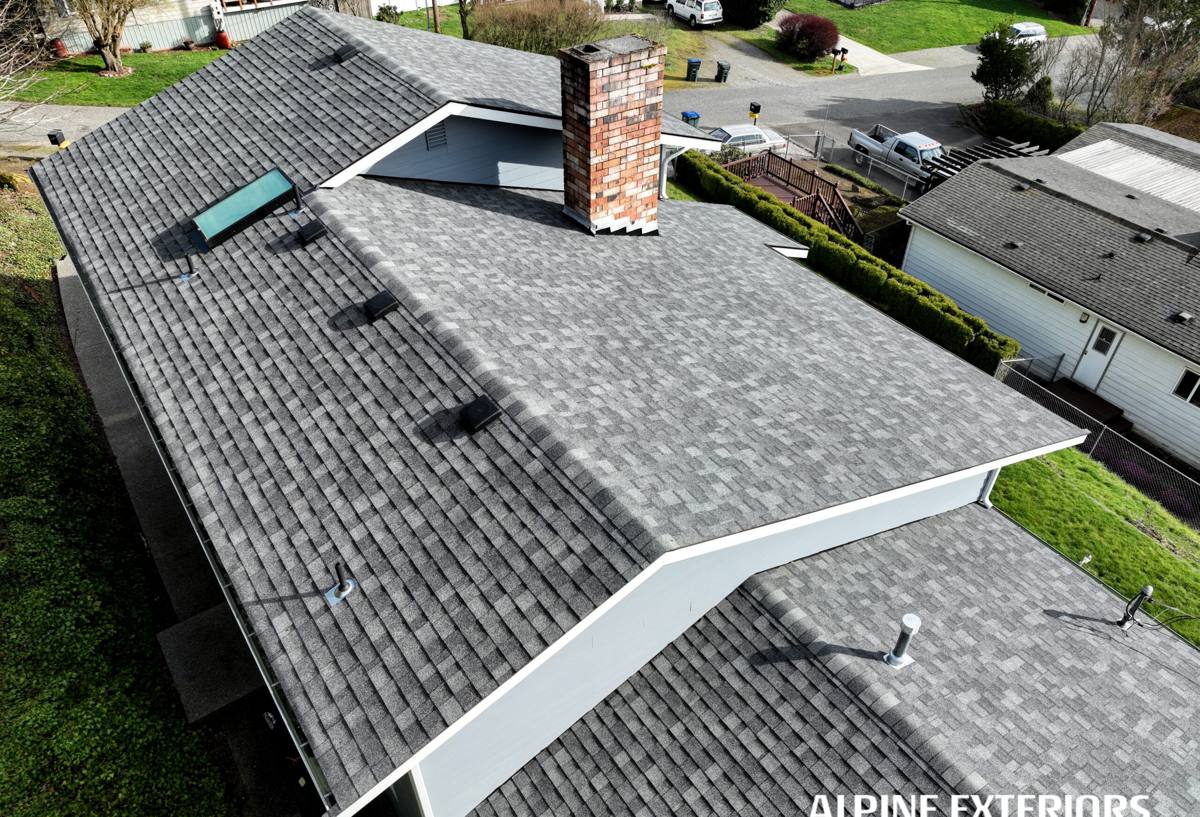
What Salt Air, Rain, and Moss Actually Do to a Roof
Salt Air and Corrosion
Airborne salt is corrosive to unprotected metal. On a Blaine roof that means exposed nail heads, cheap flashing, and uncoated fasteners rust and fail years before they would on an equivalent roof further inland. Once a fastener corrodes, it loses grip on the decking, and that's how shingles start lifting in wind long before the shingle material itself is worn out.
Driving Rain
Wind off the water pushes rain sideways, not just straight down. That means valleys, roof-to-wall transitions, and any penetration (vents, chimneys, skylights) take on wind-driven moisture that a calm-weather roof detail wouldn't have to handle. Flashing that's "good enough" in a sheltered inland yard can leak on an exposed Blaine elevation.
Moss and Prolonged Dampness
Shaded, north-facing, and low-slope sections of Blaine roofs stay wet longer thanks to marine air and tree cover, and moss takes hold in those conditions. Moss isn't just cosmetic — it lifts shingle edges as it grows, holds water against the roofing material, and accelerates granule loss. Left unaddressed over several seasons, it shortens the life of an otherwise sound roof.
What a Correct Installation Involves Here
A new roof installation done right for Blaine's climate is a system, not just a layer of shingles. Every part of that system needs to account for salt exposure and sustained moisture:
- Corrosion-resistant fasteners — hot-dip galvanized or stainless steel nails and screws, not standard electro-galvanized, especially on the sides of the home facing open water or prevailing wind.
- Full underlayment coverage — synthetic underlayment across the whole deck, with self-adhered ice-and-water membrane at eaves, valleys, and around every penetration, since these are the spots driving rain finds first.
- Metal flashing, not just shingle-over details — properly stepped and counter-flashed at walls, chimneys, and skylights, sized and lapped to shed wind-driven rain rather than rely on gravity alone.
- Balanced attic ventilation — intake at the eaves and exhaust at the ridge, sized to the attic, so moisture doesn't sit trapped under the deck and feed rot or mold from the inside.
- Algae- and moss-resistant shingles where the product line offers it, particularly on shaded slopes that we already know will stay damp longer.
Skip any one of these and the roof will likely still look fine on installation day — the failures show up two, five, or ten years later, usually starting exactly where the shortcut was taken.
Choosing a Roofing Material for a Coastal Whatcom County Home
There isn't one right answer for every Blaine home — slope, budget, and how exposed the house is to open water all factor in. Here's how the common options generally compare for this specific climate:
| Material | Coastal/Salt-Air Performance | Moss Resistance | Typical Lifespan Here |
|---|---|---|---|
| Architectural asphalt shingle | Good, with coated fasteners and proper flashing | Fair — better with algae-resistant granules | 20–30 years |
| Standing seam metal | Very good with a marine-grade coating and stainless fasteners | Very good — sheds moisture, little for moss to hold onto | 40–50+ years |
| Synthetic/composite shingle | Good — resists moisture absorption well | Good, product-dependent | 30–50 years |
| Basic 3-tab asphalt shingle | Fair — thinner profile, more fastener exposure | Poor to fair | 15–20 years |
We'll walk through these trade-offs specific to your roof's slope, sun exposure, and how directly it faces the water before recommending one. There's rarely a single "best" material — there's a best fit for that particular roof.
How Our Installation Process Works
- On-site inspection and estimate. We look at the existing roof, decking condition, ventilation, and how exposed the home is to wind and salt air, then give you a written, no-pressure estimate.
- Tear-off and deck inspection. Old roofing comes off down to the deck so we can check for soft spots, rot, or prior moss damage that needs to be addressed before anything new goes down.
- Deck repair as needed. Any damaged sheathing gets replaced — this is not an area to patch over, especially on a roof that's been holding moss or trapped moisture.
- Underlayment and flashing installation. Ice-and-water membrane at vulnerable areas, synthetic underlayment across the field, and new metal flashing at every wall, chimney, and penetration.
- Ventilation check and correction. We confirm intake and exhaust venting is balanced for the attic size, correcting it if the existing setup is inadequate.
- Roofing material installation. Installed to manufacturer spec with corrosion-resistant fasteners throughout, not just at the edges.
- Final walkthrough and cleanup. Site cleared of debris and nails, and we go over the finished roof and warranty paperwork with you.
What Drives the Cost of a New Roof in Blaine
Every roof is priced on its own specifics, but these are the factors that most commonly move the number up or down:
| Factor | Why It Matters |
|---|---|
| Roof pitch and complexity | Steeper slopes and multiple valleys or dormers take more labor and material to flash correctly |
| Number of existing layers | Tear-off of multiple old layers costs more than removing a single layer |
| Deck condition | Rotten or soft sheathing found during tear-off needs replacement before new roofing goes down |
| Material choice | Asphalt, synthetic, and metal roofing carry different material and labor costs |
| Exposure to wind and salt air | Fully exposed elevations may call for upgraded fasteners and flashing, which adds material cost but reduces early failures |
| Access and site conditions | Steep lots, limited driveway access, or tight setbacks can affect staging and labor time |
Signs a Blaine Roof Needs Replacement, Not Another Repair
- Moss covering more than isolated patches, especially if it's returned after a cleaning
- Granules collecting in gutters or at downspouts in noticeable amounts
- Shingles that are cupping, curling, or visibly brittle
- Rusted or lifted flashing at chimneys, walls, or skylights
- Soft spots or sagging visible from the attic or from the ground
- Daylight visible through the roof deck from inside the attic
- Recurring leaks in the same spot despite prior repairs
- A roof approaching or past 20–25 years old with no major upgrades since installation
Why a Crew That Already Works Blaine Matters
Blaine's proximity to the water isn't a minor detail — it's the reason a generic "any climate" installation approach falls short here. A crew that regularly works this stretch of Whatcom County already knows which elevations take the worst of the wind-driven rain, which materials hold up against salt air without a premium price tag being the only path, and how long moss season realistically runs on shaded roofs near the coast. That local pattern recognition shows up in small decisions — where to add extra ice-and-water membrane, which fastener grade to use on an exposed gable end — that a crew unfamiliar with the area might not think to make.
It also matters for scheduling. Coastal weather windows can be tighter than an inland job's, and a crew that works this area regularly plans tear-off and installation around realistic dry stretches rather than hoping the forecast holds.
Maintaining a New Roof in This Climate
A correctly installed roof still benefits from a little ongoing attention in a coastal, moss-prone area like Blaine:
- Clear moss and debris from shaded slopes before it spreads, rather than after it's established
- Keep gutters clear so water doesn't back up under the eave edge
- Have flashing and fastener points checked periodically, since these are the first spots salt air and wind-driven rain will find a weakness
- Confirm attic ventilation stays unobstructed by insulation or storage over time
If you're weighing a new roof installation in Blaine, we're happy to take a look and give you a straightforward, no-pressure estimate — no fake urgency, just an honest read on what your roof actually needs. Use the form below to get started.