 Lynden Roofing
 Roof Repair in Blaine: Built for Salt Air and a Long Wet Season
Blaine sits at the far northern edge of Whatcom County, right against Semiahmoo Bay and Drayton Harbor, close enough to the water that salt-laden air reaches most homes in town, not just the ones with a water view. That coastal exposure changes what a roof repair actually needs to hold up here compared to a repair done further inland. A patch that would hold fine on a roof in a drier, more sheltered spot can fail faster in Blaine if it doesn't account for corrosion, wind-driven rain, and a moss season that runs most of the year.
Lynden Roofing Co is based inland in Lynden, but we work roofs across Whatcom County regularly, including Blaine, and we treat coastal repair work differently from the start rather than applying the same fix everywhere. This page covers what a Blaine roof repair actually needs, what a correct repair job involves, and how our process works when the job is specifically a repair rather than a full tear-off.
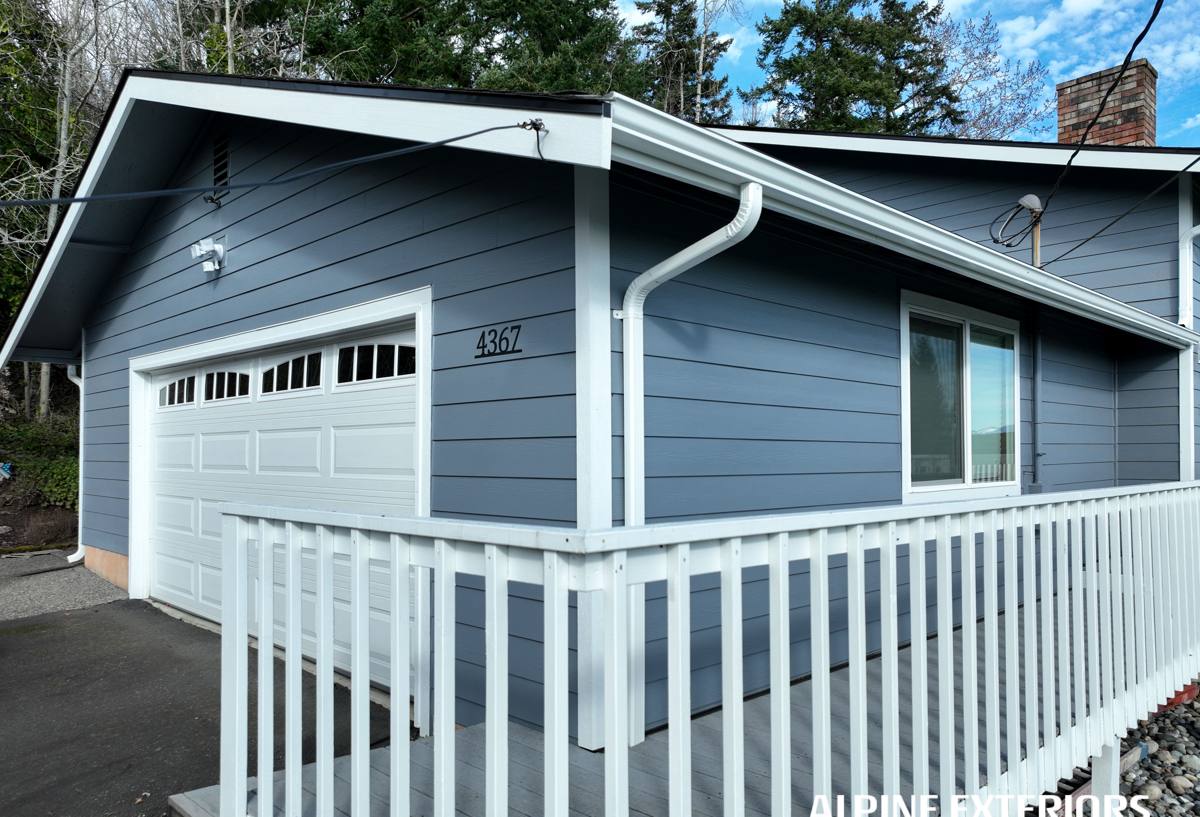
What Blaine's Climate Does to a Roof Needing Repair
Salt Air and Corroding Metal
Metal components on a roof — flashing, fasteners, vent caps, gutter hardware — take a steady dose of salt-laden air in Blaine that homes further inland in the county don't see nearly as much. Corrosion on a fastener or flashing piece often starts working before it looks obviously bad, and a corroding fastener loses holding strength well ahead of any visible rust stain. A repair that reuses standard hardware instead of corrosion-resistant material tends to need doing again sooner than the homeowner expects, sometimes within a few seasons rather than years.
Wind-Driven Rain Finding the Weak Points
Storms coming off the water in Blaine rarely fall straight down. Wind drives rain sideways into roof valleys, under shingle edges, and around chimneys and vent pipes at angles a straight-down rain never tests. That's exactly where a marginal repair shows its limits — a patch that sheds water fine on a calm day can still let water in the moment wind gets involved, and in Blaine, wind is involved a lot of the time. Most of the leaks we're called out to repair here trace back to a flashing detail or lapped seam that wind-driven rain eventually found.
A Moss Season That Never Really Stops
Mild, damp conditions give moss and algae a long growing season in Blaine, and shaded or north-facing roof slopes are usually first to show it. Moss does more than look bad on a roof — it holds moisture against the roofing material, works into shingle edges and laps, and can lift roofing over time if it's left unchecked. A repair on a roof with active moss growth nearby isn't complete if it just fixes the visible damage and leaves the moisture source sitting right next to it.
Signs a Blaine Roof Needs Repair
Some roof problems are obvious. Others sit quietly for a season or two before they show up as a stain on a ceiling. Worth a call if you're seeing any of the following:
- A leak, stain, or damp patch on an interior ceiling or wall, especially near an exterior wall or chimney
- Missing, cracked, curling, or lifted shingles, particularly after a windstorm off the water
- Moss buildup in valleys or on shaded slopes that keeps coming back after cleaning
- Granules collecting in gutters or at the base of downspouts, a sign of shingle wear
- Flashing around a chimney, vent pipe, or skylight that looks lifted, rusted, or has failed sealant
- Gutters or downspouts that are pulling away from the fascia, letting water run down the wall instead of away from it
- Daylight visible through the roof deck from inside the attic, or damp insulation below a roof plane
Any one of these is worth a professional look before the next wet stretch. Caught early, most of these are a straightforward repair. Left through another season, several of them turn into deck damage that costs a good deal more to put right.
What a Correct Roof Repair Actually Involves
A roof repair done right isn't just patching the spot where water is showing up inside the house. It's finding where the water is actually getting in, which is sometimes several feet away from the stain, and fixing that entry point correctly rather than covering it.
Finding the Real Source, Not Just the Symptom
Water travels along rafters and roof decking before it shows up as a stain, so the visible damage point and the actual entry point are often not the same spot. A proper repair starts with tracing the path — checking flashing, valleys, penetrations, and shingle condition uphill from where the damage appeared — before any material gets replaced. Skip that step and you can replace shingles that were never the problem while the actual gap keeps leaking.
Flashing Repair Done Right
Flashing — the metal that seals transitions at valleys, chimneys, vent pipes, skylights, and roof-to-wall junctions — is where most Blaine roof leaks actually start, more often than the shingles themselves. A correct repair reforms or replaces the flashing metal and properly laps and seals it, rather than smearing roofing cement over a gap and calling it fixed. Cement and caulk have their place as a short-term measure, but they degrade with UV and moisture exposure and are not a substitute for flashing work done correctly the first time.
Matching Materials Honestly
Shingles fade with sun exposure over the years, so a repair using brand-new shingles next to an older roof section rarely matches perfectly, and we're upfront about that rather than promising an invisible patch. We match as closely as the current product line allows, and on visible slopes we'll talk through whether a slight color difference is acceptable or whether the repair area should be planned to minimize how noticeable it is.
Corrosion-Resistant Fasteners and Metal for Coastal Work
On repair work in Blaine specifically, we use corrosion-resistant fasteners and flashing metal rather than standard-grade hardware, because the salt exposure here shortens the service life of anything less. It's a small cost difference on a repair job and a meaningful difference in how long the repair actually lasts.
Repair or Replace? How We Help You Decide
Not every roof problem in Blaine calls for a full replacement, and we don't default to recommending one just because the roof is aging. The honest answer depends on a few specific things we check on site:
- How much of the total roof surface is actually affected versus one localized area
- The age of the roof relative to its expected service life for the material installed
- Whether the roof deck underneath shows soft spots or moisture damage, which changes the scope of the job
- How many prior repairs the roof has already had, and whether they were addressing the same recurring issue
- Whether the shingle or material line is still available for a reasonable match, or discontinued
A localized leak on a roof that's otherwise sound is usually a straightforward repair. A roof nearing the end of its rated life, with moss-related damage spread across multiple slopes or a deck already showing soft spots from long-term moisture, is more honestly addressed with a replacement rather than another round of patchwork that won't hold. We'll explain what we actually find on your roof and why, and lay out the real trade-offs rather than steering you toward whichever option pays better for us.
What Affects the Cost of a Roof Repair in Blaine
Roof repair pricing varies more than homeowners expect, mostly because the visible damage rarely tells the whole story. The table below covers the main factors that actually move the price on a repair job here.
| Factor | Why It Matters in Blaine |
|---|---|
| Extent of the damage | A single flashing repair costs far less than a job covering multiple valleys or slopes affected by moss and moisture over time |
| Roof deck condition underneath | Soft or water-damaged decking has to be replaced before new roofing goes back on, which adds material and labor beyond the visible repair |
| Roof pitch and accessibility | Steeper roofs and those with limited access take longer and require more safety setup regardless of how small the repair area is |
| Material availability and match | Older or discontinued shingle lines can require closer color blending or a larger repair area to keep the patch reasonably consistent |
| Fastener and flashing grade | Corrosion-resistant hardware for coastal exposure costs somewhat more than standard-grade material, but holds up far longer in Blaine's salt air |
| Number of penetrations involved | Each chimney, vent pipe, or skylight in the repair area adds its own flashing detail that needs to be done correctly |
Our Roof Repair Process in Blaine
We start with an on-site inspection rather than quoting off a phone description, since the visible symptom and the actual problem are often in different spots. That includes checking the interior where the damage shows up, the roof surface and flashing uphill from it, and — where accessible — the attic or roof deck from underneath for moisture signs that haven't reached the ceiling yet.
From there we explain what we found in plain terms: what's causing the leak or damage, what a correct repair involves, and a straightforward estimate before any work starts. Repair work itself follows the sequence that actually stops water rather than just covering the visible symptom — tracing and correcting the entry point first, then flashing and underlayment work, then matching and replacing shingles or roofing material over the repaired area. We finish with a walkthrough of what we did and what, if anything, is worth keeping an eye on afterward, particularly around moss regrowth on shaded slopes near the repair.
Why It Matters That We Already Work Blaine
A crew that mostly works roofs further inland can still make a competent repair, but a Blaine roof has variables that come up less often elsewhere in Whatcom County — corrosion-grade fastener and flashing requirements from sustained salt exposure, wind-driven rain patterns tied to open exposure near the bay and harbor, and a moss season that runs longer here than it does in more sheltered inland towns. Working this coastline regularly means we're not guessing at those requirements on your roof. We've seen which repair approaches actually hold up against Blaine's specific combination of salt air, driving rain, and moss, and which shortcuts turn into a callback within a year or two.
That familiarity also shows up in smaller judgment calls — knowing which flashing details near the water are worth extra time on repair day, and being straightforward with you about whether a repair will genuinely hold or whether it's a stopgap on a roof that's telling you it needs more.
Get a Free, No-Pressure Estimate
If you're dealing with a leak, storm damage, or a roof that just needs an honest look before the next wet season, we're glad to come out to your Blaine property and give you a straightforward read on what it actually needs. Reach out using the form below to schedule a free, no-pressure estimate.