 Lynden Roofing
 Why "20-Year Roof" Doesn't Mean What You Think It Means
Every roofing material comes with a lifespan number attached to it — 20 years, 30 years, 50 years. Those numbers come from laboratory testing and manufacturer warranties, not from a roof sitting on a house in Whatcom County catching six months of drizzle a year. The number on the shingle wrapper assumes decent attic ventilation, a reasonably steep pitch, moderate sun and rain exposure, and no unusual moisture load. Lynden roofs rarely get that easy ride. Between the driving rain off the Nooksack Valley, the marine-tinged air drifting up from Bellingham Bay, and a moss season that can run from October clear through April, most roofing materials here land on the shorter end of their rated range rather than the longer end.
That's not a reason to panic about your roof's age. It's a reason to stop treating the "expected lifespan" number as a countdown clock and start treating it as one input among several. Age matters. Condition matters more. This page walks through both, honestly, so you can make a decision based on what's actually happening on your roof rather than on a number printed on a box fifteen years ago.
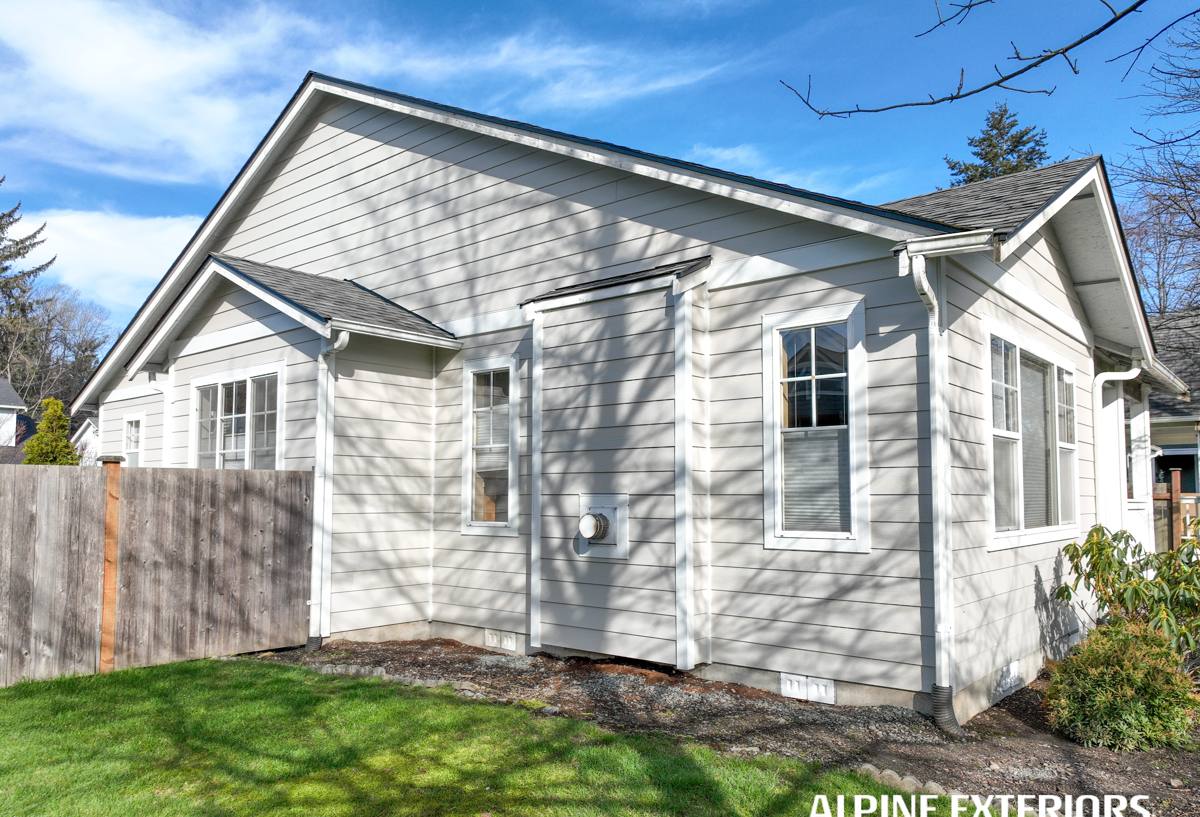
Average Lifespan by Material — the Honest Ranges
These are realistic ranges for our climate, not manufacturer best-case numbers. A roof at the low end of its range usually got there because of poor original installation, inadequate ventilation, or heavy shade and moss exposure — all common conditions on older Lynden homes.
| Material | Typical Range in Our Climate | What Shortens It Here |
|---|---|---|
| 3-tab asphalt shingle | 12-18 years | Moss lift, granule loss from constant moisture, wind on exposed farmland lots |
| Architectural (dimensional) asphalt shingle | 18-25 years | Same moisture and moss pressure, somewhat better wind and impact resistance |
| Cedar shake | 20-30 years with upkeep | Moss and moisture retention if not cleaned and treated regularly |
| Standing seam metal | 40-50+ years | Fastener and sealant wear at penetrations, coating fade over decades |
| Torch-down / membrane (low-slope) | 15-20 years | Ponding water on flat sections, seam failure at aging laps |
Notice the pattern: almost every failure mode in that right-hand column traces back to water sitting somewhere it shouldn't, or moss holding moisture against the roofing material longer than it was ever designed to tolerate. That's the throughline for the rest of this page.
What Actually Shortens a Roof's Life Around Lynden
A Long, Wet Moss Season
Whatcom County's moss season isn't a cosmetic issue — it's a mechanical one. Moss holds moisture against shingles and shake long after the surrounding air has dried out, and as it grows it physically lifts shingle edges and works into the granule layer. On north-facing slopes and roofs shaded by mature trees, which describes a large share of homes in and around Lynden, moss can shave years off a roof's usable life if it's never addressed.
Driving Rain and Wind-Driven Water
Rain that falls straight down is relatively easy for a roof system to shed. Rain that comes in sideways during a Nooksack Valley wind event finds every weak flashing detail, every under-driven nail, every place where underlayment laps the wrong direction. Over enough winters, wind-driven rain is what turns a small flashing gap into a slow leak.
Marine-Influenced Air and Metal Fatigue
Lynden sits inland from Bellingham Bay and the Strait of Georgia, but the marine air pattern still reaches this far into the valley, especially on south and west exposures. That salt-tinged, humid air accelerates corrosion on exposed fasteners, flashing, and metal roofing accessories faster than it would in a dry inland climate. It's a slow effect, but it's a real one over a 20-30 year timeline.
Temperature Swings and Freeze-Thaw Cycles
Our winters aren't brutally cold, but we get enough freeze-thaw cycling — especially on north-facing and shaded roof sections — to stress any water that's found its way under a shingle or into a seam. Repeated freezing and thawing is what turns a minor moisture intrusion into a cracked shingle or a lifted seam.
Reading the Warning Signs Yourself
You don't need to get on the roof to do a basic health check. Most of the early warning signs are visible from the ground or from a ladder at the eave line.
- Granules collecting in gutters or at downspout outlets — a sign the shingle surface is wearing thin
- Shingle edges that curl, cup, or lift, especially on south and west-facing slopes
- Dark streaking or heavy moss growth concentrated on shaded or north-facing sections
- Visible daylight or gaps at flashing points — chimneys, vent pipes, valleys, skylights
- Sagging or a soft, spongy feel anywhere on the roof deck (usually noticed from the attic first)
- Nail heads backing out or becoming visible through the shingle surface
- Interior signs — ceiling stains, musty attic smell, or visible daylight through the roof deck from inside the attic
- Missing or torn shingles after a windstorm, even just one or two
Any single item on that list, by itself, usually isn't an emergency. Several of them together, or any of them combined with a roof that's already past the midpoint of its expected material life, is worth a closer look before the next wet season.
Age vs. Condition: Why the Two Don't Always Match
We get called out to plenty of 15-year-old roofs that are in worse shape than some 25-year-old roofs down the street. The difference almost always comes down to three things: how well the original installation handled ventilation and flashing details, how much shade and moss exposure the roof has had, and whether anyone has done basic upkeep along the way. A well-ventilated, well-flashed roof that's been kept clear of moss can genuinely outperform its rated lifespan. A roof installed with poor attic ventilation or corner-cut flashing can fail well before its "expected" date, regardless of the material.
This is why we don't recommend replacing a roof on age alone. Age tells you where you are in the statistical range. A proper inspection tells you what's actually happening to your specific roof, on your specific house, under your specific trees.
Maintenance That Actually Moves the Needle
Not all roof maintenance is worth doing, and some of it can do more harm than good if it's done carelessly. Here's what's genuinely worth the effort in our climate:
- Keep gutters and valleys clear so water has a clean path off the roof instead of backing up under shingle edges
- Address moss before it establishes — a light touch early is far less disruptive than aggressive removal after years of growth
- Trim back overhanging branches to reduce shade, debris, and the abrasion that comes from branches scraping the surface in wind
- Have flashing points — chimneys, vents, skylights, valleys — checked periodically, since these fail long before the field of the roof does
- Confirm attic ventilation is adequate; trapped heat and moisture age a roof from underneath just as much as weather ages it from above
We'd rather talk a homeowner out of unnecessary pressure washing or harsh chemical moss treatments than sell a service that damages the shingle surface. Pressure washing in particular can strip granules and shorten a roof's life faster than the moss it was meant to remove — it's a common mistake, and one we steer people away from.
Repair vs. Replace: The Honest Cost-Factor Breakdown
There's no single rule that applies to every roof, but these are the factors that actually drive the decision once a roof shows real wear.
| Factor | Leans Toward Repair | Leans Toward Replacement |
|---|---|---|
| Age relative to material range | Under 60% of expected lifespan | Past 75-80% of expected lifespan |
| Extent of damage | Isolated to one section or flashing detail | Spread across multiple slopes |
| Decking condition | Solid, no soft spots | Soft, spongy, or visibly sagging |
| Number of past repairs | First or second repair | Repeated patch jobs on the same areas |
| Underlayment condition | Intact, still doing its job | Brittle, torn, or original to a very old roof |
When a roof is failing in one concentrated area — a valley, a chimney flashing, a single wind-damaged section — a targeted repair is usually the honest recommendation, even if the roof is getting older. When damage is spread across the whole roof or the decking itself is compromised, repeated repairs stop being cost-effective and start becoming a way to delay an inevitable replacement while spending money that won't show up as value later.
Planning Ahead Instead of Reacting to a Leak
The homeowners who get the best outcomes are the ones who start asking about roof condition a few years before they expect to need work, not the ones who call us mid-storm with water coming through a ceiling. A roof nearing the back third of its expected lifespan is a good candidate for an annual look, even absent any visible problems, simply so replacement can be planned and budgeted rather than forced by an emergency. Lynden's wet season makes emergency timing especially inconvenient — scheduling and material availability both tighten up once the rain sets in for the winter.
If you're unsure where your roof stands, the most useful thing you can do is get an honest, no-pressure look at it rather than guess from age alone. We're happy to come out, walk the roof, and tell you plainly whether you're looking at a maintenance issue, a repair, or a replacement worth planning for — no upsell, just a straight answer. Reach out using the form below for a free estimate.