 Lynden Roofing
 Roofing and Exterior Work for Everson Homes
Everson sits in the Nooksack River valley in Whatcom County, close enough to Lynden that we treat it as part of our regular service area rather than a special trip. That matters more than it sounds like it should. A crew that drives out once a year for an emergency call doesn't have the same read on a neighborhood as one that's out there routinely for tune-ups, inspections, and small jobs alongside the big ones. We know the general character of the area's weather and building stock, and we plan our work around it instead of applying a one-size-fits-all approach.
Everson's location in the valley means it gets its own mix of exposure: river-valley moisture, wind funneling down from the foothills, and the same long gray stretch of fall-through-spring weather that defines this part of Washington. None of that is exotic, but it's persistent, and persistent is what wears down a roof or a wall system over the years.
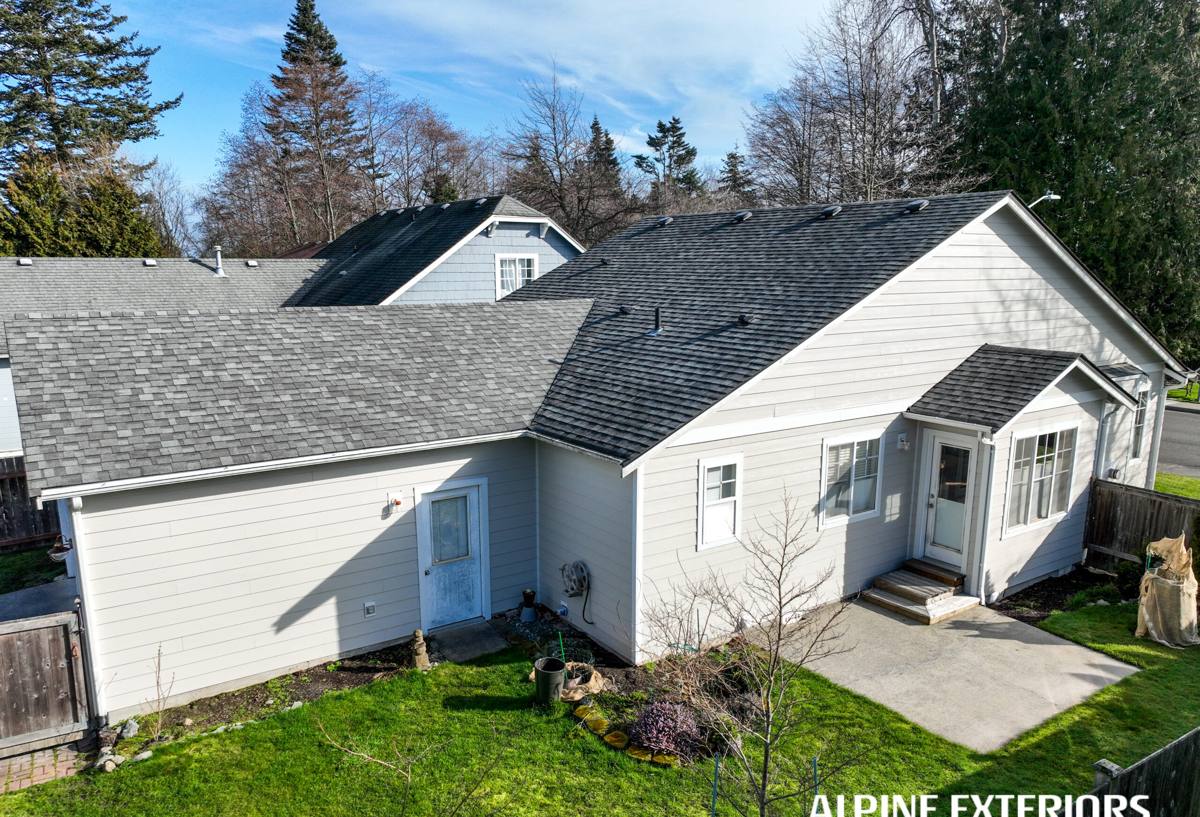
What the Local Climate Does to a Roof
Whatcom County doesn't get the dramatic storms some regions do — it gets something slower and, in some ways, more demanding: months of low-intensity rain, overcast skies that limit drying time, and the kind of humid, shaded conditions that let moss and algae take hold on roofing surfaces. If you've owned a home out here for more than a season or two, you've probably already seen moss creeping up a north-facing slope or along a shaded valley in the roofline.
Moss and Algae
Moss isn't just cosmetic. As it establishes itself on asphalt shingles or wood surfaces, it holds moisture against the roofing material far longer than open air ever would, and its root structure can work into shingle mat and lift edges over time. Left unchecked for years, that moisture retention accelerates granule loss on asphalt shingles and can contribute to rot on wood-based roofing or trim. Regular moss treatment and removal — done carefully, without pressure-washing that strips granules — is one of the simplest things a homeowner here can do to add years to a roof's life.
Driving Rain and Wind-Driven Moisture
Rain that comes in at an angle, pushed by wind off the valley, doesn't behave like straight-down rain. It gets up under flashing, around vents, and into any gap in the roofing system that a fair-weather roof might tolerate. That's why flashing detail — around chimneys, skylights, valleys, and wall-to-roof transitions — matters as much as the shingles themselves. A roof can have quality material on it and still leak if the flashing was rushed.
Salt Air and Coastal Influence
While Everson is inland from the immediate coastline, this part of Whatcom County still sees salt-tinged air moving in off Puget Sound and the Strait, especially with onshore weather patterns. Salt air accelerates corrosion on exposed metal — fasteners, flashing, gutter hardware — faster than it would inland in a drier climate. It's a slower, quieter form of wear than moss or leaks, but it adds up over the life of a roof or siding system, especially where corrosion-resistant materials weren't used to begin with.
Roof Replacement and Repair
Every roof job we do starts with an honest look at what's actually there — decking condition, ventilation, existing flashing, and how much life is realistically left in the current roofing. Sometimes a repair is the right call: a section of damaged shingles, a flashing detail that was never done right, or moss remediation before it does more damage. Other times, especially on a roof already past 20-25 years, patching becomes a losing game and a full replacement is the more honest recommendation.
We work with standard asphalt shingle systems as well as metal roofing, and we talk through the tradeoffs plainly:
| Factor | Asphalt Shingle | Metal Roofing |
|---|---|---|
| Upfront cost | Lower | Higher |
| Typical lifespan | 20-30 years | 40-50+ years |
| Moss resistance | Moderate — needs periodic treatment | Better shedding, still needs occasional cleaning in shaded areas |
| Wind-driven rain performance | Good with proper flashing and underlayment | Very good with proper seam and fastener detail |
| Noise in heavy rain | Minimal | Noticeable unless properly insulated/decked |
Neither option is wrong — it depends on budget, how long you plan to stay in the home, and how much maintenance you want to take on. We'll give you our honest read rather than pushing whichever product carries the better margin.
Siding That Holds Up in the Valley
Siding takes a different kind of abuse than a roof — it's the wall against wind-driven rain, splash-back moisture near grade, and temperature swings that cause expansion and contraction over the seasons. In our experience, siding failures in this region usually trace back to one of a few root causes: poor original installation (gaps, improper flashing at windows and trim), materials that weren't suited to sustained moisture exposure, or simple age.
We install and repair fiber cement, engineered wood, and vinyl siding systems, and we're upfront about why we favor certain approaches for this climate. Fiber cement, for example, handles sustained moisture exposure and freeze-thaw cycling better than many wood-based alternatives, though it's heavier and less forgiving to install — which is exactly why installation quality matters as much as the product choice itself. A well-installed mid-tier product will consistently outperform a premium product installed carelessly.
Windows: Sealing Out Moisture, Not Just Drafts
In a climate this wet, window replacement is as much about moisture management as it is about energy efficiency. Old or poorly flashed windows are a common source of hidden water intrusion — the kind that shows up as soft trim or discoloration on an interior wall long after the actual leak started. When we replace windows, proper flashing and integration with the surrounding siding or wall system gets as much attention as the window unit itself, because a great window installed without correct flashing will leak just the same as a cheap one.
We also talk with homeowners about realistic expectations: no window is maintenance-free, but the frequency of caulking touch-ups and hardware checks drops significantly with a properly installed, quality unit versus an older single-pane or poorly sealed replacement window.
Decks Built for Wet-Season Reality
A deck in Whatcom County spends a lot of its life wet, shaded, or both — conditions that are hard on fasteners, ledger connections, and any wood surface that doesn't drain and dry properly. We build and repair decks with drainage and airflow in mind: proper spacing, ledger flashing that actually sheds water away from the house rather than into it, and fastener choices that resist the same corrosion pressure the rest of the exterior faces.
Composite decking has become a common choice here specifically because it holds up to sustained moisture and shaded, slow-drying conditions better than untreated wood, without the annual staining and sealing cycle wood decking demands. It's not the right fit for every budget or every homeowner's preference, and we'll walk through the real cost and maintenance differences rather than assuming one answer fits everyone.
Why a Local Crew Matters
Being based near Lynden and working throughout Whatcom County, including Everson, means we're not learning the area's climate patterns on your project — we've already seen how moss builds up on shaded roof faces, how flashing tends to fail around valley features, and how salt-influenced air affects exposed hardware over time. That translates into faster, more accurate estimates and fewer surprises mid-project.
It also means accountability. If something needs a warranty callback or a follow-up inspection years down the line, we're not driving in from out of the area — we're already local.
A Simple Maintenance Checklist for Everson Homeowners
Between professional inspections, a few habits go a long way toward protecting a roof and exterior in this climate:
- Check for moss buildup on shaded or north-facing roof slopes at least once a year
- Keep gutters and downspouts clear so water isn't backing up under roof edges
- Look for discoloration or soft spots on interior ceilings near exterior walls — early signs of a slow leak
- Inspect caulking around windows and trim annually, especially after a hard winter
- Walk the deck for soft boards, loose fasteners, or standing water after heavy rain
- Trim back vegetation that keeps roof or siding sections shaded and slow to dry
Getting an Honest Estimate
Every home in Everson carries its own combination of age, exposure, and prior work, so we don't quote roofing, siding, window, or deck projects without actually looking at the property first. If you're seeing moss, a slow leak, aging siding, or just want a straight read on how much life is left in what you've got, we're glad to come take a look. The estimate is free, there's no pressure attached to it, and you'll get a clear explanation of what we find and what your realistic options are — fill out the form below to get started.