 Lynden Roofing
 Roofing in Aldergrove, BC: A Local Lynden Crew Just Over the Line
Aldergrove sits close enough to Lynden that our crews cross the border for a job the same way they'd drive across town. That proximity matters more than it might seem. A roof in Aldergrove faces almost the exact same weather pattern as a roof in Lynden or anywhere else in Whatcom County — the same Pacific storm track, the same long wet season, the same moss problem. We're not a big regional outfit dispatching a crew that's never worked this climate before. We're a Lynden company that already understands what this corner of the Pacific Northwest does to a roof, and we bring that experience across the line.
This page is about what homeowners in and around Aldergrove tend to run into with their roofs, how we approach the work, and what to expect if you're considering a repair, a full replacement, or just want an honest inspection before you commit to anything.
What the Local Climate Does to a Roof
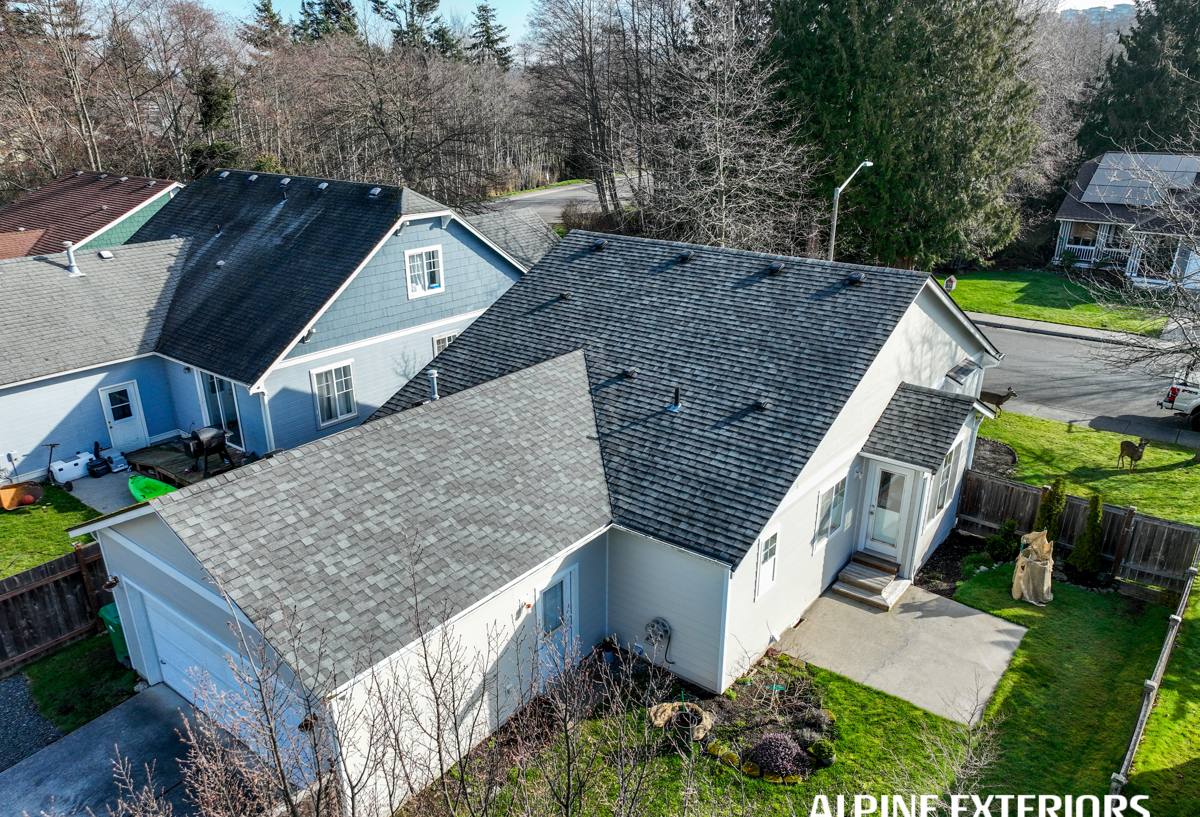
Aldergrove and Lynden both sit in the Fraser Valley / North Whatcom weather corridor — mild temperatures year-round, but a lot of moisture and a lot of gray, overcast stretches where roofs never fully dry out. That combination is harder on a roof than a single hard freeze or a single big storm. It's the slow, repeated exposure that wears materials down.
Moss and a Long Growing Season
Moss doesn't need extreme weather to take hold — it needs shade, moisture, and time, and this region hands it all three for most of the year. Once moss establishes on a roof, it holds water against the surface long after the rest of the roof has dried, and it works its way under shingle tabs and around flashing edges. Left alone for a few seasons, that moisture retention shortens the life of asphalt shingles noticeably and can contribute to soft spots in the decking underneath.
Driving Rain and Wind-Driven Moisture
Storms coming off the Strait of Georgia and the Fraser Valley often bring rain sideways, not straight down. Wind-driven rain finds any gap in flashing, any lifted shingle edge, or any undersized valley and pushes water where gravity alone wouldn't take it. This is why flashing detail and valley work matter as much as the shingles themselves — a roof can have good material on it and still leak if the flashing was installed carelessly.
Salt Air and Slow Material Fatigue
Homes closer to the water, and even some further inland when the wind is right, deal with a fine salt content in the air that accelerates corrosion on exposed metal — nail heads, flashing, gutter fasteners, and vent stacks. It's a slow effect, not a dramatic one, but over ten or fifteen years it's the difference between fasteners that hold and fasteners that rust through.
Common Issues We See in Aldergrove-Area Homes
- Moss buildup on north-facing slopes and shaded roof sections that get little direct sun
- Granule loss on aging asphalt shingles from years of standing moisture
- Flashing that's rusted, lifted, or was never properly sealed at chimneys and skylights
- Clogged or undersized gutters that push water back under the roof edge during heavy rain
- Soft or spongy decking discovered only once shingles are pulled for repair
- Vent stack boots that have cracked and dried out from years of weather cycling
Most of these don't show up as a dramatic leak right away. They show up as a slow stain on a ceiling, a slightly higher heating bill, or a patch of moss that keeps coming back no matter how many times it's power-washed off. Catching them early is almost always cheaper than waiting.
Our Roofing Services
We handle the full range of residential roofing work, from a single repair to a complete tear-off and replacement:
- Roof inspections and honest condition assessments — including for pre-purchase home buyers
- Asphalt shingle roof replacement and repair
- Metal roofing installation for homeowners who want a longer-term, lower-maintenance option
- Flat and low-slope roofing for additions, porches, and outbuildings
- Flashing repair and replacement around chimneys, skylights, and valleys
- Moss treatment and roof cleaning as part of a broader maintenance plan
- Storm damage repair and emergency tarping
Choosing a Roofing Material for This Climate
There's no single "best" roofing material — the right choice depends on your budget, how long you plan to stay in the home, and how much maintenance you want to take on. Here's how the main options compare for a wet, moss-prone climate like ours:
| Material | Typical Lifespan Here | Moss/Moisture Resistance | Maintenance |
|---|---|---|---|
| 3-tab asphalt shingle | 15–20 years | Moderate — needs regular moss control | Low cost, but shortest lifespan in this climate |
| Architectural (dimensional) shingle | 25–30 years | Good — thicker profile sheds water better | Moderate; still benefits from periodic moss treatment |
| Standing seam metal | 40–50+ years | Excellent — moss struggles to hold on smooth metal | Very low; occasional fastener and sealant checks |
| Low-slope membrane (flat roof areas) | 15–25 years | Depends heavily on drainage design | Requires attention to ponding and seam integrity |
For most single-family homes we still install a lot of architectural asphalt shingle roofs — it's a good balance of cost and performance when it's installed correctly, with proper underlayment and ice-and-water protection at the eaves and valleys. Metal roofing has become more popular with homeowners who are tired of moss maintenance and want to stop thinking about their roof for several decades. Neither choice is wrong; it's about matching the roof to your plans for the house.
Beyond the Roof: Siding, Windows, and Decks
The same weather that wears down a roof works on the rest of the exterior too, which is why we don't treat roofing as an isolated job. Wind-driven rain that gets past a roof edge often shows up as rot at the fascia or the top course of siding. Old windows with failed seals let moisture into wall cavities the same way a bad flashing detail does on a roof. And a deck exposed to year-round rain needs the same kind of moisture-conscious construction as anything above it.
When we're on an Aldergrove property for a roof estimate, we'll point out anything we notice on the siding, trim, or windows while we're up there — not to upsell, but because catching a small siding gap or a failing window seal early is a lot cheaper than dealing with the water damage it causes later. If you're planning a deck build or replacement, the same moisture logic applies: proper flashing where the deck meets the house, decking material suited to constant wet-dry cycling, and ledger connections that won't trap water against the structure.
What a Cross-Border Job Looks Like
Working on a home in Aldergrove instead of Lynden doesn't change how we do the roofing work — it changes the logistics around it. We coordinate scheduling so crews and material deliveries cross at a reasonable time, and we work with each homeowner individually on anything specific to their property or municipality, including confirming permit requirements with the Township of Langley where applicable. We're upfront if there's a step in the process that needs to go through a local authority rather than us directly, and we'll tell you plainly if something is outside what we handle. The goal is no surprises — you should know exactly what's being done, by whom, and under what approval before work starts.
A Practical Maintenance Checklist
Whether your roof is five years old or twenty, a few habits go a long way in this climate:
- Have moss growth treated before it spreads across a full slope, not after
- Clean gutters at least twice a year — more often if you're under fir or cedar trees
- Check attic ventilation; poor airflow traps moisture and accelerates decking rot from underneath
- Look at flashing around chimneys and skylights every year or two for lifting or rust
- Walk the perimeter after major windstorms and check for lifted or missing shingles
- Get a professional inspection every few years even if nothing looks obviously wrong
Signs You Shouldn't Ignore
Some warning signs are easy to miss until they've turned into a bigger repair:
| What You Notice | What It Often Means |
|---|---|
| Dark streaks or thick moss on shaded slopes | Moisture retention that's shortening shingle life |
| Granules collecting in gutters or downspouts | Shingle surface wearing down, reducing weather protection |
| A ceiling stain that appears after a windstorm specifically | Likely a flashing or valley leak, not a general roof failure |
| Daylight visible in the attic near the roofline | Gap in decking or flashing that needs prompt attention |
| Sagging in a section of roofline | Possible structural or decking issue — needs an inspection soon |
Why a Local Crew Matters
A roofing crew that works this region regularly knows things a crew from outside the area has to learn on your dime — which slopes tend to hold moss longest, how much ice-and-water protection actually makes sense at this latitude, and what flashing details hold up against wind-driven rain versus what looks fine on paper but fails in year three. We've built our business on being straightforward about what a roof needs and what it doesn't, whether that's a full replacement or just a repair and a maintenance plan. If a roof has a few good years left in it, we'll tell you that instead of pushing a replacement it doesn't need yet.
Get a Free, No-Pressure Estimate
If you're in Aldergrove and dealing with moss, a suspicious ceiling stain, an aging roof, or you just want a straight answer on how much life is left in what's up there, we're glad to come take a look. The estimate is free, there's no pressure to book anything on the spot, and you'll get a clear explanation of what we see and what your realistic options are. Use the form below to get started.