 Lynden Roofing
 Building a Deck That Can Handle Blaine's Weather
Blaine sits right on the water at the edge of Whatcom County, and that location shapes everything about how a deck should be built here. Homes close to Semiahmoo Bay and the Strait of Georgia deal with a combination most inland Washington towns don't: salt-laden air, wind-driven rain that gets pushed sideways into structures, and a long, damp shoulder season where moss and mildew have months to take hold on any horizontal wood surface. A deck built to a generic spec sheet might look fine the first summer. Out here, the difference shows up in year three or four, when fasteners start weeping rust stains, ledger boards trap moisture against the house, or the boards themselves stay slick and green well into June.
We build decks for homeowners throughout Blaine and the surrounding Lynden and Whatcom County area, and this page walks through what actually matters for a deck in this specific environment — the materials, the hardware, the framing details, and the maintenance realities — so you know what to expect and what to ask for.
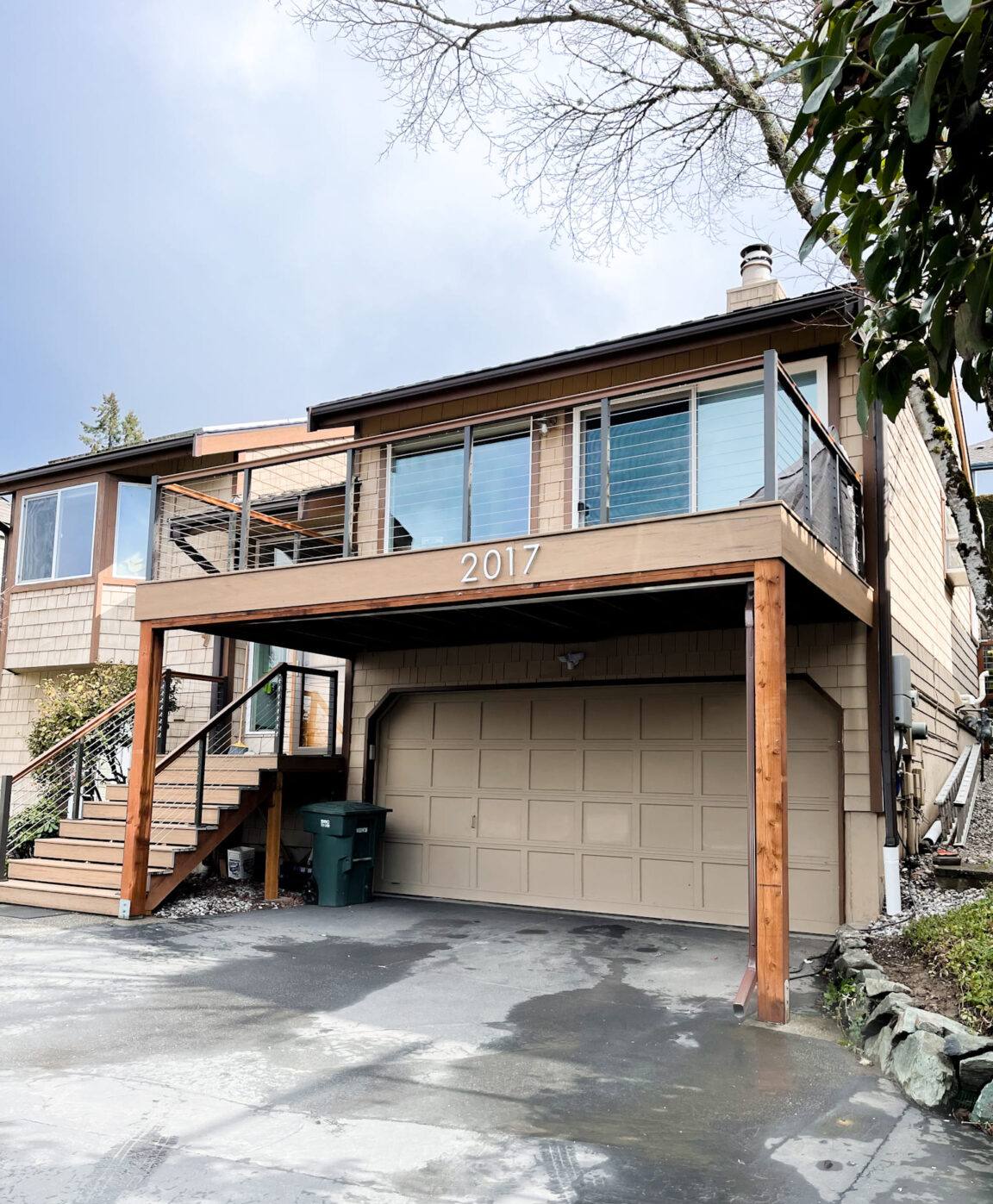
What Salt Air and Driving Rain Actually Do to a Deck
Two separate forces are working against a deck near the coast, and they attack different parts of the structure.
Salt Air and Corrosion
Airborne salt accelerates corrosion on any exposed metal — nails, screws, joist hangers, post bases, and railing hardware. Standard construction-grade fasteners that would last decades inland can start rusting within a few years in a coastal environment like Blaine's. Once a fastener corrodes, it loses holding strength, and rust can bleed into the surrounding wood or composite, leaving stains that don't come out.
Driving Rain and Moisture Intrusion
Rain in this part of Whatcom County doesn't always fall straight down. Wind off the water pushes it sideways, which means it gets driven up under railings, behind ledger boards, and into any gap or seam that wouldn't be a problem in a calmer climate. Where a deck attaches to the house is the single most important point to get right — a poorly flashed ledger board is the most common source of hidden rot we find on older decks in this area, because water works its way behind the board and soaks the house's rim joist without ever showing on the surface.
Choosing the Right Decking Material for Blaine
There's no single "best" decking material — there's a best material for your budget, your maintenance appetite, and how close your lot sits to the water. Here's an honest comparison of the main options we work with.
| Material | How It Handles Salt Air & Rain | Maintenance | Typical Lifespan |
|---|---|---|---|
| Pressure-treated fir/hem-fir | Decent if sealed regularly; end grain and fastener holes are vulnerable points | Annual cleaning, re-sealing every 1-2 years | 15-20 years with upkeep |
| Cedar | Naturally rot- and insect-resistant, but still needs finish to resist graying and moisture cupping near the coast | Cleaning plus periodic finish, more than composite | 20-25 years with upkeep |
| Composite (capped) | Doesn't absorb moisture like wood; handles humid, salty air well; won't rot | Occasional washing, no sealing or staining | 25-30+ years |
| Tropical hardwood (e.g. ipe) | Very dense and durable, resists moisture well | Periodic oiling to maintain color, otherwise low | 30+ years |
For homes close to the water where salt exposure is heaviest, we lean toward capped composite or a dense hardwood, simply because they don't give moisture and salt as much to work with. For homes a bit further inland or on a budget, a well-sealed cedar or treated deck is still a sound choice — it just asks more of you in upkeep.
Fasteners and Hardware Matter as Much as the Boards
A beautiful composite deck built with the wrong screws will still show rust streaks within a couple of years. In a coastal environment like Blaine's, we spec stainless steel or heavy hot-dip galvanized fasteners and connectors rated for coastal or ACQ-treated lumber use, not the standard-grade hardware that's fine for a deck twenty miles inland. It costs a little more up front. It's the difference between hardware that outlasts the deck and hardware that fails before the boards do.
Framing, Footings, and Ledger Details Built for This Coast
The parts of a deck you never see are the parts that determine whether it lasts. A few details we treat as non-negotiable on Blaine builds:
- Ledger boards flashed with proper metal or composite flashing and a water-resistant barrier behind them, not just caulk, to keep driving rain from tracking behind the board and into the house framing.
- Joist tape or a moisture barrier on top of every joist, since standing water on top of a joist under the decking is one of the most common hidden rot points we see on older coastal decks.
- Footings set below frost depth and sized for our soil conditions, with post bases that hold the post up off the concrete so it isn't sitting in standing water after a heavy rain.
- Corrosion-resistant joist hangers and structural screws throughout, matched to whatever decking and framing material is used.
- Adequate airflow underneath the deck so moisture doesn't get trapped against the framing — a low, tightly skirted deck with no ventilation is a slow rot problem waiting to happen in this climate.
Moss, Mildew, and What Long Whatcom County Winters Do to Decking
Whatcom County's damp, mild winters mean moss and algae have a long runway to establish themselves on any north-facing or shaded deck surface. Beyond looking bad, a mossy deck surface is a genuine slip hazard once it gets wet, and left unaddressed, moss holds moisture against the board surface longer than it would otherwise sit there.
A few things reduce how much of a problem this becomes over the life of the deck:
- Board spacing and orientation that lets water drain and air move rather than pool.
- Choosing a decking surface with texture and color that hides the early stages of algae growth versus one that shows every spot immediately.
- Keeping overhanging trees trimmed back so the deck gets some sun and airflow rather than staying shaded and damp all season.
- A simple annual or biannual wash-down — for most materials this is the single biggest factor in how a deck looks after five winters versus how it looks neglected.
We'll talk through what's realistic for your specific lot and sun exposure when we come out for an estimate, rather than giving you a one-size-fits-all maintenance schedule that doesn't account for whether your deck sits in full sun or under a stand of fir trees.
Permits and Code Requirements for Deck Building in Whatcom County
Most decks attached to a home, and many freestanding decks above a certain height, require a building permit in Whatcom County, along with inspections at key stages like footings and framing before the decking goes down. Requirements can also touch on railing height, guard spacing, and stair geometry if your deck is elevated. We handle the permit process as part of the job — pulling the permit, scheduling inspections, and building to the code requirements that apply to your property — so you're not left tracking that down yourself or discovering a problem after the fact.
Our Deck Building Process
Every deck starts with a site visit, not a phone estimate. Here's roughly how a project moves from first call to finished deck:
- On-site consultation to look at your home's ledger connection point, sun and wind exposure, soil, and how the deck will actually be used.
- A written proposal covering material options, framing approach, and a clear cost range, so you're choosing between real options rather than guessing.
- Permit drawings and submission where required, handled on your behalf.
- Demolition of any existing structure and site prep, with attention to protecting your landscaping and existing drainage.
- Footings, framing, and ledger flashing — the structural work that determines how the deck performs for the next twenty-plus years.
- Decking, railing, and stair installation, followed by a final walkthrough with you before we call it done.
Why a Crew That Already Works in Blaine Matters
A deck built to a generic inland spec is a deck that's already behind before the first winter storm off the water hits it. Building decks regularly in Blaine and along the Whatcom County coastline means we're not guessing at which fasteners hold up, which ledger flashing details actually stop wind-driven rain, or which decking materials are worth the extra cost this close to salt air versus which ones are overkill a few miles inland. That local, repeated experience is what keeps a deck looking and performing the way it should well past the point where a corner-cut build starts falling apart.
If you're planning a new deck or replacing one that's showing its age, we're happy to come out, take a look at your specific site and sun exposure, and put together a free, no-pressure estimate — just fill out the form below to get started.