 Lynden Roofing
 Exterior Work Built for Maple Falls Conditions
Maple Falls sits in a part of Whatcom County where the exterior of a house works harder than most homeowners realize. Between the marine air moving in off the coast, long stretches of driving rain through fall and winter, and shaded, tree-covered lots that hold moisture well into the afternoon, roofs and siding here age differently than they would in a drier inland climate. Lynden Roofing Co has spent years working on homes throughout this part of the county, and Maple Falls properties tend to show a consistent set of wear patterns tied directly to that environment.
This page walks through what we typically see on roofs, siding, windows, and decks in the area, how our approach is built around those conditions, and what to think about if you're planning a repair or replacement.
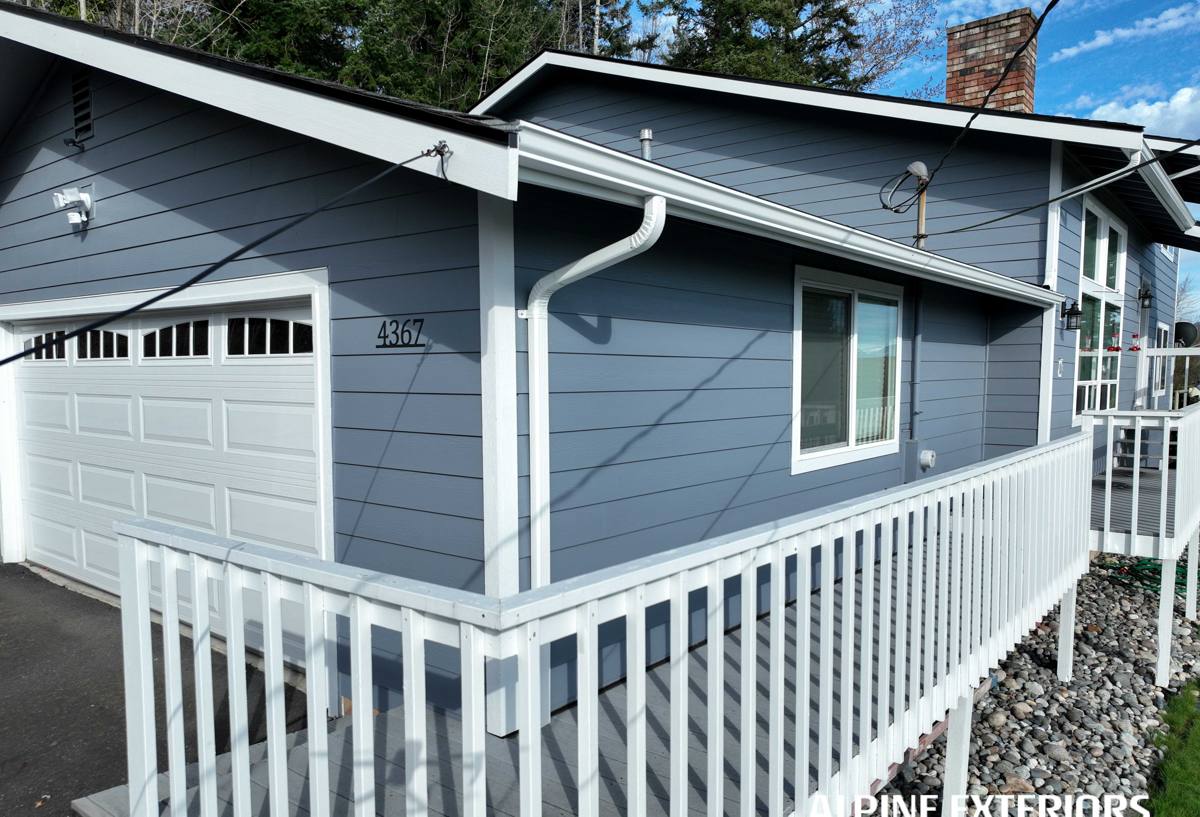
Why the Local Climate Matters More Than Most Homeowners Expect
Three factors drive most of the exterior wear we see on homes in and around Maple Falls:
- Salt-tinged marine air — moisture-laden air moving inland accelerates corrosion on fasteners, flashing, and any exposed metal components over time.
- Driving rain — wind-driven rain doesn't just fall on a roof, it gets pushed sideways into laps, seams, and wall penetrations, which puts extra demand on flashing details and siding overlaps.
- Extended moss and algae season — shaded, tree-lined lots stay damp longer, which gives moss and moisture-loving growth more time to establish on roofing and siding surfaces than it would in a more open, sun-exposed setting.
None of these factors are unique to Maple Falls, but the combination — heavy tree cover, proximity to moving marine air, and a long wet season — shows up reliably in the condition of older roofs and siding we inspect in this area.
What This Means for Roofing Specifically
Moss doesn't just sit on a roof looking bad. As it grows, it lifts shingle edges, holds moisture against the roofing surface for extended periods, and slowly works its way under laps. Left unaddressed, that moisture retention shortens the life of asphalt shingles well below their rated lifespan and can lead to sheathing damage that isn't visible from the ground. Homes with heavy tree cover — common throughout Maple Falls — need more frequent moss treatment and roof inspection than homes in open, sun-exposed areas.
What This Means for Siding
Driving rain finds weak points in siding systems that calm-weather installations never get tested against. Lap siding with insufficient overlap, poorly sealed trim joints, or aging caulk at penetrations can let water behind the cladding, where it's slow to dry given the region's humidity. We pay particular attention to water management details — flashing, weep paths, and drainage gaps — on every siding job in this area, not just the visible finish.
Roofing Services in Maple Falls
Our roofing work in this area covers the full range from minor repair to complete tear-off and replacement:
- Roof inspections, including checks for moss damage, soft decking, and flashing wear
- Moss and debris removal with treatment to slow regrowth
- Leak diagnosis and repair, including tracing water intrusion back to its actual source rather than just patching the visible symptom
- Full roof replacement, including sheathing repair or replacement where moisture has caused damage
- Flashing replacement around chimneys, skylights, and roof-to-wall transitions
- Gutter and downspout evaluation as part of overall water management
Because heavy tree cover is common throughout Maple Falls, we also factor in things like overhanging branches and debris accumulation when we talk through maintenance recommendations — a roof under a stand of tall conifers needs a different upkeep rhythm than one in an open field.
Roofing Material Considerations
Asphalt composition shingles remain the most common and cost-effective choice for most homes in the area, and modern architectural shingles hold up well against wind-driven rain when installed with proper underlayment and flashing detail. Metal roofing is a option some homeowners consider for its longevity and shedding ability in moss-prone settings, though it comes with a higher upfront cost and different maintenance considerations around fastener corrosion in a marine-influenced climate. We'll walk through the honest trade-offs for your specific roof rather than pushing one material as a default.
| Roofing Factor | Asphalt Composition | Metal |
|---|---|---|
| Upfront cost | Lower | Higher |
| Moss resistance | Moderate (needs periodic treatment) | Higher, but not immune under heavy tree cover |
| Fastener/flashing exposure | Standard maintenance | Requires corrosion-resistant fasteners in marine air |
| Typical lifespan (well-maintained) | 20-30 years | 40-50+ years |
| Repair complexity | Straightforward, widely available materials | More specialized labor and materials |
Siding Services for the Area
Siding takes a steady beating from wind-driven rain in this part of Whatcom County, especially on the weather-facing sides of a home. Our siding work includes:
- Full siding replacement in fiber cement, vinyl, or engineered wood products, matched to the home and budget
- Repair of damaged or failing sections, including rot remediation behind the cladding where water has gotten in
- Trim, corner, and J-channel detailing that accounts for wind-driven rain rather than just vertical rainfall
- Moisture barrier and flashing correction during re-siding projects, since a new siding job is the best opportunity to fix water management issues hiding underneath the old material
We tend to favor fiber cement siding for its dimensional stability and resistance to moisture-driven swelling in a climate that stays damp for long stretches of the year, though it's a heavier, more labor-intensive install than vinyl. Vinyl remains a solid, budget-conscious option when installed with correct expansion allowances and properly lapped and flashed penetrations. The right choice depends on your home's exposure, budget, and how long you plan to stay in the house — we'll talk through it honestly rather than defaulting to whatever's easiest to sell.
Windows: Sealing Out Driving Rain
Windows are one of the most common places we find hidden water intrusion on older homes in this area, and it's rarely the glass itself — it's the flashing and sealant around the window frame. Driving rain pushes water sideways into gaps that would never be tested by straight-down rainfall, which is exactly the failure mode we see most on aging window installations here. Our window services include:
- Replacement window installation with correct flashing integration into the surrounding wall assembly
- Repair or resealing of existing windows showing early signs of water intrusion
- Energy-efficiency upgrades, which also tend to improve comfort in homes that see cold, damp winters
Window replacement is also a natural pairing with a siding project, since both jobs involve opening up the same wall areas — doing them together can reduce redundant labor and gives us a chance to inspect and correct any moisture damage in one pass.
Decks: Built to Handle Standing Moisture
Decks in shaded, tree-covered settings face their own version of the same problem — extended dampness that promotes rot, mold, and slippery surface growth. For deck work, we focus on:
- Proper spacing and drainage in decking board layout to reduce standing water
- Ledger board and structural connection integrity, since this is a common point of hidden rot on older decks
- Composite and pressure-treated wood options, each with different maintenance expectations in a consistently damp climate
- Railing and stair repair or replacement to current safety standards
A deck that sits under heavy tree cover will need more frequent cleaning and, depending on material, periodic sealing or staining to keep moisture from working into the wood grain over time.
What to Check Before Hiring an Exterior Contractor
Whatever project you're considering, a few basics apply regardless of who you hire:
- Confirm the contractor is licensed and insured in Washington State, and ask to see proof rather than taking it on faith
- Ask specifically how they handle flashing and water management details, not just the visible finish material — this is where most long-term failures start
- Get a written estimate that spells out materials, scope, and timeline
- Ask how they handle unexpected damage found once old material is removed, since hidden rot or moisture issues are common on older homes in this climate
- Check that warranty terms are clearly explained, both for materials and for labor
Why a Local Crew Matters Here
Working throughout Lynden and the surrounding Whatcom County communities, including Maple Falls, means we see the same climate patterns repeat across job after job — the same moss growth cycles, the same wind-driven rain exposure on certain house orientations, the same fastener corrosion issues near the coast. That familiarity shapes how we bid a job, what we flag during an inspection, and what maintenance schedule we recommend afterward. A crew that only occasionally works in this specific climate is more likely to underestimate how much moss treatment, water management detail, or material choice actually matters here over the long run.
If you're dealing with a roof that's showing moss buildup, siding that's taking on water, aging windows, or a deck that never quite dries out, we're happy to come take a look. We offer free, no-pressure estimates — walk the property with us, get a straight assessment of what's actually going on, and decide from there. Use the form below to get in touch.