 Lynden Roofing
 Blaine's Climate Is Rougher on Siding Than Most of Whatcom County
Blaine sits right at the edge of the Pacific, close enough to the water that salt air is a daily fact of life, not an occasional nuisance. Add the wind-driven rain that blows in through the winter months and the long, damp moss season that follows, and you have a combination that wears down exterior materials faster than it does just a few miles inland in Lynden. Siding here doesn't just need to look good on install day — it needs to hold up to salt-laden air, repeated soaking, and shaded, moisture-prone wall sections that barely dry out between storms.
We install James Hardie fiber cement siding exclusively, and Blaine is one of the areas where that decision matters most. Wood-based products swell, rot, and invite moss in exactly these conditions. Vinyl can hold up structurally but tends to chalk, fade, and warp faster under sustained salt exposure and temperature swings near the water. Hardie's fiber cement composition doesn't feed moss the way wood does, doesn't corrode like some metal trims, and is engineered specifically for the kind of moisture cycling a coastal Whatcom County home goes through every year.
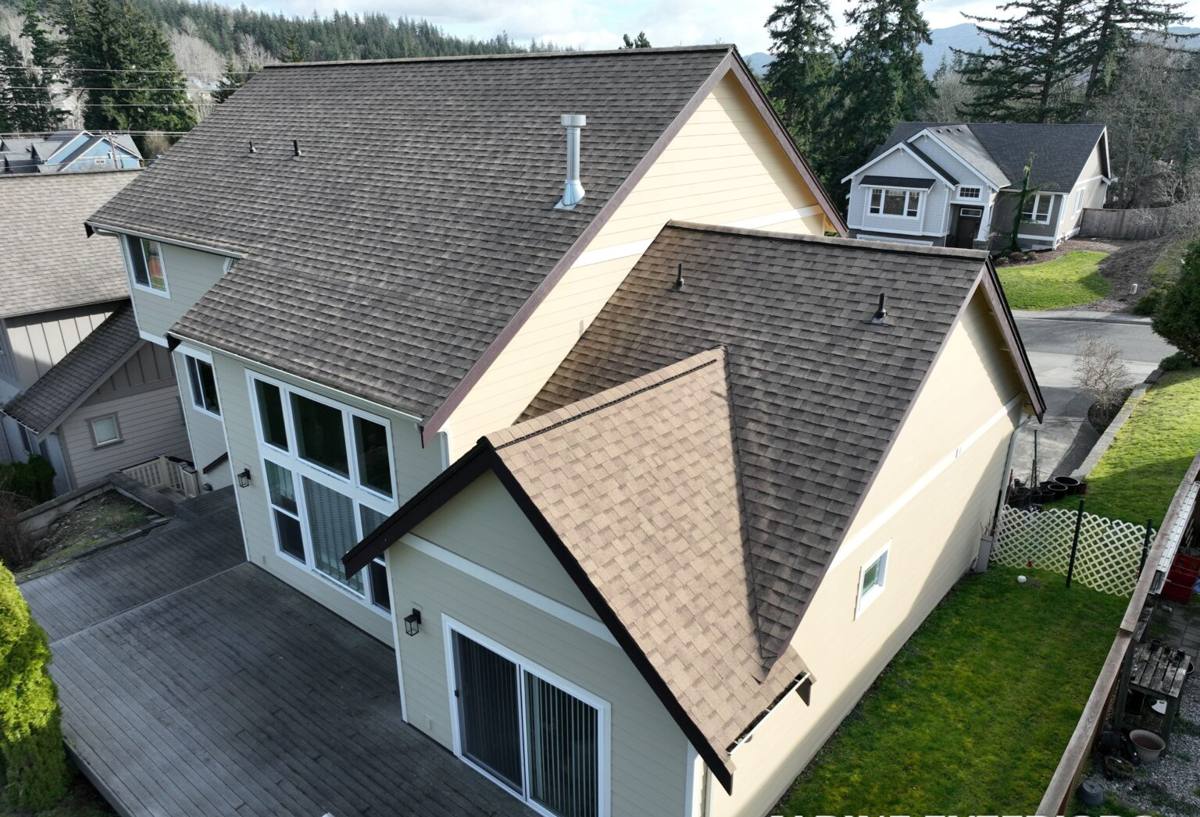
What a Coastal Home in Blaine Actually Needs From Its Siding
Homeowners often ask us what "climate-appropriate siding" really means in practical terms. For Blaine, it comes down to three things:
- Moisture resistance that doesn't rely on paint film alone — the material itself needs to shrug off repeated wetting without swelling, cupping, or delaminating.
- A finish that resists salt-air fading and chalking — job-site painted surfaces break down faster near the coast than factory-cured finishes.
- A surface moss and algae don't colonize easily — especially on north-facing and shaded walls that stay damp through much of the fall and winter.
James Hardie's HZ5 product line is engineered for exactly this kind of exposure — the freeze-thaw cycling, wind-driven rain, and moisture load common to the Pacific Northwest coast. Combined with the factory-applied ColorPlus finish, it gives Blaine homes a siding system that isn't depending on a job-site paint job to survive the salt air.
Why ColorPlus Finish Matters More Here Than Inland
ColorPlus is baked on in a controlled factory environment through multiple coats and a curing process that job-site painting simply can't replicate. In a salt-air environment, that difference shows up early: factory-finished panels resist fading and chalking far longer than a field-primed-and-painted product, and touch-up paint is formulated to match rather than guessed at. For a coastal property, that's fewer repaint cycles over the life of the siding, not just a cosmetic upgrade.
What Correct Installation Involves for a Blaine Property
James Hardie siding performs the way it's engineered to only when it's installed to the manufacturer's specifications. This is where a lot of the real-world difference between a good siding job and a problem siding job actually happens — and it's almost entirely below the surface.
Moisture Management Behind the Siding
Correct installation starts with the water-resistive barrier and flashing details, not the siding itself. Every window, door, and penetration needs proper head flashing and kick-out flashing where rooflines meet walls, and the drainage plane behind the siding needs a functioning gap so incidental moisture can escape instead of tracking into the wall assembly. On a home exposed to driving coastal rain, a missed flashing detail is exactly the kind of shortcut that shows up as a moisture problem years later.
Clearances, Fastening, and Joint Detailing
Hardie specifies minimum clearances from grade, roofing, and decking — typically several inches — so the bottom edge of the siding isn't sitting in standing water or splash-back. Fasteners need to be corrosion-resistant and driven to the manufacturer's depth and spacing, since over-driven nails crack the material and under-driven ones leave it loose. Butt joints get sealed or flashed per spec, not just caulked and hoped for. None of this is complicated, but every one of these details is a place where a rushed install skips a step that doesn't show up as a problem until the next few winters have passed.
Fastener and Trim Corrosion Near the Coast
Salt air accelerates corrosion in anything less than fully rated stainless or hot-dip galvanized fasteners and trim components. We spec corrosion-resistant fasteners and flashing on Blaine jobs specifically because of the proximity to salt water — a detail that matters less a few miles inland but is worth getting right here from day one rather than dealing with rust streaks and loosening trim down the road.
James Hardie Product Lines That Make Sense for This Area
Not every Hardie product is the right fit for every wall or every home style. Part of our estimate process is matching the right line to the exposure and look you want.
| Product | Best Use | Why It Fits Blaine |
|---|---|---|
| HardiePlank Lap Siding | Primary wall siding, most home styles | HZ5 formulation handles wind-driven rain and moisture cycling; wide color and texture range |
| HardiePanel Vertical Siding | Modern or mixed-material facades, accent walls | Clean lines with the same moisture and salt-air performance as lap siding |
| HardieShingle Siding | Gable accents, Craftsman and cottage styles | Shadow-line look without the moss-prone maintenance of real wood shingle |
| HardieTrim Boards | Corners, fascia, window and door trim | Matches the siding's moisture resistance so trim doesn't become the weak point |
ColorPlus finishes come in a range of coastal-friendly tones, and for homeowners who want their existing trim color or a custom match, primed Hardie board is also available — though we'll always walk you through the trade-off in maintenance versus a factory finish before you decide.
Why We Standardized on James Hardie Instead of the Alternatives
We get asked fairly often why we don't offer vinyl, LP SmartSide, or cedar as options. The honest answer is that we looked at what actually holds up in this climate over a full ownership cycle, not just what looks good on install day.
Vinyl is inexpensive and low-maintenance in a general sense, but it's also more prone to becoming brittle, warping, or fading under the combination of salt air and UV exposure near the water, and it's not a fire-resistant material. LP SmartSide and other engineered wood products use a wood-strand core that, if the factory coating is ever compromised at a cut edge, fastener hole, or joint, can take on moisture and swell — a real risk in an environment where the siding is wet as often as it's dry. Cedar and primed wood siding require the most ongoing maintenance of all, and moss and algae growth on wood surfaces is a near-constant battle on shaded coastal walls.
James Hardie's fiber cement composition is non-combustible, doesn't have an organic core for moisture or pests to compromise, and comes backed by a strong transferable warranty. It's not the cheapest material on the market, but for a coastal Whatcom County home, it's the one we're willing to put our name behind.
Our Process, From First Look to Finished Siding
Assessment and Measurement
We start with a walk-around of the home, checking existing siding condition, moisture damage, trim, and flashing details, along with an honest look at sun and wind exposure on each elevation. That assessment drives the product and detailing recommendations in your estimate — not a generic package.
Installation
Installation follows the manufacturer's fastening, clearance, and flashing specifications throughout, with attention to the drainage plane and joint details described above. We keep the site protected from weather as work progresses, which matters more in Blaine's rain patterns than it does in drier parts of the state.
Final Walkthrough
Before we call a job finished, we walk it with you — checking joints, trim, caulking, and touch-up paint match against the ColorPlus finish — so you know exactly what was done and why.
What This Means for Maintenance Over Time
A correctly installed Hardie system on a Blaine home should mean fewer repaint cycles than a wood or job-site-painted product, less vulnerability to moss and algae staining than wood siding, and no rot risk from the material itself. It doesn't mean zero maintenance — gutters still need cleaning, and periodic washing helps keep salt residue and organic growth from building up on the surface — but the underlying material isn't the thing you're fighting.
Why Hiring a Crew That Already Works in Blaine Matters
Installation quality is what determines whether James Hardie siding performs for thirty-plus years or becomes a maintenance headache in five. A crew that regularly works this stretch of Whatcom County already accounts for the salt-air fastener and trim considerations, the driving-rain flashing details, and the shaded, moss-prone wall sections that are typical here — instead of treating your home like a generic install and finding out the hard way what the coastal exposure requires.
A few things worth checking before you hire anyone for a Hardie install in this area:
- Are they a James Hardie-focused installer, or is fiber cement one of a dozen products they touch occasionally?
- Do they talk specifically about flashing, clearances, and fastener spec — or just about color and style?
- Do they mention corrosion-resistant fasteners and trim for coastal exposure without being asked?
- Will they walk the finished job with you and explain what was done at each elevation?
- Can they speak to moisture and moss patterns specific to this part of Whatcom County?
If you're weighing a siding replacement or new construction siding in Blaine, we're happy to walk the property, talk through what your home's exposure actually needs, and put together a straightforward, no-pressure estimate — no obligation, just an honest look at what correct James Hardie installation would involve on your specific home.