 Lynden Roofing
 Why This Question Comes Up So Often in Lynden
If you've priced out a re-roof lately, you've probably had someone mention metal. It comes up a lot in Whatcom County, and for good reason — homeowners here deal with a specific combination of weather that not every roofing material handles the same way. Between the marine air rolling in off the Salish Sea, long stretches of driving rain through fall and winter, and a moss season that seems to start earlier every year, the roof over your head is working harder than it would in a drier climate.
Metal roofing has a reputation for durability, and a lot of that reputation is earned. But "worth it" is a personal calculation, not a universal answer. It depends on how long you plan to stay in the house, what your roof structure can support, your budget today versus your budget over 30 years, and even how your neighborhood's design standards look at it. This page walks through the real trade-offs so you can make that call with actual information instead of a sales pitch.
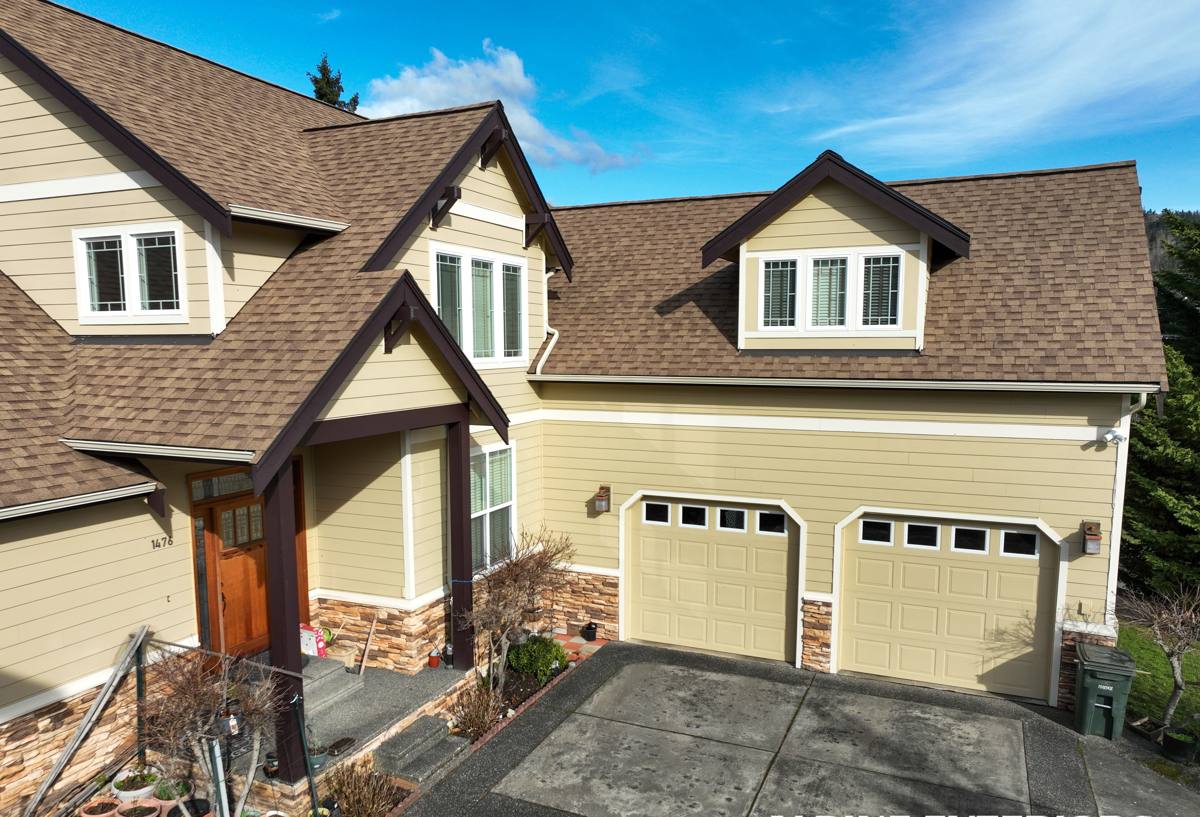
How Metal Roofing Performs in Lynden's Climate Specifically
Salt Air and Corrosion
Lynden isn't right on the water, but Whatcom County as a whole sees enough marine influence that corrosion resistance matters more here than it would inland. Not all metal roofing is created equal on this point. Galvanized steel with a quality paint system holds up well for most homes, but homes closer to the water or exposed to prevailing wind off the bay benefit from a higher-grade coating (like Kynar-based finishes) or an aluminum panel, which doesn't rust the way steel can if the coating is ever compromised. This is a conversation worth having with your contractor before you pick a product — the cheapest panel option isn't always the cheapest long-term option once you factor in coastal exposure.
Driving Rain and Wind-Driven Water
Our rain doesn't always fall straight down. When wind pushes rain sideways or uphill under wind-driven conditions, the roofing system's seams and fastener pattern matter as much as the material itself. Standing seam panels, with their raised, interlocking joints, generally shed wind-driven rain better than exposed-fastener panels because there are fewer penetration points for water to find. That's one reason we lean toward standing seam for homes in exposed locations or with lower roof pitches, where water has more opportunity to work its way backward under a seam.
Moss Season
Anyone who's owned a home in this part of Washington knows moss isn't a maybe — it's a when. Metal roofing's smooth, non-porous surface gives moss spores far less to grab onto compared to the textured surface of asphalt shingles or the organic material in wood shakes. That doesn't make a metal roof moss-proof, especially in shaded, north-facing areas or under overhanging trees, but it does mean less moss establishes itself, and what does grow is easier to rinse off without damaging the roofing material underneath.
Types of Metal Roofing: What's Actually Available
"Metal roof" isn't one product — it's a category, and the differences between options affect price, appearance, and how the roof performs over time.
| Type | Typical Use | Notes |
|---|---|---|
| Standing seam | Most residential upgrades | Concealed fasteners, best water-shedding, cleaner architectural look |
| Exposed-fastener panel | Shops, barns, budget-conscious re-roofs | Lower upfront cost, fasteners penetrate the panel and need periodic inspection |
| Stone-coated steel | Homeowners wanting a shingle or shake look | Mimics traditional roofing profiles, adds texture that can hold slightly more debris than smooth panel |
We don't push one type on every homeowner. A shop or detached garage with a simple gable roof is often a great candidate for exposed-fastener panel, where the lower cost makes sense and the maintenance is manageable. A primary residence, especially one with a lower-slope section or complex roof lines, usually does better long-term with standing seam.
What Actually Drives the Cost of a Metal Roof
Metal roofing has a wide price range, and the sticker shock some homeowners feel is usually because they're comparing a bare-bones exposed-fastener quote to a full standing seam system, or vice versa. The real cost drivers are:
| Factor | Why It Matters |
|---|---|
| Panel type and gauge | Standing seam and heavier-gauge steel cost more than lighter exposed-fastener panel |
| Coating and finish quality | Higher-grade paint systems resist fading and corrosion longer, especially near marine air |
| Roof complexity | Valleys, dormers, and multiple pitches all add labor and flashing detail |
| Tear-off vs. overlay | Removing old roofing adds cost but lets us properly assess the deck underneath |
| Structural prep | Some older roof decks need reinforcement or venting upgrades before metal goes on |
As a general rule, metal roofing costs more upfront than a mid-grade asphalt shingle roof — often by a meaningful margin. Where it tends to even out is over the lifespan of the roof, since a well-installed metal system can outlast two or more asphalt roofs, with less maintenance in between.
Metal vs. Asphalt Shingles: A Straight Comparison
| Metal Roofing | Asphalt Shingles | |
|---|---|---|
| Typical lifespan | 40-70 years depending on product and install | 20-30 years depending on product and exposure |
| Upfront cost | Higher | Lower |
| Moss/algae resistance | Better — smooth surface, fewer footholds | More susceptible, especially in shaded areas |
| Wind-driven rain performance | Strong, especially standing seam | Good with proper installation, more seam-dependent |
| Repairability | Panel or seam repair, sometimes harder to color-match later | Individual shingles easy to replace and blend |
| Weight | Lighter than most shingle systems | Heavier, more roof deck load |
Neither is objectively "better" in every category — it's a matter of which trade-offs fit your situation. A homeowner planning to sell in five years has a different calculation than one planning to stay for twenty.
Maintenance: What Metal Actually Requires
Metal roofing gets marketed as "maintenance-free," which oversells it a bit. It's lower-maintenance, not zero-maintenance. Here's what a metal roof in this climate realistically needs:
- Annual visual inspection of seams, flashing, and fastener points (more important on exposed-fastener panel)
- Gutter and valley cleaning, since debris buildup can trap moisture against the panel over time
- Rinsing off moss or organic buildup in shaded areas rather than letting it sit through a wet winter
- Prompt attention to any scratches or dents that expose bare metal, so the coating can be touched up before corrosion starts
- Checking sealant at penetrations (vents, chimneys, skylights) every few years, since sealant wears out well before the metal does
None of this is heavy lifting compared to what a shingle roof needs, but skipping it entirely is how a 50-year roof underperforms its potential.
Noise, Snow, and Other Common Concerns
A few worries come up in almost every metal roofing conversation we have with homeowners, so it's worth addressing them directly.
"Won't it be loud in the rain?"
With proper installation over solid decking and underlayment — which is standard practice, not an upgrade — a metal roof is not noticeably louder inside the home than a shingle roof. The noise concern mostly applies to open-framed structures like carports or old-style pole barns without a solid deck underneath.
"Does snow just slide off and hit someone?"
Metal does shed snow more readily than shingles, which is generally a benefit — less weight sitting on the roof. Where it matters is over entryways, walkways, or decks, where a snow guard system can be added to control how and when accumulated snow releases.
"Will it dent from hail or falling branches?"
Heavier-gauge panels resist denting better than thin, budget-grade material. This is another reason panel gauge is worth discussing upfront rather than shopping on price per square alone.
Is Metal the Right Call for Your Home?
There's no universal answer, but a few honest questions can point you in the right direction:
- Are you planning to stay in the home long enough to benefit from a longer-lifespan roof?
- Is your current roof fighting a losing battle with moss or shaded, slow-drying sections?
- Does your roof have a lot of valleys and complex lines, where standing seam's water-shedding advantage really pays off?
- Is your roof deck and structure in good enough shape to take on the project, or does it need work either way?
- Does your neighborhood or HOA have any design guidelines that affect roofing material or appearance?
- Is your budget built around lowest upfront cost, or lowest cost over the life of the roof?
If most of your answers point toward "staying long-term" and "tired of fighting moss and maintenance," metal is worth serious consideration. If you're planning a short hold or working with a tight upfront budget, a well-installed asphalt system is still a legitimate, honest choice — it just comes with a different maintenance rhythm.
Getting an Honest Recommendation
The right roofing material for your Lynden home depends on details a page like this can't see — your roof's pitch and layout, how much shade and moss pressure you're dealing with, what the deck looks like underneath your current roofing, and what you're trying to get out of the investment. That's the kind of assessment that needs a walk-around, not a guess.
If you're weighing metal against a re-roof in asphalt, we're happy to take a look and give you a straightforward comparison for your specific house — no pressure, no upsell, just an honest read on what makes sense. Use the form below to request a free estimate.