 Lynden Roofing
 Why Two "Same Size" Roofs Can Cost Very Different Amounts
Homeowners in Lynden often start their roofing research by asking for a price per square foot, and it's a reasonable question — but roofing doesn't price out like flooring. Two houses with identical footprints can end up with quotes that differ substantially once you account for pitch, layers of old roofing, deck condition, and how the roof is put together underneath the shingles. Understanding what actually moves the number helps you read quotes accurately and avoid comparing apples to oranges when you're collecting bids.
This page breaks down the real cost drivers in the order they usually matter, with an eye toward what's specific to Whatcom County — the moss, the marine-influenced rain, and the age of housing stock common in the Nooksack Valley and greater Lynden area.
Roof Size, Pitch, and Access
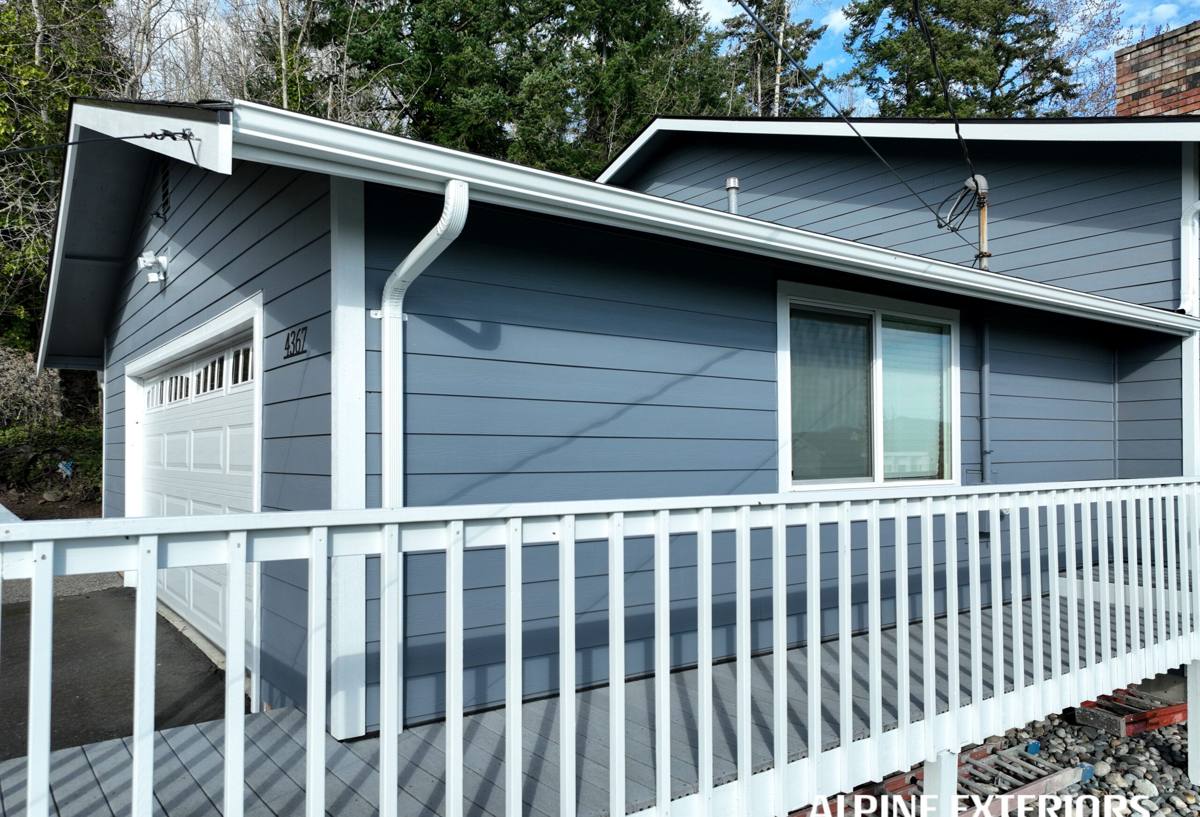
Square footage is the starting point, but pitch and access change labor time more than most homeowners expect. A steep roof requires more safety equipment, slower work, and often specialized footwear and harness systems — all of which add labor hours without adding a single extra square foot of material. A roof with multiple valleys, dormers, or a detached shop roof tacked onto the bid adds cutting, flashing, and waste that a simple gable roof never sees.
Access matters too. A roof that a crew can reach directly with a trailer and ladders goes faster than one behind a fence, over landscaping, or requiring material to be carried by hand around a house. None of this is padding — it's real time and real risk that a fair quote has to account for.
What Adds Labor Time
- Steep pitch (anything beyond a standard walkable slope)
- Multiple roof planes, valleys, and dormers
- Limited equipment access (fencing, mature landscaping, tight side yards)
- Detached structures — shops, barns, and outbuildings common on larger Whatcom County lots
- Chimneys, skylights, and multiple roof penetrations
Tear-Off Complexity: What's Under the Existing Roof
Whether the crew is removing one layer of shingles or two changes the job significantly. Some older Lynden homes were re-roofed once already without a full tear-off, and a second layer adds disposal weight, labor, and often reveals deck problems that couldn't be seen from the surface. Once the old roofing is off, the condition of the plywood or plank decking underneath is the next variable — soft, delaminated, or water-stained sheathing has to be replaced before new roofing goes down, and that's not something a contractor can responsibly predict with certainty until the old roof is off.
A straightforward tear-off with sound decking underneath is the cheapest scenario. A roof with hidden rot from a slow leak, or decking installed with wide gaps that no longer meets current code spacing, adds cost that's genuinely unavoidable — it's not an upsell, it's what's actually there.
Material Choice
Material is usually the single biggest line item, and it's also where homeowners have the most control. The table below lays out the honest trade-offs between the main options we install and discuss with Lynden homeowners.
| Material | Typical Lifespan | Relative Cost | Behavior in Our Climate |
|---|---|---|---|
| 3-Tab Asphalt Shingle | 15-20 years | Budget-friendly | Adequate but less wind and moss resistance than architectural shingles |
| Architectural (Dimensional) Shingle | 25-30 years | Mid-range | Heavier profile sheds water better, holds up well under sustained rain |
| Standing Seam Metal | 40-50+ years | Premium | Sheds moss and moisture fastest, best long-term value on shaded or north-facing roofs |
| Cedar Shake | 20-30 years with upkeep | Premium | Attractive but needs regular treatment; retains moisture longer in our wet season |
We don't install every product on this list on every home, and we'll tell you plainly why. Cedar shake, for example, looks great and has a long history in the Pacific Northwest, but it needs consistent maintenance to resist moss and rot in a climate with our rainfall totals — if that upkeep isn't going to happen, we'll say so rather than sell a product that will disappoint you in ten years. That's a maintenance-and-moisture conversation, not a knock on the material itself.
What You Don't See: Underlayment, Ventilation, and Flashing
A roof is a system, not just the visible shingle layer, and the parts underneath influence both cost and how long the roof actually lasts. Synthetic underlayment costs more than old-style felt paper but resists tearing and holds up far better during the install window if weather turns — which, in this part of Washington, it often does mid-project.
Ventilation is easy to overlook and expensive to ignore. A roof that traps heat and moisture in the attic ages faster from the inside out, regardless of how good the shingles are. Proper ridge and soffit venting, along with correctly sized and placed flashing around chimneys, skylights, and valleys, is where a lot of long-term leak problems either get prevented or get built in. It's rarely the most visually dramatic part of a quote, but it's often the difference between a roof that reaches its full rated lifespan and one that doesn't.
Common Ventilation and Flashing Upgrades
- Ridge vent installation on roofs that currently have none
- Soffit vent clearing or addition where insulation has blocked airflow
- Step flashing replacement at wall-to-roof transitions
- Ice-and-water shield at eaves and valleys
- Pipe boot and vent flashing replacement (a frequent source of small leaks)
Whatcom County Climate Factors That Affect the Number
Roofs in Lynden and the surrounding Nooksack Valley work harder than roofs in drier climates, and that shows up in both material choice and maintenance recommendations. Moist marine air moving in off the Salish Sea combines with our long wet season to create ideal conditions for moss growth, especially on north-facing slopes and roofs shaded by mature trees — common throughout Whatcom County's older residential lots. Moss holds moisture against the roofing surface long after a storm has passed, which accelerates granule loss on asphalt shingles and can work its way under shingle edges over several seasons.
Driving rain, common with the wind patterns we see off the water, tests flashing and underlayment quality more than a light, straight-down rain would. This is part of why we lean on proper underlayment and flashing details rather than treating them as optional add-ons — in a climate like ours, they're doing real work every winter. Homeowners considering a roof replacement should factor in that a cheaper install with weaker moisture defenses tends to show problems here faster than it would in a drier region.
Permits, Code Requirements, and Disposal
Depending on the scope of work, a roof replacement in Whatcom County may require a permit, and code requirements around decking, ventilation, and ice-and-water shield placement have tightened over the years compared to when many older Lynden homes were originally built or last re-roofed. Bringing a roof up to current code during replacement is a legitimate cost, not a padded line item — it's what keeps the roof performing and keeps you covered if you ever sell the home.
Disposal is another real cost that's easy to underestimate. Tear-off material is heavy, and a two-layer tear-off on a larger roof can mean multiple dumpster loads. A quote that seems unusually low compared to others is worth asking about directly — sometimes it means efficient operations, and sometimes it means disposal, permitting, or code upgrades were left out and will show up later as a change order.
Getting Quotes You Can Actually Compare
The best way to evaluate roofing quotes isn't to look at the bottom-line number first — it's to make sure every bid is pricing the same scope of work. A quote that's missing underlayment specifics, ventilation upgrades, or a clear tear-off plan isn't necessarily cheaper; it may just be incomplete.
Before You Sign, Confirm the Quote Includes
- Full tear-off scope and how many layers are being removed
- Decking replacement — either a flat allowance or a clear per-sheet price if issues are found
- Specific underlayment type (synthetic vs. felt) and ice-and-water shield locations
- Ventilation plan, including any ridge or soffit vent work
- Flashing replacement at chimneys, walls, and valleys, not just reuse of old flashing
- Cleanup and disposal method, including magnetic nail sweep
- Manufacturer warranty terms and whether workmanship is separately warrantied
- Whether a permit is included in the contractor's scope or left to the homeowner
If a homeowner in Lynden or elsewhere in Whatcom County wants a straightforward, honest look at what their specific roof needs — no pressure, no inflated urgency — a free estimate is the right next step. We'll walk the roof, explain what we find in plain terms, and give you a quote that spells out exactly what's included.