 Lynden Roofing
 Exterior Contractors Serving Wiser Lake
Wiser Lake sits just outside Lynden in Whatcom County, and homes out here live a little differently than homes in town. Properties tend to sit closer to tree lines, closer to water, and further from a quick drive-by from a passing contractor. That combination of tree cover, lake moisture, and rural distance means the exterior of a Wiser Lake home takes on more wear in more places than a typical in-town lot — the north-facing roof slope that never fully dries out, the siding tucked behind a stand of fir that stays damp for days after a storm, the deck boards that see shade most of the afternoon.
We work on roofing, siding, windows, and decks, and we treat those as connected systems rather than separate jobs. A roof that's shedding water properly but dumping it onto siding with failed caulking isn't actually protecting the house. A deck built without attention to drainage will rot the ledger board regardless of how good the boards themselves are. Out at Wiser Lake, where moisture has more opportunities to sit against a house, that connected thinking matters more than it does on a dry, open, in-town lot.
The Climate Wiser Lake Homes Are Up Against
Whatcom County sits under a steady flow of marine air moving in off the Sound, and that air doesn't lose its moisture just because a property is inland at a lake instead of on the water. Homes around Wiser Lake deal with the same driving rain events as the rest of the county, plus a few local wrinkles: lake-effect humidity that lingers into the morning, tree cover that shades roofs and siding long after a storm has passed, and a moss season that, out here, can run close to eight or nine months of the year.
Moss doesn't just look bad. It holds moisture directly against roofing material, works its way under shingle tabs and shake edges, and — left long enough — lifts and displaces the material it's growing on. On a shaded, lake-adjacent roof, moss can re-establish within a season of being cleaned off if the underlying shade and moisture conditions aren't addressed as part of the plan. We see this pattern often enough at Wiser Lake that we don't treat moss control as an afterthought — it's part of how we plan roofing work for this area from the start.
Salt-bearing marine air, driving rain off the Sound, and long stretches of shade and dampness are the baseline conditions here. None of that is unusual for Whatcom County. What matters is choosing materials and installation details that actually account for it, rather than installing the same system you'd put on a dry, sun-exposed roof forty minutes east.
Roof Replacement
When a roof at Wiser Lake reaches the point of replacement — usually driven by widespread moss damage, granule loss, or age rather than a single failure — we look at the whole system: underlayment, flashing, ventilation, and the roofing material itself. Ventilation especially matters on shaded, tree-lined lots, because a roof deck that can't breathe stays damp longer after every rain, which feeds the moss cycle right back into the new roof. We'll walk you through material options honestly, including which ones hold up better under sustained shade and moisture and which ones need more attention to stay ahead of it.
Roof Repair
Not every roof at Wiser Lake needs full replacement. Localized leaks, damaged flashing around chimneys and vents, and moss-related lifting on isolated sections are all repairable if caught before they compromise the underlayment or decking. Because a lot of these lots are tree-covered and harder to see from the ground, we recommend an actual roof inspection rather than guessing from a photo — moss and moisture damage in shaded valleys and north slopes is easy to miss from the driveway.
Moss and Moisture Maintenance
For roofs that are otherwise sound, ongoing moss control — treatment, debris removal from valleys and gutters, and trimming back overhanging branches where it's practical — extends the life of the roof significantly. This is the part of roofing that homeowners in shaded, lake-adjacent areas benefit from most and skip most often. A roof that's cleared and treated on a regular schedule will consistently outlast one that's only addressed when moss becomes visible from the street.
Siding for Lake-Area Homes
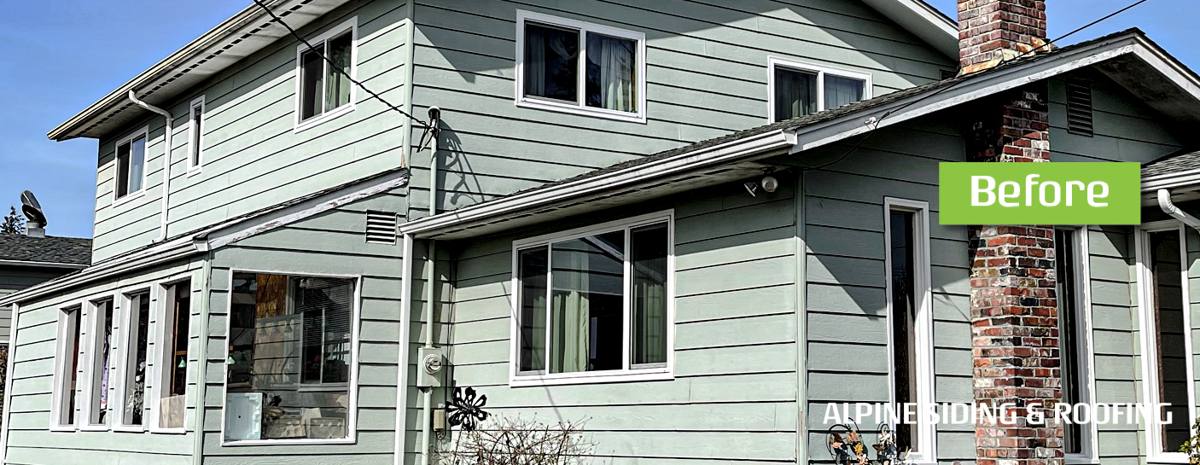
Siding at Wiser Lake fights the same battle as the roof: sustained dampness from shade and lake humidity, plus driving rain that finds its way into any gap in caulking, trim, or flashing. Fiber cement and quality vinyl both perform well here when installed correctly, but installation quality matters more in a wet, shaded environment than it does in a dry one — poor flashing details or gaps at trim and window returns that would be a minor issue on a sun-exposed, in-town wall can turn into ongoing rot or mold behind the siding on a shaded lake lot.
We also see a fair number of older homes around Wiser Lake with wood siding that's been repainted repeatedly to keep ahead of moisture. That's a legitimate approach if it's kept up on schedule, but it's also worth an honest conversation about whether re-siding with a lower-maintenance material makes more sense long-term for a lot that stays damp more of the year than most.
Windows That Hold Up to Driving Rain
Windows are one of the more overlooked failure points on lake-area homes. Driving rain pushed by wind off the water finds weak seals and old flashing that a calmer, drier location would never expose. Failed window seals show up as fogging between panes; failed flashing shows up as staining or soft trim below the sill. Both are more common on the weather-facing sides of homes closer to open water and wind exposure, which describes a lot of Wiser Lake properties.
When we replace windows out here, we pay particular attention to flashing and sill pan details — the parts of the installation that don't show up in the finished look but determine whether water gets managed or trapped. A window that looks fine from inside can still be feeding moisture into the wall cavity if it wasn't flashed correctly, and that's a slower, more expensive problem to fix than the window itself.
Decks Built for a Wet Climate
Decks around Wiser Lake usually deal with two things at once: shade from surrounding trees that keeps them from drying out quickly, and proximity to the lake that adds humidity to the mix. That combination is hard on ledger boards, joists, and any wood-to-wood contact point where water can sit. Composite decking handles this environment with less ongoing maintenance than wood, but wood decking, properly built with attention to drainage, gapping, and ledger flashing, can hold up well too — it just asks more of the homeowner in terms of upkeep.
The detail that matters most on a shaded, lake-adjacent deck is what's happening underneath and behind it: proper ledger flashing where the deck meets the house, adequate gapping between boards for airflow and drainage, and joist protection so the structural wood isn't sitting in trapped moisture season after season. That's where deck failures actually start, long before the surface boards show visible wear.
Choosing Materials: A Quick Comparison
For a shaded, moisture-heavy lot like most of what we see around Wiser Lake, material choice matters more than it would on a dry, open site. Here's a general comparison of how common exterior materials tend to perform in this kind of environment:
| Material | Moisture/Moss Resistance | Maintenance in Shade | Typical Lifespan Here |
|---|---|---|---|
| Composition (asphalt) shingle roofing | Moderate — needs moss treatment on shaded slopes | Periodic moss/debris clearing | 20-30 years with upkeep |
| Metal roofing | Higher — sheds moss more readily than shingle | Low, occasional debris clearing | 40+ years |
| Fiber cement siding | High — stable in sustained damp conditions | Low, repaint on a longer cycle | 25-40+ years |
| Wood siding | Lower without diligent upkeep | Higher — regular repainting/sealing | Varies widely with maintenance |
| Composite decking | High | Low, occasional cleaning | 25-30+ years |
| Wood decking | Moderate with proper drainage detailing | Higher — sealing/staining cycle | 15-20+ years with upkeep |
None of these are wrong choices — they're trade-offs between upfront cost and ongoing maintenance. What we push back on is installing a low-maintenance material poorly, or a high-maintenance material without being upfront that it'll need attention on a schedule to actually last in this climate.
Signs Your Home Needs Attention
Because a lot of Wiser Lake properties are tree-shaded and set back from the road, problems can develop for a while before they're obvious from the driveway. A few things worth checking, especially heading into or coming out of the wet season:
- Moss or dark streaking on north-facing or shaded roof slopes
- Granules collecting in gutters or at downspout outlets
- Soft or discolored trim below window sills
- Fogging or condensation between window panes
- Caulking gaps or cracking around siding trim and window returns
- Springy or discolored decking, especially near the ledger board or in shaded corners
- Gutters overflowing during heavy rain rather than draining clear
Any one of these on its own might be minor. Several together, or any of them left unaddressed for a season or two, is usually where small repairs turn into bigger ones.
Why a Local Crew Matters
A contractor who works across Whatcom County regularly knows that a Wiser Lake roof and a roof in downtown Lynden aren't facing identical conditions, even though they're a few miles apart. Shade, tree cover, and proximity to water change how fast moss establishes, how long surfaces stay wet after a storm, and which details — flashing, ventilation, drainage — need the most attention. That's not something you get from a general contractor pricing the job off a satellite photo.
Being local also means we're not guessing at material availability, permitting, or what actually holds up through a Whatcom County winter — we're basing it on what we've seen work and fail on homes not far from yours. And when something needs a follow-up visit, whether that's a moss treatment or a warranty check, we're not driving in from out of the area to do it.
If you're dealing with moss buildup, a roof that's due for a closer look, siding that's holding moisture, or windows and decks that need attention before the next wet season, we're happy to come take a look. Reach out for a free, no-pressure estimate using the form below.