 Lynden Roofing
 Roofing and Exteriors for Bellingham Homes
Bellingham sits right on the water, and that changes what a roof, a wall of siding, or a set of windows has to deal with compared to homes further inland. Salt-laden air off Bellingham Bay, driving rain that comes in sideways during fall and winter storms, and a moss season that can run eight months or longer all put steady pressure on the exterior of a house. We work throughout Whatcom County, including Bellingham neighborhoods close to the water and up into the hills above town, and the approach we take here is built around those specific conditions rather than a one-size-fits-all install.
This page walks through what Bellingham's climate actually does to roofing, siding, windows, and decks, and how we handle each of those systems so they hold up rather than needing constant patchwork.
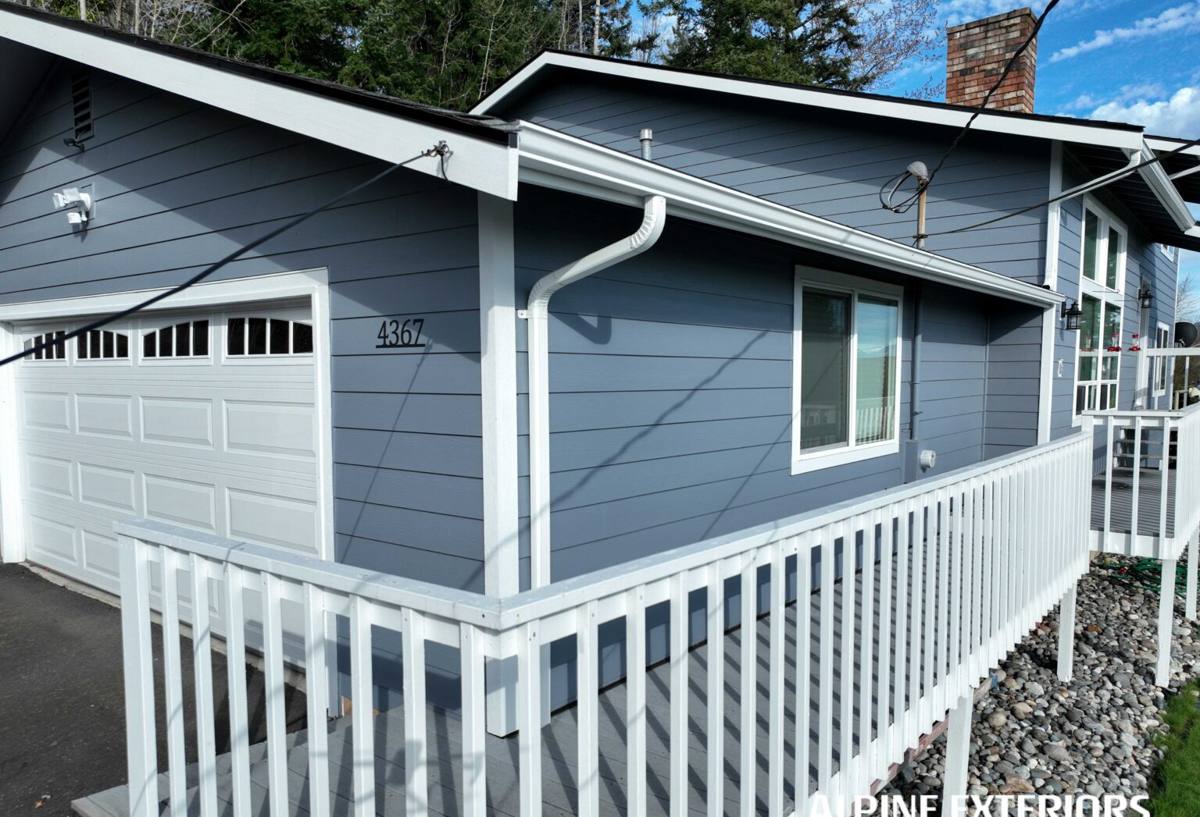
What Salt Air Does to a Roof and Exterior
Homes closer to Bellingham Bay and the shoreline get a steady dose of salt-carrying moisture in the air. It settles on roofing materials, flashing, gutters, and any exposed metal fasteners. Over years, that salt exposure speeds up corrosion on unprotected or lower-grade metal components, and it can accelerate wear on caulking and sealants around penetrations like vents and chimneys.
This doesn't mean metal roofing or metal flashing is off the table near the water — it means the fastener grade, coating, and flashing details matter more here than they would on a home twenty miles inland. We spec corrosion-resistant fasteners and flashing on coastal-facing homes and pay close attention to how metal-to-metal contact points are sealed, since that's usually where salt-driven corrosion shows up first.
Where Salt Exposure Shows Up First
- Exposed nail heads and fasteners on older roofs
- Gutter hangers, screws, and seams
- Metal flashing around chimneys, skylights, and roof-to-wall transitions
- Hardware on decks and railings, especially uncoated steel
Moss: The Long-Season Problem
Whatcom County's damp, mild climate is close to ideal for moss growth, and Bellingham's tree cover and shaded lots make it worse in a lot of yards. Moss doesn't just sit on top of a roof looking bad — it holds moisture against the roofing material, and on asphalt shingles that constant dampness works into the granule layer and shortens the shingle's usable life. On wood-based products it can trap moisture against the substrate and encourage rot. Moss also grows in gutters and valleys, where it blocks water flow and can cause backups that send water under shingles or behind siding.
North-facing roof slopes and sections shaded by mature trees are almost always the worst affected, since they dry out the slowest after rain. If you've noticed green or black streaking, or thick moss mats building up along the lower courses of shingles, that's the roof telling you moisture isn't shedding the way it should.
How We Approach Moss
Preventive moss control — zinc or copper strips near the ridge, periodic gentle cleaning, and keeping gutters and valleys clear — does far more good than waiting until moss is thick and then scraping it off, which can damage the shingle surface. We also look at tree cover and shading during an inspection, since sometimes the longer-term fix involves trimming back branches that keep a section of roof from drying out, not just treating the roof itself.
Driving Rain and Wind-Driven Water
Storms coming off the Strait of Georgia and Puget Sound often bring rain at an angle rather than straight down, especially during fall and winter systems. Wind-driven rain finds weaknesses that vertical rain never would — gaps in flashing, marginal siding laps, and window and door openings where the flashing and sealant weren't detailed correctly. This is a big part of why flashing and water-management details matter as much as, or more than, the roofing or siding material itself.
On roofs, that means proper underlayment, correctly lapped flashing at valleys and roof-to-wall intersections, and ice-and-water shield in the vulnerable spots even though Bellingham doesn't see heavy ice buildup most winters — the same product does double duty against wind-driven rain. On siding and windows, it means the house wrap, flashing tape, and window flashing all have to work together as a system, not just look right from the outside.
Roofing Material Comparison for This Climate
There's no single "best" roofing material for every Bellingham home — it depends on the home's exposure, roof pitch, budget, and how much upkeep an owner wants to do. Here's how the common options stack up against the salt-air, rain, and moss conditions typical of this area.
| Material | Moss Resistance | Salt Air Durability | Maintenance |
|---|---|---|---|
| Asphalt shingles (algae-resistant) | Moderate — treated granules slow growth | Good with quality flashing/fasteners | Periodic cleaning, gutter care |
| Standard asphalt shingles | Lower — moss and algae take hold faster | Good with quality flashing/fasteners | More frequent moss removal |
| Metal roofing | Very good — moss struggles to grip smooth panels | Good if fasteners/flashing are corrosion-rated | Low; occasional inspection |
| Wood shake/shingle | Lower — moisture-retentive surface favors moss | Fair; hardware needs upgrading | Higher; regular treatment needed |
We're upfront that wood shake and untreated wood products carry more ongoing maintenance burden in a climate this damp — not because the material is bad, but because keeping it dry and moss-free here takes real, recurring effort. For homeowners who want a lower-maintenance roof, algae-resistant asphalt or metal are usually the more practical long-term choices in this area.
Siding in a Wet, Salty Climate
Siding takes the same wind-driven rain and salt exposure as the roof, plus it has to manage moisture at the ground level and around every window and door opening. Fiber cement and quality vinyl products both handle Bellingham's climate well when installed with correct flashing and drainage gaps behind the panels — that gap matters more here than in drier climates, since it gives any moisture that does get past the surface a way to escape instead of sitting against the sheathing.
We pay particular attention to butt joints, corner details, and the transitions around windows and trim, since those are the spots where driving rain most commonly finds a way in over time.
Windows and Doors: The Weak Points
Older single-pane or poorly flashed windows are one of the most common sources of water intrusion we see on Bellingham homes, especially on walls that take the brunt of storm-direction wind. Beyond energy efficiency, updated windows with proper flashing integration reduce the risk of water working its way into the wall cavity during heavy weather. On homes closer to the water, we also look at hardware and frame materials that hold up better against salt exposure over time.
Decks: Built for Rain, Not Just Sun
A deck in Bellingham spends most of the year wet, not dry, which is the opposite of how a lot of composite and wood decking is marketed. Proper spacing between boards, correct fastener selection, and a ledger connection that's flashed to keep water out of the house are what actually determine whether a deck lasts here. Composite decking generally resists moss and moisture damage better than untreated wood, but any decking material still needs the substructure — joists, flashing, ledger — built to shed water rather than trap it.
Maintenance Checklist for Bellingham Homeowners
- Check for moss buildup on north-facing and shaded roof slopes each fall
- Keep gutters and valleys clear of moss, needles, and leaf debris
- Inspect exposed fasteners and flashing for early corrosion, especially on homes near the water
- Look at caulking and sealant around windows, doors, and roof penetrations annually
- Trim back tree branches that keep sections of roof or siding from drying out
- Watch for staining or streaking on siding, which often points to a flashing or drainage issue upstream
Why a Local Crew Matters Here
A contractor who works this specific stretch of Whatcom County — from Lynden down through Bellingham — knows which slopes hold moss longest, which neighborhoods get the harder wind-driven storms, and which flashing details actually hold up against salt air versus which ones just look fine on install day. That local knowledge shows up in the small decisions: fastener grade, underlayment placement, how a drainage gap is detailed behind siding. Those aren't things a homeowner should have to specify — they should be standard practice from a crew that's dealt with this climate season after season.
If you're noticing moss buildup, staining, drafts, or just want an honest read on where your roof, siding, windows, or deck stand, we're happy to take a look. Reach out for a free, no-pressure estimate — someone from our crew will walk the property with you and lay out what we see, plainly, with no obligation.