 Lynden Roofing
 Why Nooksack Windows Take More Punishment Than the Spec Sheet Assumes
Nooksack sits along the river lowlands just outside Lynden, in a part of Whatcom County where the weather doesn't do anything in half measures. Storms roll in off the Salish Sea and Puget Sound corridor carrying wind-driven rain that hits window openings sideways, not straight down. That same marine air brings a faint but constant load of salt that speeds up corrosion on hardware, screens, and fasteners you can't see once the window is installed. And because this part of Whatcom County stays damp for so much of the year, moss and algae get a long runway to colonize roofs, siding, and window sills — which keeps wood trim and lower sash rails wetter, longer, than homeowners in drier climates ever have to think about.
None of that is a knock on the area — it's just the operating environment. But it means a window that performs fine on a spec sheet in a lab can still fail here in five or six years if it wasn't chosen and installed with this specific climate in mind. Most of the window problems we get called out for in and around Nooksack aren't glass failures. They're moisture problems that started at the frame, the flashing, or the sill — places where the installation, not the product, made the difference.
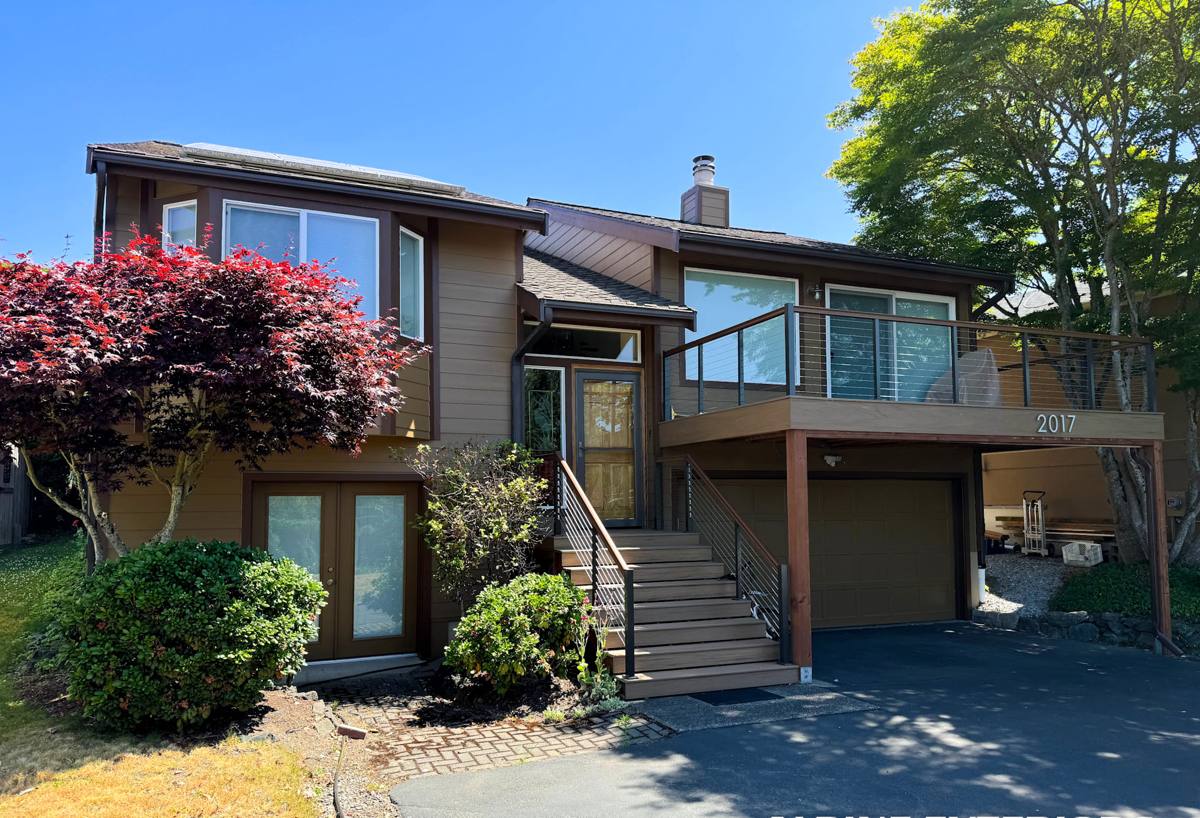
What "Energy-Efficient" Actually Means for a Window
Every legitimate replacement or new-construction window carries an NFRC label, and that label is the honest answer to "how efficient is this window" — not the marketing copy on the box. Three numbers on that label matter most for a Nooksack home:
- U-factor — how much heat escapes through the window. Lower is better. This is the number your local energy code is checking when a permit gets pulled.
- Solar Heat Gain Coefficient (SHGC) — how much solar heat passes through the glass. In western Washington this matters less for keeping heat out and more for not losing free solar warmth on the handful of clear days you get.
- Air Leakage (AL) — how much outside air sneaks through the window assembly itself. In a climate with driving rain, air leakage paths are also often water intrusion paths.
A contractor who can't walk you through these three numbers on the specific window they're proposing isn't giving you an energy-efficient window — they're giving you a new window that happens to be more efficient than the 30-year-old one it's replacing, which is a much lower bar.
Glazing and Gas Fills
Double-pane, low-E, argon-filled glass is the standard baseline for this climate and covers most Nooksack homes well. Triple-pane adds another layer of insulation and a real bump in sound dampening, which is worth considering on a busy road or a home with a lot of west-facing glass catching storm wind — but it adds weight, cost, and isn't always necessary for a typical single-family home in this area. The bigger performance jump usually comes from a good low-E coating and a properly sealed insulated glass unit (IGU), not from adding a third pane.
Frame Material Comparison
Frame choice matters as much as the glass here, because the frame is what's absorbing the salt air, the rain impact, and the seasonal moisture swings.
| Frame Material | Moisture / Salt-Air Behavior | Maintenance | Notes for This Area |
|---|---|---|---|
| Vinyl | Doesn't corrode or rot; performs well in salt air | Low — occasional cleaning | Most common choice for Nooksack-area replacements; good value |
| Fiberglass | Excellent — very stable, resists warping and corrosion | Low | Higher upfront cost, strong long-term option on exposed elevations |
| Wood-clad | Good if cladding is intact; wood core vulnerable if seals fail | Moderate to high | Needs vigilant caulk maintenance in a wet climate like this one |
| Aluminum | Prone to corrosion in salt-tinged air without a quality finish | Moderate | We're selective about where we'll recommend it on this coastline |
We're not going to tell you a certain brand or material is garbage — plenty of manufacturers make a decent product. Our standard is simply that whatever goes into a Nooksack-area wall has to hold up to salt-tinged air, sustained rain exposure, and a long damp season without babying. That standard rules a few options out more than it rules brands in.
Installation Details That Matter More Than the Window Itself
You can put a great window in a rough opening the wrong way and end up with rot behind the trim in a few years. In a climate with driving rain, the installation sequence is the actual weatherproofing system — the window is just one part of it.
- Sill pan flashing — a sloped, sealed pan under the window that directs any water that does get past the exterior finish back out, instead of into the wall framing.
- Proper flashing shingle-lap order — head flashing, side flashing, and the weather-resistive barrier have to be layered so water sheds downward and outward, never trapped behind the window.
- Backer rod and sealant, not sealant alone — caulk without a backer rod behind it is prone to cracking and doesn't handle the building's natural movement.
- Shimming and squaring — an out-of-square window stresses the seals at the corners, which is often where the first leaks show up.
- Insulating the gap correctly — too little insulation leaves a cold spot and condensation risk; overpacking certain foams can actually bow the frame.
Any one of these done wrong can undo the energy performance and the water resistance of an otherwise good window. This is where hiring a crew that's installed a lot of windows in this specific climate — not just windows in general — actually shows up in the outcome.
How We Approach a Nooksack Window Job
We start with an on-site look at the existing openings before quoting anything, because what's happening at the sill and behind the trim changes the scope. If there's already moisture staining or soft wood around an opening, that gets addressed as part of the job, not discovered halfway through. From there:
- Measure and confirm the right product line for that elevation — a south- or west-facing wall taking direct weather gets the same scrutiny as a sheltered one, sometimes more.
- Remove the old window carefully, checking the framing and sheathing underneath for hidden rot or past water intrusion before anything new goes in.
- Install with proper flashing sequence and sill pan, shim and square the unit, then insulate the gap correctly.
- Seal the exterior with backer rod and sealant rated for this climate, and finish the interior trim to match.
- Walk the job with you, confirm operation on every window, and go over warranty coverage on both the product and our labor before we consider it done.
Signs Your Windows Are Already Costing You
A lot of Nooksack-area homes still have original windows from decades back, and the signs of trouble are usually gradual enough that homeowners get used to them. Worth checking for:
- A draft you can feel standing near the frame, even with the window latched
- Fogging or haze between the panes — that's a failed seal on an insulated glass unit, not a cleaning problem
- Water staining or a soft, spongy feel in the sill or lower frame
- Windows that stick, won't stay open, or are hard to latch — often a sign of swelling or warped framing
- Noticeably higher heating bills in the coldest months compared to similarly sized homes
- Single-pane glass, which is common in older homes in this area and offers very little insulation value on its own
Any one of these is worth a look. Several of them together usually mean the windows are actively driving up your heating costs and, in the worst cases, letting moisture into the wall assembly behind them.
Why a Crew That Already Works Nooksack Matters
Window installation done right isn't exotic work, but the details that make it hold up in this climate are learned by doing it here repeatedly — not by reading a manufacturer's install guide once. A crew that regularly works the Nooksack and greater Lynden area knows what this housing stock tends to have going on behind the trim, knows how the local permitting process works with Whatcom County, and is close enough to come back promptly if a warranty question comes up after the first hard rain of the season. That local proximity also matters for scheduling around weather — installing a window opening means the wall is open to the elements until the new unit is sealed in, and a local crew can plan around this area's rain patterns instead of guessing at them from out of town.
Keeping New Windows Performing for the Long Haul
Energy-efficient windows are a long-term investment, and a little seasonal upkeep protects that investment in a climate like this one:
- Clear weep holes at the bottom of the frame so water has somewhere to drain — they're easy to overlook and easy to clog with debris
- Wipe down tracks and sills periodically, especially after the wetter months, to keep organic buildup from holding moisture against the frame
- Keep nearby moss and algae growth on roofing and siding from splashing or draining directly onto window sills
- Inspect exterior caulk lines yearly and touch up any cracking before it becomes a water path
- Avoid aiming a pressure washer directly at window seals and weep systems
What Drives the Cost
Every job is different, but the main variables that move the price are consistent from house to house:
| Factor | Why It Matters |
|---|---|
| Frame material | Vinyl, fiberglass, and wood-clad carry different material costs and labor requirements |
| Window size and count | Larger openings and whole-house replacements have different economies of scale than a single room |
| Glazing package | Standard double-pane low-E versus triple-pane or upgraded coatings |
| Opening condition | Hidden rot or past water damage adds repair scope before the new window goes in |
| Access and site conditions | Second-story or hard-to-reach openings take more time and equipment |
As a broad range, homeowners in this area are typically looking at somewhere around $500 to $1,500 or more per window installed, depending on those factors — but the only way to get a real number is to look at your specific openings and goals.
If you're weighing whether your current windows are worth repairing, replacing, or just monitoring for another season, we're happy to take a look and give you a straight answer. Reach out for a free, no-pressure estimate using the form below.