 Lynden Roofing
 Storm Weather in the Nooksack Area
Nooksack sits in the open, flat farmland of northern Whatcom County, close to the Sumas Gap — the low point in the hills where cold air spills down out of Canada's Fraser Valley during outflow wind events. When that happens, gusts can hit roofs in this part of the county harder and more suddenly than in more sheltered towns further south. Add in the driving, sideways rain that comes with winter storms off the Pacific, and a roof here takes a different kind of beating than one in a calmer inland location.
Between storms, the same weather that makes the Nooksack River valley good farmland works against a roof. Moist, salt-tinged marine air pushes inland from Bellingham Bay and the Sound, and it doesn't clear out quickly here — shaded slopes and low-lying stretches near the river stay damp for weeks at a time. That's a big part of why Whatcom County is known for a long moss season, and moss holds moisture against shingles and roof decking long after the storm itself has passed.
None of this means every roof in Nooksack needs constant attention. It does mean storm damage here is rarely one isolated event. A hard wind event this winter compounds with moss growth from last spring and driving rain from the fall before it. A repair that only patches the most visible damage and ignores the rest of that pattern tends to open back up at the next storm.
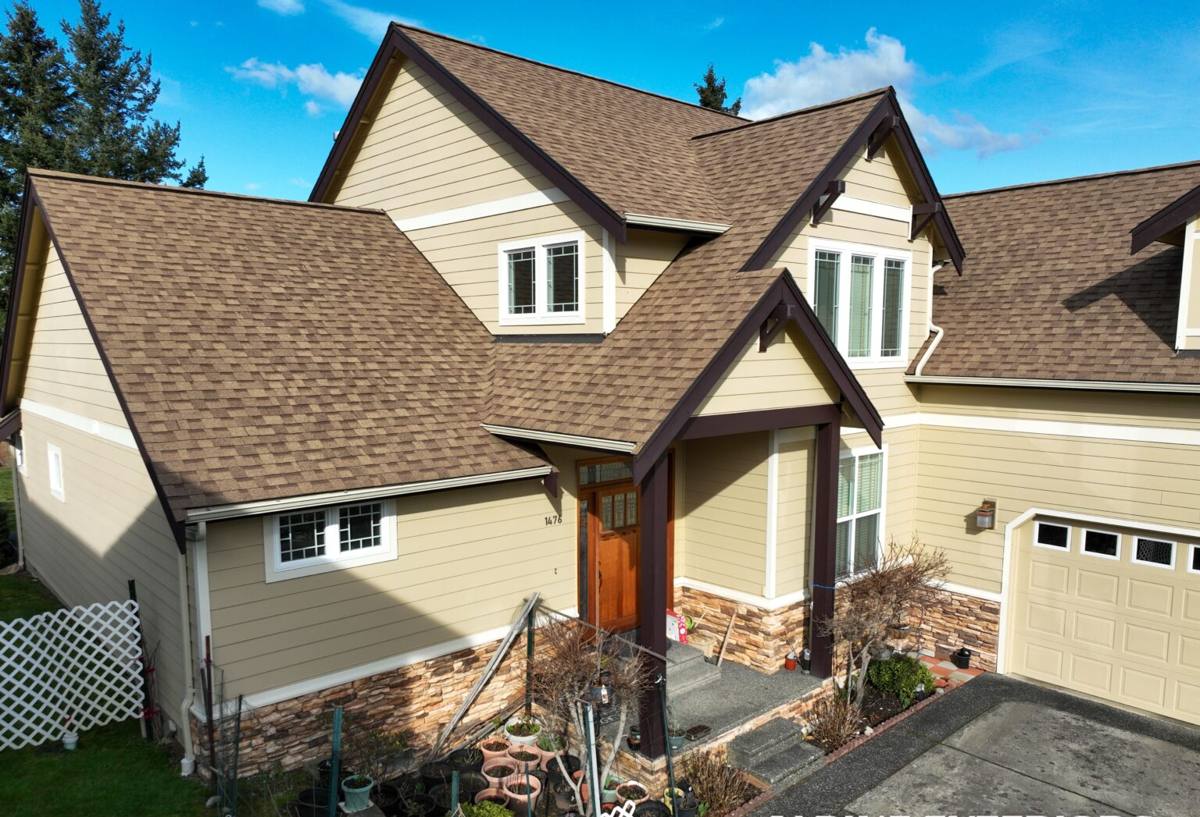
What Counts as Storm Damage to a Roof
Damage you can see from the ground
Missing or torn shingles, shingles curled up at the edges, bent or dented metal flashing, and debris — branches, fence sections, loose gutter runs — sitting on the roof are the obvious signs. Granule loss on asphalt shingles shows up as bald, darker patches, or as grit collecting in gutters and downspouts after a storm passes through.
Damage that hides until it leaks
Wind can lift a shingle just enough to break its seal without tearing it off, leaving a gap that only leaks in the next sideways rain. Nail heads can back out gradually under repeated wind flex. Flashing around chimneys, skylights, and roof-to-wall joints can separate slightly and still look fine from a ladder. This is the damage that turns a small repair into a much larger one if it sits through another wet season, because the leak is doing its work inside the roof assembly long before it shows up as a stain on a ceiling.
When to call for an inspection right away
Not every gust or hard rain means storm damage, but a few situations are worth a call the same week: shingles or debris on the ground after wind, a new stain on an interior ceiling, daylight visible through the roof deck from inside an attic, or a roof that took a direct hit from a falling branch. Waiting through another storm before checking any of these usually costs more than the inspection would have.
What a Correct Storm Repair Involves
A storm repair is more than swapping out the shingles that are obviously gone. Done correctly, it includes:
- A full-roof inspection, not just a look at the damaged section — wind rarely limits itself to one spot on a roof
- Checking the decking underneath for soft spots or water staining before anything new goes on top of it
- Matching replacement shingles as closely as possible in style, weight, and color, so the repair doesn't stand out or wear unevenly against the rest of the roof
- Re-sealing or replacing flashing and re-checking valleys, since these fail before the open field of the roof does
- Clearing moss and debris from the surrounding area before repair, so trapped moisture isn't sealed back in under new material
The difference between a fast patch and a proper repair usually isn't visible on day one — it shows up at the next storm.
| Factor | Quick Patch | Full Storm Repair |
|---|---|---|
| Scope of work | Only the visibly damaged shingles | Damaged area plus a check of the full roof and decking |
| Roof decking | Usually not inspected | Checked for soft spots or water damage before repair |
| Flashing and valleys | Left alone unless obviously broken | Re-sealed or replaced where wind and age have weakened them |
| Typical lifespan of the fix | Until the next significant wind or rain event | Matches the remaining life of the roof |
| Upfront cost | Lower | Higher, but lower cost over time |
Choosing the Right Repair Materials for This Climate
Asphalt shingles
Most homes in the Nooksack area are roofed in asphalt shingles, and for storm repairs, matching the existing shingle's weight class matters as much as matching its color. A lighter-weight shingle patched into an older, heavier roof can lift again in the same type of wind event that damaged it the first time. Our standard is to match shingle weight and wind rating to what's already on the roof, not just whatever's closest on the shelf.
Flashing and metal trim
Flashing failures cause more storm leaks than shingle damage does. We use metal flashing rather than lower-cost asphalt or plastic alternatives at valleys, chimneys, and roof-to-wall joints, because metal holds its shape and seal through repeated wind flex better over time — a real consideration in an area that sees regular outflow wind events out of the Sumas Gap.
Underlayment
Where a repair opens up enough of the roof to reach the underlayment, we use synthetic underlayment or a self-adhering ice-and-water membrane at valleys and eaves instead of reusing old felt paper. Felt breaks down faster under the amount of moisture this climate holds against a roof deck, and a repair is only as good as what's underneath the visible shingles.
Our Storm Damage Repair Process
- Inspection. We walk the roof, or use a drone where the pitch or condition makes that safer, and document every area of damage — not just the spot that prompted the call.
- Honest assessment. We tell you plainly whether this is a repair, and if it isn't, why. We don't upsell a full replacement when a repair would genuinely hold.
- Written estimate. You get a clear scope of work and price before anything is touched.
- Repair. We replace damaged materials, re-secure or replace flashing, and check for hidden moisture before closing everything back up.
- Cleanup and final check. Debris, old materials, and stray fasteners are cleared from the property, and we walk the roof once more to confirm the repair is sound.
Working With Insurance After a Storm
Many storm repairs in this area are at least partly covered by homeowners insurance, depending on your policy and the cause of the damage. We can document what we find with photos and a written scope your adjuster can use, but we work for you, not the insurance company. That means we report what's actually on your roof — nothing added to inflate a claim, and nothing left off to make an estimate easier to approve.
If the damage turns out to be minor and not worth filing a claim over, we'll tell you that too. A small, honest repair bill is usually a better outcome for you than a claim on your record for a few shingles.
Timing matters with a claim, too. Photograph the damage as soon as it's safe to do so, before any tarping or temporary repair changes what the roof looks like, and keep a copy for your own records regardless of whether you end up filing. A written estimate dated close to the storm date also makes the claim easier to support later, whether that's this month or if the damage doesn't fully show itself until a leak turns up weeks after the storm has passed.
Moss, Debris, and Keeping the Repair From Repeating
A storm repair holds up longer when the conditions that caused the damage are addressed at the same time. A few habits make a real difference on a Nooksack roof:
- Keep gutters and downspouts clear so wind-driven rain has somewhere to go instead of backing up under shingles
- Have moss treated or removed on a regular schedule, especially on shaded, north-facing slopes that stay damp the longest
- Trim back tree limbs that overhang the roof — they're a common source of impact damage in wind events
- Schedule a roof check after any significant windstorm, even if nothing looks wrong from the ground
- Address small leaks or bare, granule-stripped patches right away rather than waiting for the next storm to make them worse
Why a Crew That Already Works in Nooksack Matters
A roofing crew that already works this part of Whatcom County knows what a Nooksack roof is up against before they climb the ladder — the outflow wind pattern out of the Sumas Gap, the long moss season, the driving winter rain — and inspects with that pattern in mind instead of treating every roof the same. Being local also means a faster response, and when a storm has left a roof open to the weather, the time between the storm and the repair is what decides whether you're dealing with a shingle replacement or water damage to decking, insulation, and ceilings inside the home. A crew that plans to still be doing roofs in this area next year has every reason to get the repair right the first time, not just fast.
If a recent storm left your Nooksack roof with missing shingles, damaged flashing, or a leak you can't quite pin down, we're glad to take a look. Estimates are free and there's no pressure to move forward — just an honest read on what your roof actually needs and what it will take to fix it right.