 Lynden Roofing
 Why Siding Repair Looks Different in Nooksack
Nooksack sits in a part of Whatcom County where weather doesn't do anything halfway. Winters bring long stretches of driving rain that comes in sideways off passing fronts, and the valley holds onto moisture longer than higher, drier ground. Add the marine air that moves inland from the Sound through the Nooksack River corridor, and you get siding that's under near-constant low-grade moisture stress for months at a time. Then spring and fall bring the shade, damp bark mulch, and standing dew that moss and algae need to get established on north-facing walls and anything tucked under an overhang.
None of that is unusual for this part of Washington. But it does mean a siding repair here isn't just "patch the hole and move on." A repair that ignores how water actually moves across a wall in this climate will fail again within a couple of seasons — often in the exact same spot, because the underlying moisture path was never fixed, just covered up.
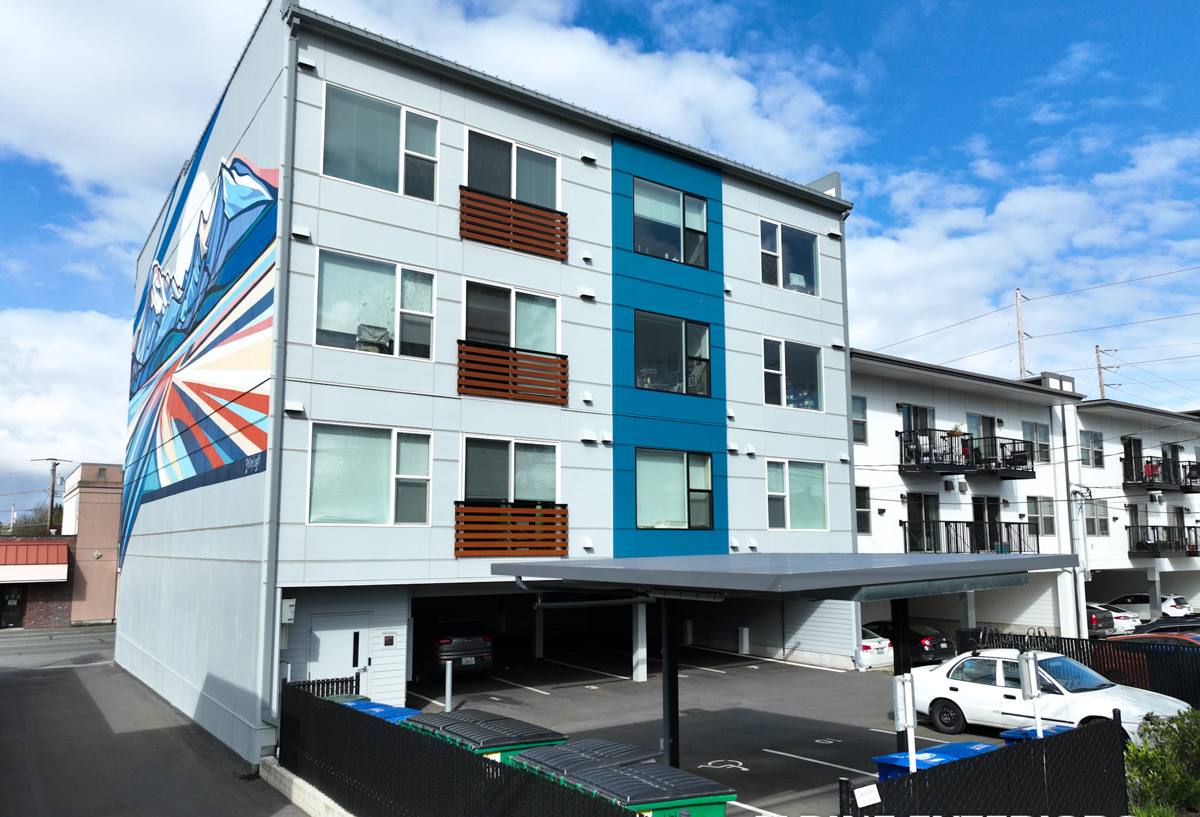
What We're Actually Seeing on Nooksack Homes
Moisture-Driven Damage
The most common call we get isn't storm damage — it's slow damage. Caulk joints around trim and window flashing dry out and crack after a few Whatcom County winters, and once that seal opens up, water gets behind the siding instead of running off it. On wood-based products (cedar, primed spruce, some older engineered wood panels) that means swelling, soft spots, and eventually rot at butt joints, bottom edges, and anywhere siding meets a horizontal surface like a deck ledger or porch roof.
Moss and Organic Growth
Whatcom County's moss season runs long — realistically, anywhere shaded and damp can support growth eight or nine months of the year. Moss itself doesn't destroy fiber cement or properly finished siding, but it holds moisture against the surface, and on lap siding that's already lost paint or caulk integrity, that trapped moisture accelerates whatever damage was already starting.
Impact and Fastener Issues
We also see plenty of ordinary wear: cracked panels from tree limbs or lawn equipment, siding popped loose from wind, and nails that have backed out or rusted through on older installations. These are usually the easiest repairs — if they're caught before water gets a chance to work on the exposed wood sheathing behind them.
What a Correct Siding Repair Actually Involves
A repair that holds up in this climate is about more than matching color and profile. Every repair we do addresses three things together:
- The visible damage — the cracked, rotted, or missing panel itself.
- The water management behind it — house wrap, flashing, and drainage plane that may have been compromised when the damage occurred.
- The cause — a caulk joint that failed, a downspout dumping water where it shouldn't, a missing kick-out flashing, or a grade issue pushing splash-back onto the wall.
Skip that third item and you're just scheduling the next repair. We pull back siding far enough to actually see the sheathing and weather barrier underneath before we decide the repair is finished, not just cosmetically closed up.
Fastening and Sealing Standards
Fiber cement repairs need the correct fastener type, spacing, and depth — over-driven or under-driven nails are one of the most common causes of repeat siding failures we find on other contractors' patch work. Caulk gets used only at manufacturer-approved joints, with the right sealant for a fiber cement substrate, not a generic exterior caulk that will chalk and crack in a season or two.
Repair or Replace? How We Help You Decide
Not every damaged section needs a full re-side, and we don't push replacement when a targeted repair will genuinely hold. But we're also honest when a repair is just delaying an inevitable, more expensive job. Here's how we generally think about it:
| Situation | Usually a Repair | Usually Full Replacement |
|---|---|---|
| Damage extent | Isolated to one or two wall sections | Recurring rot or cracking across multiple elevations |
| Underlying wrap/sheathing | Dry, intact when opened up | Soft sheathing or visible moisture staining found |
| Siding material | Fiber cement or sound existing material with a matching stock | Discontinued product, or original material we don't install (vinyl, LP, cedar, primed spruce) |
| Age of siding | Under 15-20 years, otherwise performing well | Near or past expected service life for the material |
| Homeowner goals | Fix and maintain current look | Ready to stop maintaining and upgrade long-term |
Our Siding Repair Process in Nooksack
- On-site inspection. We look at the damage itself, but also the surrounding wall, flashing, caulk lines, and grading/drainage nearby.
- Diagnosis, in plain language. We tell you what caused the damage and whether it's a one-time event (impact, storm) or an ongoing moisture issue that needs addressing before we patch anything.
- Honest scope and estimate. You get a clear picture of what's being repaired and why, with no pressure toward a bigger job than the home actually needs.
- Removal and inspection behind the siding. We don't repair over a problem we haven't actually looked at.
- Correct repair. Matched material where possible, proper fastening, correct flashing and sealant, and water management restored to spec.
- Final check. We walk the repair with you before we consider the job done.
Why We Repair and Replace With James Hardie Fiber Cement
This company installs only James Hardie fiber cement siding — we don't install vinyl, LP SmartSide, Cemplank, Allura, primed spruce, or cedar. When we're doing a small patch repair on an existing home with one of those materials, we'll match it if a sound repair is genuinely possible. But when damage is widespread, or a homeowner is weighing a bigger repair against replacement, we're upfront that our recommendation is Hardie, and here's the honest reasoning:
- Cedar and primed spruce are wood. In a climate with Nooksack's moisture load and moss season, wood siding demands ongoing paint and caulk maintenance to keep water out — skip a cycle and rot risk climbs fast.
- Vinyl holds up dimensionally in weather swings but can crack in impacts, fades over time, and can't be feathered into a color-matched repair the way a factory-finished product can.
- LP SmartSide, Cemplank, and Allura are reasonable engineered or fiber cement products, but we've standardized on one system — James Hardie — so every crew member installs the same details, to the same spec, every time, and warranty claims aren't complicated by mixed manufacturers.
James Hardie's HZ5 product line is engineered for climate zones like ours, the ColorPlus factory finish resists the fading and chalking that plain-painted siding suffers here, and the material itself is non-combustible fiber cement that doesn't swell, rot, or feed moss growth the way wood-based products can. When a repair job turns into a "does this wall need a fresh start" conversation, that's the material we put on the house.
Signs Your Nooksack Home Needs a Siding Repair Now
- Cracked, split, or missing siding panels anywhere on the exterior
- Caulk that's visibly cracked, shrunk, or pulled away from trim and joints
- Soft or spongy siding when pressed near the bottom edges or around windows
- Persistent moss or algae staining that keeps coming back after cleaning
- Peeling or bubbling paint, especially on wood-based siding
- Visible gaps where siding has pulled away from the wall or overlaps have separated
- Water stains or discoloration on interior walls near exterior siding damage
What Siding Repair Typically Costs
Every home and every repair scope is different, so we won't quote a number without seeing the damage — but these are the main factors that move the price:
| Factor | Why It Matters |
|---|---|
| Size and location of damage | A single ground-level panel is far simpler than a multi-story or hard-to-access repair |
| Underlying moisture damage | Rotted sheathing or wet insulation adds real work beyond the visible siding |
| Material match | Matching an older or discontinued profile/color can take more sourcing time than a standard Hardie repair |
| Flashing and trim involved | Repairs touching window or roofline flashing require more careful sequencing |
| Access | Second-story sections or areas near landscaping/decks may need staging |
Why a Nooksack-Familiar Crew Matters
Whatcom County's building requirements, typical wall assemblies, and the specific ways homes in this area take on water aren't identical to what you'd find on the coast or in a drier part of the state. A crew that regularly works Lynden and the surrounding Nooksack area already knows what moisture patterns to check for, which repairs tend to recur on local homes, and how to sequence a repair around our actual weather windows instead of a generic seasonal calendar. That familiarity is the difference between a repair that's cosmetically fine for a summer and one that's still solid three winters from now.
If you've got damaged, aging, or failing siding on a Nooksack-area home, we're happy to take a look and give you a straight answer — repair or replace — with no pressure either way. Reach out for a free estimate; there's a form right below this page.