 Lynden Roofing
 Decks in Nooksack Face a Different Set of Problems Than Decks Inland
Nooksack sits in the river valley just east of Lynden, close enough to the Salish Sea that homes here deal with a steady flow of damp marine air on top of everything else Whatcom County weather brings. That combination — salt-tinged air moving in off the water, long stretches of driving rain through fall and winter, and a moss season that can run six months or more — is hard on any exterior structure, but it's especially hard on a deck. A deck is horizontal, it's outside year-round, and every joint, fastener, and board face is exposed to weather from above and moisture from below at the same time.
A deck built without that reality in mind will look fine for a season or two. Then the moss shows up in the shaded corners, the fasteners start weeping rust stains, and boards that looked identical at installation start cupping and checking at different rates depending on how much sun and airflow they get. Building correctly for this area means designing and detailing the deck for how Whatcom County weather actually behaves, not just meeting minimum code.
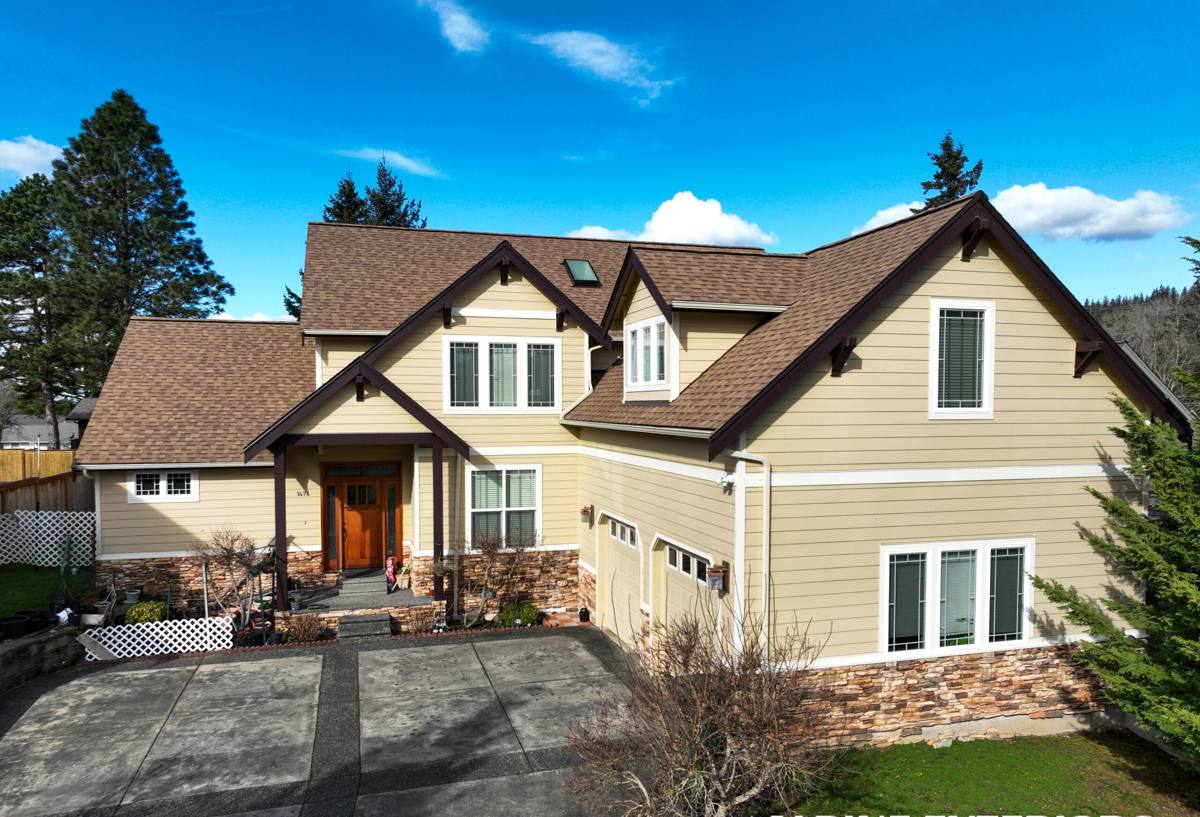
What Local Homes Actually Need From a Deck
Drainage First, Everything Else Second
Standing water is the single biggest driver of deck failure in this climate. Whether it's rain pooling on the deck surface, splashback saturating the bottom few inches of framing, or poor grading sending runoff back under the structure, water that doesn't move on is water that starts rot, feeds moss and algae, and corrodes hardware. Every deck we build starts with drainage — surface slope, gaps between boards, and a plan for where water goes once it leaves the deck.
Airflow and Sun Exposure
Decks tucked against the north side of a house, shaded by mature trees, or built low to the ground stay damp longer after every rain. In Nooksack's tree-lined, semi-rural lots, that's a common layout. It doesn't mean you can't build there — it means the framing height, joist spacing, and material choice need to account for the fact that the deck may not fully dry out between storms for weeks at a time in winter.
Materials That Don't Fight the Climate
Some decking and fastener choices hold up to sustained damp and moss pressure far better than others. We'll walk through that in detail below, but the short version is: what works well in a dry inland climate often underperforms here, and what's marketed as "low maintenance" isn't always low maintenance under six months of Whatcom County moisture.
Choosing the Right Decking Material
There's no single correct material for every deck — budget, look, and how much upkeep you want to do all factor in. But in a wet, moss-prone climate like Nooksack's, some trade-offs matter more than they would elsewhere.
| Material | Moisture & Moss Behavior | Maintenance | Typical Lifespan |
|---|---|---|---|
| Pressure-treated lumber | Absorbs water at cut ends and fastener holes; needs sealing to resist moss and checking | Annual cleaning and re-sealing recommended | 15–25 years with upkeep |
| Cedar | Naturally moisture- and insect-resistant, but surface still hosts moss without regular cleaning | Periodic cleaning; staining/sealing extends life and color | 20–30 years with upkeep |
| Capped composite | Won't rot, but moss and algae can still grow on the surface film in shaded, damp spots | Periodic washing; no sealing or staining needed | 25–30+ years, manufacturer-warrantied |
| Uncapped composite | More moisture-absorbent than capped versions; more prone to surface staining and mold over time | Regular cleaning; more upkeep than capped composite | 15–20 years |
We'll talk through this table with you against your actual site — how much shade the deck will get, whether it's near sprinklers or downspouts, and how much cleaning you're realistically willing to do — rather than defaulting to whatever's cheapest or trendiest.
Getting the Structure Right
Footings and Frost
Whatcom County code requires footings to bear below the local frost depth and on undisturbed or properly compacted soil. In the Nooksack River valley, soils can run wetter and softer than on higher ground closer to Lynden proper, which affects how footings are sized and how deep they need to go. We don't guess on this — footing depth and diameter are set based on the actual soil conditions on your lot, not a generic assumption.
Ledger Attachment
The ledger board — where the deck attaches to the house — is the single most common point of catastrophic deck failure nationwide, almost always because of water intrusion behind it. A correct ledger installation uses proper flashing that sheds water away from the house framing, not just caulk and lag bolts. In a climate with this much sustained rain, a poorly flashed ledger is a matter of when, not if, it causes rot behind the siding.
Fasteners and Hardware
Standard galvanized hardware corrodes faster in areas that see salt-influenced marine air, which includes much of Whatcom County near the water and the low-lying valleys that funnel that air inland. We use fasteners and structural connectors rated for coastal or high-corrosion exposure rather than the minimum-grade hardware that's fine in drier, inland regions of the state.
Railings and Guard Systems
Beyond meeting code height and baluster spacing requirements, railing material choice matters here too. Untreated or poorly finished wood railings show weathering and moss faster than the deck surface itself because they get less airflow and more direct rain contact on horizontal caps. Metal railing components need the same corrosion-resistant hardware consideration as the rest of the structure. We spec railing systems to match how the rest of the deck is built, not as an afterthought.
Our Process for a Nooksack Deck Project
- Site visit and assessment. We look at drainage, sun exposure, existing grading, and how the deck ties into the house before we talk materials.
- Design and material selection. We walk through layout, decking material, and railing options with the trade-offs specific to your site's shade and moisture exposure.
- Permitting. We handle the permit application and inspections required for the project's scope and location.
- Footings and framing. Structural work is built to the soil and frost conditions on your lot, with corrosion-resistant hardware throughout.
- Decking, railing, and finish work. Surface material and railings are installed with attention to drainage gaps, fastener placement, and flashing details.
- Final walkthrough. We go over maintenance expectations for your specific material choice before we call the job done.
Living With a Deck Through a Whatcom County Winter
No deck material is maintenance-free in this climate — "low maintenance" means less work than a fully finished wood deck, not zero work. A little seasonal attention goes a long way toward keeping moss from getting a foothold and catching small issues before they become expensive ones.
- Sweep leaves and debris off the deck surface regularly through fall — trapped organic matter is what moss and algae feed on first.
- Rinse or wash the deck surface at least once a year, more often in shaded areas, using a cleaner appropriate for your specific decking material.
- Check and clear the gaps between boards so water and debris don't build up and hold moisture against the framing.
- Inspect railings and stair connections annually for movement, corrosion staining, or loose fasteners.
- Look underneath the deck once a year for standing water, soft framing, or signs of moisture buildup that aren't visible from the surface.
- Re-seal wood decking on the manufacturer's recommended schedule — skipping a cycle in a wet climate shows up fast.
Permits and Local Requirements
Most new deck construction and many deck replacements in Whatcom County require a building permit, with specifics depending on the deck's size, height, and attachment to the house. Requirements can also vary depending on whether your property falls under county jurisdiction or a specific local jurisdiction near Lynden. We handle the permit process as part of the job so you're not left figuring out county requirements on your own.
Why It Matters That We Already Work in This Area
A deck built by a crew that mainly works drier inland climates will often make reasonable choices for that climate and the wrong choices for this one — lighter-duty hardware, less attention to ledger flashing, decking material chosen on look and price alone. Working regularly in and around Lynden and the Nooksack area means we've seen how different materials and details actually hold up here over years, not just how they're marketed. That's the difference between a deck that needs real work in year five and one that's still solid in year twenty.
If you're planning a new deck or replacing one that hasn't held up to the weather, we're happy to take a look and talk through what makes sense for your property. Reach out for a free, no-pressure estimate using the form below.