 Lynden Roofing
 Asphalt Shingle Roofing Built for Nooksack's Weather
Nooksack sits in the part of Whatcom County where marine air off the Salish Sea, moisture pulled up the Nooksack River valley, and the deep shade from mature evergreens all combine into one of the tougher climates in the state for a roof to sit under. It's not any single storm that wears out an asphalt shingle roof here — it's the steady combination of salt-laden air, driving rain that comes in sideways more often than straight down, and a moss season that can run eight months out of the year. A roof that would hold up fine in a drier part of the state can fall behind quickly here if it wasn't installed with this specific climate in mind.
This page is about one job, done right, in one place: asphalt shingle roofing for homes in and around Nooksack. Not a general overview of shingles everywhere — what actually matters for a roof over this particular stretch of Whatcom County.
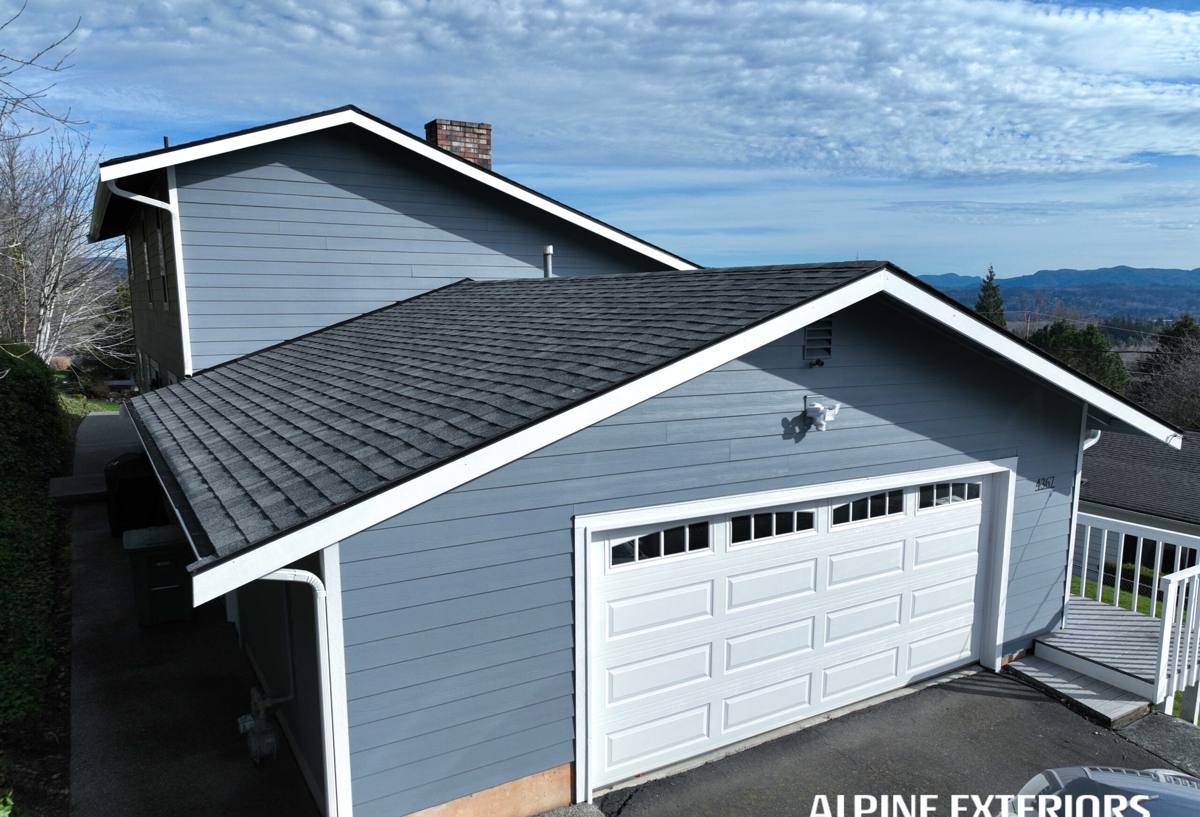
What This Climate Actually Does to a Shingle Roof
Salt Air and Coastal Moisture
Homes in the Nooksack and Lynden area aren't right on the coast, but they're close enough that salt-bearing air moving in off the Sound still reaches roofing metal, fasteners, and flashing over time. Salt exposure speeds up corrosion on exposed nail heads, drip edge, and any lower-grade flashing. It's a slow process, but it's a real one, and it's part of why we don't cut corners on the metal components of a roof system out here.
Driving Rain
Whatcom County storms frequently bring wind-driven rain rather than straight-down rain. That matters because wind-driven rain gets pushed sideways and even slightly upward under shingle edges, valleys, and around penetrations — places a roof built for calmer weather might get away with skipping extra protection. A roof here needs underlayment and flashing details that assume water will try to travel somewhere other than straight down.
Moss and Shade
Between the tree cover common on Nooksack-area lots and the long stretches of damp, mild weather, moss has almost year-round conditions to take hold. Moss isn't just cosmetic. As it establishes on a shingle roof, it holds moisture against the shingle surface, lifts shingle edges as it grows, and works its way into fastener lines. Left unmanaged for years, it shortens the useful life of an otherwise sound roof.
Choosing the Right Asphalt Shingle for a Nooksack Roof
Not every asphalt shingle product is built the same way, and in a climate like this, the differences show up faster than they would in a drier region. The table below is a general comparison of shingle classes we install, not a specific brand endorsement — the right choice depends on your roof's pitch, sun exposure, and your budget.
| Shingle Type | Typical Lifespan Here | Moss/Moisture Resistance | Best Fit |
|---|---|---|---|
| 3-tab (economy) | Shorter end of the range | Lower — flatter profile holds less debris but ages faster under constant damp | Budget-driven projects, secondary structures |
| Standard architectural (laminate) | Mid-range | Good with proper ventilation and maintenance | Most Nooksack-area homes |
| Algae/moss-resistant architectural | Mid-to-upper range | Higher — copper or zinc granules discourage moss and algae growth | Heavily shaded lots, north-facing slopes |
| Premium/designer laminate | Upper range | Good, comparable to standard architectural with resistant granules available | Homeowners prioritizing appearance and longevity |
For lots with heavy tree cover — common around Nooksack — we generally steer homeowners toward an algae- and moss-resistant shingle line. It costs more up front than a standard laminate, but on a shaded roof it earns that difference back in reduced moss treatment and a longer service life before the granule loss that ends a shingle's usefulness.
What a Correct Installation Actually Involves
A shingle roof is a system, not just a layer of shingles nailed to plywood. In this climate, skipping any one layer of that system is where roofs start failing early — usually at the edges, valleys, and penetrations first.
- Tear-off and deck inspection: Old roofing removed down to the deck, with any soft, delaminated, or water-damaged sheathing identified and replaced before anything new goes down.
- Ice and water shield at vulnerable points: Self-adhering waterproof membrane at eaves, valleys, and around chimneys and skylights — the places wind-driven rain is most likely to find a way in.
- Synthetic underlayment across the field: A water-resistant barrier under the shingles across the rest of the roof, providing backup protection if wind ever drives moisture past the shingle surface.
- Drip edge and flashing in corrosion-resistant metal: Given the salt air this area sees, we use flashing and drip edge that's built to hold up to that exposure rather than the cheapest option available.
- Proper nailing pattern: Correct nail count and placement per shingle, not staples and not a shortcut pattern — this is one of the most common places lower-bid roofs cut corners, and it's the first thing that fails in a windstorm.
- Balanced attic ventilation: Intake at the eaves and exhaust at the ridge, sized to the attic space, so moisture and heat don't build up under the deck and shorten the shingles' life from underneath.
- Valley and penetration detailing: Woven, closed-cut, or open metal valleys installed correctly for the shingle type, and every pipe, vent, and skylight properly flashed rather than just caulked.
Any one of these steps done wrong won't necessarily show up as a leak in the first year. It shows up two, five, or eight years later, usually right when the manufacturer's warranty coverage starts thinning out. That's the argument for getting it right the first time rather than the cheapest time.
How Our Process Works
Inspection and Estimate
We walk the roof (or use a ladder and drone assessment where pitch or safety makes that the better call), check the deck condition where accessible, look at ventilation, and note anything specific to your lot — tree cover, north-facing slopes, low-slope sections that need extra attention. You get a written estimate that spells out the shingle option, underlayment, flashing, and scope, not a vague lump sum.
Materials and Scheduling
We order material to match the scope we walked with you, and schedule around the weather window rather than promising a date we can't hold in a wet stretch. In this climate, forcing a roof install between rain systems is how corners get cut.
Tear-Off, Deck Repair, and Install
Full tear-off, deck inspection and repair as needed, then the layered system described above — ice and water shield, underlayment, drip edge, shingles, flashing, ventilation — installed in the sequence that actually keeps water out, not just the sequence that's fastest.
Cleanup and Walkthrough
Job site cleaned up, including a magnetic sweep for stray nails, and a walkthrough so you know what was done and what to watch for going forward.
Living With a Shingle Roof in Nooksack: Maintenance That Actually Matters
A correctly installed shingle roof still needs some upkeep in this climate — that's true of any roofing material here, not a knock on asphalt shingles specifically.
- Keep gutters and valleys clear of needles and leaf debris, especially going into fall — clogged valleys are where driving rain finds a way under the shingle edge.
- Address moss early with a gentle, roof-safe treatment rather than pressure washing, which strips granules and shortens shingle life.
- Trim back overhanging branches where practical — less shade and debris means less moss pressure and fewer scuff points from limbs in wind.
- Have the roof looked at after major windstorms, particularly checking ridge caps and any flashing around penetrations.
- Watch for granule buildup in gutters — a normal amount early on, but a sudden increase later in the roof's life is worth a look.
Repair or Replace? A Straight Answer
Not every roof problem in Nooksack means a full replacement. A localized leak, a section of storm damage, or moss buildup on an otherwise sound roof can often be repaired. Full replacement generally makes sense when the shingles are past their expected service life across the whole roof, when granule loss is widespread rather than isolated, or when the deck itself has moisture damage in multiple areas rather than one isolated spot. We'll tell you honestly which category your roof falls into rather than defaulting to the bigger job.
Why It Matters That We Already Work in Nooksack
A roofing crew that works this specific corner of Whatcom County regularly has already seen how the local combination of salt air, wind-driven rain, and shade-driven moss plays out over years, not just in a manufacturer's spec sheet. That shows up in small decisions — which valleys get extra attention, which slopes need moss-resistant shingles even when the rest of the roof doesn't, how much ventilation a given attic actually needs given local humidity. A crew unfamiliar with this stretch of the county is working from general assumptions. A crew that's already up on Nooksack roofs is working from what actually holds up here.
If you're weighing a repair, a full replacement, or just want an honest read on where your roof currently stands, we're glad to take a look. Estimates are free, there's no pressure attached, and you'll get a straight answer about what your roof needs — nothing added just to pad the job. Use the form below to get started.