 Lynden Roofing
 Siding That Has to Work in Nooksack's Climate, Not Just Look Good
Nooksack sits in a stretch of Whatcom County where the weather doesn't take a season off. Homes here deal with salt-laden air moving in off the water, long stretches of driving rain, and a moss season that can run from fall clear through spring. That combination is hard on exterior materials that aren't built for it. Paint fades and chalks faster than it should, seams open up, and moisture finds its way behind panels that weren't installed with enough attention to detail. Siding in this area isn't just a cosmetic choice — it's the layer standing between your framing and a climate that will find every weak point.
We focus this page on one job in one place: fiber cement siding installation for homes in and around Nooksack. Not a general overview of siding options, not a company brochure — what actually matters if you own a house here and you're looking at your siding wondering if it's going to make it through another wet winter.
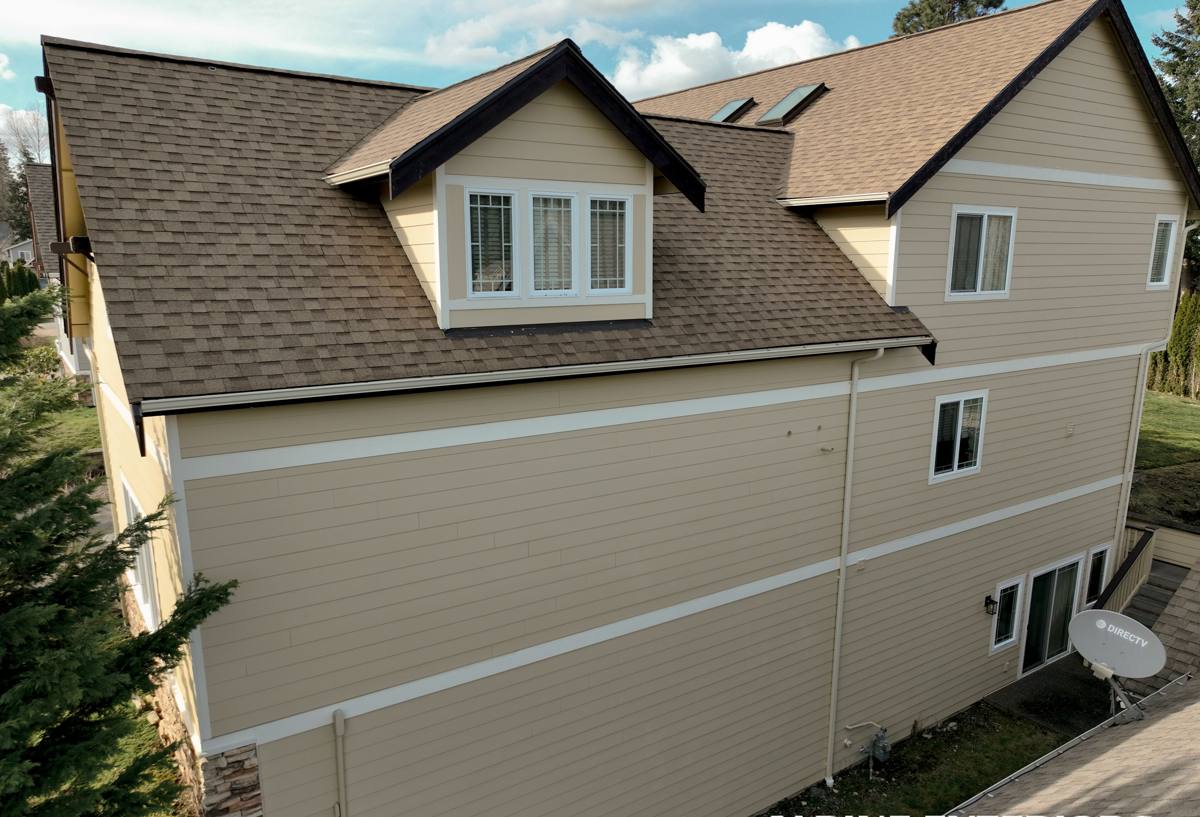
Why We Only Install James Hardie Fiber Cement
Lynden Roofing Co installs one siding product: James Hardie fiber cement. We don't install vinyl, LP SmartSide, primed wood, cedar, or other fiber cement brands. That's not a marketing line — it's a standard we hold because of what we've seen happen to other materials in this exact climate.
Vinyl expands and contracts with temperature swings and can warp or crack in cold snaps; it also doesn't hold up structurally against wind-driven rain the way a rigid fiber cement panel does. Wood-based products, including engineered wood siding, are organic material at their core — no matter how well they're treated, they're more vulnerable to moisture absorption, and in a moss-heavy climate like Whatcom County's, sustained dampness against the cladding is a real long-term risk. Fiber cement itself isn't unique to Hardie, but the manufacturing consistency, factory-applied finish, and climate-specific product engineering are where James Hardie has set itself apart, and it's why we've standardized on it rather than mixing brands.
James Hardie is non-combustible, doesn't rot, doesn't attract insects, and comes with a factory-applied ColorPlus finish that's baked on rather than field-painted — which matters enormously in a region where UV exposure and moisture cycling wear paint down faster than most homeowners expect.
HardieZone: Built for This Region Specifically
James Hardie engineers its siding by climate zone, called HardieZone. Homes in the Pacific Northwest, including Whatcom County, typically call for the HZ5 formulation, which is engineered for wetter, more temperate conditions rather than the freeze-thaw extremes or high-heat exposure other regions deal with. That's a meaningful difference — a siding product engineered for a dry, high-UV climate isn't the same product performing well in Nooksack's rain and moss exposure.
What Goes Wrong With Siding in Nooksack Specifically
We see a consistent pattern of problems on homes in this area, and almost all of them trace back to moisture management rather than the siding material itself failing outright:
- Moss and algae buildup on north-facing walls and shaded siding that stays damp longer after rain
- Caulk joints that have failed at trim boards and window returns, letting water track behind the siding
- Paint or finish that's chalking, peeling, or fading unevenly, usually a sign the original coating wasn't rated for this level of UV and moisture cycling
- Soft or swelling siding at the bottom courses, where splashback and poor ground clearance keep material wet longer than it should be
- Gaps and buckling from panels that were installed without the manufacturer's required expansion clearances
None of these are things a homeowner should have to just live with. They're almost always installation or product issues, not inevitable outcomes of living in this climate — which is exactly why the install itself matters as much as the material.
What a Correct Fiber Cement Installation Actually Involves
A lot of siding problems in this region don't come from bad material — they come from installation shortcuts. James Hardie publishes detailed installation requirements, and skipping them is what causes the moisture problems we listed above. A correct job includes:
- A weather-resistant barrier (house wrap) installed and lapped correctly behind the siding, with no gaps at seams or penetrations
- Proper flashing at every window, door, and roof-to-wall intersection so water is directed out and away from the sheathing
- Minimum clearance between the bottom of the siding and grade, decks, or roof surfaces, per manufacturer spec — this is one of the most commonly skipped steps and one of the most damaging when ignored
- Correct fastener type, spacing, and depth — over-driven or under-driven fasteners are a leading cause of premature siding failure
- Factory-cut edges sealed and field-cut edges primed or sealed before installation, since exposed fiber cement edges are more vulnerable to moisture uptake
- Caulking only at the joints Hardie specifies, using a sealant rated for the application — over-caulking traps moisture just as badly as under-caulking lets it in
This is the level of detail that separates siding that lasts three decades from siding that starts showing problems in five years. It's also work that's hard for a homeowner to verify just by looking at the finished wall, which is where hiring the right crew becomes as important as the material choice.
Our Process for a Nooksack Siding Project
1. On-Site Assessment
We walk the exterior, check for existing moisture damage, look at trim, window flashing, and grade clearance, and identify anything that needs correcting before new siding goes on — installing over a moisture problem just hides it.
2. Tear-Off and Substrate Check
We remove the existing siding down to the sheathing and inspect for rot or water damage that's been hidden underneath. This is often where older problems on Nooksack homes actually get found.
3. Weather Barrier and Flashing
We install or replace the weather-resistant barrier and integrate flashing at every penetration and transition point, since this layer does more long-term work than the siding itself.
4. Hardie Panel Installation
Panels, fastening, and clearances go in to James Hardie's published specifications — not shortcuts, not "close enough."
5. Trim, Caulking, and Finish Detailing
Corner boards, trim, and joints are finished and sealed only where the manufacturer calls for sealant, using the ColorPlus-matched or paint-grade materials appropriate to the product line.
6. Final Walkthrough
We walk the completed job with the homeowner before calling it done, checking sightlines, seams, and finish consistency.
What Drives the Cost of a Siding Project in This Area
Every home is different, so we won't quote a number without seeing the house — but these are the real factors that move the price up or down on a Nooksack-area project:
| Cost Factor | Why It Matters |
|---|---|
| Tear-off vs. installing over existing siding | Full tear-off costs more upfront but lets us inspect and fix hidden moisture damage — something we recommend given how common it is in this climate |
| Home size and number of stories | More square footage and taller walls mean more material, more staging, and more labor time |
| Trim and architectural detail | Homes with more corners, dormers, or trim work require more cutting, fitting, and finish labor |
| Siding profile and finish | Lap width, board-and-batten, and shingle-style profiles vary in material and labor cost |
| Existing moisture or rot damage | Sheathing or framing repairs found during tear-off add cost but prevent covering up a bigger problem |
| Access and site conditions | Tight lots, landscaping, or difficult staging areas can affect labor time |
A Homeowner's Maintenance Checklist for This Climate
Even correctly installed fiber cement siding benefits from a little seasonal attention in a climate like Nooksack's. We recommend homeowners keep an eye on:
- Moss or algae buildup on shaded or north-facing walls — soft-wash rather than pressure-wash to avoid damaging the finish
- Caulk joints at trim, windows, and corners for cracking or separation, especially after the first few winters
- Grade and landscaping — keep soil, mulch, and plantings from building up against the bottom edge of the siding
- Gutters and downspouts — make sure they're directing water away from walls rather than splashing back onto the siding
- Paint or finish condition on trim boards and any field-painted elements, which wear faster than the factory-finished panels
Why It Matters to Hire a Crew That Already Works in Nooksack
Siding installation standards don't change by zip code, but the conditions a crew needs to plan around do. A contractor who already works in Nooksack and the surrounding Whatcom County area knows which walls take the worst of the moss season, understands local permitting expectations, and isn't learning the region's weather patterns on your project. That familiarity shows up in the details — where extra flashing attention matters most, which orientations need the most moisture protection, and how to sequence a job around the rain this area gets.
It also means a crew that's genuinely local, not a company passing through the region for a single job and gone before problems would show up. Fiber cement siding is a decades-long investment in your home; the installation quality behind it matters more than almost anything else in determining whether it delivers on that lifespan.
Get a Free Estimate for Your Nooksack Home
If your siding is showing moss, gaps, failing caulk, or finish wear, or you're planning ahead for a replacement, we're happy to take a look and walk you through what we're seeing — no pressure, no obligation. Reach out below for a free estimate on James Hardie fiber cement siding for your Nooksack home.