 Lynden Roofing
 Why Bellingham Roofs Wear Differently Than Roofs Inland
Bellingham sits close enough to the water that salt-laden air is a constant, low-grade presence on every exterior surface in the area, roofs included. Add Whatcom County's long stretch of driving rain each fall and winter, plus a moss season that can run from October well into spring, and you have a set of conditions that ages an asphalt shingle roof faster here than it would in a drier, inland climate. None of this means asphalt shingles are the wrong choice for the area — they're still the most practical, cost-effective roofing material for the vast majority of homes here. It means the installation details matter more, and the maintenance schedule can't be an afterthought.
A shingle roof that's installed correctly for this climate and one that's installed to a generic national standard can look identical the day the crew leaves. The difference shows up three, five, and ten years later — in how much moss has taken hold, whether the underlayment held up under sustained rain, and whether the metal flashing has started to corrode from salt exposure.
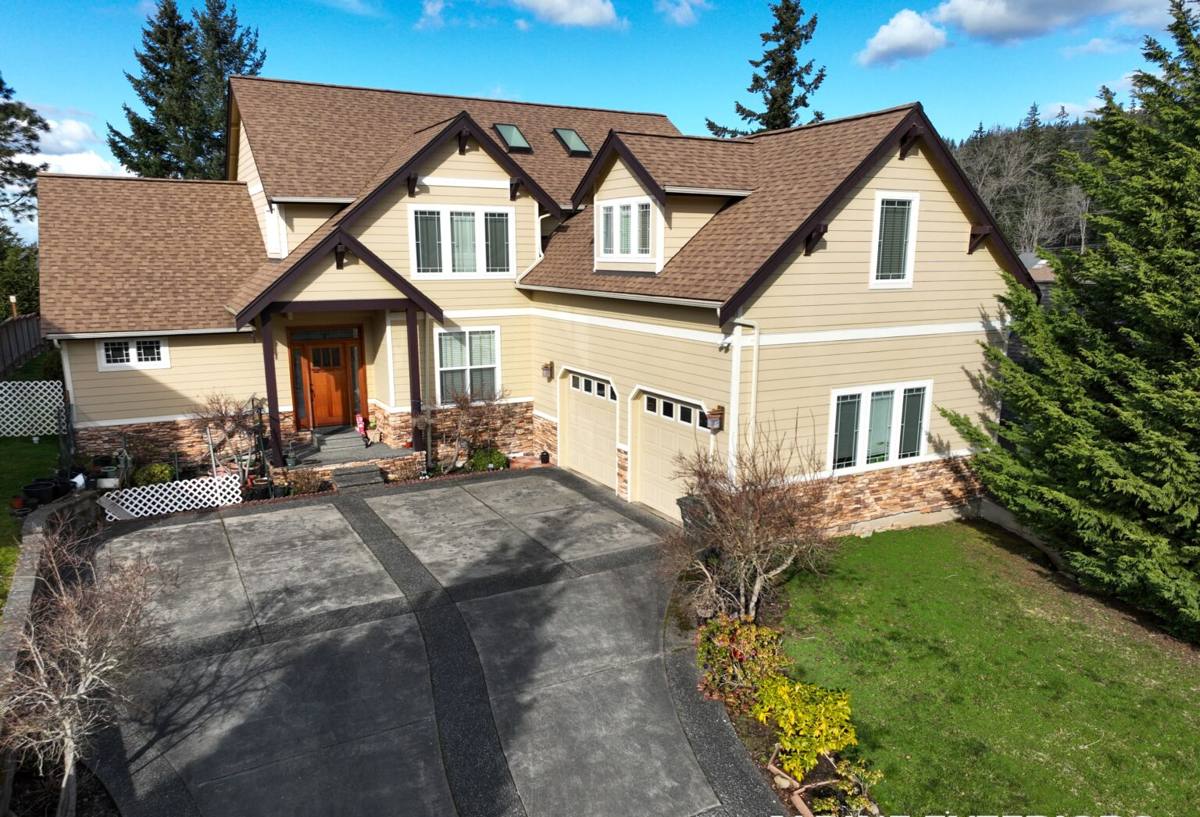
What Driving Rain Actually Does to a Roof
"Driving rain" isn't just heavy rain — it's rain pushed sideways by wind, which means water gets forced up and under shingle edges, into gaps at ridges and valleys, and around any penetration (vents, chimneys, skylights) that isn't flashed with a wind-driven-rain climate in mind. On a roof with correctly lapped shingles, sealed nail penetrations, and proper underlayment, this isn't a problem. On a roof where shortcuts were taken — shingles nailed too high, insufficient overlap at valleys, or underlayment installed without attention to how water actually moves under wind pressure — driving rain finds every one of those weak points over time.
This is why we treat underlayment and valley/flashing detail as the parts of the job that matter most for long-term performance, even though they're invisible once the shingles go down. A homeowner can't inspect this work after the fact without pulling shingles up, which is exactly why it's worth vetting who does it before the job starts, not after a leak shows up.
Moss Season and What It Actually Costs a Roof
Moss doesn't just look bad — it holds moisture against the shingle surface, works its way under shingle edges as it grows, and can lift shingles enough to create a path for water. Left unaddressed for a few seasons, moss growth shortens the effective life of a shingle roof meaningfully, especially on north-facing slopes and shaded areas that stay damp longer after Whatcom County's fall and winter rain.
The fix isn't just "get the moss off" — it's a combination of the right shingle product, proper attic and roof ventilation to reduce the moisture and temperature swings that moss thrives on, and a maintenance rhythm that keeps growth from establishing in the first place. We'll cover each of those below.
Where Moss Tends to Take Hold First
- North-facing and heavily shaded slopes that dry out slowly after rain
- Valleys and low-slope sections where water and debris collect
- Areas under overhanging tree branches
- Roofs with poor attic ventilation, where trapped heat and moisture accelerate growth from underneath as well as above
Signs a Bellingham-Area Roof Needs a Closer Look
Most asphalt shingle roofs don't fail suddenly — they show warning signs for months or years before a real leak develops. Given the local climate, we tell homeowners to watch for these specifically:
- Moss or algae streaking, especially concentrated on shaded or north-facing slopes
- Granules collecting in gutters or downspouts, which signals shingle wear
- Shingle edges that look lifted, curled, or cupped rather than lying flat
- Rust staining or visible corrosion around flashing at chimneys, vents, or valleys
- Water stains or discoloration on interior ceilings, particularly after a stretch of driving rain
- Visible sagging along the roofline or in a valley
- Daylight visible through the roof deck from inside the attic
Any one of these is worth a professional look before it turns into an interior repair, which almost always costs more than the roof work would have.
What a Correctly Installed Asphalt Shingle Roof Involves Here
A quality asphalt shingle installation in this climate isn't fundamentally different in its steps from anywhere else — but the standard we hold each step to reflects Bellingham's rain and salt exposure.
Deck Inspection and Repair
Once old roofing is removed, the deck gets inspected for soft spots, rot, or delamination — common on older Whatcom County homes where past leaks went unaddressed. Any compromised sheathing is replaced before anything new goes down, since installing new shingles over a weak deck just hides the problem.
Underlayment Selection
Given the volume and duration of rain here, we use underlayment products and installation methods suited to wind-driven rain conditions, with particular attention to ice-and-water-shield-type membrane at eaves, valleys, and around penetrations — the areas most exposed to wind-forced water intrusion.
Flashing Details
All flashing — step flashing along walls, valley flashing, and flashing around vents and chimneys — is installed (or replaced, on a re-roof) rather than reused where salt-air corrosion or age has compromised it. Corroded flashing is one of the most common hidden causes of leaks on older coastal-influenced homes.
Ventilation
Proper intake and exhaust ventilation keeps the attic space closer to outdoor temperature and moisture levels, which reduces condensation, helps shingles last longer, and reduces the damp, stagnant conditions moss and algae favor.
Shingle Installation and Nailing
Shingles are nailed according to manufacturer specification for proper wind and rain resistance — not just "enough to hold," but placed at the correct height and count to maintain the seal strip's performance under wind-driven rain.
Choosing a Shingle Product for This Climate
Not all asphalt shingles perform the same way under sustained moisture and moss pressure. The table below outlines the general trade-offs homeowners in this area should weigh — these are general industry characteristics, not claims about any single manufacturer.
| Shingle Type | Typical Lifespan | Moss/Algae Resistance | Best Fit |
|---|---|---|---|
| Standard 3-tab | Shorter end of the asphalt range | Lower unless algae-resistant (AR) granules specified | Budget-focused re-roofs, secondary structures |
| Architectural (laminated) | Mid-to-long range | Better mass and profile; AR granules widely available | Most primary homes in this climate |
| Premium/designer laminated | Longer end of the asphalt range | Highest-grade AR options typically available | Homes prioritizing longevity and heavier moss exposure areas |
Across all three tiers, we recommend algae-resistant (AR) shingles as the practical standard for Bellingham and the surrounding area — the copper- or zinc-infused granules used in AR products slow algae and moss growth meaningfully compared to standard granules, and the added cost is modest relative to the total job.
Maintenance That Actually Extends Roof Life Here
Installation quality only gets a roof so far — ongoing upkeep matters more in this climate than in drier parts of the state.
Twice-Yearly Inspection
A visual check in fall (before the wet season sets in) and again in spring catches moss establishment, loosened flashing, and debris buildup before they become bigger problems.
Gutter and Valley Clearing
Clogged gutters and debris-packed valleys hold water against the roof edge, which is exactly the kind of sustained moisture that accelerates both rot and moss growth.
Moss Treatment, Not Just Removal
Scraping visible moss off without treating the surface just means it grows back. A proper approach removes growth without damaging the granule surface and follows with a treatment approach appropriate to the shingle type.
Tree Trimming
Overhanging branches keep shaded roof sections damp longer after rain and drop debris that traps moisture — trimming back branches near the roofline is one of the simplest ways to reduce moss pressure.
What Drives the Cost of an Asphalt Shingle Roof Locally
Every roof is different, so we don't publish blanket pricing, but these are the factors that most affect cost on a typical Bellingham-area home:
| Factor | Why It Matters |
|---|---|
| Roof size and pitch | More surface area and steeper pitches increase material and labor time |
| Number of layers to remove | Tear-off of multiple existing layers adds labor and disposal cost |
| Deck condition | Rot or soft sheathing found during tear-off requires repair before new roofing goes down |
| Shingle tier selected | 3-tab, architectural, and premium laminated products carry different material costs |
| Flashing and ventilation work | Replacing corroded flashing or upgrading ventilation adds scope but reduces future risk |
| Roof complexity | Valleys, dormers, chimneys, and skylights all add cutting, flashing, and labor time |
We walk through each of these factors on-site so a homeowner understands exactly what they're paying for and why, rather than getting a number with no explanation behind it.
Why It Matters That a Crew Already Works This Area
A crew that regularly works roofs in Bellingham and across Whatcom County has already seen how local conditions play out over years, not just on installation day. That means knowing which slopes on a typical local roof design tend to hold moss, recognizing early corrosion patterns on flashing exposed to salt air, and understanding which underlayment and ventilation choices actually hold up through a full wet season here — not just what a spec sheet says in ideal conditions.
It also means being available and familiar when something needs a follow-up look, rather than being a crew that did one job in the area and moved on. For a homeowner, that continuity is worth as much as the installation itself.
If you're weighing a repair, a full replacement, or just want a straight answer about what your current roof needs, we're happy to take a look. The form below gets you a free, no-pressure estimate with a clear explanation of what we find and what your options are.