 Lynden Roofing
 Siding Repair in Bellingham: A Different Job Than Full Replacement
Not every damaged wall on a Bellingham home needs to come off. A lot of what we see on repair calls is isolated: a section of boards near a downspout that's taken on water, a corner where caulk failed and let moisture behind the material, a stretch of wall that's staying damp long after the rest of the house has dried out. Bellingham sits on Bellingham Bay in Whatcom County, and that location means homes here deal with salt-tinged marine air, rain that comes in sideways off the water, and a moss season that can run most of the year on shaded walls. That combination wears on siding in specific, identifiable ways, and a repair that addresses the actual cause can add years of service life to a wall that doesn't need to be torn off and rebuilt.
We install and repair one siding system: James Hardie fiber cement. That's not a marketing line, it's the material we trust to hold up in this climate, and it shapes how we approach repair work too. A correct repair isn't just patching the visible damage. It means figuring out why that spot failed in the first place, matching the material and finish so the repair doesn't stand out as a repair, and rebuilding the water management details underneath so the same failure doesn't show up again two winters later.
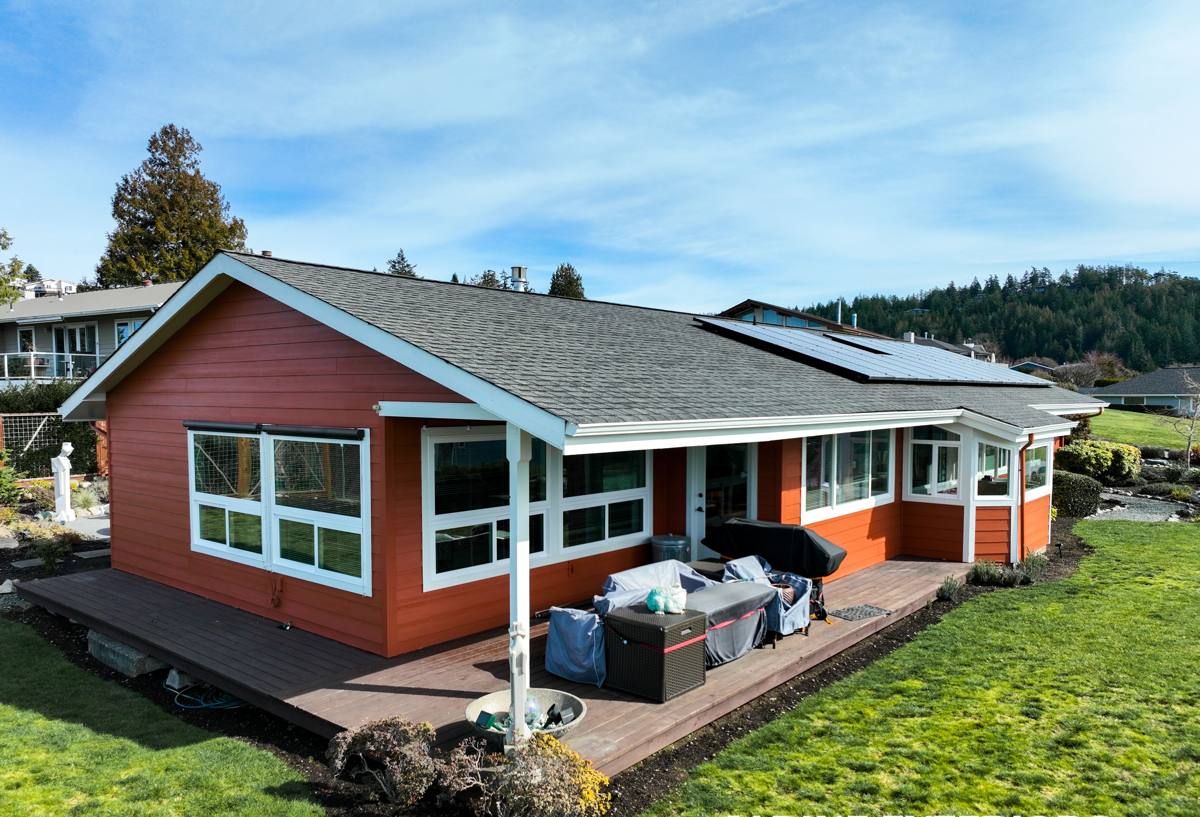
What Bellingham's Climate Does to Siding Over Time
Salt Air and Corrosion
Bellingham's proximity to the bay means a steady presence of salt-laden moisture in the air, even on days without an obvious storm. That exposure works slowly on fasteners, flashing, and trim connections, corroding the small metal components that hold a siding system together long before the siding boards themselves show visible wear. A repair that only addresses the surface without checking fastener and flashing condition underneath is often just delaying the same failure.
Wind-Driven Rain
Rain off the Salish Sea and Bellingham Bay regularly arrives at an angle instead of falling straight down, and that changes how water moves against a wall. Lap joints, trim seams, and penetrations that would shed a vertical rain fine can still take on water when it's being pushed sideways by wind, which is a common root cause behind repair calls that look, at first glance, like simple material failure.
A Long Moss and Mildew Season
Mild, damp conditions and tree cover across much of Bellingham keep north-facing and shaded walls wet for extended stretches of the year. Moss and mildew don't just look bad, they hold moisture directly against whatever they're growing on, and on a wall with any existing gap or porous surface, that constant dampness accelerates whatever damage was already starting underneath.
Signs a Bellingham Home Needs Siding Repair
Most homeowners notice something is off before they can say exactly what it is. These are the specific signs worth acting on before they spread into a bigger job:
- Boards that feel soft or spongy when pressed, especially near the bottom of a wall or below windows
- Cracking or chipping concentrated at butt joints, corners, or trim seams rather than spread evenly across a wall
- Paint or finish bubbling and peeling in one localized area while the rest of the wall looks fine
- Staining or dark streaking running down from a window, trim piece, or roof-to-wall transition
- Moss or mildew growth that's noticeably heavier in one spot than the surrounding siding
- Gaps opening up at corners, trim boards, or seams where there used to be a tight fit
- Small holes or soft spots that suggest pest activity has followed existing moisture damage
- Siding that's visibly pulling away from the wall at fastener points
Any one of these can be a small fix. Several of them together, especially in the same area, usually mean water has been getting behind the wall for a while and the visible damage is the tail end of a problem that started somewhere else.
What a Correct Siding Repair Actually Involves
Diagnosing the Real Cause First
Before we touch anything, we're trying to answer one question: why did this specific spot fail when the rest of the wall didn't? Sometimes it's a straightforward material issue. Just as often it traces back to something else entirely, a flashing detail that was never installed correctly, a house wrap seam that opened up, or a nearby roof or window leak that's been feeding water into the wall from above. Patching over the visible symptom without answering that question means the same damage tends to reappear in the same spot.
Matching Material and Profile Correctly
A repair that's obviously a repair, mismatched board width, wrong reveal, or a visibly different color, isn't a finished job in our view. On James Hardie siding, that means sourcing the correct plank profile and, where the original finish is Hardie's factory-applied ColorPlus coating, getting as close a color match as the product line and the age of the existing siding allow. On older installations where an exact match isn't realistic, we're upfront with homeowners about what to expect rather than promising a seamless blend we can't deliver.
Rebuilding the Water Management Details
The siding itself is the last layer, not the only one. A correct repair means restoring the house wrap, flashing, and fastening underneath to spec, not just caulking the surface and calling it done. Caulk has a place in siding work, but it's not a substitute for flashing that directs water back out of a wall assembly, and over-relying on it is a common shortcut that shows up again as a callback within a season or two.
Repair or Replace? How We Make That Call on a Bellingham Home
We don't default to recommending a full re-side just because a homeowner called about a repair, and we don't try to squeeze a few more years out of a wall that's genuinely done just to keep the job small. The honest answer depends on what we actually find once we look closely, sometimes with a moisture meter, sometimes by opening a small test area.
| What We Find | What It Usually Points Toward |
|---|---|
| Damage isolated to one or two sections, with a clear and fixable cause | Targeted repair, once the underlying cause is corrected |
| Moisture traced to a single failed flashing detail or trim piece | Repair of that section, provided the flashing itself gets rebuilt correctly |
| Damage showing up on multiple walls or elevations | Worth a broader assessment before committing to spot repairs |
| Original siding at or near the end of its practical service life | Replacement is often more cost-effective than repeated repairs |
| Rot or moisture damage found at several points once a section is opened | Likely points to replacement of that wall section or more |
We walk homeowners through what we find and why, including the option to hold off and monitor a borderline area rather than spend money on work that isn't needed yet.
Why We Repair Exclusively With James Hardie Fiber Cement
We don't install or repair with LP SmartSide, vinyl siding, Cemplank, Allura, primed spruce, or cedar. Those are legitimate products and other contractors work with them successfully, but we made a professional decision to standardize on one system: James Hardie fiber cement, including the HZ5 formulation engineered for regions with sustained moisture exposure like this one. It's non-combustible, its ColorPlus finish is cured at the factory instead of painted on-site, and it holds its dimensions instead of swelling or cupping the way some engineered wood products can after repeated wet-season cycles.
What that means practically for repair work: if your home is currently sided in one of those other materials and you're dealing with localized damage, we'll be straightforward with you about what we can and can't do. In some cases a section can be replaced with matching Hardie product as a transition point. In others, especially with vinyl or engineered wood showing widespread moisture damage, the more honest recommendation is a broader conversation about the wall's long-term condition rather than a patch that only buys a little time.
Our Siding Repair Process, Step by Step
- Free on-site inspection. We look at the damaged area and the surrounding wall, checking accessible moisture levels and tracing likely causes rather than just eyeballing the surface.
- Honest scope and recommendation. You get a plain explanation of what we found, what's causing it, and whether repair or a larger scope of work actually solves the problem.
- Material sourcing and matching. We confirm the correct James Hardie profile and closest available color match before scheduling the work.
- Correct rebuild of the water management layer. House wrap, flashing, and fastening get restored to spec, not just covered back over.
- Finish and walkthrough. We review the completed repair with you so you know exactly what was done and why.
Why a Crew That Already Works Bellingham Matters for Repair Work
Diagnosing siding damage correctly depends on understanding how this specific climate behaves on real houses, not just what a product spec sheet says. A crew that already works in Bellingham knows which wall orientations stay wet the longest, how bay-facing exposure differs from more sheltered inland lots, and where extra flashing attention on a repair actually pays off versus where it's unnecessary. That local pattern recognition is part of what keeps a repair from becoming a repeat callback.
It also matters because siding damage rarely starts with the siding. Since we handle roofing, windows, and decks as well, we're able to look at a Bellingham property as one connected exterior system. A leaking roof valley, a poorly flashed window, or a deck ledger board trapping water against the wall can all show up as siding damage even though the siding itself is just where the problem finally surfaces. Tracing it back to the actual source, instead of re-siding over a leak that's still active underneath, is the difference between a repair that lasts and one that doesn't.
If you're seeing damage, staining, or soft spots on your Bellingham home's siding, we're happy to take a look and give you a straight answer on what's actually going on. Reach out using the form below to schedule a free, no-pressure estimate.