 Lynden Roofing
 Why Bellingham-Area Siding Takes a Different Approach
Homes near Bellingham sit in one of the more demanding siding environments in Whatcom County. You've got proximity to salt air off Bellingham Bay and the Salish Sea, driving rain that comes in sideways off the water during fall and winter storms, and a long stretch of the year — often six months or more — where surfaces stay damp enough for moss and algae to take hold. Any one of those factors will shorten the life of the wrong siding material. Together, they make material choice and installation quality the two things that matter most.
Salt-laden air accelerates corrosion on fasteners and metal trim, and it works into any exposed or unsealed wood fiber over time. Driving rain doesn't just wet the face of the siding — wind pressure pushes moisture up and under laps, seams, and trim edges that a fair-weather installation might not account for. And moss doesn't just look bad; it holds moisture against the wall assembly long after a normal rain would have dried off, which is exactly the condition that rots wood-based products and blisters low-quality paint finishes.
We install James Hardie fiber cement siding exclusively, and on Bellingham-area homes specifically, that choice is driven by these three conditions — not by preference or brand loyalty.
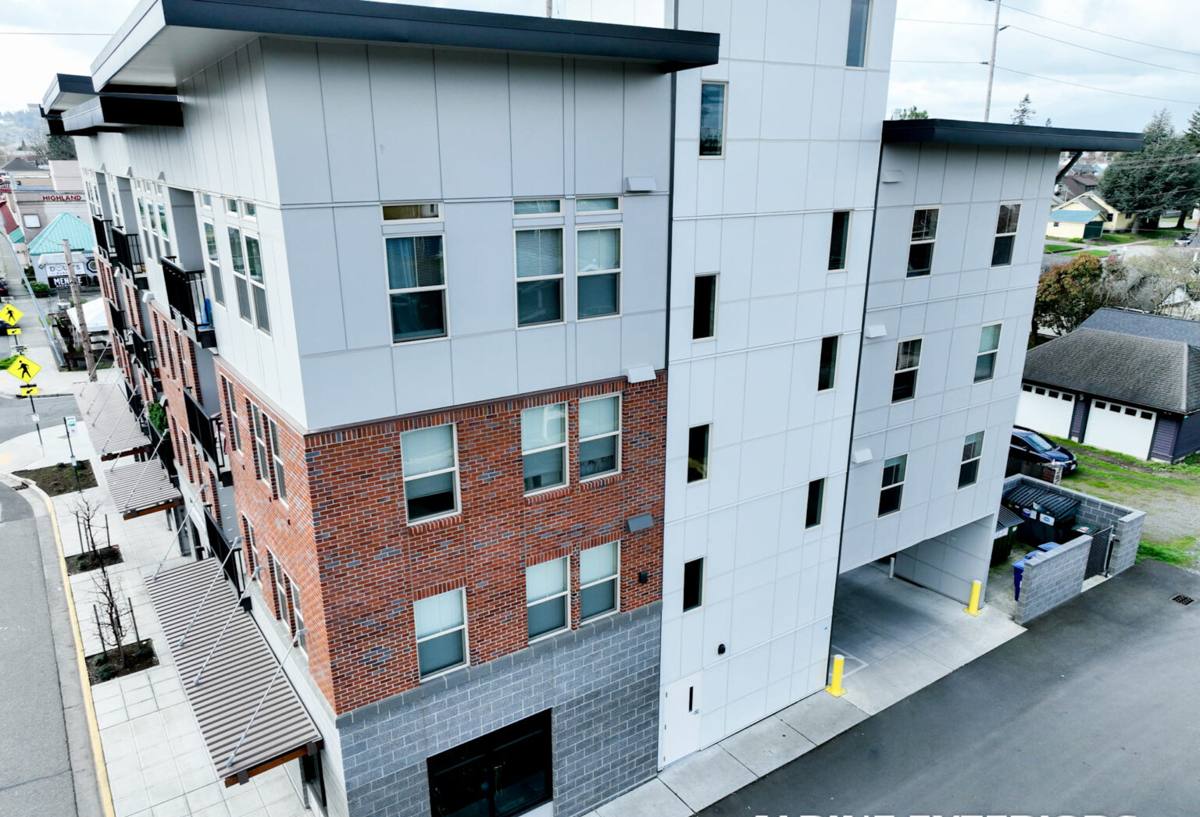
What James Hardie Siding Solves for This Climate
Fiber cement is made from cement, sand, and cellulose fibers, engineered under pressure and heat into a rigid plank or panel. Unlike wood-based siding products, it doesn't have an organic wood face that can absorb moisture, swell, and eventually rot. Unlike vinyl, it doesn't soften, warp, or crack under UV exposure and temperature swings, and it holds paint and factory finish without the chalking and fading that shortens the usable life of cheaper materials.
James Hardie also engineers its products by climate zone. For the Pacific Northwest, that means the HZ5 product line, formulated specifically for regions with sustained moisture exposure — which describes Whatcom County for most of the year. HZ5 boards are engineered to resist moisture-related damage better than the versions of Hardie board sold in dry climates, which is a meaningful distinction most homeowners never hear about until they're comparing quotes.
The other piece is non-combustibility. Hardie board is a cement-based product, not an organic or petroleum-based one, so it doesn't contribute fuel to a fire the way wood siding or vinyl can. That's a real consideration anywhere in the Pacific Northwest given wildfire seasons in recent years, and it's one of the reasons insurance carriers increasingly favor fiber cement.
ColorPlus Factory Finish vs. Field Painting
One detail that matters more in a coastal-influenced climate than almost anywhere else: how the color gets onto the board. James Hardie's ColorPlus finish is baked on in a controlled factory environment, cured to the substrate in multiple coats, and backed by its own finish warranty separate from the product warranty. Field-painted siding — whether it's fiber cement painted after installation or a wood product painted on site — depends on weather conditions at the time of painting and the quality of that day's application.
In a place where you're fighting moss growth and salt exposure, a factory-cured finish holds its color and its seal far more consistently than something painted outdoors between rain systems. We steer Bellingham-area customers toward ColorPlus for this reason specifically, not just because it looks better on day one.
What a Correct Installation Involves
Fiber cement siding is only as good as the installation behind it. A large share of the siding problems we get called out to inspect on older installations — regardless of brand — trace back to installation shortcuts, not the material itself. In a wet, wind-driven climate like ours, those shortcuts show up faster.
A correct James Hardie install includes:
- A properly lapped weather-resistive barrier behind the siding, with all seams taped and integrated with window and door flashing so water is directed out, not trapped in
- Correct starter strip installation at the base of the wall so the first course of siding sits at the manufacturer-specified angle and gap
- Minimum clearance gaps at the bottom of the wall, at grade, and at any horizontal surfaces like decks or roofs to prevent wicking
- Proper fastener type, spacing, and depth — over-driven or under-driven nails are one of the most common causes of premature siding failure
- Correctly sized gaps at butt joints and trim, caulked with a product rated for the exposure, not just whatever's on the truck
- Flashing integration at every penetration — vents, hose bibs, light fixtures, meter bases — so water has nowhere to enter the wall assembly
None of this is unique to Bellingham. What's unique is how quickly a missed detail turns into a real problem here. A gap that would take years to cause damage in a dry climate can trap moisture behind the board in a single wet winter on a home exposed to driving rain off the water.
Comparing What's Actually on the Wall
Homeowners in this area are often comparing quotes across different siding materials, not just different installers. Here's an honest look at how the common options perform against the specific conditions Bellingham-area homes deal with.
| Material | Salt Air / Coastal Exposure | Driving Rain / Moisture | Moss & Algae Resistance | Finish Longevity |
|---|---|---|---|---|
| James Hardie (HZ5, ColorPlus) | Strong — non-organic substrate, engineered for the region | Strong when properly flashed and gapped | Good — hard surface, factory finish resists staining better than porous materials | Long — factory-cured, separate finish warranty |
| Vinyl siding | Fair — can become brittle over time | Fair — relies heavily on correct overlap and installation | Fair — smooth surface but can trap moisture behind panels | Moderate — color is molded in, but fades and chalks with UV exposure |
| Cedar / wood siding | Weak without diligent maintenance | Weak — organic material absorbs moisture | Weak — moisture retention feeds moss and algae growth | Short — requires repainting/staining on a recurring cycle |
| LP SmartSide / engineered wood | Fair — treated substrate helps but is still wood-based | Moderate — better than raw wood but still moisture-sensitive at cut edges | Fair — better than cedar, more moisture-sensitive than fiber cement | Moderate — factory finish options exist but system is younger than Hardie's track record |
We don't install the other products listed here, and we want to be upfront about why: each of them asks a homeowner to take on more long-term maintenance risk, more moisture sensitivity, or more finish upkeep than fiber cement requires, in a climate that doesn't give much room for error. That's a standard we hold across every home we side, not just in Bellingham.
How Our Process Works on a Bellingham Home
Every project starts with a walk-around assessment of the existing wall — checking for hidden moisture damage, evaluating the condition of the sheathing underneath, and identifying trouble spots like window trim, roof-to-wall transitions, and grade clearance before any material goes on order.
- Assessment and measurement — we look at wind and rain exposure on each elevation of the house, since a wall facing prevailing weather off the water needs different attention at seams and penetrations than a sheltered side
- Tear-off and substrate inspection — removing old siding gives us a direct look at the sheathing and framing; any rot or moisture damage gets addressed before new siding goes up, not covered over
- Weather barrier and flashing — a continuous, correctly lapped barrier system with integrated flashing at every window, door, and penetration
- Hardie board installation — installed to manufacturer fastening and gap specifications, with attention to starter strips, corners, and butt joints
- Trim, caulking, and touch-up — finish details sealed with climate-appropriate sealants and any factory finish touch-up handled per Hardie's guidelines
- Final walkthrough — we go over the completed job with the homeowner before calling it done
Why a Crew That Already Works Bellingham Matters
Siding installation isn't just about following a manufacturer's install guide — it's about knowing which parts of that guide matter most for a given wall on a given lot. A crew that's already worked homes in and around Bellingham has a feel for which elevations catch the worst of the wind off the water, how far moss creep tends to reach up a north-facing wall, and how local permitting and inspection expectations run in Whatcom County. That's knowledge you build by being on these roofs and walls repeatedly, not by reading a spec sheet once.
It also means shorter lead times for material and fewer surprises mid-project, since we're not learning the area's weather patterns for the first time on your house.
What Drives the Cost of a Siding Job Here
| Factor | Why It Matters Locally |
|---|---|
| Substrate condition | Hidden moisture damage from prior wood or engineered-wood siding often isn't visible until tear-off; repairs add cost but prevent covering up a bigger problem |
| Wall complexity | Homes with more corners, dormers, and trim detail take longer to flash and seal correctly, which matters more where driving rain tests every seam |
| Product line and finish | HZ5 boards and ColorPlus factory finish cost more upfront than base-grade materials but reduce long-term maintenance and repainting costs |
| Site access and elevation exposure | Walls facing prevailing wind and rain off the water may need extra attention at flashing and gaps, which can affect labor time |
| Tear-off and disposal | Removing and disposing of old siding material is a real cost, especially if there's more than one layer of prior siding on the wall |
Maintaining Hardie Siding in a Moss-Prone Climate
Fiber cement is low-maintenance compared to wood or vinyl, but "low-maintenance" doesn't mean "no maintenance" in a climate like ours. A little seasonal attention goes a long way toward protecting the investment.
- Rinse siding with a garden hose (not a pressure washer aimed directly at seams) once or twice a year to remove pollen, dust, and early moss growth
- Trim back shrubs and trees so foliage isn't holding moisture against the wall or shading a section long enough for moss to establish
- Check caulking at trim, window, and door joints annually — caulk is a wear item and is far cheaper to renew than the water damage it prevents
- Watch gutters and downspouts for overflow that could be sheeting water down a wall section repeatedly
- Address any paint or finish touch-up promptly at fastener heads or cut edges to keep the moisture barrier intact
If you're weighing a siding replacement on a Bellingham-area home and want a straight answer about what your walls actually need, we're happy to take a look and give you a free, no-pressure estimate.