 Lynden Roofing
 Board & Batten Siding for Bellingham-Area Homes
Board and batten has become one of the most requested looks for homes in and around Bellingham — the vertical lines read as clean and modern on new builds, and as classic farmhouse styling on older properties near Lynden and the Whatcom County countryside. But the look is only half the story. In this part of Washington, the siding underneath that look has to deal with salt-laden air rolling in off Bellingham Bay, long stretches of driving rain, and a moss season that can run most of the year in shaded, north-facing exposures. We install board and batten using James Hardie fiber cement exclusively, and this page walks through what that means for a Bellingham-area home specifically — not board and batten in general.
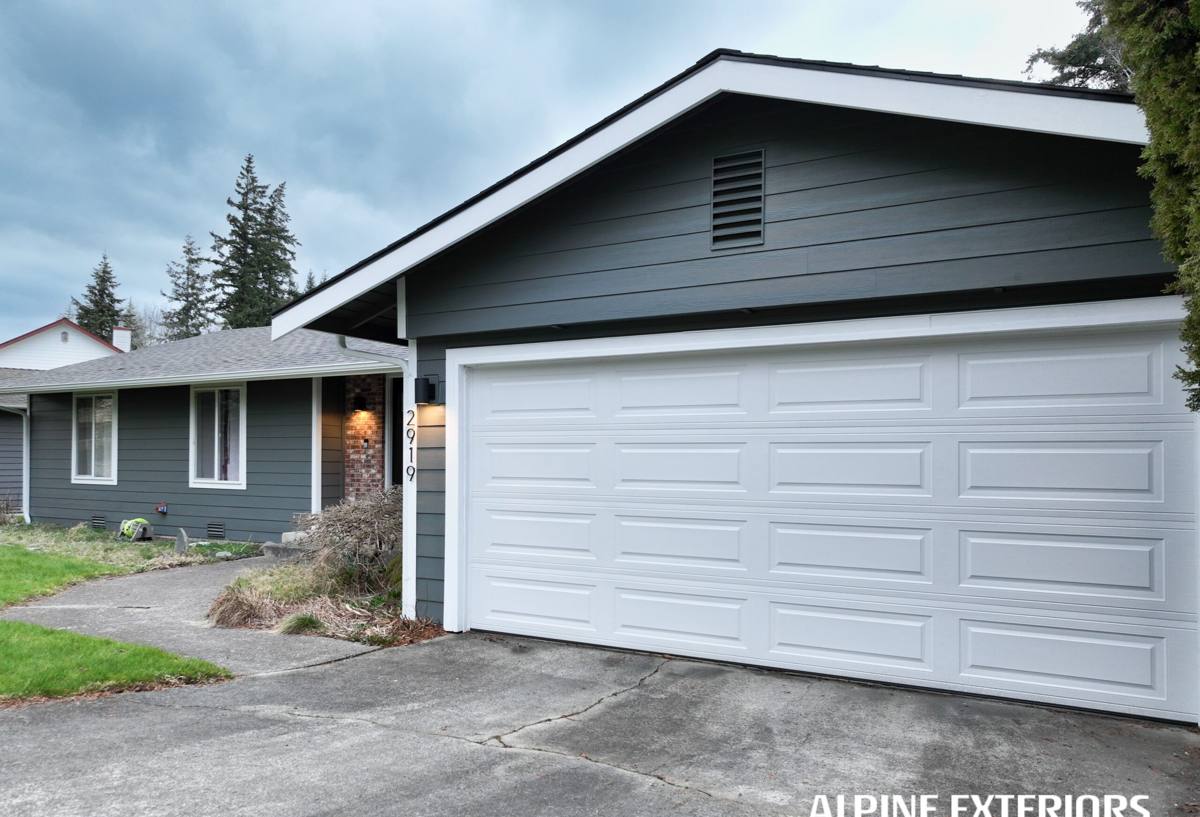
What "Board & Batten" Actually Means in a James Hardie System
Board and batten isn't a single product — it's a pattern. With James Hardie, that pattern is built from wide fiber cement panels (commonly HardiePanel vertical siding) with narrow HardieTrim battens fastened over the seams, or in some cases individual vertical boards spaced and battened to match a more traditional plank look. The panel underneath does the structural and weatherproofing work; the battens create the shadow lines and cover the joints.
That distinction matters because a lot of the board-and-batten homes people admire around Bellingham were actually built with cedar or engineered wood boards installed the same way — and those materials age very differently than fiber cement does. The visual pattern can look identical on day one. How it performs after five Whatcom County winters is where the products separate.
Why the Vertical Pattern Is Less Forgiving Than Lap Siding
Vertical siding has more field joints and more places where water can find a way behind the cladding if flashing and fastening aren't done correctly. Horizontal lap siding sheds water down and out by design. Board and batten depends much more heavily on correct flashing at every horizontal transition, correct fastening at every batten, and a properly detailed water-resistive barrier behind the whole assembly. On a house facing Bellingham's rain and wind, a board and batten job that's 90% right is still a job with vulnerable seams.
What Bellingham's Climate Does to Vertical Siding Specifically
Three regional conditions matter most for board and batten homes in this area:
- Salt air: Proximity to Bellingham Bay means airborne salt settles on exterior surfaces year-round. Untreated or under-primed cut edges on wood-based battens corrode fasteners and accelerate rot from the inside out — and because battens are narrow, they have proportionally more edge exposed than a wide panel does.
- Driving rain: Wind-driven rain off the Sound doesn't just fall on a wall, it's pushed into it. Vertical joints and batten seams are the first place that pressure finds a gap. A rain screen gap behind the siding — not flush-nailed directly to the sheathing — is what actually manages this, and it's a detail that's easy to skip and impossible to see from the ground once the wall is closed up.
- Moss season: Shaded elevations and north-facing walls around Lynden and Bellingham stay damp for long stretches of the year. Moss and algae growth on wood or wood-composite battens holds moisture against the surface far longer than a clean, factory-finished fiber cement surface does, which is one of the more common reasons wood-based board and batten needs repainting or replacement well ahead of schedule.
What a Correctly Installed Board & Batten Job Involves
A board and batten installation that's built to actually last through Whatcom County winters includes several details that aren't optional, even though they add labor time:
Rain Screen Furring
Vertical battens are installed over a drainage gap, not tight against the weather-resistive barrier. This lets any water that gets past the outer layer drain and dry instead of sitting against the sheathing.
Flashing at Every Horizontal Break
Window heads, door heads, belly bands, and any horizontal trim transition need proper counter-flashing so water is directed out and away rather than behind the panel.
Correct Fastener Placement and Type
James Hardie specifies fastener type, spacing, and embedment for panel and batten installation. Under-fastening or over-driving nails is one of the most common causes of premature siding failure, and it's invisible once the job is finished — which is exactly why it matters who's doing the work.
Factory-Finished Edges Wherever Possible
ColorPlus factory finish on cut edges and touch-up is treated correctly, so the finish holds color and seals the fiber cement the same way the factory face does.
Board & Batten Material Comparison
| Material | Behavior in salt air & driving rain | Moss/algae resistance | Repaint cycle |
|---|---|---|---|
| James Hardie fiber cement | Non-combustible, engineered for moisture exposure, factory ColorPlus finish resists fading | Dense surface sheds growth better than wood fiber products | ColorPlus finish is warrantied well beyond typical repaint intervals |
| Cedar boards | Handsome but absorbs moisture at end grain and battens; needs consistent sealing | Prone to moss/algae in shaded, damp exposures without upkeep | Every 3-7 years depending on exposure |
| Primed spruce/engineered wood | Vulnerable at cut edges and fastener points if moisture gets in | Moderate; depends heavily on paint film integrity | Every 5-8 years, sooner on rain-exposed elevations |
| Vinyl board & batten profiles | Won't rot, but can warp/crack in temperature swings and doesn't handle wind-driven rain seams as well | Resistant to moss but shows dirt and mildew film | No repaint, but color is baked in and fades over time |
Why We Only Install James Hardie for This Look
We get asked regularly about cedar board and batten, and it's a legitimate, attractive material — we're not going to pretend otherwise. What we've found, working on homes throughout Whatcom County, is that the maintenance commitment cedar requires to perform well near the coast is significant, and most homeowners don't want to be back on a ladder resealing battens every few years. Primed wood composite products carry similar cut-edge and moisture-sensitivity issues, especially at the narrow batten pieces where there's less material to buffer against water intrusion.
James Hardie's fiber cement is non-combustible, doesn't absorb water the way wood-based products do, and comes with a factory-applied ColorPlus finish backed by a strong transferable warranty. For a pattern like board and batten — where the seams and edges are the whole game — that combination of moisture resistance and finish durability is why it's the only system we put on homes.
Our Process on Bellingham-Area Board & Batten Projects
- On-site assessment: We look at wall orientation, existing sheathing and moisture barrier condition, and how much shade/moisture exposure each elevation gets — north-facing and bay-facing walls get extra attention.
- Rain screen and flashing plan: We detail drainage and flashing before a single panel goes up, especially around windows, doors, and any horizontal trim breaks.
- Panel and batten installation to spec: Fastener spacing, panel gaps, and batten layout follow James Hardie's published installation requirements, not shortcuts.
- Finish and touch-up: Cut edges and any field touch-up are sealed correctly so the ColorPlus warranty terms are protected.
- Final walk-through: We go over the completed elevations with you before calling the job done.
Maintaining Board & Batten in a Coastal Climate
One advantage of fiber cement board and batten is how little ongoing maintenance it actually needs — but "little" isn't "none," especially with the moss and algae pressure this area sees.
- Rinse siding annually, focusing on shaded and north-facing elevations where moss gets a foothold first
- Keep gutters clear so overflow doesn't run down and pool against horizontal trim and battens
- Trim back landscaping that keeps a wall section shaded and damp longer than the rest of the house
- Inspect caulking at trim and flashing points every couple of years, especially after a hard winter
- Address any impact damage or chipped finish promptly so moisture can't get behind the panel
Why Local Experience on This Specific Pattern Matters
Board and batten is unforgiving of installation shortcuts in a way that standard lap siding isn't — the vertical seams and batten joints simply give water more places to test the assembly. A crew that already works Bellingham and Lynden knows which elevations on a given lot will take the worst of the wind-driven rain, where moss pressure is going to be heaviest, and how to detail the rain screen and flashing so the pattern holds up rather than just looks good on installation day. That's the difference between a board and batten job that still looks sharp in ten years and one that starts showing seam trouble in three.
If you're considering board and batten siding for a home in the Bellingham area, we're happy to walk the property with you, look at your specific exposures, and put together a free, no-pressure estimate — just fill out the form below.