 Lynden Roofing
 New Roof Installation Built for Bellingham's Climate
Bellingham sits close enough to the water and low enough under the marine cloud cover that its roofs work harder than most people realize. Between the salt-tinged air rolling in off Bellingham Bay, long stretches of driving rain through fall and winter, and a moss season that can run eight months or more under the tree cover common in Whatcom County neighborhoods, a roof here is under near-constant pressure. A new roof installation isn't just about picking a shingle color — it's about choosing materials and installation details that hold up to this specific combination of moisture, organic growth, and wind-driven rain.
We're based in Lynden and have installed and repaired roofs across Whatcom County long enough to know which details matter here and which ones are just upsells. This page covers what a correct new roof installation looks like for a Bellingham home, what our process involves, and why the climate here changes some of the decisions homeowners have to make.
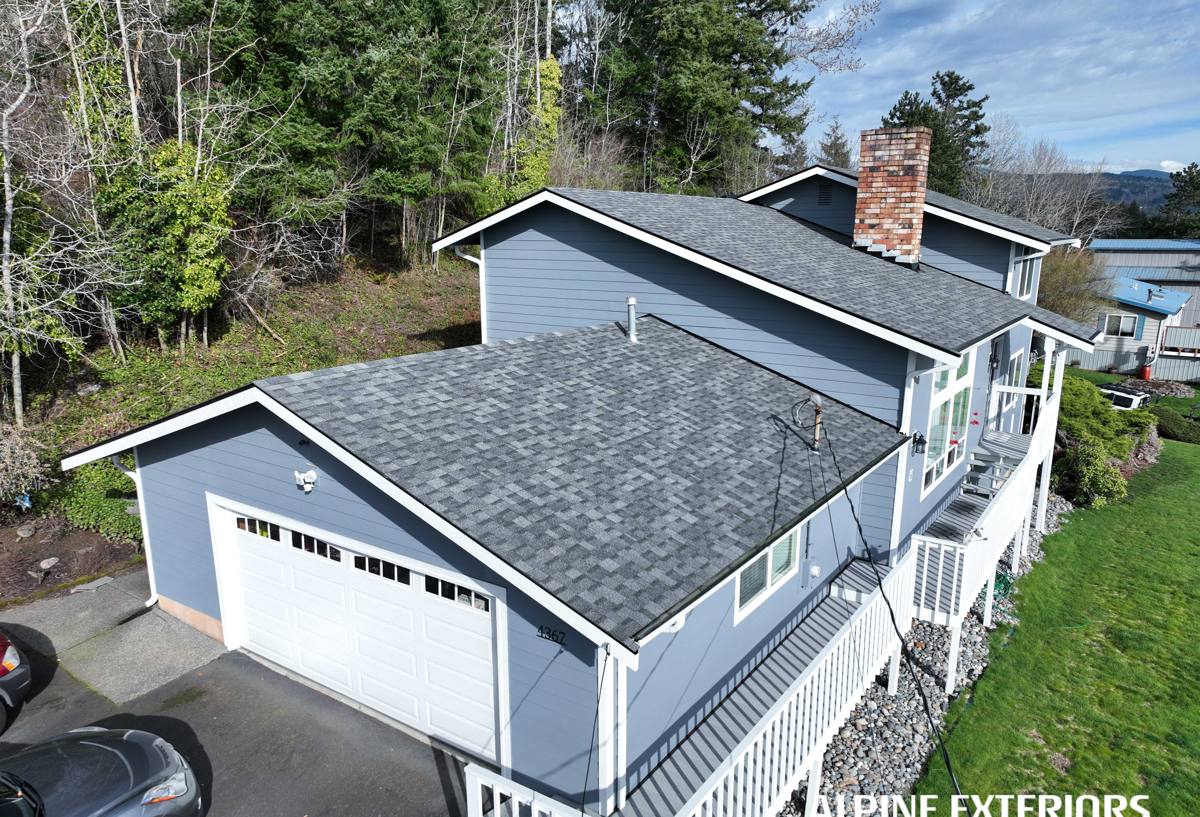
Why Bellingham's Climate Is Tougher on Roofs Than It Looks
On paper, Bellingham doesn't get the extreme weather that shows up in national roofing headlines — no hail belts, no hurricane exposure. But the combination of near-constant moisture and mild temperatures creates its own slow-motion problems.
Salt Air
Homes closer to the water deal with airborne salt that accelerates corrosion on exposed metal — flashing, fasteners, vent stacks, and gutter hardware. Standard fasteners and thin-gauge flashing that might last decades inland can start showing rust and pitting years sooner near the coast.
Driving Rain
Bellingham's rain doesn't just fall straight down — wind off the Strait and the Bay pushes it sideways, which means it finds its way under improperly lapped shingles, around poorly sealed penetrations, and into any gap in the underlayment. A roof that would be fine in a calmer, drier climate can leak here if the water-shedding details aren't done correctly.
Moss and Algae
Shade, moisture, and mild year-round temperatures are exactly what moss and algae need to thrive. Once moss gets a foothold in a roof's texture, it holds moisture against the surface, lifts shingle edges, and speeds up granule loss. Left unchecked for a few seasons, it can shorten the life of an otherwise sound roof.
What a Correct New Roof Installation Actually Involves
A roof is a system, not a single layer of shingles. Skipping or rushing any one part of that system is where most premature failures come from — and it's usually invisible until the leak shows up.
Tear-Off and Deck Inspection
We remove the old roofing down to the deck rather than layering over it. That's the only way to actually see the plywood or OSB underneath and catch soft spots, delamination, or rot before they're sealed under a new roof. Any damaged decking gets replaced before anything else happens — installing new shingles over a compromised deck just guarantees problems later.
Underlayment and Water Barriers
Given how much rain this region gets, underlayment isn't a formality — it's the roof's backup line of defense. We use synthetic underlayment across the field of the roof and install self-adhering ice-and-water membrane at the eaves, valleys, and around penetrations, where wind-driven rain and moss-related moisture buildup are most likely to cause trouble.
Ventilation
A roof that can't breathe traps moisture in the attic, which leads to condensation, premature deck rot, and mold — problems that show up regardless of how good the shingles are. Balanced intake and exhaust ventilation is part of every installation, not an optional add-on.
Flashing and Penetrations
Chimneys, skylights, vent stacks, and roof-to-wall transitions are where the overwhelming majority of leaks originate — not the open field of shingles. We use corrosion-resistant flashing material and proper step-and-counter-flashing techniques at every penetration and wall intersection, which matters more here than in drier climates because of the salt air's effect on lower-grade metal.
Choosing Roofing Materials for a Bellingham Home
There's no single "best" roofing material — the right choice depends on your home's design, your budget, and how much long-term maintenance you're willing to do. Here's how the common options stack up against Bellingham's specific conditions.
| Material | Moss/Algae Resistance | Wind-Driven Rain Performance | Typical Lifespan | Relative Cost |
|---|---|---|---|---|
| Architectural asphalt shingles | Good with algae-resistant granules; needs periodic moss removal | Very good when properly lapped and sealed | 25–30 years | $$ |
| 3-tab asphalt shingles | Fair; more prone to moss lift at edges | Adequate, less margin for error | 15–20 years | $ |
| Standing seam metal | Excellent; sheds moisture, little for moss to grip | Excellent | 40–50+ years | $$$$ |
| Cedar shake | Poor without diligent maintenance; retains moisture | Good if installed correctly | 20–30 years with upkeep | $$$ |
Architectural asphalt shingles with algae-resistant (AR) granules are the most common choice for Bellingham homes because they balance upfront cost with real resistance to this region's moss and moisture. Standing seam metal performs the best against moss and salt-related wear over the long run, which is why we see more interest in it on homes closer to the water. Cedar shake can look great, but it requires consistent maintenance to manage moisture retention in a climate this wet — we'll always walk you through that trade-off honestly rather than talk you into or out of a material based on appearance alone.
Moss, Algae, and What to Expect Long-Term
No roofing material is permanently immune to moss in a climate like this — the goal is managing it, not eliminating the need to think about it. Algae-resistant shingles slow growth significantly, and copper or zinc strips near the ridge can help suppress regrowth over time by releasing trace amounts of metal ions when it rains. Beyond material choice, the two biggest factors in how fast moss becomes a problem are shade (tree cover holding moisture on the roof surface) and airflow (ventilation and roof pitch affecting how quickly the surface dries out). We'll flag anything about your specific property — heavy tree cover, a low-slope section, a north-facing plane that never gets direct sun — that's likely to accelerate moss growth so you know what kind of upkeep to expect rather than being surprised by it a few years in.
Our Installation Process
Every project runs through the same sequence, adjusted for your roof's specific layout and any issues found along the way:
- On-site inspection and honest assessment of whether you need full replacement or a targeted repair
- Written estimate detailing materials, scope, and timeline — no vague allowances
- Permitting handled on our end where required
- Delivery, staging, and property protection (landscaping, siding, gutters covered before work starts)
- Full tear-off and deck inspection, with any damaged decking replaced
- Installation of underlayment, ice-and-water membrane, flashing, ventilation, and final roofing material
- Full site cleanup, including magnetic sweep for stray fasteners
- Final walkthrough so you can see the finished work before we consider the job done
We keep you informed at each stage rather than disappearing until the job is finished — if we find deck damage or a flashing issue mid-project, you'll hear about it before we proceed, not after.
Signs Your Bellingham Roof Needs Replacement, Not Just a Repair
Not every roofing problem means a full replacement. But there are signs that point toward it being the more sensible option rather than continuing to patch:
- Shingles that are cupping, curling, or missing granules across large sections, not just one spot
- Moss or algae that keeps returning within a year of cleaning, even after treatment
- Multiple layers of prior roofing already on the deck (a second full re-roof usually isn't allowed over two existing layers)
- Visible sagging in the roofline, which can indicate deck or structural issues
- Daylight visible through the attic or staining on interior ceilings after heavy rain
- A roof approaching or past 20–25 years old, even if it looks fine from the ground
- Rising frequency of small repairs that are starting to add up to more than a replacement would cost
Permits and Timelines
Most residential re-roofs in and around Bellingham require a permit, and we handle that process as part of the job rather than leaving it on you. Timeline-wise, a typical single-family roof replacement runs one to a few days of active work once materials are on site, though scheduling around Whatcom County's wetter months sometimes means building in flexibility for weather delays. We'll give you a realistic window up front rather than a best-case number that assumes perfect conditions.
Why a Local Lynden Crew Matters for a Bellingham Roof
We're not a national outfit that rotates crews through the region for a season and moves on. We're based in Lynden, we work throughout Whatcom County, and we've seen firsthand how differently roofs age here compared to drier, inland climates. That matters when it comes to judgment calls — knowing which flashing details actually hold up against driving rain off the Bay, which materials are worth the added cost given the moss pressure on a shaded lot, and which shortcuts common elsewhere just don't hold up here. A crew that's local also means we're accountable after the job is done — we're not hard to find if you have a follow-up question a few years down the road.
If you're weighing a new roof for a Bellingham property, we're glad to take a look and give you a straightforward, no-pressure estimate — just fill out the form below to get started.