 Lynden Roofing
 Why Bellingham and Lynden Homes Wear Out Siding Faster
Whatcom County sits in a tough spot for exterior materials. Homes near Bellingham Bay deal with salt-laden air moving inland on the marine breeze, while properties further out toward Lynden catch long stretches of driving rain off the Pacific systems that roll through fall, winter, and spring. Add the shaded, damp conditions that let moss and algae take hold on north-facing walls and under eaves, and you have a climate that is genuinely hard on siding. This isn't a coastal-only problem or a farmland-only problem — it's a regional one, and it shows up differently depending on where a house sits and how it's oriented.
We work on homes throughout this corridor, and the failure patterns repeat: paint that's chalking and peeling years before it should, panel edges swelling from trapped moisture, and green-black staining creeping up from the bottom courses where splashback and shade combine. None of that is inevitable. It's a product and installation problem, and it's fixable with the right material and the right detail work.
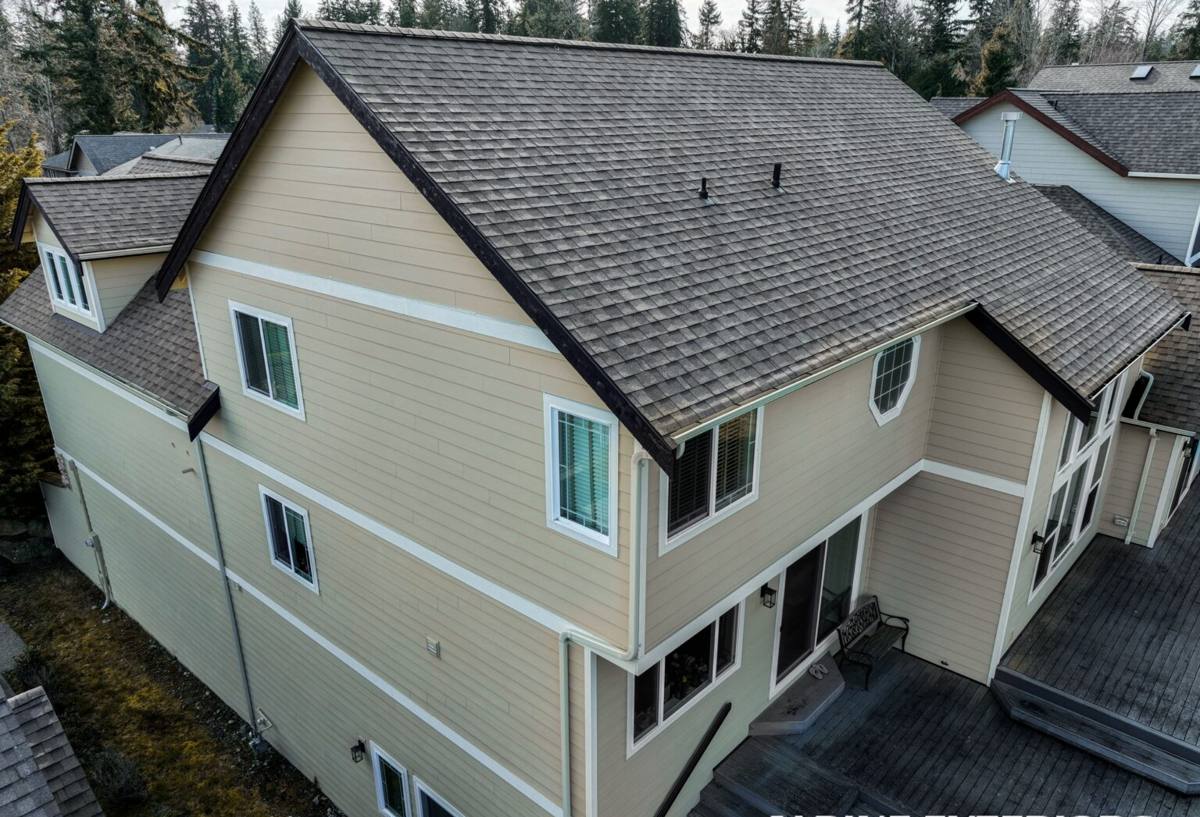
What Local Siding Actually Has to Survive
Salt Air and Coastal Moisture
Even a few miles inland from Bellingham Bay, airborne salt accelerates the breakdown of paint films and speeds corrosion of exposed fasteners. Materials that rely on a surface coating for protection lose that coating faster in this environment, which opens the door to moisture getting underneath.
Driving Rain
Whatcom County doesn't just get a lot of rain — a good share of it comes in sideways during winter storms, pushed by wind off the Strait of Georgia and the Sound. Wind-driven rain finds every gap in flashing, every under-caulked seam, and every panel that wasn't given room to handle water. Siding here needs both a water-resistant material and a water-managed installation — one without the other still fails.
Extended Moss and Algae Season
Between the rainfall totals and the number of overcast, humid days, this region has one of the longer moss and algae seasons in the state. Shaded walls, areas under overhangs, and anything close to landscaping stay damp for extended periods. Organic material that gets a foothold on siding doesn't just look bad — sustained moisture against a wall assembly is one of the more common paths to hidden rot.
What a Correct Siding Replacement Actually Involves
Replacing siding is not a cosmetic swap. Done right, it's a full look at how water moves across and away from the wall. Here's what that means in practice:
- Full removal of old siding and inspection of the sheathing underneath for soft spots, staining, or rot — especially common around old butt joints and under previously unflashed penetrations
- Repair or replacement of any compromised sheathing before new material goes up
- Installation of a weather-resistive barrier, lapped correctly from bottom to top so water sheds outward, not behind the barrier
- Correct flashing at every window, door, and roof-to-wall intersection — this is where the majority of siding failures in this region actually originate
- Proper fastener placement and spacing per the manufacturer's installation instructions, not "close enough"
- Rainscreen or drainage gap detailing where called for, so incidental moisture behind the siding has somewhere to go
- Correct clearances at grade, decks, and roof lines to keep siding from sitting in standing water or constant splashback
Skip any one of these steps and you can end up with brand-new siding that still fails in five to eight years — the material gets blamed, but the installation was the actual problem.
Why We Install Only James Hardie Fiber Cement
We've made a deliberate decision not to install vinyl, LP SmartSide, cedar, primed spruce, or other fiber cement brands like Cemplank or Allura. That's not a marketing position — it's a standard we hold because of what we see on homes in this exact climate.
Non-Combustible Material
James Hardie siding is fiber cement — it does not burn, warp, or provide fuel in the way wood-based or vinyl products can. In a region where wildfire smoke and drier late summers are becoming more common even west of the Cascades, that's a meaningful long-term consideration.
Engineered for Wet Climates
Hardie's HZ10 product line is specifically engineered for the Pacific Northwest's wet, humid conditions — dimensionally stable, resistant to moisture-driven swelling, and formulated to resist the kind of cracking and buckling that comes from repeated wet-dry cycles.
ColorPlus Factory Finish
Rather than field-painted color, Hardie's ColorPlus finish is baked on in a controlled factory process, giving a more consistent, fade- and chip-resistant top coat than most site-applied paint jobs — and it holds up better against the salt air and UV exposure this region delivers.
Warranty Backing
Hardie backs its siding with a strong, transferable limited warranty — a real consideration for resale, since a warranty tied to the house rather than the original owner adds value when it's time to sell.
Why We Don't Install the Alternatives
Every product on the market gets something right, and it's fair to say so before explaining why we still don't put it on Whatcom County homes.
| Material | What It Gets Right | Why We Don't Install It Here |
|---|---|---|
| Vinyl Siding | Low upfront cost, low maintenance in mild climates | Panels can warp or crack in temperature swings and impact events; seams and J-channels give wind-driven rain more paths inward; color is molded-in and fades with UV/salt exposure over time |
| LP SmartSide | Engineered wood strand product, easier to install than solid wood, reasonable cost | It's a wood-based product — even with resin treatment, sustained moisture exposure in a rain- and moss-heavy climate is its weak point if any seam or fastener detail is off |
| Cedar / Primed Spruce | Natural appearance, long regional tradition | Requires ongoing refinishing, is highly susceptible to moisture, rot, and moss in shaded coastal conditions, and demands maintenance most owners underestimate |
| Other Fiber Cement (Cemplank, Allura) | Same base material category as Hardie, generally competent products | We standardized on one manufacturer so our crews install one system to spec every time, and Hardie's factory finish and warranty structure are what we've found most reliable long-term |
The honest trade-off with any of the alternatives above is maintenance burden, moisture sensitivity, or a warranty structure that doesn't hold up as well over a house's real lifespan in this climate. That's the professional judgment call behind why our trucks only carry Hardie.
Signs Bellingham and Lynden Homeowners Should Watch For
- Paint that's chalking, peeling, or blistering — especially on south and west-facing walls that take the most weather
- Persistent green or black staining on north-facing walls or areas shaded by trees and eaves
- Soft or spongy spots when you press on siding near the bottom courses or around window trim
- Visible gaps, warping, or buckling at panel seams
- Rising utility bills that might point to a compromised weather barrier letting conditioned air escape
- Siding that's more than 20-25 years old, regardless of visible condition — most legacy materials are near or past their realistic service life by then
How Our Process Works
1. On-Site Assessment
We walk the exterior with you, looking at current siding condition, problem areas, drainage patterns around the foundation, and anything that points to hidden moisture issues before we ever talk product or price.
2. Sheathing and Structure Check
Once old siding comes off, we inspect what's underneath. This step is non-negotiable — covering compromised sheathing with new siding just hides the problem for another few years.
3. Weather Barrier and Flashing Detail
This is the step that determines whether the new siding actually performs in Whatcom County's driving rain. We flash every penetration and lap every course of house wrap correctly, top to bottom.
4. Hardie Installation to Spec
Panels, fasteners, and clearances go in per James Hardie's published installation guidelines — not shortcuts, not "how we've always done it."
5. Final Walkthrough
We go over the finished work with you, including care and maintenance basics specific to your home's exposure and layout.
What Drives the Cost of a Siding Replacement
| Factor | Why It Matters |
|---|---|
| Home size and wall complexity | More corners, gables, and dormers mean more cutting, flashing, and labor time |
| Sheathing condition | Rot repair found once old siding is removed adds material and labor before new siding can go up |
| Siding profile chosen | Lap siding, shingle-style panels, and board-and-batten each carry different material and install costs |
| Trim and accessory scope | Corner boards, window trim, and fascia detailing add to both material list and install time |
| Access and site conditions | Steep lots, limited staging area, or multi-story walls affect equipment needs and labor time |
We don't quote broad numbers without seeing the house — too many of these factors are specific to your property. What we can say is that Hardie's upfront cost is typically higher than vinyl but comes with a longer realistic service life and less maintenance spending over time, which changes the real cost picture once you look past year one.
Why Hiring a Crew That Already Works This Area Matters
Installation quality is the difference between siding that lasts three decades and siding that fails in eight years — and installation quality depends heavily on a crew understanding what the local climate actually demands. A contractor who works Bellingham and Lynden regularly already knows which wall orientations need extra attention for moss, how much clearance to leave at grade given typical rainfall, and where wind-driven rain tends to find weak flashing details. That's not something you get from a general installation manual — it's built from doing the work in this specific climate, on this specific building stock, over and over.
If your siding is showing its age or you're planning ahead for a replacement, we're happy to take a look and walk you through what your home specifically needs — no pressure, no hard sell. Reach out for a free estimate using the form below.