 Lynden Roofing
 Why Bellingham Homes Need a Different Approach to Windows
Bellingham sits close enough to the water that salt-laden air, near-constant winter rain, and a long moss season all work on a home's exterior year-round. Windows take more of that punishment than most homeowners realize. A window that performs fine in a drier inland climate can fail early here — not because it's a bad product, but because it wasn't installed or flashed with this specific weather pattern in mind. An energy-efficient window job in Bellingham isn't just about the glass; it's about how the whole unit is sealed, flashed, and integrated into a wall system that's going to see moisture for months at a stretch.
We're based in Lynden and have worked homes throughout Whatcom County long enough to know that a window package that looks identical on paper can perform very differently depending on how it's installed against this region's rain and humidity. That's the piece a lot of estimates skip over.
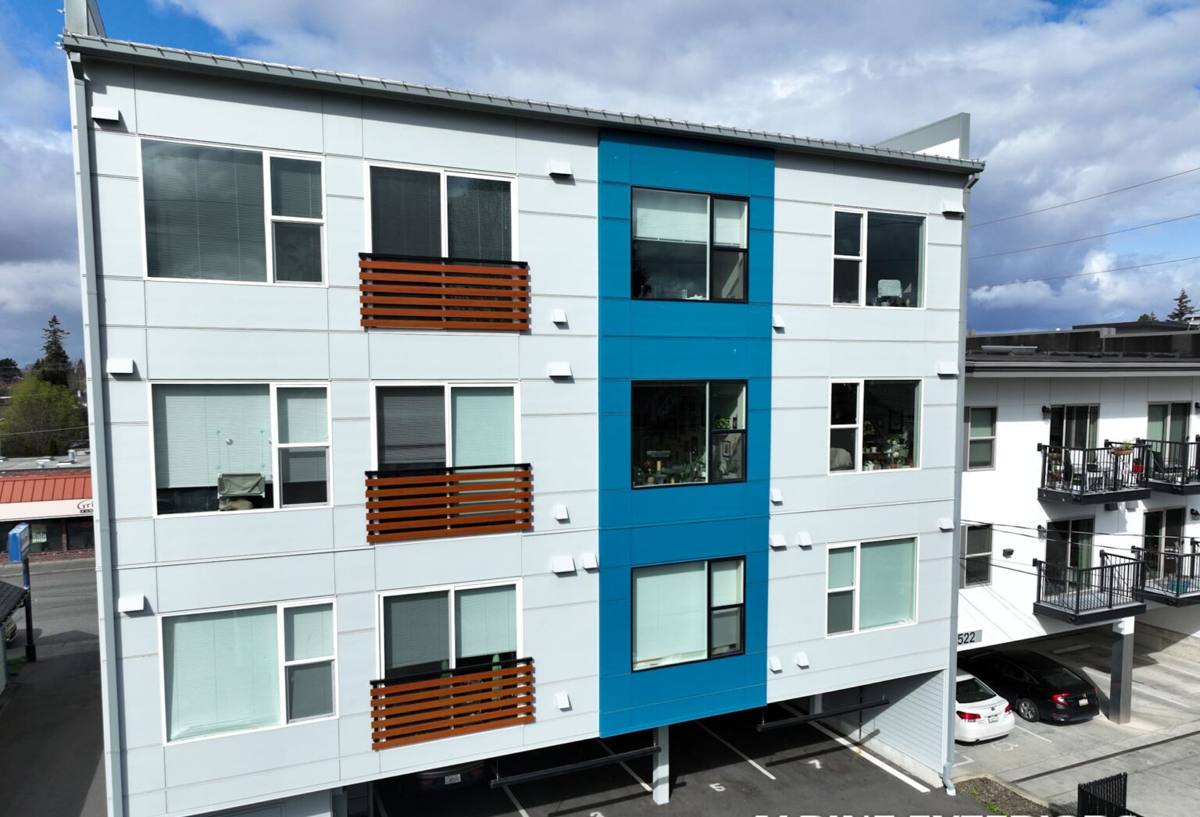
What Bellingham's Climate Actually Does to Windows Over Time
Driving Rain and Wind-Driven Moisture
Storms coming off the water don't just drop rain straight down — wind pushes it sideways into wall assemblies and window frames. Over years, this exposes any weak point in the flashing or sealant around a window opening. A window itself can be perfectly sound while water is still finding its way in around the perimeter because of how the opening was flashed.
Salt Air and Metal Components
Proximity to the water means airborne salt settles on and around window hardware, cladding, and fasteners. Over time this accelerates corrosion on lower-grade metal components — hinges, cranks, and some cladding fasteners — which is why hardware quality and finish matter more here than in a dry inland market.
Moss, Mildew, and Prolonged Dampness
Whatcom County's long wet season keeps north-facing and shaded elevations damp for extended stretches. Moss and mildew don't just grow on roofs — they collect in window sills, tracks, and corners where water sits instead of draining. Left alone, that moisture holds against wood trim and frame components and slowly breaks them down.
Temperature Swings and Condensation
Cool, damp air outside against a heated interior creates condensation potential at the glass and frame. Poorly performing glass packages or gaps in the seal show this first — fogging, moisture beading on the interior, or a cold draft near the frame even when the window is shut.
What a Correct Energy-Efficient Window Installation Actually Involves
The window unit itself is only part of the job. A correct installation in this climate includes:
- Proper flashing integration with the existing wall's water-resistive barrier, not just caulk around the frame
- Sill pan flashing so any water that does get past the outer seal drains back out instead of pooling
- Correct shimming and squaring so the sash operates properly and the seal compresses evenly all the way around
- Insulation in the gap between the frame and rough opening — not stuffed too tight, not left with voids
- Exterior sealant and trim detailing that sheds water rather than trapping it against the frame
- Interior air sealing so conditioned air isn't leaking out around the frame even if the exterior looks fine
Skip any one of these steps and the window can still look good from the curb while quietly underperforming — higher energy bills, a cold draft near the frame, or slow water intrusion that doesn't show up until trim or sheathing has already been damaged.
Choosing the Right Window Package for a Bellingham Home
There's no single "best" window for every house — the right choice depends on the home's exposure, existing wall assembly, and budget. What matters is understanding the trade-offs honestly rather than picking on looks alone.
| Factor | What to Consider Locally |
|---|---|
| Frame material | Vinyl and fiberglass both hold up well against moisture and salt air with minimal maintenance; wood frames need more diligent upkeep in a wet climate unless well-clad |
| Glass package | Double-pane with a low-E coating is the practical baseline here; triple-pane adds cost but pays off more on exposed, wind-driven elevations |
| Frame color/finish | Darker exterior finishes absorb more heat and can stress seals over time with our temperature swings — worth weighing against appearance preferences |
| Hardware quality | Corrosion-resistant hardware is worth the upgrade on homes closer to the water, where lower-grade metal shows wear faster |
| Drainage design | Look for a sill design that actively channels water out rather than relying purely on sealant to keep it out |
We'll walk through these trade-offs specific to your home's exposure during the estimate rather than pushing one product line regardless of fit. A window that's the right call on a sheltered south wall isn't necessarily the right call on an exposed, water-facing elevation.
Signs Your Current Windows Are Already Costing You Money
Most homeowners don't replace windows on a schedule — they replace them when something starts to bother them. Here's what we'd flag as worth a closer look:
- Noticeable draft near the frame even when the window is fully latched
- Condensation or fogging between panes, which usually means a failed seal
- Wood trim that's soft, discolored, or holding moss/mildew at the sill
- Windows that are hard to open, close, or lock — often a sign of a shifted or swollen frame
- A visible gap or crack in exterior caulking or trim around the opening
- A noticeably higher heating bill compared to similar homes nearby
- Paint or finish failing specifically around the window opening rather than the wider wall
Any one of these on its own might just mean routine maintenance. Several of them together, especially on the same elevation, usually points to a window or its flashing reaching the end of its useful life.
Our Process, Start to Finish
1. On-Site Assessment
We look at the actual condition of each window opening — not just the sash and glass, but the sill, trim, and how water has historically behaved around that opening. This tells us whether it's a straightforward replacement or whether there's flashing or minor rot repair to address first.
2. Honest Recommendation
We'll walk through window options suited to that specific elevation's exposure, explain the real trade-offs, and give you a written estimate with no pressure to decide on the spot.
3. Installation
Old units are removed carefully to check the condition of the rough opening and existing flashing before anything new goes in. Any deteriorated framing or sheathing gets addressed before the new window is set — installing a new window into a compromised opening just hides a problem instead of fixing it.
4. Sealing and Finish
Flashing, insulation, and exterior sealant are installed to shed water correctly, and interior trim is finished to match the surrounding wall.
5. Final Walkthrough
We check operation, seal, and appearance with you before considering the job done, and explain any care specific to the product installed.
Maintenance That Actually Matters Here
New windows still need occasional attention in this climate, though far less than older, worn units:
- Clear debris and moss buildup from sills and tracks a couple of times a year, especially on shaded elevations
- Rinse salt residue off frames and hardware periodically on homes closer to the water
- Check exterior caulking annually for cracking or gaps, particularly after a hard winter
- Keep gutters and downspouts clear so overflow isn't running down onto window trim below
Why a Crew That Already Works Bellingham Matters
Window installation guidance in a manufacturer's manual is written for average conditions — it doesn't account for a wall that's seeing wind-driven rain off the water or a north-facing sill that stays damp for weeks at a time. Knowing how to flash and seal for that reality comes from having actually done the work on homes in this area, not from a generic install checklist.
Working out of Lynden means we're regularly in Bellingham and across Whatcom County, and we see how different window products and installation details hold up here over time — not just in the first year, but several seasons in. That's the kind of judgment call an estimate should include, not something you find out about after the first hard rain.
Get a Straightforward Estimate
If your windows are drafty, fogging, hard to operate, or just due for an honest look, we're happy to walk your home, point out what we actually see, and put together a clear estimate — no pressure, no upsell. Use the form below to request your free estimate.