 Lynden Roofing
 Building Decks That Actually Hold Up Near Bellingham
A deck built for inland, dry-climate conditions does not last long near Bellingham. Between the salt-laden air off the bay, the long stretch of driving rain that runs roughly October through April, and a moss season that can linger on shaded or north-facing surfaces for months, an outdoor structure here takes on a different kind of stress than the same deck would in a drier part of the state. Framing, fasteners, and decking all need to be chosen and installed with that reality in mind, not just built to a generic plan.
This page covers what we've learned building and repairing decks for homeowners in and around Bellingham and the rest of Whatcom County: what fails first, what materials actually earn their keep here, and what a correctly built deck looks like from the footings up.
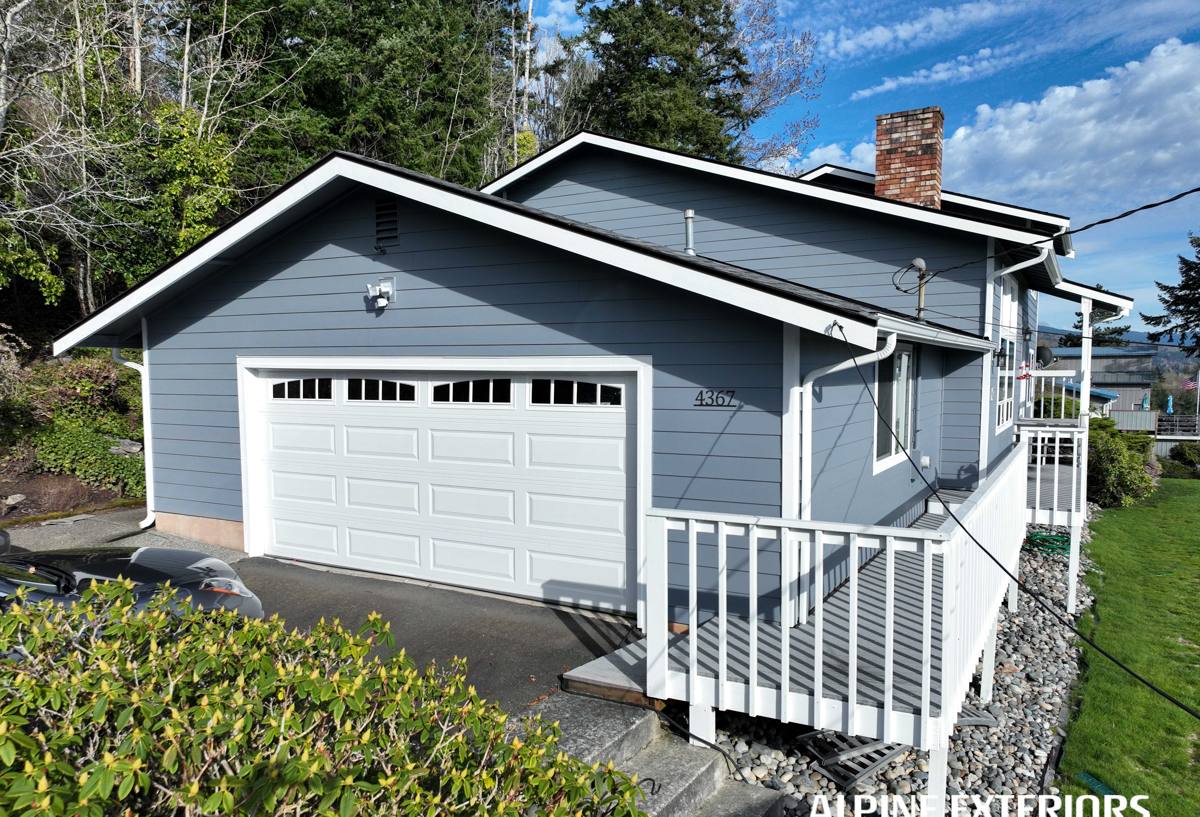
What Driving Rain and Salt Air Do to an Unprotected Deck
Two things do most of the damage to decks in this region, and they work together.
Driving rain doesn't just fall straight down here — wind off the water pushes it sideways, which means it gets up under railings, into ledger connections, and between decking boards more than it would in a calmer climate. If flashing, gaps, and drainage weren't planned for at the framing stage, water finds its way into end grain and fastener holes and stays there, because the region's humidity means wood doesn't dry out quickly between storms.
Salt air adds a second layer of wear. It accelerates corrosion on any metal hardware that isn't rated for coastal exposure — joist hangers, screws, bolts, and railing brackets. A fastener that would last decades inland can start rusting and staining the wood around it within a few years this close to the bay. Add in a moss season that keeps shaded deck surfaces damp and slick for a good chunk of the year, and you have three separate stressors that all point to the same conclusion: material and hardware choices matter more here than in most parts of the state.
The Foundation: Footings, Framing, and Ledger Attachment
Footings Set Below Frost Depth
Whatcom County's building code requires deck footings to bear below the local frost depth and rest on undisturbed or properly compacted soil. Skipping this — or pouring a footing on soft, wet fill — is the single biggest cause of a deck that develops a slope or bounce within a few years. Given how wet the ground stays here for much of the year, we take soil conditions at each site seriously rather than using a one-size footing spec everywhere.
Ledger Flashing: Where Most Deck Failures Start
If a deck is attached to the house with a ledger board, that connection is the single most important detail on the project. It has to be through-bolted (not just lag-screwed) to the house framing, flashed with a proper drip cap and self-adhering membrane, and separated from the siding with a gap or flashing that lets water drain out instead of behind it. We have seen a lot of rot damage in this region that started at a poorly flashed ledger, hidden behind decking, that wasn't caught until the siding or rim joist behind it was already compromised.
Fasteners and Hardware Rated for Coastal Exposure
Standard electro-galvanized fasteners are not adequate for decks near Bellingham, especially with modern treated lumber, which contains chemical compounds that accelerate corrosion in ordinary steel. Our standard is stainless steel or high-grade (G185 or better) hot-dip galvanized hardware for anything in contact with treated wood, and stainless fasteners on any hardware exposed to salt-laden air. It costs more up front. It also means the hardware isn't the reason the deck needs rebuilding in ten years.
Choosing a Decking Material for a Long Moss Season
There is no single "best" decking material — there's a best fit for how a homeowner uses the deck, how much shade and moisture it gets, and how much upkeep they want to do. Here's how the common options actually compare in this climate:
| Material | Upfront Cost | Moss & Moisture Behavior | Maintenance | Typical Lifespan Here |
|---|---|---|---|---|
| Pressure-treated pine/fir | Lowest | Absorbs moisture; needs airflow underneath and regular cleaning to keep moss from taking hold | Annual cleaning, re-sealing every 1-2 years | 15-20 years with upkeep |
| Cedar | Moderate | Naturally more rot- and insect-resistant than pine, but still organic and can host moss in shaded spots | Cleaning and re-sealing every 1-2 years to hold color and resist moisture | 20-25 years with upkeep |
| Composite / capped polymer (Trex, TimberTech, similar) | Highest | Doesn't absorb water or rot; moss and algae can still grow on the surface film in shaded, damp spots and need occasional washing | Periodic washing, no sealing or staining | 25-30+ years, manufacturer warranty backed |
Our honest take: in a shaded, damp yard near Bellingham, composite decking earns its higher price back in reduced maintenance, since it removes rot as a failure mode entirely. In a sunnier, more exposed spot with good airflow, a well-maintained cedar deck can look great for decades at a lower cost. Pressure-treated wood is a reasonable budget option as long as the homeowner is realistic about the cleaning and sealing schedule it needs in this climate — skip that upkeep here and moss and soft spots show up faster than they would somewhere drier.
Railings, Stairs, and Code Compliance
Any deck more than 30 inches above grade needs a code-compliant guardrail — generally 36 inches high for residential decks, with baluster spacing that won't allow a 4-inch sphere to pass through. Stair stringers need to be sized for the actual span and rise, not eyeballed, and stair railings have their own height and graspability requirements. These aren't optional details we skip to save time; they're inspected, and more importantly, they're what keeps a deck safe for the people actually using it. Given how often decks here see wet, occasionally icy conditions in winter, we also pay attention to footing and railing security specifically with slip risk in mind, not just code minimums.
Permits and Inspections
Most decks attached to a house, or any deck above a certain height, require a building permit in Whatcom County and within Bellingham city limits — the exact threshold depends on the deck's height and size. Permitted work means a third-party inspector checks the footings, framing, and ledger connection before decking goes down, which is exactly the stage where problems are cheapest to fix. We handle the permit application and schedule inspections as part of the project rather than leaving it to the homeowner to sort out, and we don't cut corners by skipping a required permit — it's not worth the risk to the homeowner if the deck is ever inspected during a home sale.
Our Deck Building Process
- Site visit and design conversation — we look at sun exposure, drainage, soil, and how the space will actually be used before recommending materials or layout.
- Written estimate and material selection — clear pricing broken out by framing, decking material, railing, and any permit or engineering costs.
- Permitting — we pull the required permit and handle inspection scheduling.
- Framing and ledger work — footings, joists, and ledger flashing, built and inspected before decking is installed.
- Decking, railing, and stairs — installed per manufacturer specs if using a composite product, to keep the warranty intact.
- Final walkthrough — we go over maintenance expectations for the specific material installed, so there are no surprises a year in.
Why a Crew That Already Works Bellingham Matters
A deck built by a crew unfamiliar with this specific stretch of Whatcom County tends to make the same mistakes: standard fasteners instead of coastal-rated hardware, footing depths copied from a drier region's default, or a construction schedule that doesn't account for how many workable weather windows actually exist between fall and spring here. Knowing the local permit process, the county's inspection expectations, and how a particular yard's drainage and sun exposure will behave through a wet Whatcom County winter comes from having done this work here repeatedly — not from a generic playbook.
Keeping a New Deck Looking Good Through Moss Season
Whatever material a homeowner chooses, a few habits go a long way toward keeping a Bellingham-area deck from becoming a moss-covered slip hazard by its second winter:
- Sweep leaves and debris off the deck surface regularly through fall — trapped organic matter holds moisture and feeds moss growth.
- Keep gaps between boards clear of debris so water and air can move underneath as designed.
- Trim back overhanging branches and vegetation that keep sections of the deck in constant shade and damp.
- Wash the deck surface at least once a year, more often in shaded areas, using a cleaner appropriate to the material (harsh pressure washing can damage wood fibers and composite surface caps alike).
- Re-seal wood decking on the schedule appropriate to the product — don't wait until it's visibly gray and dry.
- Check railing and stair connections annually for movement, which can signal a fastener or ledger issue worth catching early.
If you're thinking about a new deck, or want an honest opinion on whether an existing one is still sound, we're happy to come take a look. Reach out through the form below for a free, no-pressure estimate.