 Lynden Roofing
 Window Replacement for Abbotsford, BC Homes
Abbotsford sits close enough to the coast, and close enough to Lynden, that it shares the same weather headaches we deal with every day on our home turf: salt-laden air pushing in off the Strait, driving rain that comes in sideways during winter storms, and a moss season that seems to start earlier every year. Windows here take a beating in ways that homeowners further inland just don't deal with. If your windows are original to the house, or if you're noticing fog between the panes, drafts, or wood that's gone soft at the sill, it's worth having someone look at them who actually understands what this climate does to a window system over time.
We're a Lynden-based crew, and Abbotsford is close enough that it's part of our regular service area, not a special trip. That matters more than it sounds like it should — we'll get back to why later in this page.
What This Climate Does to Windows
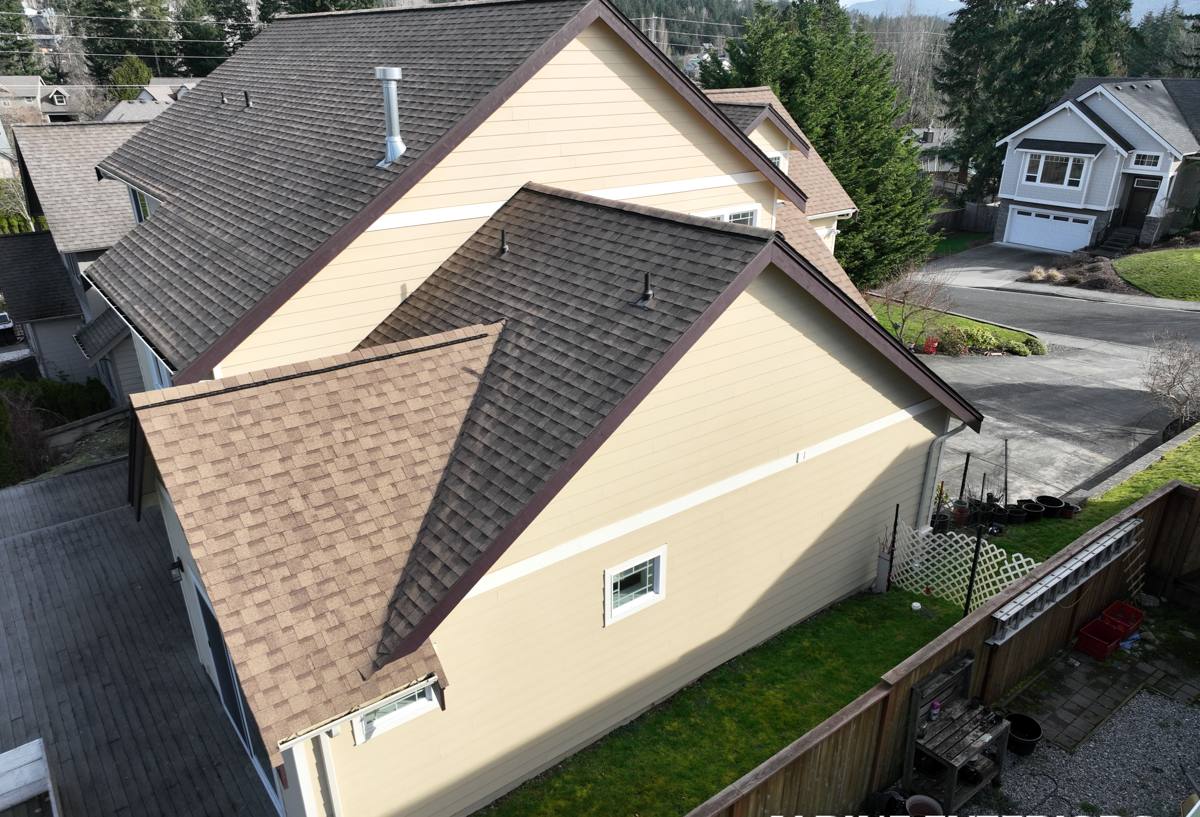
Whatcom County and the Fraser Valley share a marine climate, and that has specific consequences for window systems:
- Salt air and coastal moisture accelerate corrosion on aluminum frames, hardware, and older vinyl components that weren't rated for coastal exposure.
- Driving, wind-blown rain tests window flashing and seals in ways that vertical rain never does. A window that's fine in a calm rain can still leak when wind pushes water sideways under a poorly flashed nailing flange.
- Persistent dampness and shade feed moss and mildew growth on sills, trim, and anywhere water sits instead of draining. Moss holds moisture against wood and paint, which speeds up rot.
- Temperature swings between damp winters and warmer summers stress seals on double- and triple-pane insulated glass units, which is usually what causes that foggy, cloudy look between the panes — the seal has failed and the gas fill or trapped air is now full of moisture.
None of this is dramatic on its own. It's cumulative. A window that was installed correctly with proper flashing and quality materials will handle decades of this. A window that was installed with shortcuts, or that's simply reached the end of its service life, will show it early — usually as drafts, fogging, sticking sashes, or soft wood around the frame.
Signs Your Abbotsford Home Needs Window Replacement
Most homeowners don't think about their windows until something forces the issue. Here's what we typically see prompting a call:
- Visible fog or condensation trapped between panes (failed seal — not a cleaning problem)
- Noticeable drafts near the frame, especially during winter storms with wind off the water
- Wood trim or sills that feel soft, spongy, or show paint bubbling
- Windows that are difficult to open, close, or lock — frames have shifted or swollen
- Visible moss or black staining building up on sills and lower frame sections
- Rising energy bills without another clear explanation
- Single-pane or original aluminum-frame windows in a home that's 25+ years old
Any one of these on its own might just mean a repair or a cleaning. Several together, especially on a home that hasn't had its windows touched since it was built, usually means it's time to talk about replacement.
What a Correct Window Replacement Job Actually Involves
Window replacement gets sold like it's just "pull the old one, drop in the new one." That's the fast way to do it, and it's also the way that leads to leaks and callbacks two or three years down the road. A correct job, especially in a wet coastal climate, involves a few things that aren't optional:
Proper Flashing and Water Management
The window itself is rarely where a leak starts — it's almost always the flashing and the way water is directed around and away from the opening. This means integrating the window flashing correctly with the house wrap or building paper that's already there, using sill pans or flashing tape at the rough opening, and making sure water that does get behind the trim has somewhere to go besides into your wall cavity.
Correct Sizing and Fit
We measure for an accurate fit rather than forcing a stock size into an opening that's slightly off. Gaps that are too wide get shimmed and insulated properly; gaps that are too tight get addressed before the window goes in, not after.
Air Sealing and Insulation
The gap between the window frame and the rough opening needs to be sealed with the right material — typically a low-expansion foam or backer rod and sealant, not just caulk smeared around the trim. Done wrong, this is where drafts and energy loss come from even with a brand-new window.
Interior and Exterior Trim Work
Finishing the job means the trim, caulking, and paint or stain lines look clean and are sealed against moisture — particularly on the exterior, where a gap in the caulk line is an open invitation for the driving rain this area gets.
Our Process, Start to Finish
| Step | What Happens |
|---|---|
| Free on-site estimate | We look at your existing windows, note frame condition, flashing, and any moisture or rot issues, and talk through what makes sense for your home and budget. |
| Product selection | We walk through frame material, glass package, and style options suited to a coastal Whatcom/Fraser Valley climate — no pressure toward the most expensive option. |
| Written quote | Clear pricing, scope of work, and timeline before anything is scheduled. |
| Removal and inspection | Old windows come out carefully so we can check the rough opening for hidden rot or water damage before the new window goes in — this is often where problems are actually found. |
| Installation | New window is set, shimmed, flashed, insulated, and sealed correctly, following manufacturer specs. |
| Finish work | Interior and exterior trim, caulking, and cleanup. |
| Final walkthrough | We go over the finished work with you before calling the job done. |
Choosing the Right Window for This Climate
There isn't one "correct" window for every home, but there are trade-offs worth understanding before you decide:
Frame Material
Vinyl frames are common because they don't corrode and handle moisture well without maintenance, which is a real advantage in salt air. Fiberglass frames cost more but resist expansion and contraction better across temperature swings and hold paint well if you want a custom color. Aluminum frames are durable structurally but conduct heat and cold efficiently, which can mean more condensation on the interior frame during cold, damp stretches — something to weigh carefully in this climate rather than rule out automatically. We'll talk through what fits your home rather than push one material across the board.
Glass Package
Double-pane windows are the baseline for this climate; single-pane isn't realistic for energy performance here anymore. Triple-pane adds cost but can be worth it on north-facing walls or rooms that run cold. Low-E coatings and argon or krypton gas fills improve insulation value without changing how the window looks.
Why We're Selective About What We Install
We don't install every product on the market, and that's intentional. Some window systems are more sensitive to installation conditions, require more precise flashing details to perform as advertised, or come with warranty structures that make future service difficult for a homeowner. We'd rather stand behind a smaller lineup of products we know perform well in wet, coastal conditions and that we can service down the road, than sell something that looks good on a spec sheet but creates headaches in five years.
Repair vs. Replacement
Not every window problem means a full replacement. Here's how we generally think about it:
- Repair often makes sense for a single failed seal on an otherwise sound frame, minor hardware issues, or isolated caulk failure caught early.
- Replacement usually makes sense when frames are soft or rotting, multiple windows are original and aging together, drafts are widespread, or energy loss is significant across the house.
We'll give you an honest read on which category your windows fall into rather than defaulting to replacement because it's the bigger job. Sometimes a few targeted repairs buy you several more years, and we'll say so.
Why a Crew That Already Works Abbotsford Matters
Abbotsford is right on our regular route out of Lynden, which means a few practical things for you. We're not padding your quote with a long-distance travel charge, and we're not treating your job as an out-of-territory favor squeezed in between other work. We already know what this stretch of the Fraser Valley and Whatcom County coastline does to building materials, because we deal with the same salt air, rain, and moss on homes just a few miles south. If a warranty issue or a follow-up question comes up after the job is done, we're not far away and we're not hard to reach.
Get a Free, No-Pressure Estimate
If your windows in Abbotsford are drafty, fogged, sticking, or just old enough that you're wondering, we're happy to come take a look and give you an honest assessment — no pressure, no obligation. Fill out the form below and we'll get in touch to schedule a time that works for you.