 Lynden Roofing
 Windows Built for the Maple Falls Climate
Maple Falls sits up along the Mt. Baker Highway corridor in eastern Whatcom County, where the terrain climbs toward the foothills and the tree canopy gets thick and stays that way most of the year. That combination changes what a window has to deal with compared to a house closer to town. Heavy timber cover means less direct sun on siding and window trim, which sounds like a good thing until you realize it also means slower drying times after every rain. Add in the driving, sideways rain that blows through this part of Whatcom County several months a year, and you've got a recipe for wood rot, failed seals, and fogged glass if a window wasn't installed with real attention to water management in the first place.
Whatcom County stretches from saltwater on Bellingham Bay to the base of the Cascades, and the marine-influenced air that moves through the whole county carries a lot of moisture with it, even well inland. In Maple Falls that moisture shows up less as salt corrosion on hardware and more as prolonged dampness — shaded siding, mossy roof edges, and window sills that never fully dry between storms. That's the real local challenge: not one big weather event, but months of low-grade dampness working on caulk, flashing, and wood trim.
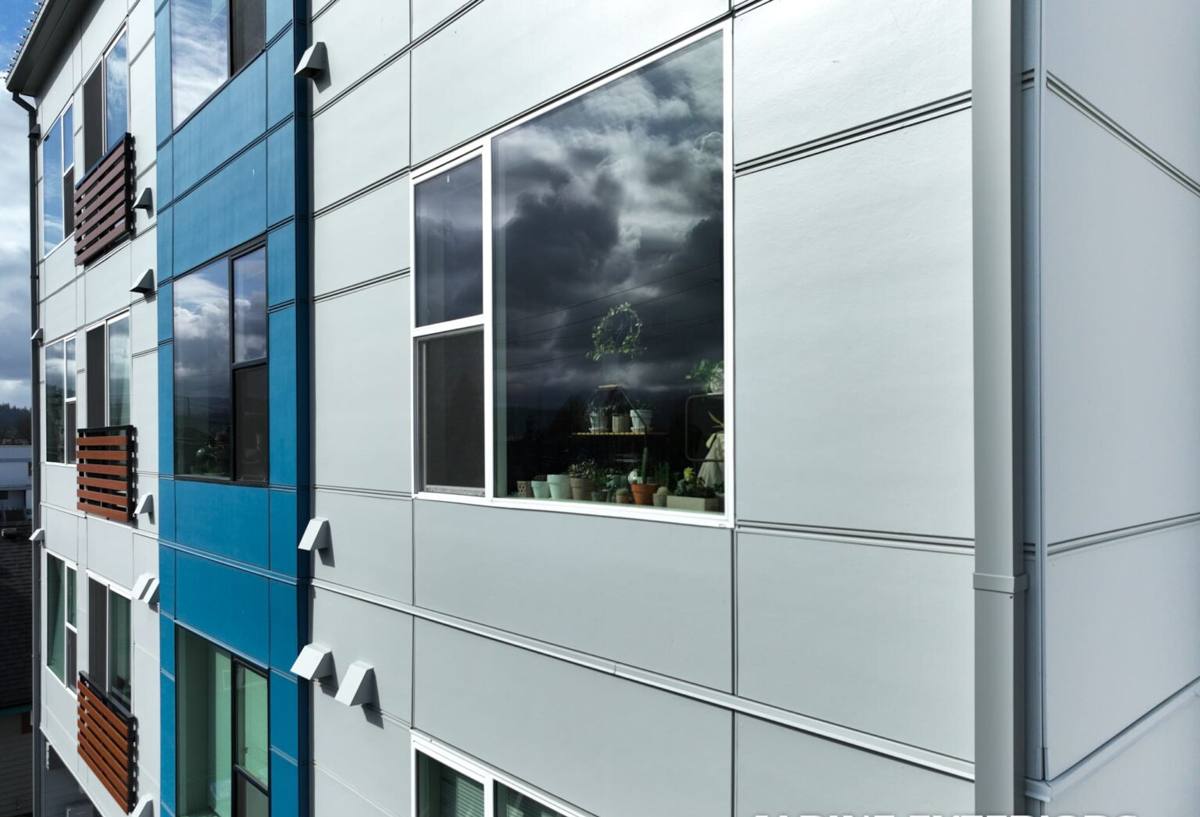
How This Shows Up on Local Homes
We see the same handful of problems repeat on Maple Falls homes, almost always tied back to how the window was originally installed rather than the window itself.
- Moss or dark streaking building up on the sill and lower sash, especially on north- and west-facing windows shaded by trees
- Soft or spongy trim boards around the window frame, a sign water has been getting behind the casing for a while
- Condensation between the panes of a double-pane window, meaning the seal has failed and the insulating gas is gone
- Drafts or a cold band of air near the window even when it's fully latched
- Paint or caulk that cracks and peels faster on that one window than the rest of the house
- Difficulty opening or closing a window that used to move freely, often from swelling wood or a settling frame
Any one of these on its own isn't an emergency. But on an older Maple Falls home, they're usually a sign the original flashing or sealant detail wasn't built for this much sustained moisture, and it's worth having someone look before the trim or the wall sheathing behind it starts to go.
What a Correct Window Installation Actually Involves
Setting a new window into an existing rough opening looks simple from the outside, but the parts nobody sees are what determine whether that window lasts 20 years or leaks in five. In a climate like this one, we treat water management as the whole job, not an afterthought.
Flashing and Water Management
Every opening gets a sill pan and properly lapped flashing tape — sill flashing first, then side flashing, then the top flashing lapped over both, so any water that does get past the window sheds down and out rather than pooling at the bottom corners. This shingle-style layering is the single biggest factor in whether a window stays dry over time, and it's also the step that gets rushed or skipped on lower-quality replacement jobs.
Air Sealing and Insulation
The gap between the window frame and the rough opening needs to be sealed and insulated correctly — not stuffed tight with fiberglass (which can compress and lose its insulating value) and not left with big open gaps. We use a low-expansion foam or backer rod and sealant designed to stay flexible as the house settles and the wood moves with the seasons.
Sealant Selection and Placement
Exterior caulk has to handle constant damp cycling without cracking, and it has to be left with intentional weep points so any trapped moisture can still escape. A fully caulked perimeter with no way for water to get back out is one of the more common mistakes we find when we're called out to fix a leak on someone else's install.
Choosing the Right Window Frame for a Shaded, Wet Property
Frame material matters more in a heavily shaded, damp setting like Maple Falls than it does on an open, sunny lot. Here's how the common options compare for this kind of property.
| Frame Material | Moisture Behavior | Maintenance | Best Fit |
|---|---|---|---|
| Vinyl | Won't rot; handles sustained dampness well | Low — occasional cleaning | Most Maple Falls homes, especially shaded or tree-covered lots |
| Fiberglass | Excellent stability, very low moisture absorption | Low | Homeowners wanting a stronger frame or larger openings, at a higher price point |
| Wood, painted | Attractive but vulnerable if the finish isn't kept up in constant shade/damp | High — repainting and caulk checks needed regularly | Homes prioritizing a traditional look who are prepared for the upkeep |
| Wood-clad (exterior-clad) | Good, as long as cladding seams and corners are properly sealed | Moderate | Homeowners wanting a wood interior look with better exterior durability |
We don't push painted, unclad wood exteriors on heavily shaded Maple Falls lots as a first recommendation — not because wood is a bad material, but because a north-facing window under mature trees rarely gets enough sun to dry out between rains, and that's exactly the condition that shortens a painted finish's life and drives up long-term maintenance. If you love the look of wood, a clad option gets you most of that appearance with a lot less upkeep in this particular setting.
Our Installation Process
- On-site assessment — we check the existing rough opening, sill condition, and any signs of prior water intrusion before quoting anything
- Product selection — we walk through frame material, glass package, and style options based on the window's exposure (shaded vs. more open, ground floor vs. upper story)
- Removal and opening prep — old window comes out, and we inspect the sheathing and framing underneath for any rot that needs to be addressed before a new window goes in
- Sill pan and flashing — sill pan installed first, then window set, then flashing lapped in the correct shingle order
- Air sealing and insulation — perimeter gap sealed with flexible, low-expansion material
- Exterior and interior trim — trim reset or replaced, caulked with weep points preserved, and finished to match the home
- Final walkthrough — we operate every window, check the seal, and walk the job with you before we call it done
What Affects the Cost
Every home is different, but these are the main factors that move the price on a Maple Falls window job, roughly in order of impact.
| Factor | Why It Matters |
|---|---|
| Window size and quantity | Larger openings and full-house replacements scale cost accordingly |
| Frame material | Vinyl is typically the most budget-friendly; fiberglass and wood-clad cost more upfront |
| Condition of the existing opening | Rot repair or resizing an opening adds labor beyond a straight swap |
| Access and story height | Second-story or hard-to-reach windows take more time and equipment |
| Glass package | Upgraded low-E coatings or gas fills add cost but help with energy performance |
As a general guide, most straightforward replacement windows in this region install in the low-to-mid four figures per window when you include materials and labor, with simpler vinyl units at the lower end and larger or premium units running higher. Full-opening work involving rot repair or resizing costs more. We give an exact number after we've actually looked at your windows — not before.
Why a Crew That Already Works Maple Falls Matters
A window installer who mostly works subdivisions in town isn't necessarily thinking about how much shade a Maple Falls lot gets, or how long water sits on a north-facing sill under fir cover before it dries. Crews who regularly work this part of Whatcom County build habits around it — sizing sill pans generously, choosing sealants that hold up to extended damp cycling, and flagging trim rot early instead of caulking over it. That local pattern-recognition is worth more than it sounds like on paper; it's the difference between a window that's still tight in ten years and one that needs attention again in three.
Keeping New Windows Performing in a Damp, Shaded Climate
A correctly installed window still benefits from a little seasonal attention here.
- Rinse pollen, moss spores, and debris off sills and tracks a couple times a year, especially on shaded sides of the house
- Check exterior caulk lines each fall before the heavy rains set in, and have any cracks touched up before they let water behind the trim
- Keep gutters and downspouts clear so water isn't sheeting down past upper windows during heavy rain
- Trim back branches or foliage that keep a window in near-constant shade and slow drying
- Operate each window a few times through the year so hardware doesn't seize up from disuse
None of this is complicated, but skipping it is how a well-installed window still ends up with avoidable problems a decade in.
Get a Straight Answer About Your Windows
If you're dealing with drafts, fogged glass, soft trim, or you're just planning ahead for a home in Maple Falls, we're happy to take a look and give you an honest read on what's going on and what it would take to fix it. Fill out the form below for a free, no-pressure estimate — no obligation, just a straight assessment from a crew that knows this part of Whatcom County.