 Lynden Roofing
 Siding in Sumas Works Harder Than It Looks
Sumas sits right up against the Canadian border in the Nooksack River valley, and that location comes with a specific mix of weather stress most homeowners never think about until their siding starts failing. You've got marine-influenced air moving up the valley, long stretches of driving rain in the fall and winter, and a moss season that can run eight months out of the year on shaded north and east walls. Add in the freeze-thaw cycles that hit Whatcom County every winter, and you've got a climate that punishes siding materials with any weakness in their moisture handling.
We replace siding in Sumas regularly enough to know which failure patterns show up here specifically: swollen bottom courses on homes backed up to tree lines, moss staining that never fully washes out of porous or textured surfaces, and paint film that's cracked and peeling years ahead of schedule because the substrate underneath couldn't keep up with the moisture cycling. None of that is a mystery once you've seen enough of it. It's what happens when a siding product isn't built for this specific combination of rain volume, humidity, and cool temperatures.
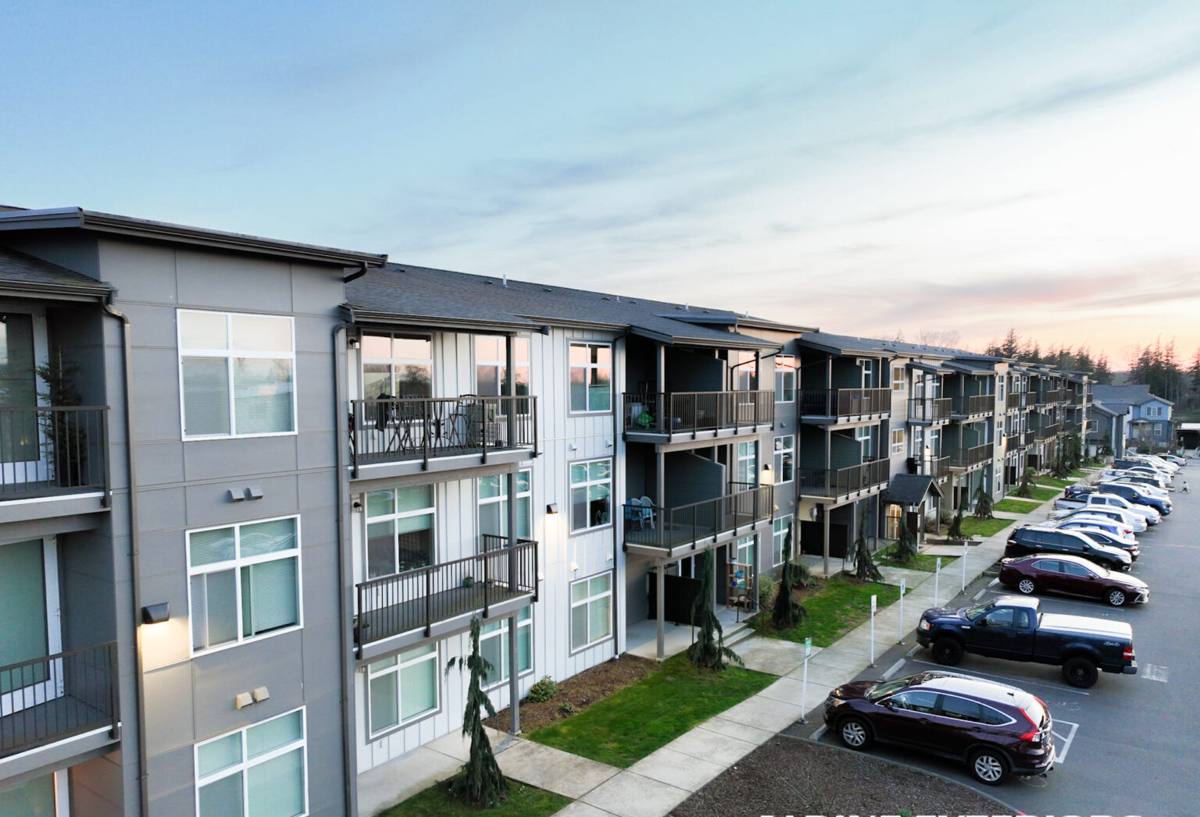
Why We Only Install James Hardie Fiber Cement
We made a decision a while back to stop installing every product a homeowner might ask for and instead standardize on one: James Hardie fiber cement. That's not a marketing position, it's a maintenance and longevity position. Fiber cement is non-combustible, dimensionally stable, and doesn't absorb and release moisture the way wood-based or wood-adjacent products do. James Hardie's HZ5 product line in particular is engineered for climates with exactly this kind of moisture exposure — freeze-thaw cycling, extended damp periods, and the kind of driving rain that pushes water sideways into wall assemblies.
We don't install vinyl, LP SmartSide, primed spruce, cedar, or other fiber cement brands like Cemplank or Allura. Each of those has legitimate uses somewhere, but we've settled on Hardie because of how it behaves specifically in Whatcom County conditions over a 20-30 year horizon, not just how it looks on install day. A factory-applied ColorPlus finish, a material that doesn't swell or rot at cut edges when properly sealed, and a warranty structure that's transferable to a future buyer all matter more here than they would in a drier climate.
What Salt Air and Moss Do to the Wrong Siding
Sumas isn't oceanfront, but the broader Whatcom County air carries enough marine moisture that untreated or poorly sealed wood products, and even some engineered wood siding, show accelerated wear compared to drier inland regions. Moss is the more persistent local problem: spores need moisture and shade to establish, and Sumas has both in abundance most of the year. Porous or textured siding surfaces give moss more to grip onto, and once it's established on a wall, it holds moisture against the substrate around the clock. Fiber cement's dense, engineered surface gives moss far less to anchor to, and a factory finish resists the staining that makes moss damage look permanent even after cleaning.
What a Correct Siding Replacement Involves
Replacing siding isn't just pulling off old material and nailing up new panels. Done right, it's a sequence of steps where each one protects the next, and skipping any of them is how homeowners end up with the same problems five years later under a fresh coat of paint.
- Full removal of existing siding and trim, with the sheathing inspected for rot, delamination, or water staining underneath
- Repair or replacement of any damaged sheathing before anything new goes up — new siding over a compromised wall just hides the problem
- Installation of a code-compliant weather-resistant barrier (housewrap) with correctly lapped and taped seams
- Proper flashing at every window, door, and roofline intersection — this is where the majority of hidden leaks originate
- Rainscreen or furring strip installation where wall assembly and product specs call for it, to let moisture drain and walls breathe
- James Hardie panel or lap siding installed per manufacturer fastening and clearance specifications
- Correct caulking and sealant only where Hardie's installation instructions specify it — over-caulking traps moisture rather than blocking it
That flashing and drainage plane work is the part that doesn't show up in a finished photo but determines whether your walls stay dry for the next few decades. It's also the part that's easiest for a crew unfamiliar with James Hardie's specific requirements to get wrong.
Our Process From First Call to Finished Wall
Assessment and Estimate
We start with an on-site look at your current siding, trim, and any visible problem areas — moss buildup, soft spots, paint failure, or gaps around windows and doors. We'll talk through what we're seeing, what's driving it, and what a Hardie replacement involves for your specific home.
Product and Color Selection
James Hardie offers multiple siding profiles — lap siding, panel siding, and trim boards — in a range of ColorPlus factory finishes. We'll walk you through the options that suit your home's style and the practical differences between them, without pushing you toward the most expensive line if it isn't the right fit.
Tear-Off and Sheathing Check
Old siding comes off, and we inspect what's underneath before covering anything back up. If there's rot or water damage in the sheathing, we address it before the new weather barrier goes on. This step is non-negotiable — it's the difference between a siding job and a siding job that actually protects your house.
Weather Barrier and Flashing
A correctly installed drainage plane and flashing system is what keeps wind-driven rain from working its way behind the siding. We follow manufacturer specs here, not shortcuts, because this layer is invisible once the job is done and impossible to fix without tearing the new siding back off.
Installation and Finish Detail
Hardie siding goes up per the manufacturer's fastening schedule, clearances, and joint treatment. Trim, corners, and transitions get finished cleanly, and we walk the job with you at the end to confirm everything meets both our standard and yours.
Cost Factors for a Sumas Siding Replacement
Every home is different, but the variables that move the price on a siding replacement are consistent. Here's what actually drives the number up or down.
| Factor | Why It Matters |
|---|---|
| Home size and wall complexity | More square footage and more corners, dormers, and roof intersections mean more labor and more flashing detail |
| Sheathing condition | Rot or water damage found during tear-off requires repair before new siding goes on, which adds material and labor |
| Siding profile chosen | Lap, panel, and shingle-style Hardie products carry different material and installation costs |
| Trim and accessory scope | Full trim replacement alongside siding costs more than reusing sound existing trim |
| Access and site conditions | Multi-story walls, tight lot lines, or landscaping obstacles affect scaffolding and staging time |
| Removal and disposal | Tear-off and haul-away of old siding, especially layered-over materials, adds to the scope |
We'll break these down specifically for your home during the estimate rather than quoting a number that doesn't reflect what's actually on your walls.
Signs Your Sumas Home Needs Siding Replacement
Not every siding problem means a full replacement, but these are the signs that usually point that direction rather than a simple repair or repaint.
- Soft, spongy, or visibly swollen sections, especially near the bottom of walls or under windows
- Paint that's peeling, bubbling, or failing repeatedly in the same spots year after year
- Persistent moss or algae staining that returns quickly after cleaning
- Visible gaps, warping, or cracking at panel seams and corners
- Rising energy bills tied to drafts or moisture infiltration through the wall assembly
- Interior signs like musty odors or staining on walls that share an exterior with problem siding
Why a Crew That Already Works Sumas Matters
Siding installation isn't purely about following a spec sheet — it's about applying that spec sheet correctly to the conditions a specific wall actually faces. A crew that regularly works Sumas and the surrounding Whatcom County towns has already seen how moss establishes on north-facing walls here, how far driving rain pushes under poorly flashed trim in this valley, and which parts of a job are worth extra attention because they've watched shortcuts fail on other homes nearby. That's not something you can get from a crew passing through once. It shows up in the small decisions — where the rainscreen gets used, how flashing gets lapped, which joints get extra scrutiny — that separate a siding job that lasts 30 years from one that starts showing problems in five.
What to Expect After Installation
James Hardie fiber cement is low-maintenance, but low-maintenance isn't the same as no-maintenance. A periodic rinse to keep moss and organic buildup from establishing, along with an annual look at caulking and trim joints, goes a long way toward getting the full life out of the product. The ColorPlus factory finish is designed to hold color longer than field-applied paint, but it's still worth a visual check each year, particularly on shaded or north-facing walls where Sumas's moss pressure is highest.
If you're seeing early signs of siding failure or you're just planning ahead for a replacement, we're happy to take a look and give you a straightforward, no-pressure estimate on what a James Hardie fiber cement installation would involve for your home.