 Lynden Roofing
 Windows Built for the Wiser Lake Climate, Not a Catalog Photo
Wiser Lake sits in a part of Whatcom County where the weather doesn't do anything halfway. Winters bring long stretches of driving rain and wind off the water, summers can swing warm and dry, and the humidity around the lake keeps tree cover, siding, and rooflines damp longer than homes further inland. Windows here are doing real work every day — keeping wind-driven rain out, keeping conditioned air in, and holding up against the kind of persistent moisture that eventually finds every gap in an aging frame. A window that was "good enough" when it was installed twenty years ago is rarely still doing its job today.
When we talk about energy-efficient windows for a Wiser Lake home, we're not just talking about a lower heating bill, although that's part of it. We're talking about a window system — glass, frame, seals, and flashing — that's matched to this specific climate and installed correctly the first time. Get any one of those pieces wrong and you end up with condensation between the panes, soft spots in the framing, or a draft you can feel from across the room by year five.
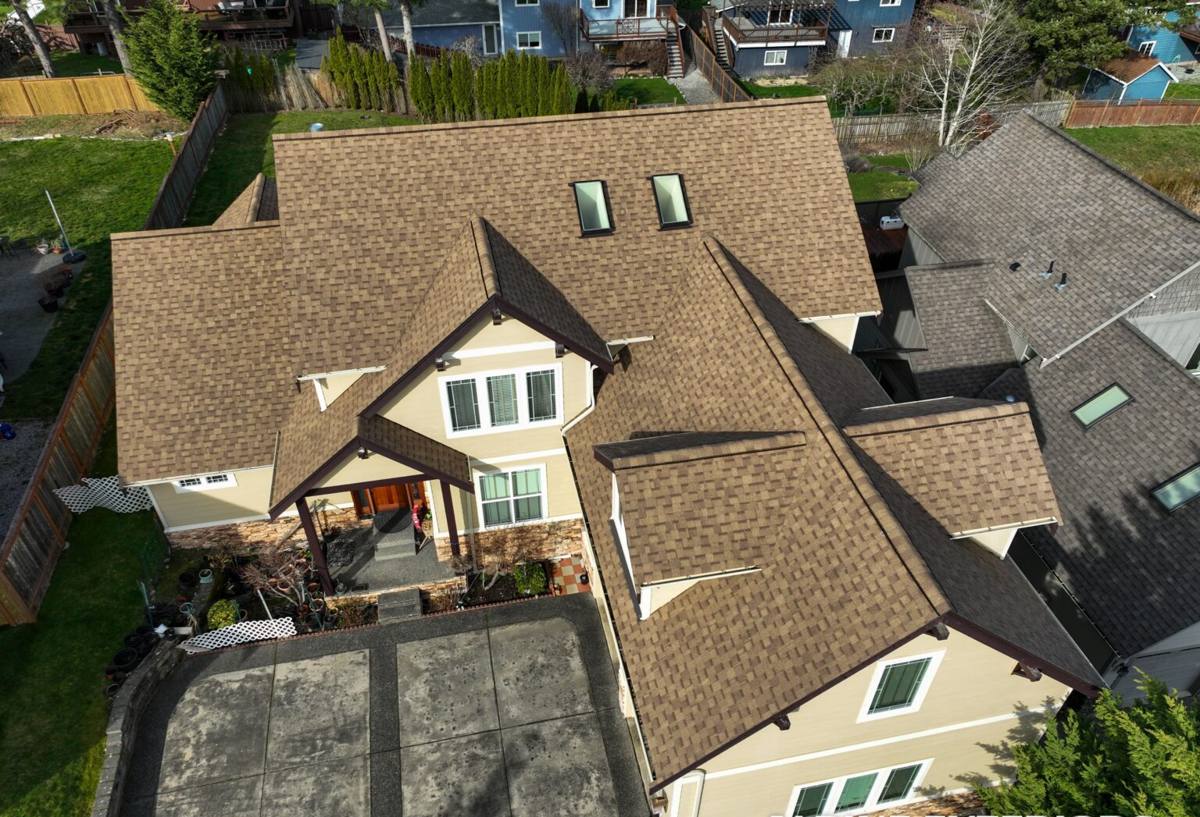
What Whatcom County Weather Does to Older Windows
Homes near Wiser Lake deal with a specific combination of stresses that windows in drier climates simply don't face as often:
Driving Rain and Wind-Driven Moisture
Storms coming through this part of Washington often push rain sideways, not straight down. Older windows, especially aluminum-frame units from decades past, were rarely detailed with the kind of flashing and drainage planes that hold up under sustained wind-driven rain. Water finds its way behind trim and into the wall cavity long before a homeowner sees a stain.
Long Moss and Mildew Season
The same damp, shaded conditions that grow moss on a north-facing roof slope do the same thing to window sills, tracks, and exterior trim. Moss and mildew hold moisture against wood and vinyl surfaces for months at a time, which accelerates rot in wood-frame windows and breaks down seals faster than most manufacturers account for in their warranty language.
Salt Air and Metal Fatigue
Proximity to Puget Sound means homes in this region get some exposure to salt-laden air, even well inland. Over time that air is hard on window hardware — hinges, locks, and balance mechanisms made from lower-grade metals corrode faster, which is why sticking sashes and failing locks show up earlier here than in drier regions.
Condensation From Temperature Swings
Cool, wet nights followed by warmer days create the kind of temperature swing that shows condensation on the inside of a poorly insulated window. If you're seeing fog or water beading on the glass regularly, that's usually a sign the window's insulating value has already dropped below what it was rated for.
What "Energy-Efficient" Actually Means in a Window
The term gets used loosely in this industry, so it's worth being specific about what actually makes a window perform well in a climate like this one. It comes down to four things working together — the glass, the gas fill between the panes, the spacer, and the frame material.
- Low-E glass coatings reflect radiant heat while still letting visible light through, which helps in both winter (keeping heat in) and summer (keeping heat out).
- Double or triple-pane construction with an inert gas fill, usually argon, slows heat transfer through the glass itself.
- Warm-edge spacers between the panes reduce the cold spot at the glass edge, which is where condensation typically starts.
- Frame material affects both insulation and how the window holds up against years of rain and humidity — this matters as much as the glass package in a climate like ours.
Comparing Frame Materials for a Wiser Lake Home
| Frame Material | Insulating Performance | Moisture Resistance | Maintenance |
|---|---|---|---|
| Vinyl | Good, consistent | Excellent — won't rot or corrode | Low; occasional cleaning |
| Fiberglass | Very good, stable through temperature swings | Excellent | Low |
| Wood (unclad) | Very good | Requires diligent upkeep to avoid rot in damp climates | High — repainting, sealing |
| Wood-clad | Very good | Good, as long as cladding seams stay sealed | Moderate |
| Aluminum | Poor unless thermally broken | Prone to condensation and corrosion over time | Low, but performance suffers |
We steer most Wiser Lake homeowners toward vinyl or fiberglass frames for the simple reason that they don't depend on ongoing maintenance to keep moisture out. A wood window can absolutely perform well here, but only if the homeowner is committed to the upkeep that a shaded, damp lot demands. That's an honest trade-off worth weighing before you commit to a look.
Signs Your Windows Are Already Costing You Money
Most homeowners don't replace windows because one broke — they replace them because a handful of small signs finally added up. Around Wiser Lake, we most often hear about:
- Visible fog or moisture trapped between the panes (a failed seal, not fixable by cleaning)
- Drafts you can feel near the frame, even with the window fully latched
- Sashes that stick, drop, or won't stay open without a prop
- Soft or discolored wood trim around the window opening
- Rising heating bills without a clear explanation elsewhere in the house
- Moss or dark staining building up on the sill or exterior casing
- Locks or hardware that have corroded or become difficult to operate
- Noticeable temperature difference near the window compared to the rest of the room
Any one of these on its own isn't an emergency. Several of them together usually mean the window system, not just the glass, has reached the end of its useful life.
How We Approach a Window Replacement
Energy-efficient windows only perform as well as their installation. A high-end window set into a poorly flashed opening will fail early, while a mid-range window installed correctly will often outlast expectations. Our process is built around getting the installation right, not just delivering a box.
- On-site assessment — we look at the existing framing, sill condition, and any signs of past water intrusion before we ever talk product.
- Accurate measurement — exact opening measurements, not estimates, so the finished install fits tight and doesn't rely on excess caulk to hide gaps.
- Frame and glass recommendation — matched to the window's orientation, exposure to weather, and your budget, not a one-size answer for the whole house.
- Removal and inspection — old windows come out carefully so we can check the framing underneath for hidden rot or moisture damage before it's covered back up.
- Proper flashing and sealing — this is the step that determines whether the window holds up against driving rain, and it's the step that gets rushed on lower-quality jobs.
- Final adjustment and walkthrough — we test operation, sealing, and locking hardware before we consider the job done.
Why Local Experience on Wiser Lake Homes Matters
Homes around the lake tend to share a few things in common — more tree cover than an open subdivision, higher ambient humidity from the water nearby, and exposure to wind patterns that come off the lake in a fairly consistent direction depending on the property's position. A crew that's worked in this specific area knows to check for moss buildup in sill tracks, knows which sides of a house tend to take the worst of the wind-driven rain, and doesn't need to relearn the region's quirks on your dime. That familiarity shows up in fewer callbacks and fewer surprises once the old windows come out and the framing underneath is visible for the first time.
Choosing the Right Window Style
Style is partly aesthetic and partly functional, and in this climate the functional side deserves real weight:
| Style | Best For | Weather Consideration |
|---|---|---|
| Casement | Rooms where a tight seal matters most | Crank-out design compresses against the frame, resisting wind-driven rain well |
| Double-hung | Traditional look, easier cleaning from inside | More seams than a casement, so quality weatherstripping matters more |
| Sliding | Wide openings, patio-adjacent rooms | Track can collect debris and moss if not maintained |
| Picture (fixed) | Lake or yard views without an operable sash | No moving parts to seal, generally the most weathertight option |
For homes with a view toward the lake, we often see a mix — a large fixed picture window flanked by operable casements — which balances the view with usable ventilation.
What Affects the Cost of a Window Project
Every home is different, so we won't quote a number without seeing the openings, but the main cost drivers are consistent:
| Factor | Why It Matters |
|---|---|
| Frame material | Vinyl is typically the most budget-friendly; fiberglass and wood-clad cost more upfront but bring different maintenance profiles |
| Glass package | Triple-pane and upgraded Low-E coatings add cost but improve performance in a wet, wind-exposed climate |
| Number and size of openings | Larger and custom-sized windows cost more than stock sizes |
| Condition of existing framing | Hidden rot or water damage found during removal adds repair work before the new window goes in |
| Access and site conditions | Second-story or hard-to-reach openings take more time and equipment |
Get an Honest Look at Your Windows
If your windows near Wiser Lake are fogging, drafting, sticking, or just costing more to heat around every winter, it's worth having someone take an honest look before you decide what to do next. We'll walk the exterior, check the framing where we can, and give you a straightforward read on what's actually needed — no pressure, no upsell on work your home doesn't require. Reach out for a free estimate using the form below.