 Lynden Roofing
 Storm Damage in Everson: What Whatcom County Weather Does to a Roof
Everson sits in the same weather pattern as the rest of Whatcom County — long stretches of wet, marine-influenced air, driving rain that comes in sideways during winter storms, and a moss season that can run most of the year on north-facing slopes. None of that is dramatic on its own, but stacked up over a few seasons it wears on a roof in specific, predictable ways. Wind gusts during winter storms lift shingle tabs and work loose fasteners. Sustained rain finds every gap in flashing, pipe boots, and valleys. And moss, left to spread, holds moisture against the roof surface long after a storm has passed, which is often worse for the material underneath than the storm itself.
For homeowners in Everson, storm damage rarely shows up as one obvious event. It's more often a combination — a windstorm loosens a section, rain gets underneath over the following weeks, and by the time a stain shows up on a ceiling, the damage has been building for a while. That's the pattern we look for when we inspect a roof after a storm out this way.
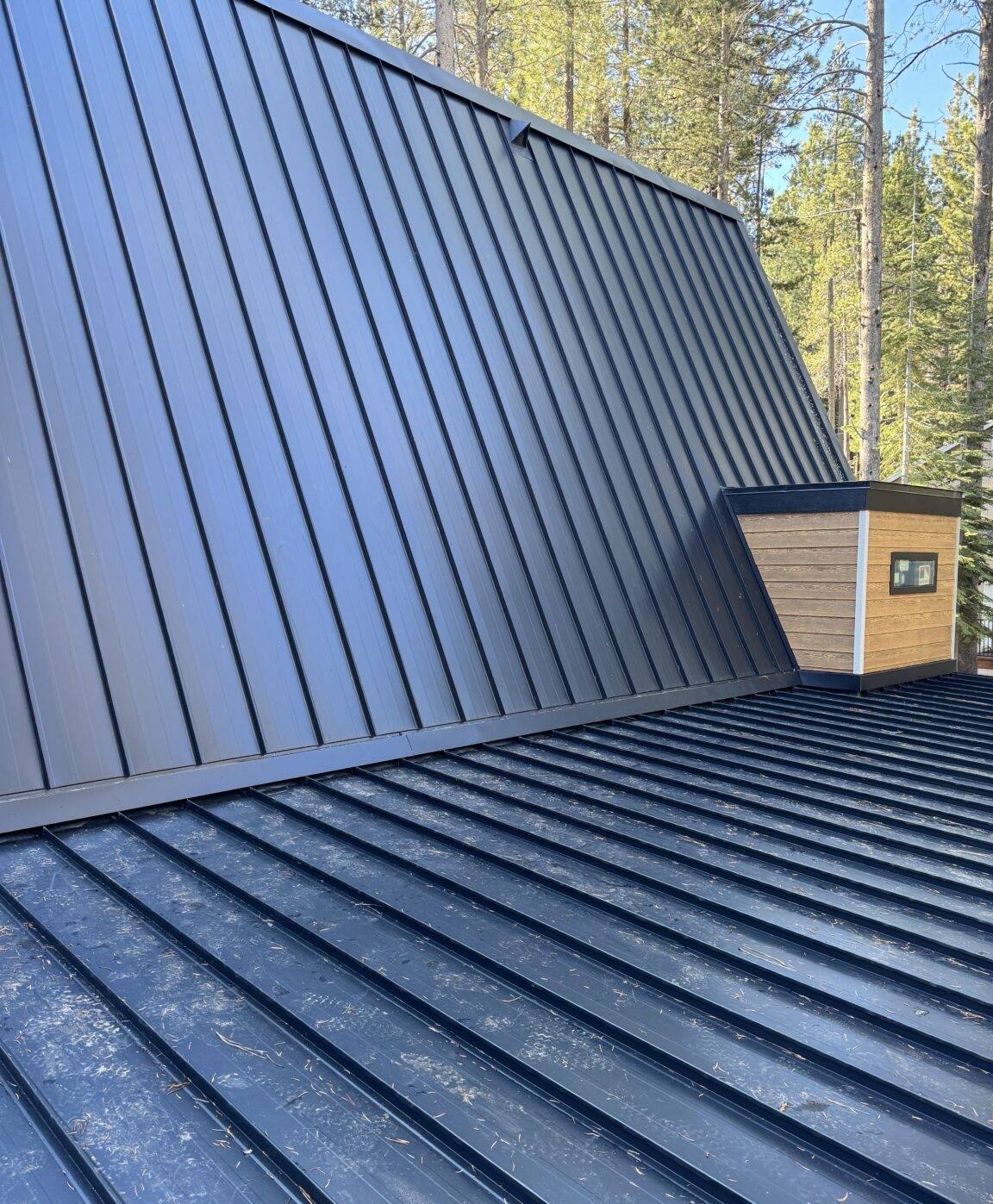
Signs Your Everson Home May Have Storm Damage
Some storm damage is visible from the ground. Most of it isn't. Here's what we tell homeowners to watch for after any significant wind or rain event:
- Shingles that look lifted, curled, or out of alignment compared to the surrounding field
- Granules collecting in gutters or at downspout outlets — a sign of shingle surface wear or impact
- New or worsening moss growth in a concentrated area, which can indicate the roof surface was disturbed
- Soft spots or discoloration on ceilings or upper walls, especially near exterior corners
- Flashing that looks bent, separated, or missing around chimneys, vents, and skylights
- Debris — branches, needles, gravel from shingle wear — collecting in valleys
- Gutters pulling away from the fascia or sagging after heavy rain
Any one of these on its own might be minor. Several at once, or any sign paired with an interior leak, is worth a proper inspection before the next storm makes it worse.
What a Correct Storm Damage Repair Actually Involves
A lot of storm repair work in this region is done wrong not because the crew is careless, but because they treat it as a patch job instead of a diagnosis. A correct repair starts with figuring out how water actually got in — not just covering the spot where it showed up inside the house.
Diagnosis Before Repair
Water travels. A stain on a bedroom ceiling might trace back to a flashing failure three feet away, or a valley that's been slowly failing for two seasons. We inspect the full roof plane, not just the area over the stain, because storm damage in a wet climate like Whatcom County's tends to spread along the path water takes under the roofing material, not in a straight line down.
Matching Materials, Not Just Covering Gaps
Repaired sections need to shed water the same way the surrounding roof does. That means matching shingle profile and, where possible, color and age so the repair doesn't create a new weak seam. It also means replacing underlayment and flashing in the repair zone, not just the visible shingles — reusing damaged underlayment under new shingles is one of the most common shortcuts that leads to a repeat leak the following winter.
Addressing the Cause, Not Just the Symptom
If moss contributed to the failure, we deal with the moss and the moisture source, not just the hole it left behind. If wind exposure was the issue — a roof edge or ridge that takes the brunt of storms coming off open ground — we look at whether the fastening pattern or edge detail needs to be upgraded, not just replaced as-is.
Our Storm Damage Repair Process
1. Inspection and Documentation
We walk the full roof, not just the reported problem area, and document what we find — both for our own repair plan and for any insurance claim you may need to file.
2. Honest Assessment
We tell you what's actually damaged, what's original wear that isn't storm-related, and what can wait. We're not going to sell a full re-roof when a section repair will hold, and we're not going to under-scope a repair that's going to fail again next winter.
3. Temporary Protection if Needed
If a roof is actively leaking or has an exposed section, we get it weathertight first — tarping or temporary flashing — before scheduling the permanent repair, especially if more rain is in the forecast.
4. The Repair Itself
Damaged shingles, underlayment, and flashing are removed back to sound material, not just to the edge of the visible damage. New materials are installed to match the existing roof's water-shedding pattern, with attention to nailing pattern and sealant at penetrations — the details that matter most in a climate that gets this much sustained rain.
5. Cleanup and Walkthrough
We clear debris, check gutters and downspouts are clear and functioning, and walk the repair with you so you know exactly what was done and why.
Repair vs. Replacement: How We Decide
Not every storm-damaged roof needs a full replacement, and not every roof that "just needs a patch" should be patched. Here's the general framework we use:
| Factor | Favors Repair | Favors Replacement |
|---|---|---|
| Roof age | Under 12-15 years, or recently replaced | Near or past typical service life for the material |
| Extent of damage | Isolated to one or two areas | Spread across multiple slopes or the majority of the roof |
| Underlying condition | Decking and underlayment sound elsewhere | Widespread moss damage, soft decking, or prior repairs failing |
| Shingle availability | Matching shingles can be sourced | Discontinued product, poor match likely |
| Storm history | Single event, roof otherwise healthy | Repeated storm exposure with cumulative wear |
We'll walk you through where your roof falls on this before recommending either option — and we'll say so plainly if a repair is the right call, even though a replacement is a larger job for us.
Materials We Use for Storm Repairs in This Climate
For storm repair work in the Everson area, material choice matters more than most homeowners expect. We favor materials and details that are proven against sustained wet weather rather than ones that look good on a spec sheet but are sensitive to installation error or ongoing moisture exposure. That generally means:
- Shingle products with a strong wind rating appropriate for open, exposed roof sections
- Self-adhered underlayment at valleys, eaves, and other vulnerable areas where wind-driven rain is most likely to intrude
- Metal flashing detailed to shed water rather than depend on sealant alone — sealant is a backup, not the primary defense, in our approach
- Fastening patterns that meet or exceed manufacturer specs for wind exposure, not just the minimum
We're selective about products that require very precise installation conditions to perform as advertised, since a repair often has to go on in less-than-ideal weather. Our standard is to use materials that hold up even when conditions during installation aren't perfect — that's a trade-off we make deliberately, not a shortcut.
Insurance and Storm Damage: What Homeowners Should Know
Many storm-related roof repairs in Whatcom County are at least partially covered by homeowners insurance, particularly when there's a documented wind or storm event. A few things that make the process smoother:
- Photos and notes taken as soon as damage is noticed, before any temporary repairs are made
- A written inspection report describing the damage and likely cause
- An itemized repair estimate that separates storm-caused damage from unrelated pre-existing wear
We provide documentation homeowners can use for a claim, but we don't handle the claim itself or promise a particular outcome from your insurer — that's between you and your policy. What we will do is give you a straight, itemized assessment you can hand to your adjuster.
Why a Crew That Already Works in Everson Matters
Storm damage repair is one of those jobs where local familiarity actually changes the outcome. A crew that regularly works Everson and the surrounding Lynden area already knows what a normal winter does to roofs out here — how moss builds on shaded slopes, which roof orientations take the worst of the wind, and what a properly detailed repair needs to withstand the next storm season, not just look fine on a dry day.
It also means faster response. When a storm comes through Whatcom County, homeowners across the area need eyes on their roof at the same time. A crew already working locally can get to an active leak faster than one dispatching from farther away, and that first 24-48 hours after damage occurs often determines whether a repair stays simple or turns into a bigger interior problem.
Keeping Storm Damage from Becoming a Bigger Problem: A Homeowner Checklist
Between storms, a little attention goes a long way in this climate. Here's what we recommend checking a couple of times a year:
- Clear gutters and downspouts before the fall rains start, so water has somewhere to go
- Look at north-facing and shaded slopes for early moss growth before it spreads
- Trim back branches that overhang the roof — they scrape granules loose in wind and drop debris into valleys
- After any significant windstorm, do a visual check from the ground for lifted or missing shingles
- Check attic spaces periodically for damp insulation, staining, or daylight showing through the roof deck
- Have flashing around chimneys, vents, and skylights inspected every few years, since these are the most common failure points
Catching small issues during a calm stretch of weather is almost always cheaper and less disruptive than dealing with an active leak mid-storm.
Get a Straight Answer on Your Roof
If a recent storm has you wondering whether your Everson home's roof took damage, we're happy to take a look. We'll give you a clear, honest assessment — repair or replacement, what it involves, and why — with no pressure either way. Reach out below for a free estimate.