 Lynden Roofing
 Why Siding Repair Looks Different on Homes Around Wiser Lake
Homes around Wiser Lake sit in a slightly different pocket of weather than a house on an open lot closer to downtown Lynden. Mature trees ring much of the shoreline, the lake itself keeps the air near the ground damper for longer stretches of the day, and many lots don't get direct afternoon sun on every elevation. Add in Whatcom County's marine-influenced weather — driving rain that comes in sideways off the Salish Sea, and air that carries a faint salt tang on breezy days — and you get a microclimate that's harder on exterior materials than it looks from the road.
None of that means Wiser Lake homes need exotic repairs. It means the same failure points that show up anywhere in Lynden — seams, butt joints, corner trim, anywhere siding meets a window or the ground — show up sooner and progress faster here. A repair call that would be a minor cosmetic fix on a dry, sun-exposed lot can already be a moisture problem by the time it's visible on a shaded lake-adjacent wall.
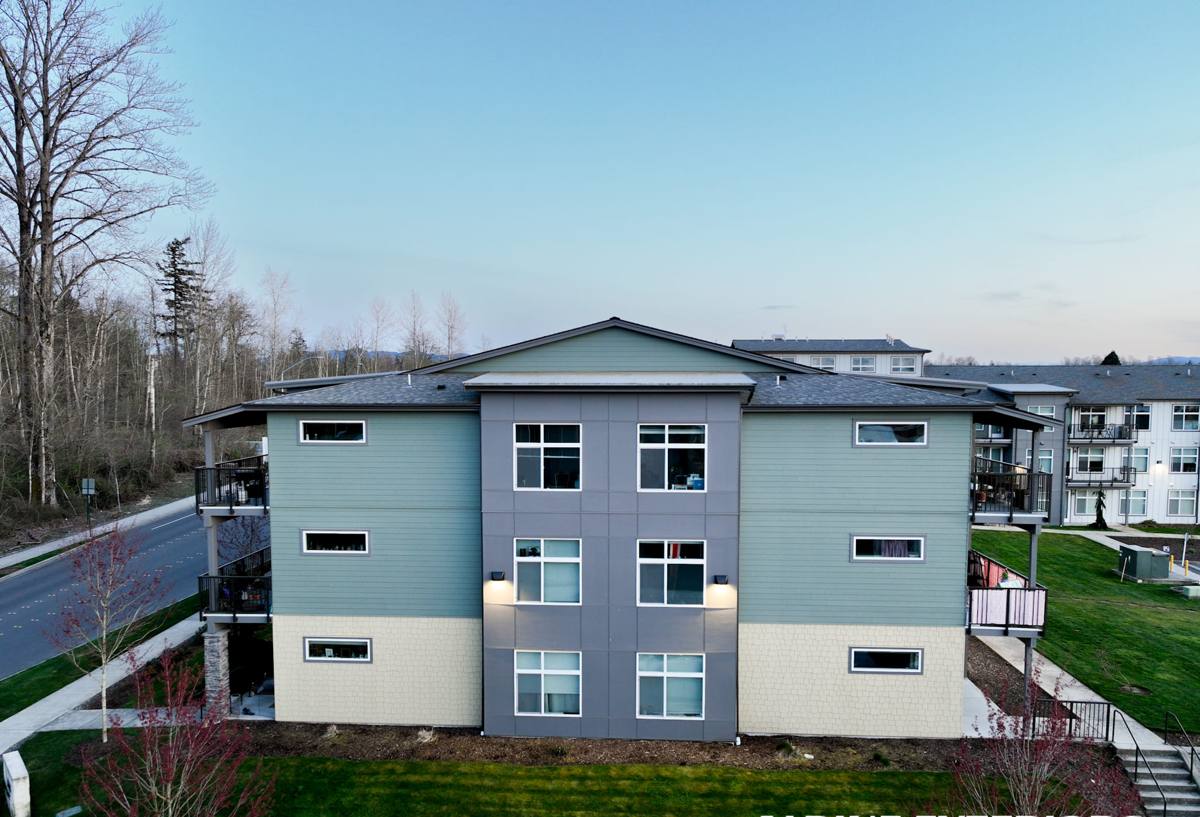
What Driving Rain and a Long Moss Season Do to Siding Over Time
Wind-Driven Rain Finds the Gaps
Straight-down rain is easy on siding. Wind-driven rain is not — it gets pushed sideways and upward into laps, seams, and any place caulk or flashing has started to fail. Around Wiser Lake, storms often arrive with enough wind to drive water into joints that would stay dry in calmer weather. Over years, that repeated wetting is what turns a small gap into a soft spot behind the siding, long before anything looks wrong from a normal walk-by.
Shade and Moss Turn Siding Green — and Soft
Whatcom County's moss season runs long, and shaded, lake-adjacent lots get the worst of it. Moss and algae hold moisture directly against the siding surface for days at a time, even between rain events. On wood-based products, that sustained dampness is exactly the condition that leads to soft, swollen, or delaminating boards. On any siding, moss buildup at panel edges and butt joints traps water right where it can work its way behind the material.
Common Siding Repair Needs We See Around Wiser Lake
The repairs we get called for around the lake tend to track closely with what kind of siding is already on the house:
- Cedar and wood siding — cupping, soft or spongy boards, and paint failure in shaded areas where moisture doesn't fully dry between rains.
- LP SmartSide and other engineered wood products — edge swelling at cut ends and seams where factory sealant has worn through, especially on north- and west-facing walls that stay damp longest.
- Vinyl siding — panels that have bowed, cracked, or blown off in wind gusts, plus moisture and pest activity behind panels that were never meant to be a full weather barrier on their own.
- Fiber cement siding — generally the most stable of the group, but still vulnerable to problems at failed caulk joints, damaged factory finish, or spots where it wasn't installed with the right clearance off the ground or roofline.
We're not saying any one of these products is a bad product across the board — each has a use case and trade-offs. What we're describing is simply what shows up in a damp, shaded, lake-adjacent climate over time, which is the honest starting point for deciding whether a spot repair, a larger repair, or a full re-side is the right call.
What a Correct Repair Actually Involves
Diagnosing the Cause, Not Just Patching the Symptom
A siding repair that only replaces the visibly damaged board is a repair that's likely to fail again in the same spot. Before we cut anything out, we look at where the water is actually getting in — a failed kick-out flashing, a gap at a window head, a missing drip cap, moss holding water against a seam — and fix that first. Otherwise you're paying to replace the same section twice.
Matching Material, Reveal, and Fastening Pattern
Once the cause is addressed, the repair itself needs to match the surrounding siding in reveal (the exposed width of each course), fastening pattern, and, where possible, finish. A patch that doesn't line up reads as a patch from the street and can create its own water path if the reveal is off even slightly. On fiber cement in particular, correct fastening and joint treatment matter for both appearance and the manufacturer's warranty coverage.
Repair vs. Replace: How We Help You Decide
Not every problem area needs a full re-side, and not every "just patch it" request is actually the right long-term call. We walk through the same factors on every Wiser Lake inspection:
| Factor | Leans Toward Repair | Leans Toward Replacement |
|---|---|---|
| Extent of damage | Isolated to one or two areas | Spread across multiple elevations |
| Underlying sheathing | Dry, sound wood behind the siding | Soft or water-stained sheathing found during inspection |
| Age of existing siding | Newer install, otherwise in good shape | Near or past expected service life |
| Siding material | Fiber cement with a localized failure | Wood-based or vinyl siding showing widespread moisture wear |
| Home's overall plan | No other exterior work planned soon | Roofing, trim, or paint work already being considered |
We'll always give you the honest read on which side of that table your home falls on — including telling you when a repair is genuinely the smarter, less expensive move.
Our Process for Wiser Lake Siding Repair Calls
Because we already work in this part of Lynden, we're not learning the area's climate quirks on your dime. A typical repair visit runs like this:
- On-site inspection of the damaged area and a check of nearby trim, flashing, and caulk joints for related problems.
- A look at the sheathing behind any removed siding to confirm whether the framing underneath is dry and sound.
- A written explanation of what caused the damage and a straightforward repair or replacement recommendation.
- Repair work using material and fastening that matches your existing siding as closely as possible.
- A final check of caulking, flashing, and drainage paths so the fix addresses the cause, not just the symptom.
Why We Only Repair and Rebuild With James Hardie Fiber Cement
When a repair area calls for new material — or when a homeowner near Wiser Lake decides a section (or the whole house) is due for replacement rather than another patch — we use James Hardie fiber cement exclusively. We don't install LP SmartSide, vinyl, Cemplank, Allura, primed spruce, or cedar, and we think homeowners deserve the honest reasoning, not just the policy.
Each of those alternatives can be a reasonable product in the right setting. Wood and engineered wood siding can look great and perform well with disciplined maintenance, but they depend on paint and sealant staying intact — a harder standard to keep up in a damp, shaded, moss-prone spot like the lake. Vinyl is inexpensive and low-maintenance, but it's not a structural weather barrier on its own and it can crack or blow off in wind. Non-Hardie fiber cement brands vary in formulation, factory finish process, and warranty structure, and we've standardized on the one system we know behaves consistently under Whatcom County conditions.
James Hardie fiber cement is non-combustible, engineered in HZ product lines specifically for wetter climate zones like ours, and finished at the factory with ColorPlus coating rather than field-applied paint — which removes one of the biggest maintenance liabilities we see fail on damp, shaded elevations. It also carries a strong transferable warranty, which matters on a repair or re-side you expect to last for decades, not just look good for the first few years.
Signs You Need a Siding Repair Inspection
Around Wiser Lake, these are the warning signs worth a call before they turn into a bigger project:
- Soft or spongy spots when you press on the siding, especially near the ground or under windows
- Visible moss or algae buildup along seams, butt joints, or shaded lower courses
- Paint that's peeling, bubbling, or flaking in patches rather than evenly across a wall
- Gaps or separation at corner trim, window trim, or panel seams
- Warped, cupped, or bowed boards or panels on north- or west-facing elevations
- Musty smells or visible staining on interior walls that back up to exterior siding
- Siding that sits close to grade, mulch, or landscaping without a clear gap for drainage
If you're seeing even one of these, it's worth a look before the next round of driving rain gets further behind the wall.
Why a Crew That Already Works Wiser Lake Matters
A siding repair estimate is only as good as the person doing the diagnosing. A crew that hasn't spent time on shaded, lake-adjacent lots in Whatcom County can miss how much moss and prolonged dampness have already worked behind a wall that looks fine at first glance. We've worked enough homes in and around Wiser Lake to know which elevations tend to hold moisture longest, where moss builds up fastest, and what a repair actually needs to hold up through another wet season — not just look right on move-out day.
That local familiarity also means faster, more accurate estimates. We're not guessing at how Lynden's rain patterns behave on a shaded lakeside lot — we've already seen it play out on homes nearby.
If you're noticing soft spots, moss buildup, or trim separation on your siding, we're glad to take a look. Reach out for a free, no-pressure estimate — use the form below to get started.