 Lynden Roofing
 Roof Replacement in Deming: A Job That's Different From Town
Deming sits east of Lynden along the Mount Baker Highway corridor, tucked into the timber and river bottomland that runs toward the foothills. It's a different setting from the open farmland closer to Lynden proper. Homes out here often sit under mature fir, cedar, and maple canopy, set back on wooded lots with far less direct sun and far more standing shade than most roofs in Whatcom County ever see. That setting is part of what makes Deming a good place to live, and it's also exactly why roofs here wear out on a different timeline than roofs a few miles down the road.
We're a Lynden-based crew, and Deming is part of our regular service area, not a job we drive out for once and never see again. That matters for roof replacement specifically, because getting it right here comes down to understanding how shade, standing moisture, and a long moss season interact with a specific roof, not just following a generic install checklist.
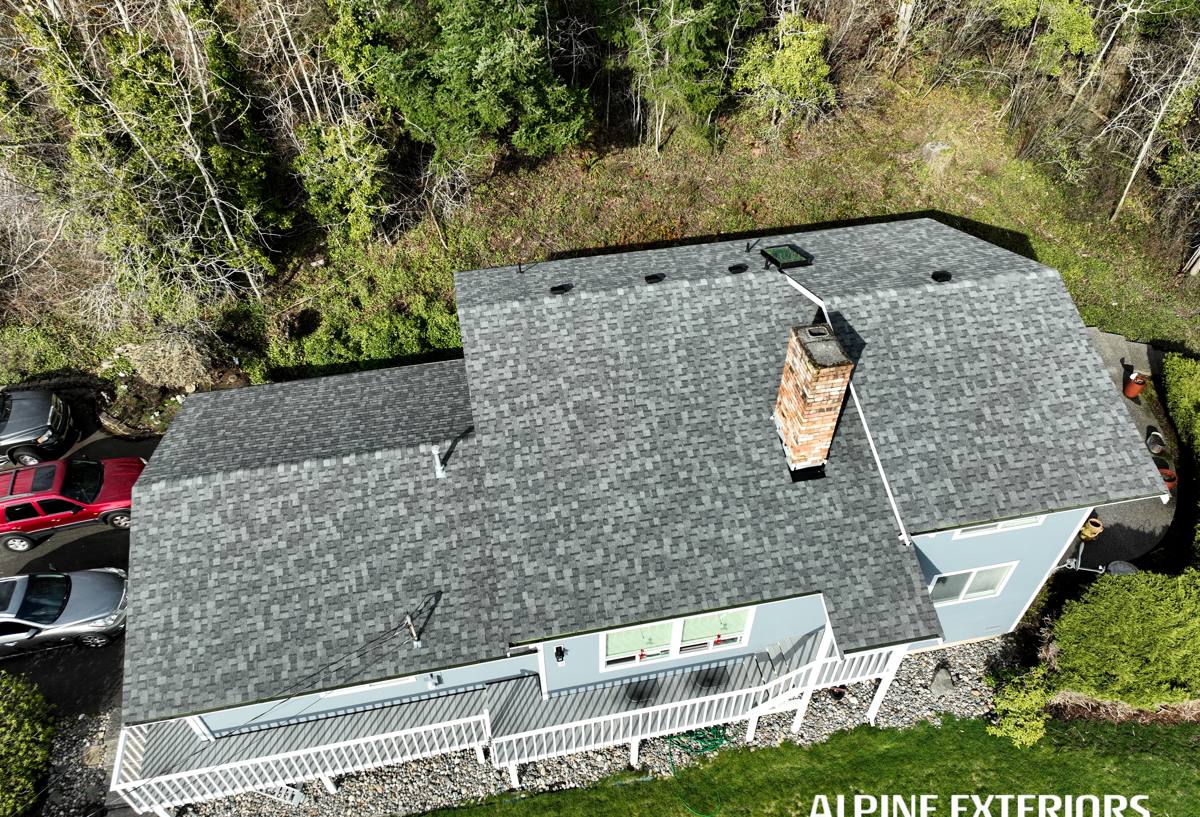
Why Deming's Setting Is Hard on Roofs
Heavy Tree Cover and a Long Moss Season
The biggest factor working against roofs in Deming usually isn't wind or hail, it's shade. Dense tree cover keeps roof surfaces cool and damp long after a storm has passed, well after a sunnier roof nearby would already be dry. That extended dampness is exactly what moss, lichen, and algae need to take hold, and once established they hold moisture against the shingle or panel surface around the clock. Across Whatcom County the moss season runs most of the year outside the driest summer weeks; on a shaded Deming lot it can run nearly year-round.
Driving Rain and Saturated Ground
Marine weather systems move through this part of Washington with driving rain that doesn't just fall straight down, wind-driven rain gets pushed sideways into ridge caps, valleys, and any flashing detail that isn't sealed correctly. Pair that with tree-covered lots where both the ground and the roof stay wetter longer, and you get more chances for water to find a weak point somewhere in the roof system.
Needles, Cones, and Organic Debris
Conifer needles, cones, and leaf litter collect in valleys, behind chimneys, and in gutters faster on a wooded Deming lot than on an open one. Left alone, that debris holds water against the roofing material and speeds up the granule loss and deck rot that lead to an early, avoidable replacement.
Signs a Deming Roof Is Ready for Replacement
Because of the shade and moisture load out here, roofs can show their age differently than roofs closer to town, sometimes with heavy moss cover well before there's any visible curling or cracking. Some of the signs worth taking seriously:
- Moss or algae that keeps returning within a season or two of cleaning, even after treatment
- Shingles that feel soft or spongy, or that spring back slowly when you walk near an edge, a sign of trapped moisture in the deck below
- Granules collecting in gutters or piling up at downspout outlets
- Daylight visible through the roof deck from inside the attic
- Water stains on interior ceilings, especially near valleys or around chimneys
- Shingles that are cupping, curling at the edges, or missing entirely after a windstorm
- A roof that's 20-plus years old and has only ever been patched, never replaced
One or two of these on their own might mean a repair is enough for now. Several together, especially on an older roof, usually means it's time to talk about full replacement instead of chasing the same leak year after year.
What a Correct Roof Replacement Actually Involves
Tear-Off and Deck Inspection
We don't install new roofing over old. A full tear-off lets us see the deck itself, which on a shaded, moisture-heavy lot is where real damage tends to hide. Soft or delaminated sheathing gets replaced before anything new goes down. Skipping this step is the single most common reason a roof fails early in a wet, shaded setting like Deming.
Underlayment and Water Protection
Given how long moisture can sit on these roofs, we pay close attention to underlayment quality and placement, with extra ice-and-water membrane at valleys, eaves, and around penetrations, the spots where driving rain and trapped moisture cause the most trouble.
Ventilation
A roof that can't breathe traps humid attic air against the underside of the deck, which speeds up rot from the inside out, especially under heavy shade where the roof surface never fully dries out between rain events. Balanced intake and exhaust ventilation is part of the plan, not an afterthought.
Flashing and Detail Work
Chimneys, skylights, valleys, and wall intersections are where most leaks actually start. These details take longer to get right than the open field of the roof, and on a job in a climate this wet, they aren't a place to cut corners.
Choosing a Roofing Material for a Shaded, Wet Lot
There's no single best roofing material for every home, it depends on the roof's exposure, the homeowner's budget, and how much long-term maintenance they're willing to take on. Here's how the common options compare for a property like the ones we see around Deming:
| Material | Moss/Moisture Resistance | Relative Upfront Cost | Maintenance Under Tree Cover |
|---|---|---|---|
| Standard 3-tab asphalt shingle | Lower, tends to hold moisture against the surface | Lowest | Needs regular moss treatment and gutter clearing |
| Architectural (dimensional) asphalt shingle | Moderate; algae-resistant granule options help | Low to mid-range | Still benefits from periodic moss and debris removal |
| Metal roofing (standing seam or panel) | Higher, sheds water fast with little surface for moss to grip | Higher upfront | Lower ongoing maintenance, but valleys still need debris cleared |
| Synthetic/composite shingle | Moderate to higher, varies by product | Mid to higher | Varies by manufacturer; worth reviewing product-specific guidance |
Cost Factors Beyond the Material
The material itself is only part of what drives cost. On a wooded lot, tear-off can take longer, deck repair is more common because of the extra moisture exposure, and equipment staging has to work around trees and landscaping rather than a wide-open driveway. Steeper roofs and complex rooflines with lots of valleys, common on older homes in this area, also add labor time regardless of which material you choose. We break all of this out in the estimate so you know what's driving the number, not just a single lump sum.
We don't push one material on every homeowner. What we will say plainly is that on a heavily shaded lot, algae-resistant granules on an asphalt roof or a metal roof are both worth serious consideration, because the underlying problem in Deming is almost always moisture dwell time, not heat or sun exposure. Whatever material fits your home and budget, we'll walk you through the honest trade-offs, install sensitivity, warranty structure, and what upkeep actually looks like, rather than just naming a brand and moving on.
Our Process for a Deming Roof Replacement
- On-site inspection. We walk the roof and the attic, not just the ground, which matters on a wooded lot where moss and debris can hide developing damage.
- Honest scope and estimate. We tell you what actually needs replacing versus what can wait, with a written estimate that spells out materials and scope of work.
- Scheduling around the weather. Whatcom County's wet stretches don't leave large dry windows, so we plan tear-off and dry-in carefully to keep your home protected mid-job.
- Tear-off, deck repair, and install. Old roofing comes off, the deck gets inspected and repaired as needed, then new underlayment, flashing, ventilation, and roofing go on in that order.
- Site cleanup. Nails, old material, and debris are cleared from the yard and landscaping, a bigger job on a treed lot than on open ground, and one we don't shortcut.
- Final walk-through. We go over the finished roof with you before we consider the job done.
Why a Crew That Already Works Deming Matters
Roofing crews that mostly work open, in-town roofs sometimes underestimate what a wooded, rural-feeling property like a Deming home actually requires: tighter access for equipment, more careful staging around trees and landscaping, and a realistic read on how much moss and debris buildup is normal here versus a sign of a bigger problem underneath. As a Lynden-based crew that already works this area regularly, we're not learning Deming's quirks on your job.
We're also familiar with the permitting and inspection steps that apply to roof replacement work in Whatcom County, so that part of the process doesn't become a surprise partway through the project.
After the Install: Keeping a Deming Roof Healthy
A new roof under heavy tree cover still needs some attention to get its full lifespan out of it:
- Clear gutters and valleys of needles and leaves at least twice a year, more often on a heavily wooded lot
- Have overhanging branches trimmed back where practical to cut down on shade and debris load
- Watch for early moss regrowth and treat it before it spreads, rather than waiting for a visible mat to form
- Schedule a periodic roof check, especially after the windstorms this region sees most winters
None of this is difficult, but skipping it is how a well-installed roof in a place like Deming ends up needing attention years earlier than it should have.
If you're dealing with a moss-covered roof, a leak you can't pin down, or you just want an honest read on how much life your current roof has left, we're glad to take a look. We offer free, no-pressure estimates for roof replacement in Deming and the surrounding Lynden area, fill out the form below and we'll get in touch.