 Lynden Roofing
 Why Maple Falls Siding Takes Extra Punishment
Homes around Maple Falls deal with a tougher mix of weather than a lot of homeowners realize until something starts to go wrong. Salt-laden air moving in off the water corrodes fasteners and finishes faster than dry inland air ever would. Driving rain, pushed sideways by wind instead of falling straight down, finds every gap in flashing, trim, and butt joints that a calm rain would never reach. And because this part of Whatcom County stays cool and damp for long stretches of the year, moss and algae get a running start on siding, especially on north-facing walls and anywhere tree cover keeps a wall shaded and slow to dry.
None of that means your siding is doomed. It means siding here needs to be inspected and repaired with those specific stresses in mind, not treated the same way you'd treat a wall in a dry, sunny climate. A repair that looks fine from the driveway can still be hiding moisture behind it if it wasn't diagnosed correctly in the first place.
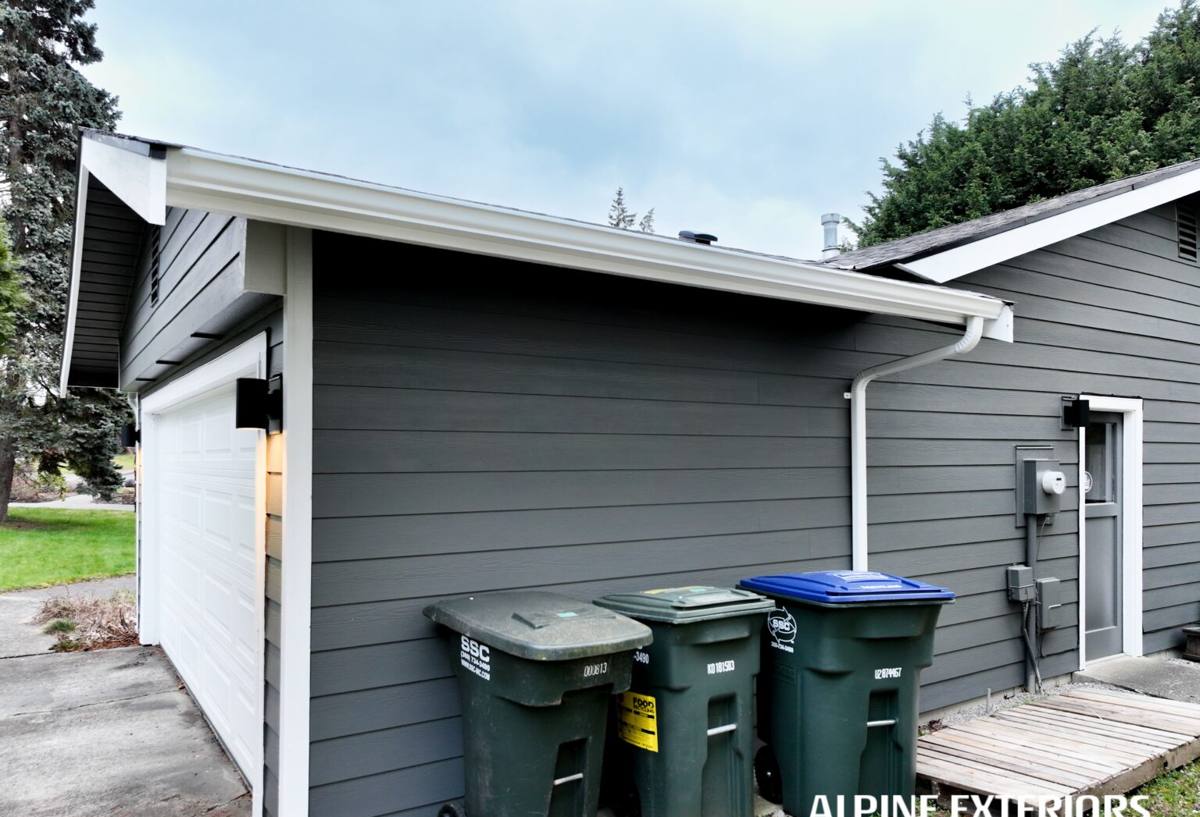
Signs Your Siding Needs Repair — Not Just a Coat of Paint
A lot of siding problems get masked with paint or caulk instead of actually fixed, which usually just delays a bigger repair. Here's what we look for, and what you should look for too:
- Soft or spongy spots when you press on the siding, especially near the bottom courses or under windows
- Paint that's bubbling, peeling, or won't hold no matter how many times it's redone
- Visible gaps at seams, corners, or trim where daylight or drafts get through
- Persistent moss or algae growth that comes back within a season of cleaning
- Staining or dark streaks running down from a specific joint, seam, or fastener
- Warping, cupping, or buckling boards, particularly on walls that get the most wind-driven rain
- Any soft trim boards, window casings, or corner boards near siding damage
Any one of these on its own might be minor. Several of them clustered in one area usually means water has been getting behind the siding for a while, not just sitting on the surface.
What a Correct Siding Repair Actually Involves
Diagnosing the Cause, Not Just the Symptom
Cutting out a damaged board and nailing in a new one is the easy part. The part that actually determines whether the repair lasts is figuring out why that section failed in the first place. Was it a flashing detail that never sealed properly? A caulk joint that dried out and cracked open? A downspout dumping water against the wall instead of away from it? If we don't fix the underlying cause, a repair is just a countdown to the next one.
Checking What's Behind the Siding
Once siding is pulled back, we check the weather-resistive barrier and sheathing underneath for staining, softness, or mold. In a climate that stays damp as long as this one does, water that's been getting in for even a season or two can compromise the sheathing before it ever shows on the surface. A repair that reinstalls new siding over damaged sheathing isn't really a repair — it's a cosmetic fix on top of an ongoing problem.
Matching Materials and Details
Flashing, trim, and butt joints all need to shed water the same way the original assembly was designed to, and fasteners need to be corrosion-resistant given the salt air this area sees. Where the existing siding is fiber cement, matching profile, reveal, and finish is straightforward. Where it's a different material entirely, we'll walk you through what a true match looks like versus what's realistic.
Repair or Replace? How We Help You Decide
Not every damaged section needs a full re-side, and not every "repair" request should end with a patch. The right call depends on how much of the wall is affected, how old the existing siding is, and what's actually happening behind it.
| Factor | Points Toward Repair | Points Toward Replacement |
|---|---|---|
| Extent of damage | Isolated to one or two sections | Recurring across multiple walls |
| Sheathing condition | Dry, solid behind the damaged area | Soft, stained, or showing rot |
| Age of existing siding | Well within its expected service life | Near or past the end of its usable life |
| Material match | Same product, profile, and finish available | Discontinued, faded, or mismatched product |
| Root cause | Fixable detail (flashing, caulk, fastener) | Systemic moisture issue across the assembly |
We'll always tell you honestly which side of that table your home falls on. A targeted repair that solves the actual problem is often the right, cost-effective answer — we're not going to talk you into a full re-side you don't need.
Why We Repair With James Hardie, Not Whatever's on the Wall
When a repair calls for new siding material — a full board replacement, a damaged section, or trim work tied into the siding — we do that work in James Hardie fiber cement. That's a deliberate standard, not a default. We don't install vinyl, LP SmartSide, primed spruce, cedar, or other fiber cement brands, on repairs or full replacements, and it's worth explaining why that matters even for a patch job.
Vinyl and wood products handle moisture and UV very differently than fiber cement does, so mixing them into an existing wall — or using them to repair one — often creates a weak point rather than a durable match. Wood trim and siding absorb moisture readily in a climate that stays damp this long each year, which is exactly the failure mode we're usually called out to fix in the first place. Fiber cement doesn't rot, doesn't feed moss and algae the way bare wood can, and holds its factory finish far longer than field-applied paint does. For repair work specifically, that consistency matters: a patch is only as good as how well it performs next to the material around it.
Where an entire wall or elevation needs replacement rather than a patch, Hardie's HZ5 product line is engineered for cold, wet climates like this one, and the ColorPlus factory finish holds color and resists the fading and chalking that field-painted materials struggle with here. It also carries a strong transferable warranty when installed to manufacturer spec — something worth having in a climate that doesn't give siding many easy years.
Our Siding Repair Process in Maple Falls
- Inspection. We walk the exterior, check problem areas you've flagged, and look at wall orientations that typically take the worst weather — usually the sides facing prevailing wind and rain.
- Diagnosis. We identify what's actually causing the damage: a flashing failure, a caulk joint, drainage aimed at the wall, or straightforward wear from age and exposure.
- Honest scope and estimate. You get a clear explanation of what needs to happen, what it will cost, and why — including if the honest answer is that a small area needs attention now to avoid a bigger repair later.
- The repair itself. Damaged material comes out, the sheathing and barrier underneath get checked and addressed if needed, and new material goes in with flashing and fastening details built to shed water, not just cover the hole.
- Final check. We confirm the repaired section ties in cleanly with the surrounding siding, both structurally and in appearance.
Why Hiring a Crew That Already Works in Maple Falls Matters
Siding repair isn't just about swapping a board. It's about understanding how a specific wall, on a specific home, in this specific stretch of Whatcom County, is likely to take on water. A crew that works this area regularly already knows which orientations tend to fail first, how far moss and algae typically spread before a homeowner notices, and what a repair needs to hold up through another wet season rather than needing to be redone in a year or two.
That local familiarity also shows up in smaller, practical ways — knowing what access looks like on wooded lots, planning around weather windows that are shorter here than in drier parts of the state, and not treating every job like it's the first time we've seen this climate do this to a wall.
When a Repair Isn't the Full Answer
Sometimes what looks like a repair call turns into a bigger conversation. If moisture damage shows up in multiple places, if the existing siding is old enough that matching material isn't realistic, or if the underlying cause is systemic rather than isolated, patching one section just delays dealing with the rest. In those cases, we'll tell you plainly, lay out what a phased or full replacement in James Hardie fiber cement would look like, and let you decide the timeline — there's no pressure to do more than the home actually needs right now.
If you're noticing soft spots, recurring moss, peeling paint, or staining on your Maple Falls home, it's worth getting a straight answer on what's actually happening before it spreads further. We offer free, no-pressure estimates — walk us through what you're seeing and we'll tell you honestly what it needs, use the form below to get started.