 Lynden Roofing
 Siding Built for the Lynden–Abbotsford Climate
Homes along the Lynden–Abbotsford corridor sit in one of the wettest, dampest stretches of the Pacific Northwest lowlands. Whatcom County and the neighboring Fraser Valley share the same weather system: long stretches of grey, drizzly winters, wind-driven rain that comes in sideways off open fields and waterways, salt-laden air carried inland on coastal storms, and a moss and algae season that can run eight months or longer in shaded, north-facing exposures. Siding here doesn't just need to look good — it needs to survive near-constant moisture cycling without trapping water, feeding moss, or breaking down at the seams.
That's a different set of demands than siding installed in a drier inland climate. A product that performs fine in Eastern Washington or the interior can fail early here simply because it was never engineered for this much sustained dampness. Choosing the right material — and installing it correctly — matters more in this part of the state than almost anywhere else.
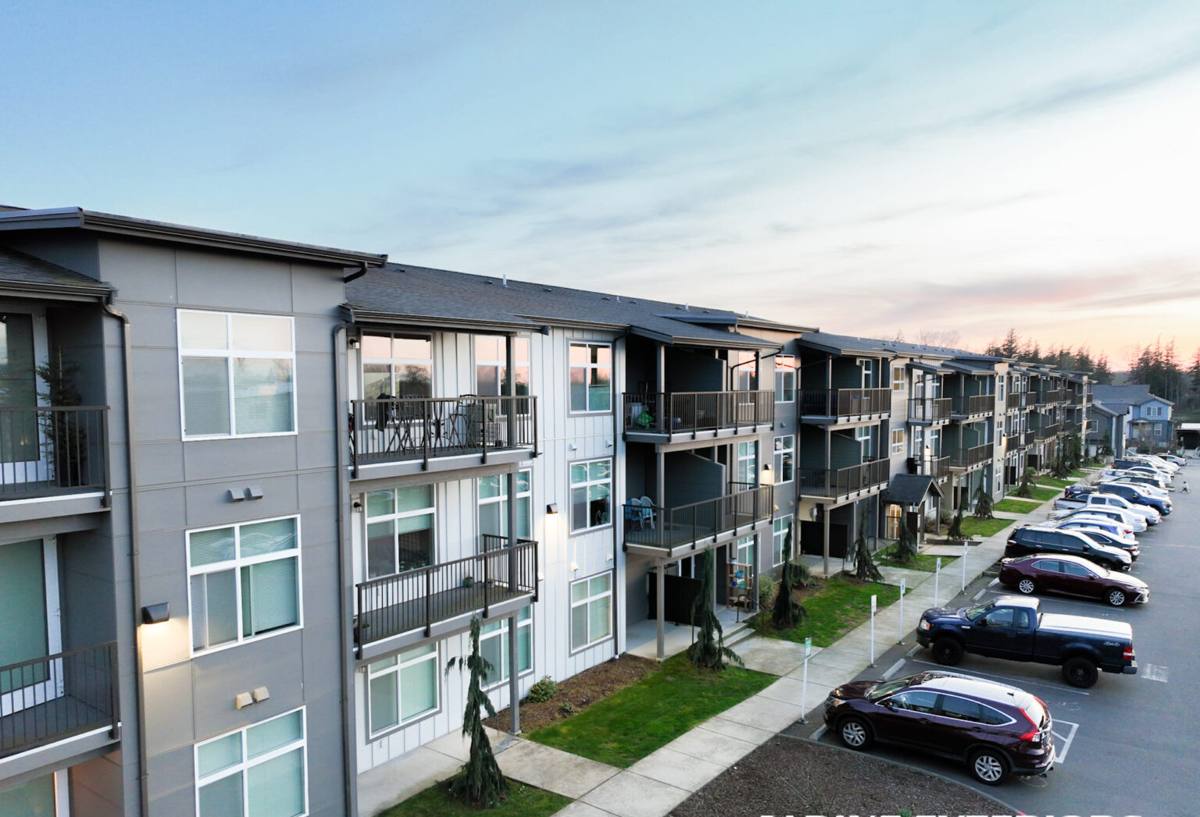
What Salt Air, Driving Rain, and Moss Season Do to the Wrong Siding
Every siding material has a weak point, and this climate finds it fast.
- Vinyl siding expands and contracts with temperature swings and can warp or pull away from fasteners over time. More importantly, its lapped seams and unsealed panel joints aren't built to stop wind-driven rain the way a properly flashed, rigid material can — water finds its way behind the panels in exposed, storm-facing walls.
- Cedar and primed spruce are wood. Wood absorbs and releases moisture with every wet-dry cycle, and in a climate that rarely gets a long dry stretch, that cycling never really stops. Paint fails faster, joints open up, and moss anchors directly into the grain, holding moisture against the wall long after the surface looks dry.
- OSB-based products like LP SmartSide are engineered wood — strand board with a resin coating. They hold up well when installed and maintained exactly to spec, but the failure mode when water does get behind a seam, a cracked caulk joint, or a damaged edge is swelling and softening of the substrate itself, which is much harder to catch early than surface damage.
None of these are "bad" products in every climate. But in a place with this much sustained moisture, salt exposure, and moss pressure, the margin for a missed flashing detail or a skipped touch-up coat is much thinner than most homeowners realize.
Why We Install Only James Hardie Fiber Cement
We standardized on James Hardie fiber cement siding for every job we do, including here in the Abbotsford border area, for a simple reason: it's the product that holds up best against exactly the conditions this region throws at it. Fiber cement is a blend of cement, sand, and cellulose fiber — it doesn't rot, it doesn't feed moss the way wood grain does, and it's non-combustible. Its dimensional stability means it doesn't expand and contract the way wood or vinyl does, so caulk lines and trim joints stay tight for years instead of opening up after one or two wet seasons.
Hardie also builds region-specific product lines engineered for different climate zones, so a home here gets a formulation matched to high-moisture, freeze-thaw-light coastal conditions rather than a generic national spec. The factory-applied ColorPlus finish is baked on under controlled conditions and backed by its own finish warranty, which matters in a climate where field-applied paint is fighting rain and humidity almost every time it's put on.
We don't install vinyl, LP SmartSide, Cemplank, Allura, primed spruce, or cedar — not because those products have no place anywhere, but because we've made a professional decision about what we're willing to put our name behind in this specific climate, and Hardie is what we trust to perform here without surprises five or ten years down the road.
What "HZ" Actually Means
Hardie's HZ5 and HZ10 zone designations aren't marketing labels — they reflect engineering choices tied to regional weather patterns, including moisture exposure and freeze-thaw behavior. Homes in the Lynden and Abbotsford area fall into the coastal, high-moisture zone, and the product spec, fastening pattern, and clearance requirements we use are matched to that zone, not applied generically from a national default.
What a Correct Fiber Cement Siding Job Actually Involves
Fiber cement is only as good as the installation behind it. Most siding failures we're called out to inspect — regardless of brand — trace back to installation shortcuts, not the material itself.
Weather-Resistive Barrier and Drainage Plane
Before a single piece of siding goes up, the wall needs a continuous weather-resistive barrier with a drainage plane behind it. In a climate that sees this much wind-driven rain, any moisture that does get past the siding needs somewhere to go — down and out, not trapped against the sheathing. This step is invisible once the job is done, which is exactly why it's the step that gets skipped on rushed installs.
Flashing at Windows, Doors, and Penetrations
Every window, door, hose bib, light fixture, and vent penetration is a place water can get behind the siding. Correct flashing — head flashing above openings, properly lapped house wrap, and sealed penetrations — is what actually keeps a wall dry, not the siding panel itself. This is the detail work that separates a job that lasts twenty-plus years from one that starts showing problems in five.
Fastening and Clearances
Hardie specifies exact fastener types, spacing, and clearances from grade, roof lines, and decks. Siding installed too close to the ground or to a roof deck stays wet longer and is more likely to wick moisture and grow moss at that contact line — a common problem we see on homes where clearance wasn't respected during the original install.
Caulking and Touch-Up
Because ColorPlus finish comes factory-applied, field touch-up should be minimal and limited to cut edges and fastener heads, using Hardie-matched products. A job that requires extensive field painting after installation usually means the wrong product was used or panels were cut and handled incorrectly.
Comparing Siding Materials for This Climate
| Factor | James Hardie Fiber Cement | Vinyl | Cedar / Primed Spruce | OSB-Based (e.g. LP SmartSide) |
|---|---|---|---|---|
| Moisture resistance | High — cement-based, doesn't absorb and swell | Moderate — seams are the weak point | Low — wood absorbs moisture directly | Moderate — vulnerable if edges or seams are compromised |
| Moss/algae resistance | High — smooth factory finish, low porosity | Moderate | Low — moss anchors into grain | Moderate |
| Finish durability | Factory-baked ColorPlus, separate finish warranty | Color molded in, can fade/chalk | Field-applied paint, fails faster in constant damp | Field or factory finish, varies by product |
| Fire rating | Non-combustible | Combustible | Combustible | Combustible |
| Typical lifespan when installed to spec | 30+ years | 20-30 years | 15-25 years, shorter with poor maintenance | 20-30 years |
Our Process, Start to Finish
- Walkthrough and estimate — we inspect the current siding, look for existing moisture damage, and talk through product line, color, and trim options.
- Tear-off and sheathing inspection — old siding comes off and we check the sheathing underneath for rot or soft spots before anything new goes up. This step catches problems that would otherwise get sealed in behind new siding.
- Weather barrier and flashing — a continuous drainage plane and correctly lapped flashing go in at every window, door, and penetration.
- Hardie installation — panels, fasteners, and clearances installed to Hardie's climate-zone spec, not a generic national default.
- Caulk and touch-up — minimal, matched touch-up at cut edges and fastener heads only.
- Cleanup and walkthrough — site cleaned up and we walk the finished job with the homeowner before calling it done.
What Drives the Cost of a Siding Project
| Cost Factor | Why It Matters |
|---|---|
| Tear-off and sheathing condition | Rot or damage found underneath old siding adds repair scope before new siding can go on |
| Home size and number of stories | More wall area and taller elevations affect material, labor, and access/equipment needs |
| Trim, windows, and architectural detail | Every opening and corner adds flashing and cutting time |
| Product line and color | Different Hardie panel profiles and ColorPlus finishes carry different material costs |
| Site access | Tight lots, fencing, or difficult grading can affect setup and staging time |
We give straight, itemized estimates rather than vague ranges once we've actually seen the house — too much of the real cost depends on what's found once tear-off starts.
Why a Crew That Already Works This Area Matters
Siding crews that mostly work drier inland climates tend to under-detail the things that matter most here: drainage planes, clearance from grade, and flashing at every penetration. A crew that regularly works the Lynden and Abbotsford border area sees firsthand which walls take the worst of the wind-driven rain, which north- and shade-facing elevations grow moss fastest, and which installation shortcuts show up as callbacks two or three winters later. That familiarity shows up in the details — not in anything flashy, just in a job that's still tight and dry a decade in.
Signs Your Current Siding Is Losing the Fight
- Persistent moss or dark streaking that comes back within weeks of cleaning
- Paint that's peeling, bubbling, or chalking faster than it used to
- Soft or spongy spots when you press on the siding, especially near the bottom courses
- Visible gaps at seams, corners, or trim where caulk has cracked or pulled away
- Warping, bowing, or panels that no longer sit flat against the wall
- Rising energy bills that suggest moisture or air infiltration behind the siding
If you're seeing more than one of these on a home in the Lynden or Abbotsford area, it's worth having someone take a real look before the damage spreads to the sheathing underneath.
If you're weighing a siding project on a home in the Abbotsford, BC area near Lynden, we're happy to take a look and walk you through what correct James Hardie installation would involve on your specific house — no pressure, no upsell, just a straight assessment. Use the form below to request a free estimate.