 Lynden Roofing
 Why Siding Fails Faster in Ferndale
Ferndale sits close enough to the water and open farmland that homes here take a different kind of weather beating than siding fifteen miles inland. You get salt-laden air moving in off the Strait, long stretches of driving rain that hits walls sideways instead of straight down, and a moss and algae season that runs longer than most of the state because things simply don't dry out. Add in the wind exposure common to the flatter areas around town, and siding is doing more work here than the manufacturers' glossy brochures usually account for.
None of that means siding is doomed to fail. It means the margin for error in the original installation, and in how repairs get handled later, is thinner than in a drier climate. A repair that would hold up fine in eastern Washington can fail again in two years out here if it doesn't account for how water actually moves across a wall in Whatcom County weather.
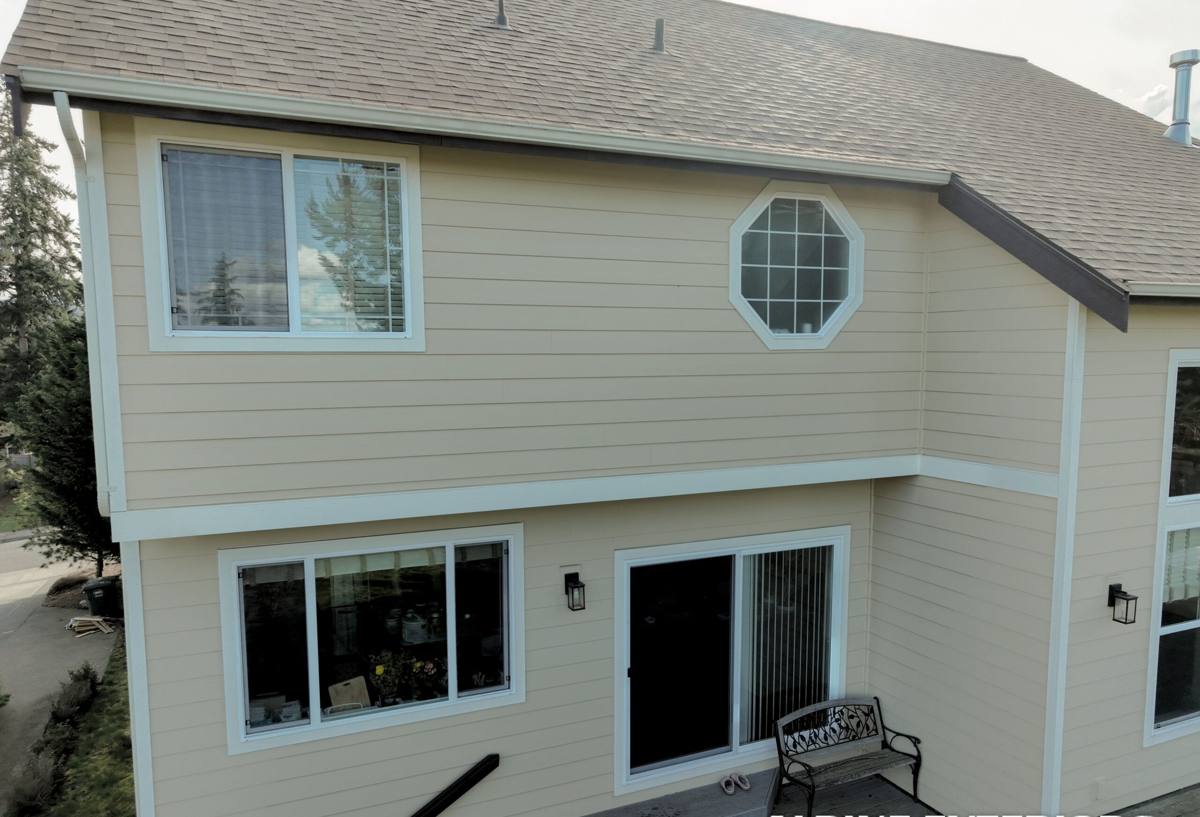
Signs Your Siding Needs a Repair Call
Most siding problems don't announce themselves with a dramatic failure. They show up as small, easy-to-ignore details first. Homeowners in Ferndale should watch for:
- Soft or spongy spots when you press on a wall, especially near the bottom courses or under windows
- Persistent dark streaking or green/black growth that comes back within weeks of being cleaned
- Visible gaps, cracks, or separated seams, particularly where two pieces of siding meet
- Paint that's bubbling, peeling, or failing in one specific area rather than evenly across the house
- Warping, bowing, or panels that no longer sit flat against the wall
- Rising interior utility bills or a draft near exterior walls, which can point to a moisture or gap problem outside
- Insect activity around siding edges, a common sign that wood behind or within the siding has softened
Any one of these on its own might be minor. Several showing up in the same section of wall usually means water has been getting behind the siding for a while, and the visible damage is the tail end of a problem that started months or years earlier.
Repair vs. Replace: How We Actually Decide
An honest siding contractor doesn't default to "replace everything" just because it's the bigger job. Repair is the right call when damage is localized, the underlying wall assembly is dry, and the siding material itself is still sound. Replacement becomes the right call when damage is widespread, when the water intrusion has already reached the sheathing or framing, or when patching would leave you with a wall that looks and performs worse than before.
| Situation | Repair usually makes sense | Replacement usually makes sense |
|---|---|---|
| Damage location | Isolated to one wall section or a handful of boards | Spread across multiple walls or the whole exterior |
| Underlying sheathing | Dry, solid, no rot found on inspection | Soft, discolored, or rotted when probed |
| Age of siding | Well within expected service life | Near or past the end of its realistic lifespan |
| Material match | Matching material or color still available | Discontinued product, visible mismatch unavoidable |
| Root cause | A single identifiable event (impact, flashing failure) | Systemic moisture problem from the original install |
We won't talk you into a full re-side when a targeted repair will genuinely hold. We also won't patch over a wall we know is going to fail again in a Ferndale winter just to make the invoice smaller today.
What a Correct Repair Actually Involves
A repair that's done right isn't just cutting out the bad piece and nailing in a new one. It involves:
- Removing enough surrounding siding to see the full extent of the damage, not just the visible part
- Checking the water-resistive barrier (house wrap) and flashing behind the siding for tears or gaps
- Confirming the sheathing underneath is dry and structurally sound before closing the wall back up
- Correcting the drainage detail at that section — proper overlaps, kick-out flashing, and gaps at the bottom — so water sheds the way it's supposed to
- Matching the replacement piece for material, profile, and finish as closely as possible
- Sealing and finishing the repair so it performs, and looks, like part of the original wall rather than a patch
How Repair Needs Differ by Siding Material
What a repair actually requires depends heavily on what's on the wall in the first place. This matters in Ferndale specifically because of how much moisture and organic growth the climate throws at a house year-round.
| Material | Common repair issue here | What repair involves |
|---|---|---|
| Fiber cement (James Hardie) | Impact chips, caulk failure at joints, moss buildup on north-facing walls | Cut-and-patch of the damaged board, re-caulking with proper joint detail, cleaning without pressure-blasting the finish |
| Vinyl | Cracking in cold snaps, warping near dryer vents or dark colors, panels popping loose in wind | Re-hanging or replacing the affected panels; exact color matches get harder to find as products age off the market |
| Wood / cedar | Rot at butt joints and lower courses, moss and mildew staining, paint failure | Cutting out rotted sections, treating exposed wood, repainting; repeated repairs are common on wood in this climate |
| LP SmartSide / engineered wood | Edge swelling where water penetrates the strand board core | Full board replacement is usually required once swelling starts — the core doesn't recover once compromised |
We repair what's already on the house, regardless of brand. But we install James Hardie fiber cement exclusively when a homeowner is ready for new siding, and this table is part of why: fiber cement simply gives us a more predictable, durable repair down the road than the alternatives.
Our Repair Process
When we come out for a siding repair in Ferndale, the process looks like this:
- Inspection: We look at the damaged area and the surrounding wall, not just the spot you called about, since siding problems often extend further than they appear from the ground
- Moisture check: Where there's any sign of water intrusion, we check how far it's traveled before quoting the repair
- Honest scope: We tell you plainly whether this is a repair or whether repair would just be a short-term fix on a bigger problem
- The work: Matching materials, correcting the drainage detail, and finishing the repair so it blends in and holds up
- Walkthrough: We show you what we found and what we did before we consider the job finished
Why It Matters That We Already Work in Ferndale
Siding repair isn't just carpentry — it's diagnosing why water got in and making sure it doesn't happen again in the same spot. A crew that works this part of Whatcom County regularly already has a feel for the patterns: which wall orientations take the worst of the driving rain, where moss builds up fastest, and how quickly a small gap can turn into a soft spot given the moisture load out here. That local pattern recognition shortens the time it takes to find the actual cause of a repair, instead of just patching the symptom.
It also means we're not guessing at material availability or driving in a specialty crew for a small job. We're already equipped to handle both a quick repair and, if the inspection turns up more, a conversation about what full replacement with James Hardie siding would look like for your home.
When Repair Isn't the Right Long-Term Answer
There's a point where repeated repairs stop making financial sense. If a home has needed three or four siding repairs in as many years, or if an inspection turns up moisture damage in multiple areas rather than one isolated spot, that's usually a sign the original siding or installation wasn't suited to this climate. At that point we'll say so directly, rather than billing you for another patch that's likely to fail again.
When that conversation happens, our recommendation is James Hardie fiber cement siding. It's non-combustible, holds its factory-applied ColorPlus finish far longer than field-painted materials, and its HZ product lines are engineered for exactly this kind of wet, coastal-influenced climate. It won't eliminate maintenance entirely — nothing exposed to Whatcom County weather is maintenance-free — but it holds up to moisture, moss, and salt air with far fewer of the repeat failures we see with vinyl, LP SmartSide, or unfinished wood siding.
What Siding Repair Typically Costs
Repair costs vary a lot based on scope, so treat this as a general guide rather than a quote:
| Repair type | Typical scope | What drives the price |
|---|---|---|
| Spot repair | A few boards or panels | Material match, access, whether trim is also affected |
| Section repair | One wall or corner | Extent of hidden moisture damage found once opened up |
| Multiple-area repair | Several separate spots | Travel time between areas, whether a pattern of failure suggests a bigger issue |
We won't give a firm number without seeing the wall in person, but we'll always tell you upfront if what you're describing sounds like a $400 patch or the start of a much bigger conversation.
After the Repair: Keeping It From Happening Again
A few habits go a long way toward protecting a repair, and your siding generally, in this climate:
- Keep gutters clear so water isn't overflowing directly onto walls below
- Trim back vegetation and tree cover that keeps a wall section shaded and slow to dry
- Rinse visible moss and algae growth off before it gets a chance to hold moisture against the surface
- Have caulking at joints and trim checked every couple of years, since that's usually the first thing to fail
- Address small cracks or chips promptly rather than waiting for them to grow
If you're seeing damage, staining, or soft spots on your Ferndale home's siding, we're glad to come take a look. The estimate is free, there's no pressure attached to it, and we'll tell you straight whether you're looking at a simple repair or something bigger.